


Living in a small apartment often feels like a high-stakes game of Tetris. You are constantly trying to fit a sofa, a coffee table, and a TV into a tight footprint without blocking the walkway. If you are wondering how to reclaim square footage without sacrificing your entertainment experience, the answer lies in utilizing the "dead zone" of your room.
So, how do corner TV stands maximize space?
In short, Corner TV Stands transform unused corner wedges into functional entertainment zones, liberating your valuable long walls for larger furniture like sectionals or desks. By shifting the TV to the corner, you create a diagonal layout that opens up central traffic flow, reduces visual clutter, and allows you to fit a larger screen (up to 65 inches) into a compact room without it dominating the space.
In this guide, we will explore why moving away from the traditional flat-wall layout is the ultimate architectural hack for small living rooms, and how to choose the perfect stand to make your home feel bigger.

Why Corner TV Stands Are the Ultimate Space Hack?
When you are dealing with limited square footage, every single inch counts. Placing your TV in the corner isn't just about finding a spot for it; it is about fundamentally changing the geometry and traffic flow of the entire room.
Reclaiming Your Long Walls
In a typical small rectangular room, you usually have two long walls and two short walls. If you put a TV on one long wall and a sofa on the other, you create what interior designers call the "tunnel effect." The room feels narrower than it actually is, and you are forced to walk between two heavy pieces of furniture just to get across the room.
By moving the television to the "dead zone" (the corner), you liberate a massive amount of wall space.
- The Design Benefit: That long wall you just freed up is now available for a 3-seater sectional, a dedicated work-from-home desk, or a beautiful gallery wall of art.
- The Traffic Flow: It opens up the center of the room. Instead of walking in a straight line through a narrow channel, you create a clear diagonal walking path. This diagonal line is the longest visual line in the room, which tricks the brain into perceiving the space as wider and more open.
Utilizing the "Dead Zone"
Corners are notoriously difficult to style. In most homes, corners are "dead space." They are often too dark for house plants to thrive, too small to fit a comfortable reading chair, and too awkward for standard storage units. Often, they just collect dust or become a tangle of extension cords.
A specialized small space TV stand designed for corners turns this wasted wedge into the focal point of the room. It transforms "dead space" into a high-functioning entertainment zone without stealing floor space from the areas where you actually walk, eat, or play.
Recommended Reading: Still weighing your options? If you are torn between a floor unit and wall mounting, check out our detailed comparison: Corner TV Stand vs Floating TV Stand: Which Is Good for Small Spaces? to see which fits your specific floor plan better.
Solving the "Visual Weight" Problem
There is a major difference between physical size (the dimensions on a tape measure) and visual size (how heavy it looks to your eye). A traditional wooden corner cabinet might physically fit in the corner, but because it is a solid box with doors and shelves, it has high "visual weight." It blocks the view of the floor and baseboards, which makes the walls feel like they are closing in on you.
The Magic of Open Design
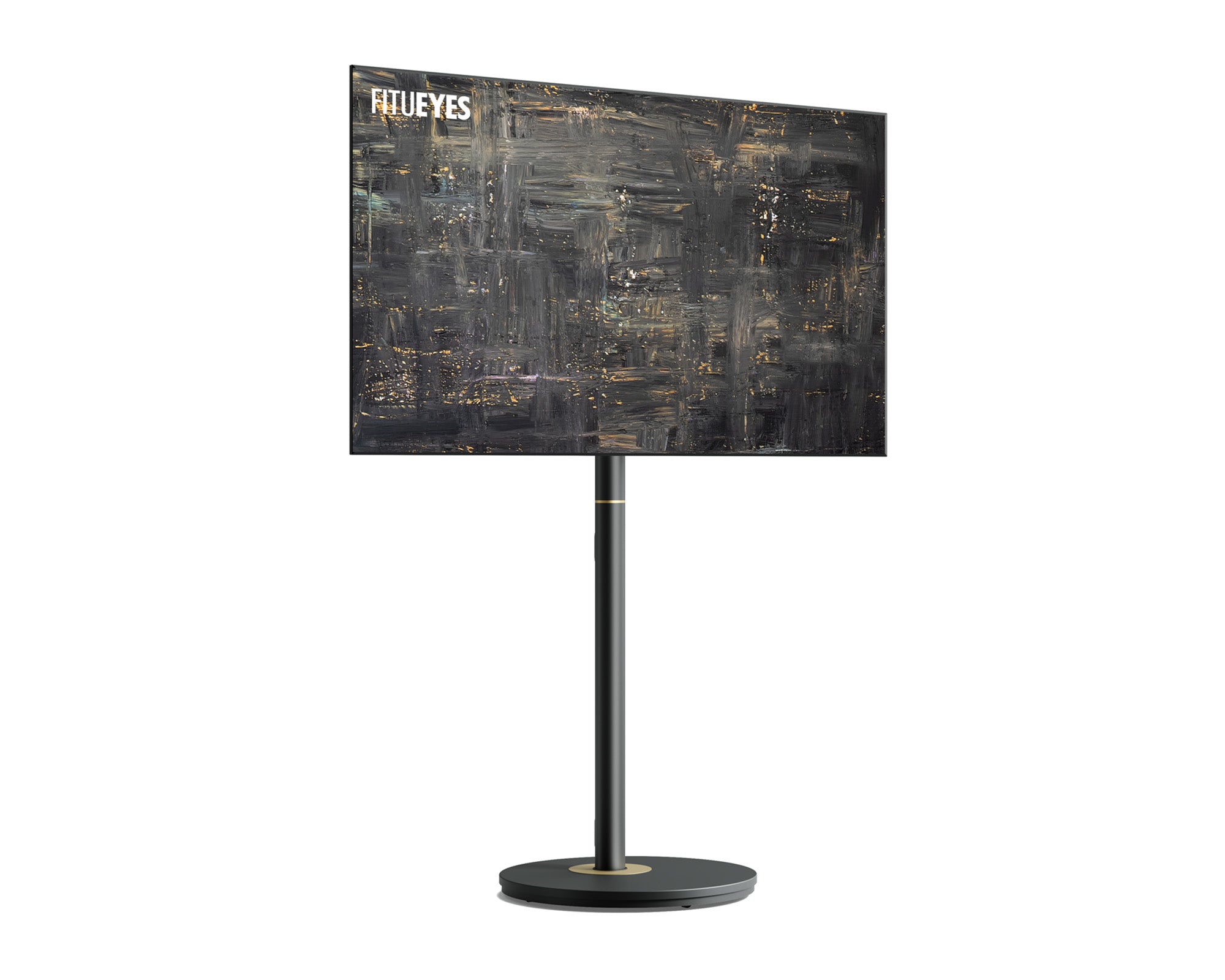
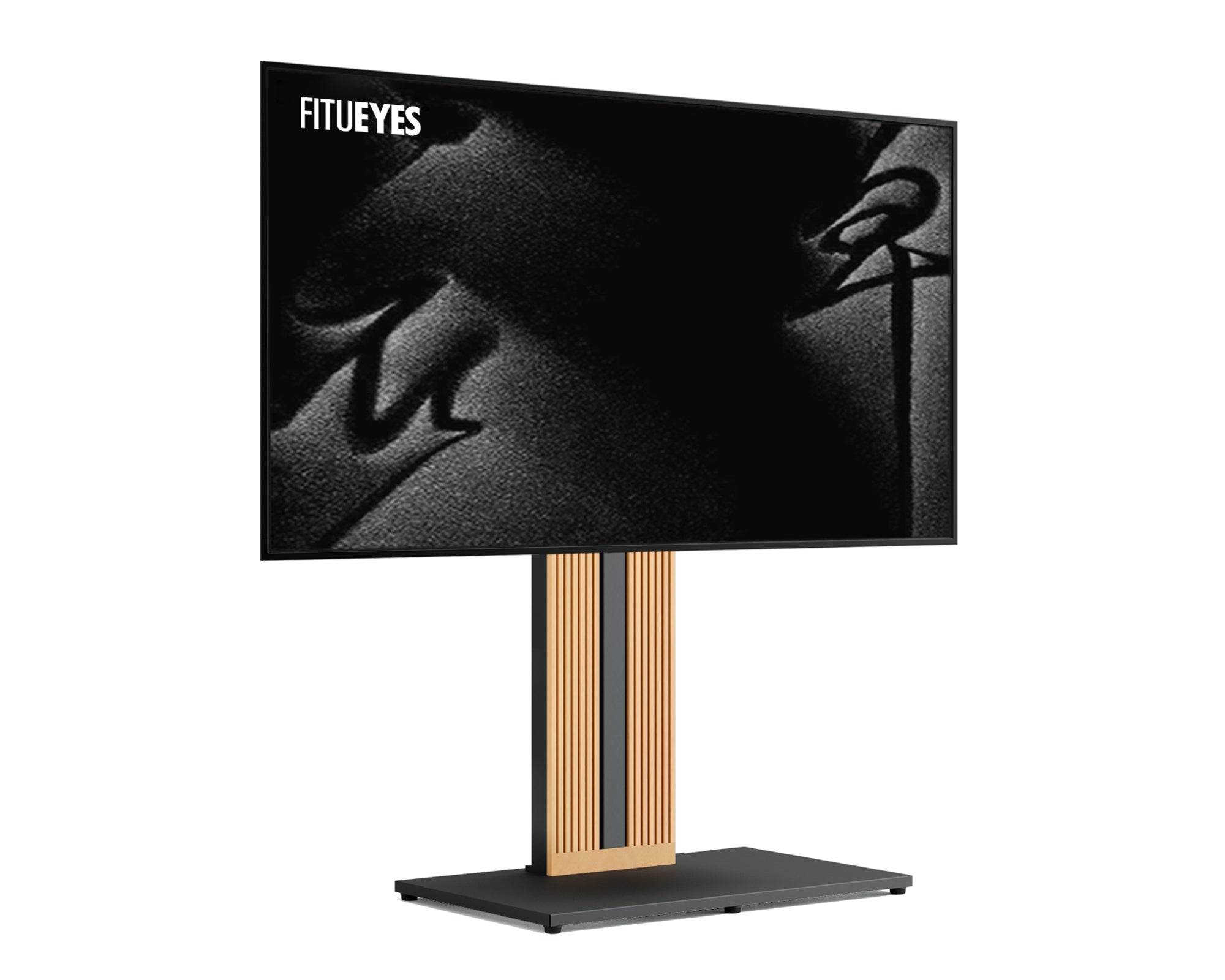
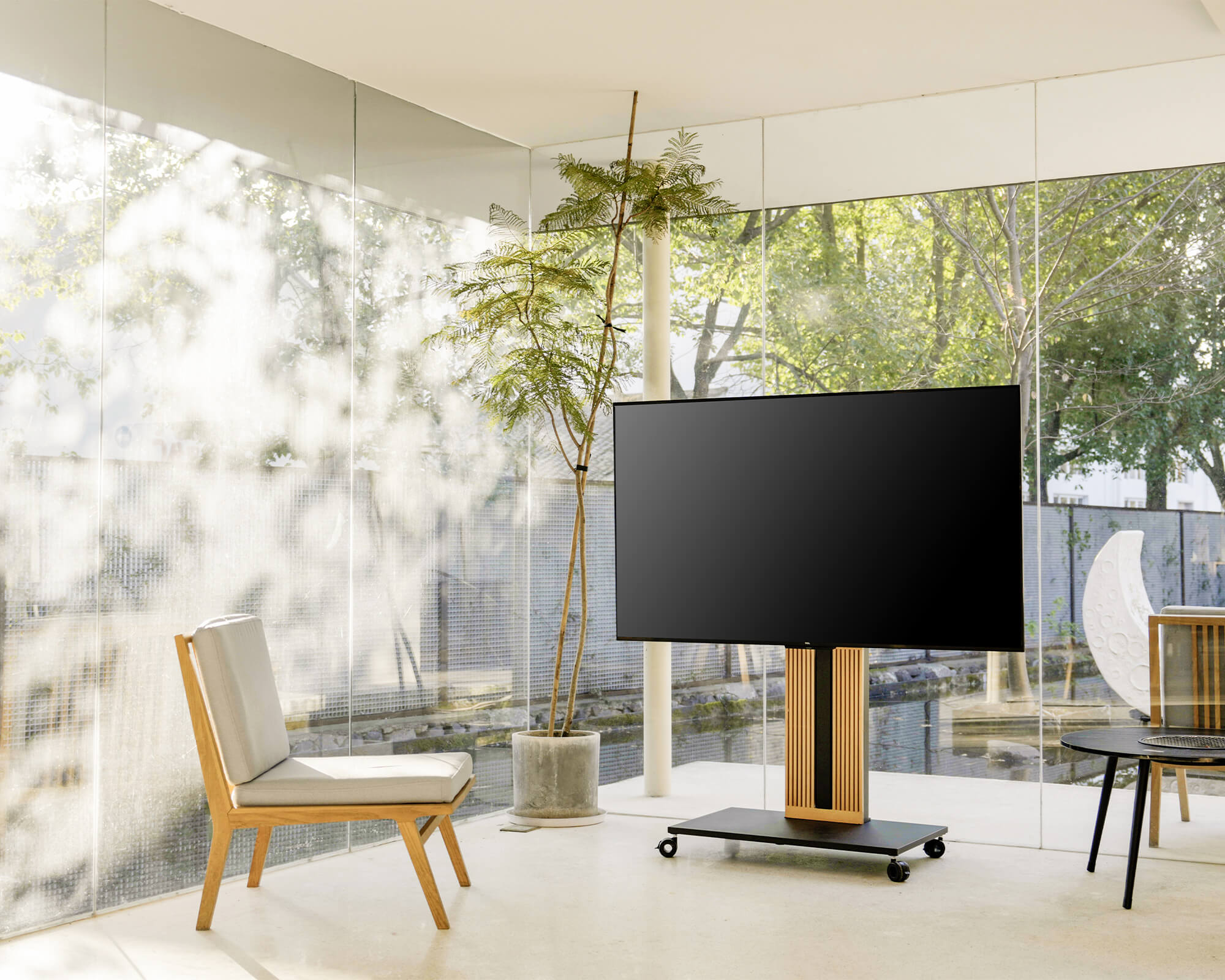
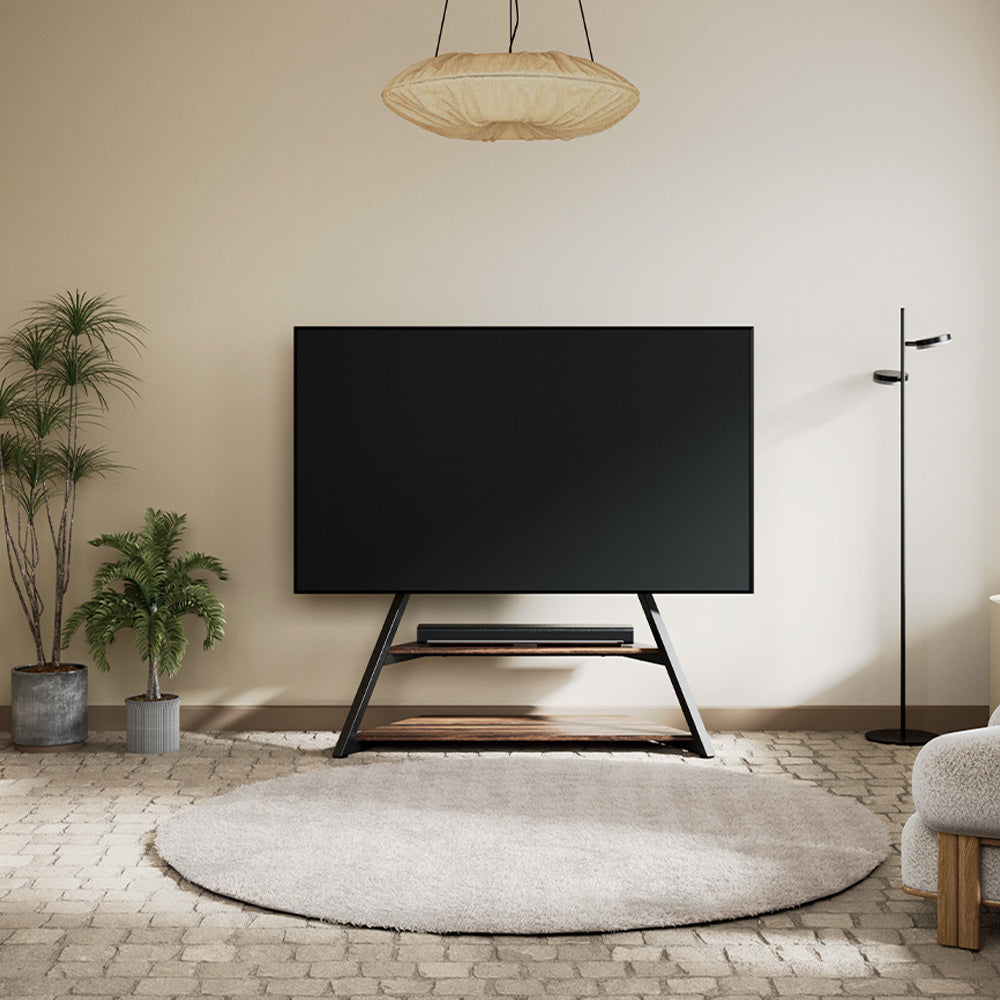
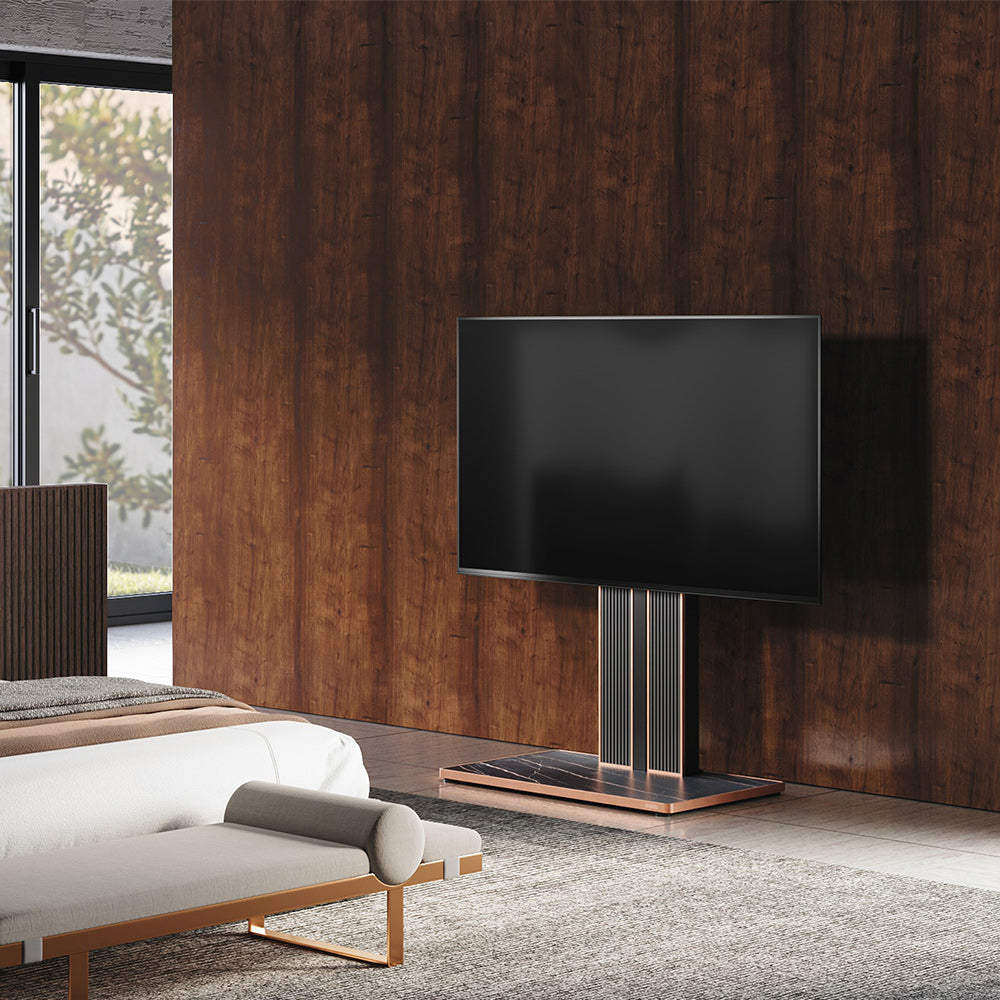
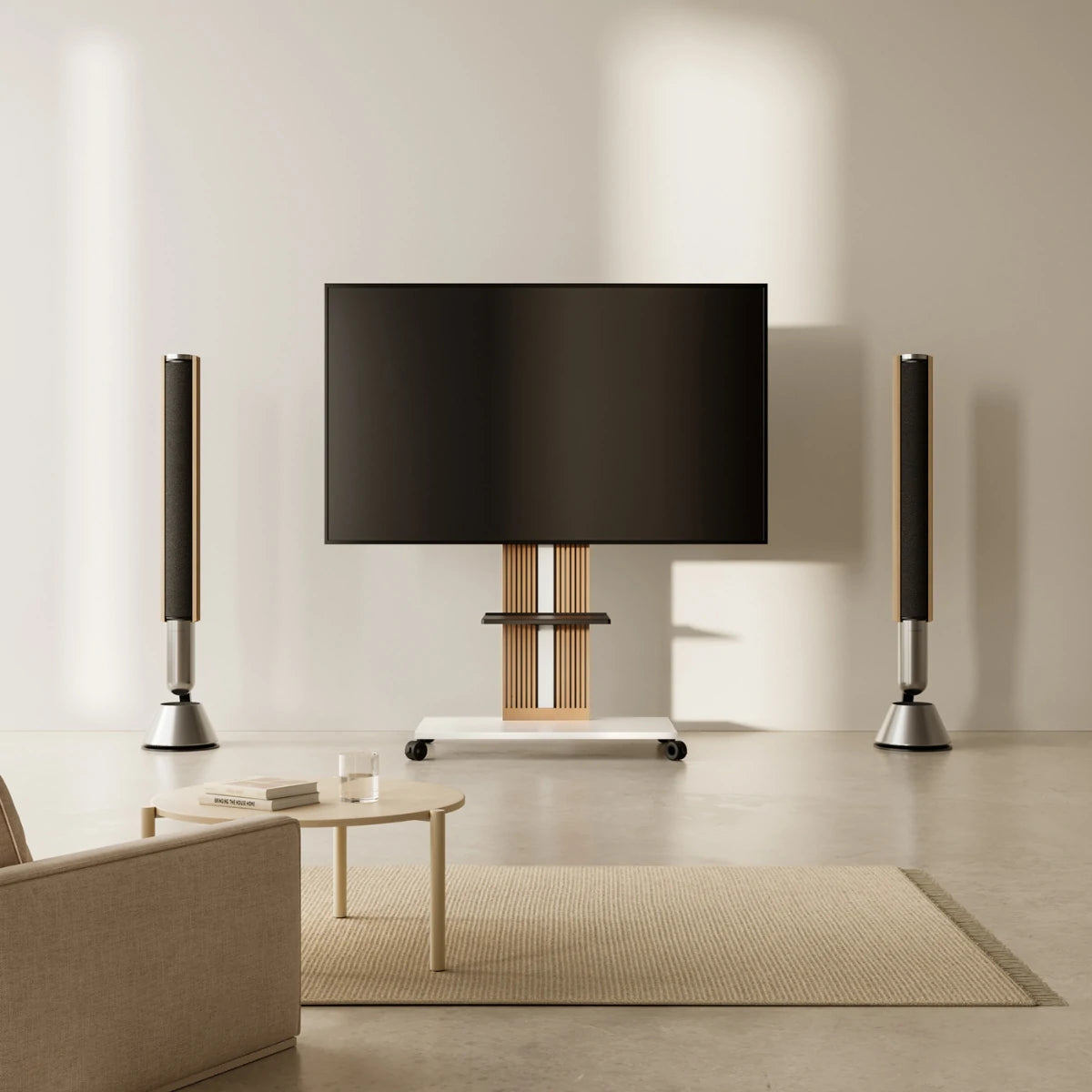
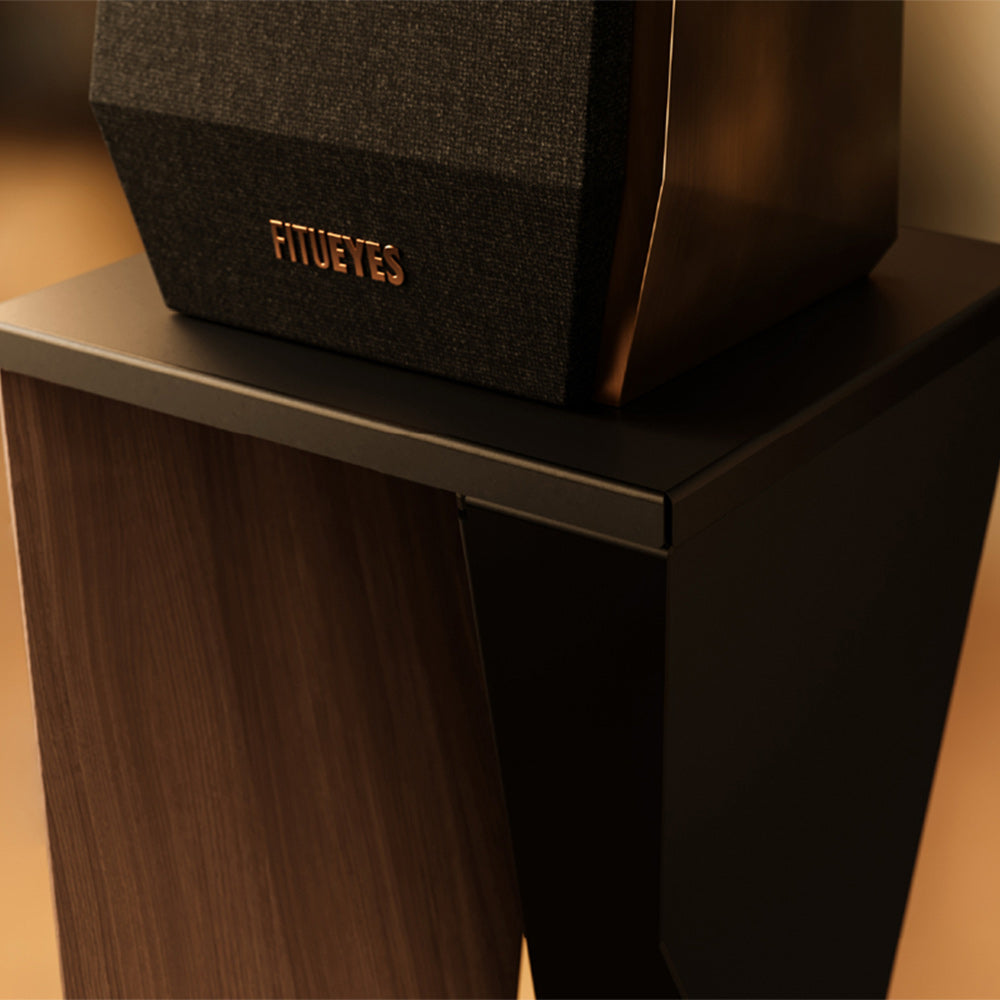
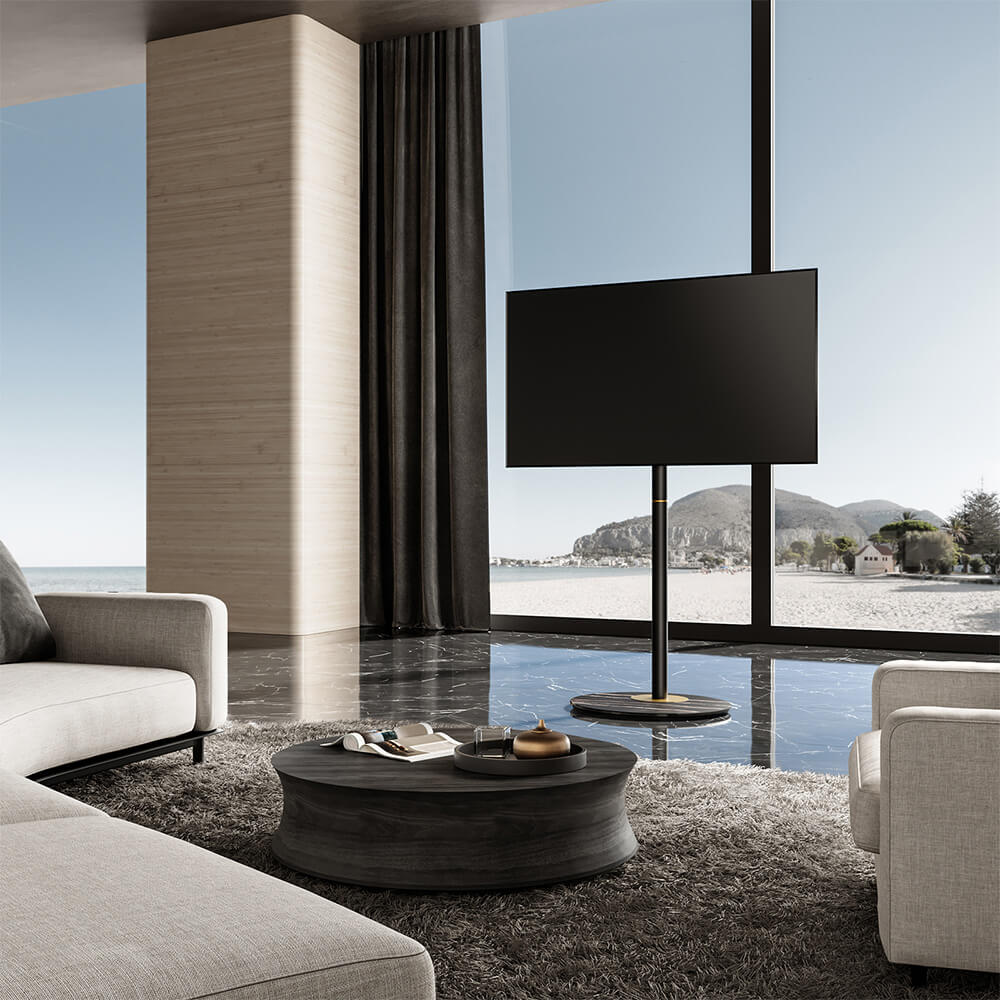
Modern solutions, like the FITUEYES Master Series, prioritize an "open" architecture. Instead of a solid block of wood, they use thin, high-strength columns or elegant tripod legs.
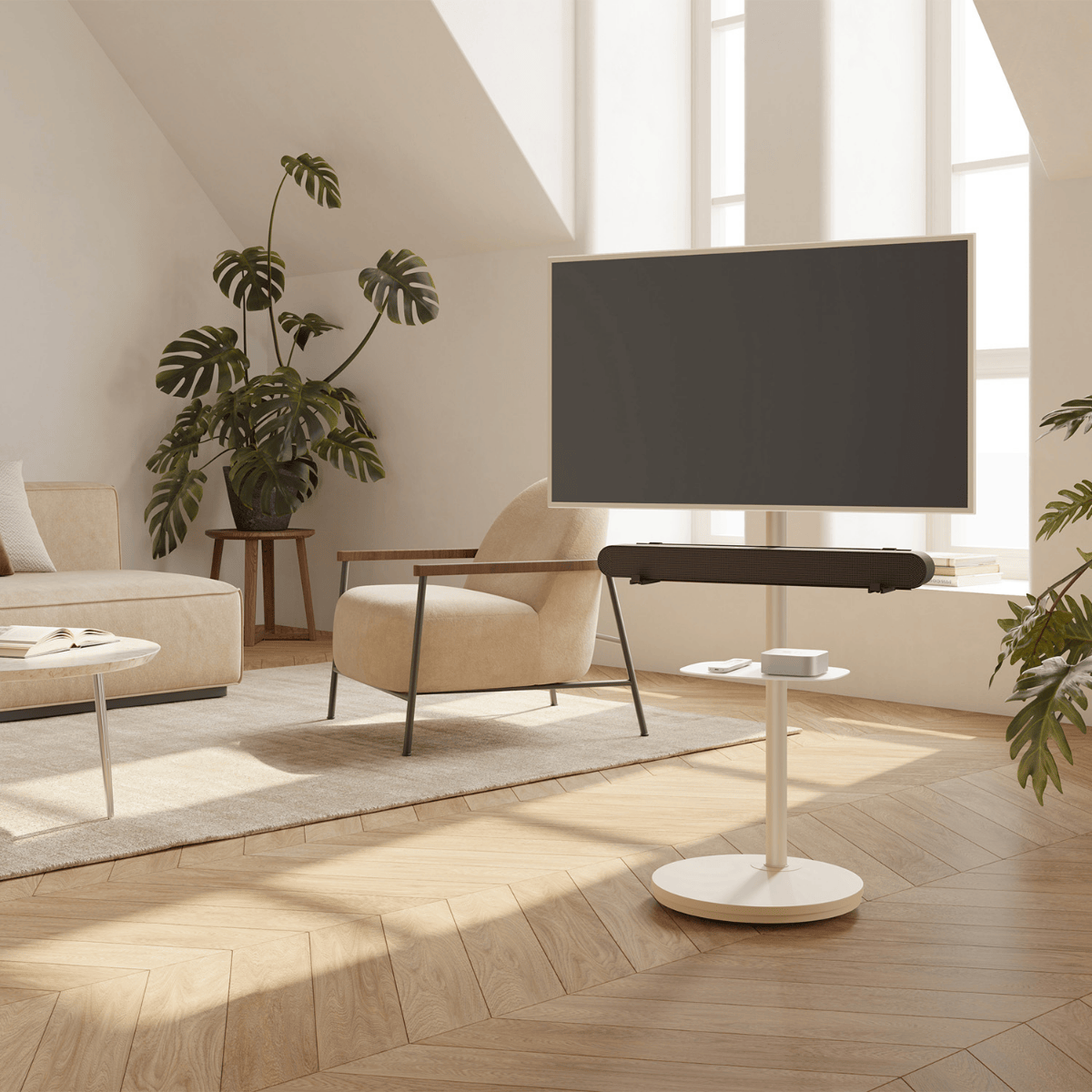
- See-Through Design: Because these stands are minimalist, you can see the wall paint and the flooring through and under the TV.
- The Optical Illusion: In interior design, the more floor you can see, the larger the room feels. When the eye can see the corners of the room and the floor continuing underneath the furniture, the room instantly looks about 20% larger. It creates a sense of "airiness" that bulky cabinets simply cannot match.

Fitting Large Screens on Corner TV Stands
A common myth is that if you have a small room, you must settle for a small TV. Or, if you want a big TV (65"+), you need a massive, wide media console to support it. This leads many people to compromise on their cinematic experience, watching movies on a laptop or a tiny screen.
How Single-Column Stands Work
Let’s look at the math. A 65-inch TV is approximately 57 inches wide. To support this on a table, you usually need a media cabinet that is at least 60 inches wide. In a small room, finding 5 continuous feet of empty wall space is a nightmare.
However, a floor TV stand with a single column has a footprint of roughly 24 inches. Because the stand supports the TV from the center (via the VESA mount) rather than sitting it on a wide shelf, you can fit a massive 65-inch or even 75-inch screen into a tight corner without the stand itself hitting the walls.
Push It Deeper for Better Views
This design allows you to push the TV deeper into the corner than a boxy cabinet. By pushing the screen back into the wedge, you maximize the viewing distance between the sofa and the screen. This ensures you aren't sitting "too close" to the pixels, providing a comfortable, immersive experience even in a cozy apartment.
Perfect Viewing Angles Without the Neck Pain
One of the biggest fears people have about Corner TV Stands is ergonomics. Users often worry, "If the TV is in the corner, will I have to twist my neck to watch it?" or "Will the picture look washed out if I'm not sitting directly in front of it?"
The Power of Swivel Technology
This is a valid concern if you are using cheap, fixed furniture. However, premium floor stands are designed with swivel functionality. This is the game-changer for corner layouts.
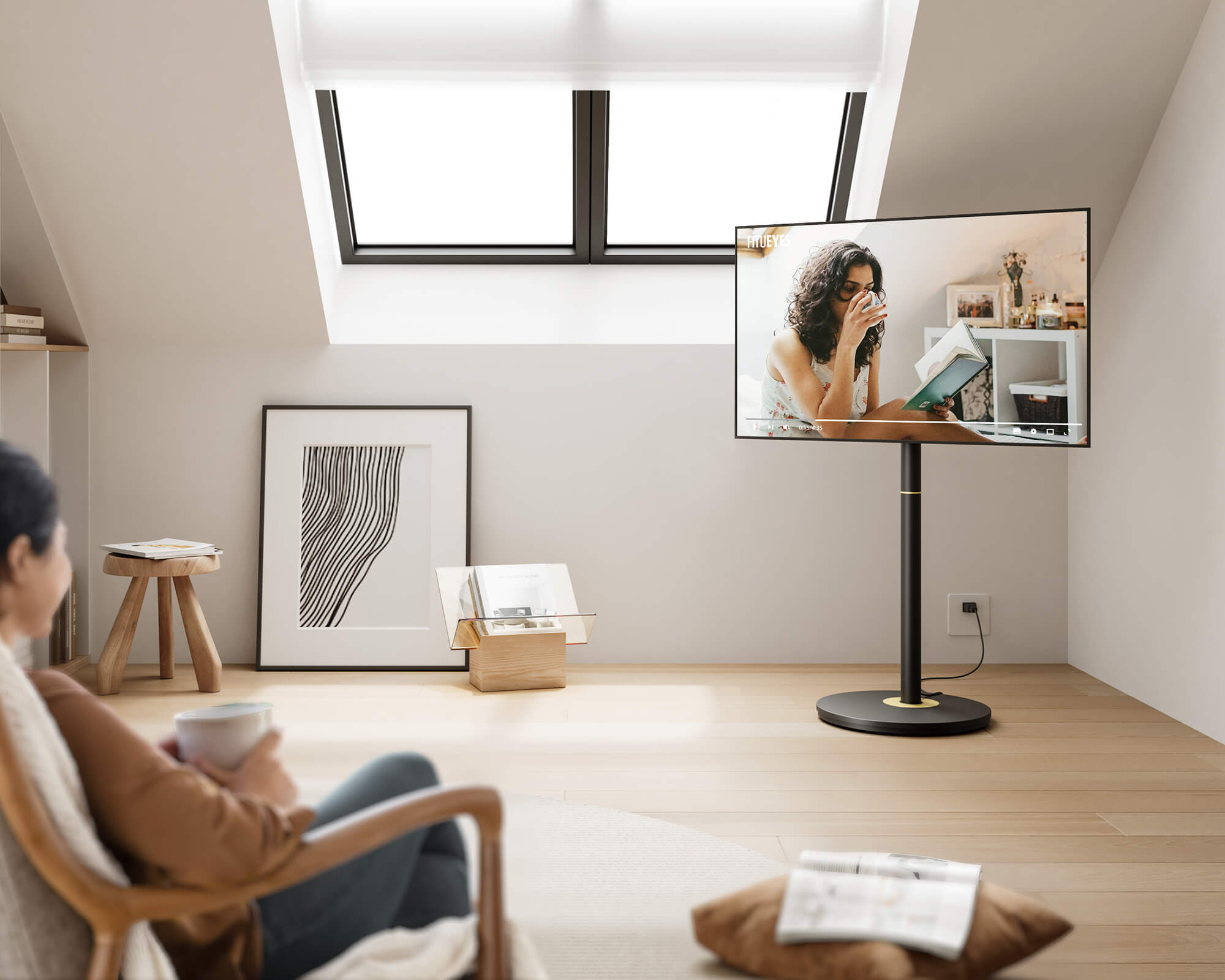
A FITUEYES stand allows you to swivel the screen +/- 30 degrees (or more). This means you can angle the base to fit perfectly into the wedge of the wall—keeping the footprint small—and then independently turn the screen to face your sofa directly. You get the space-saving benefit of the corner placement with the direct viewing angle of a flat-wall placement.
Managing Glare
This flexibility is also a lifesaver in small rooms with specific lighting challenges. If you only have one window, you might battle glare during the afternoon. With a fixed wall mount, you are stuck. With a swivel floor stand, you can simply rotate the TV a few inches to eliminate the reflection, ensuring a perfect picture at any time of day.

A Step-by-Step Guide to Setting Up Your Corner
Ready to reclaim your room? Switching to a corner layout is easy, but it requires a little planning to get the fit just right. Follow these detailed steps to ensure a perfect setup.
Step 1: Measure Your "Deep Corner" Distance
Don't just measure the width of your TV. You need to understand the depth of your corner. Stand in the corner and measure out along the floor diagonally to where you want the front of the TV to be.
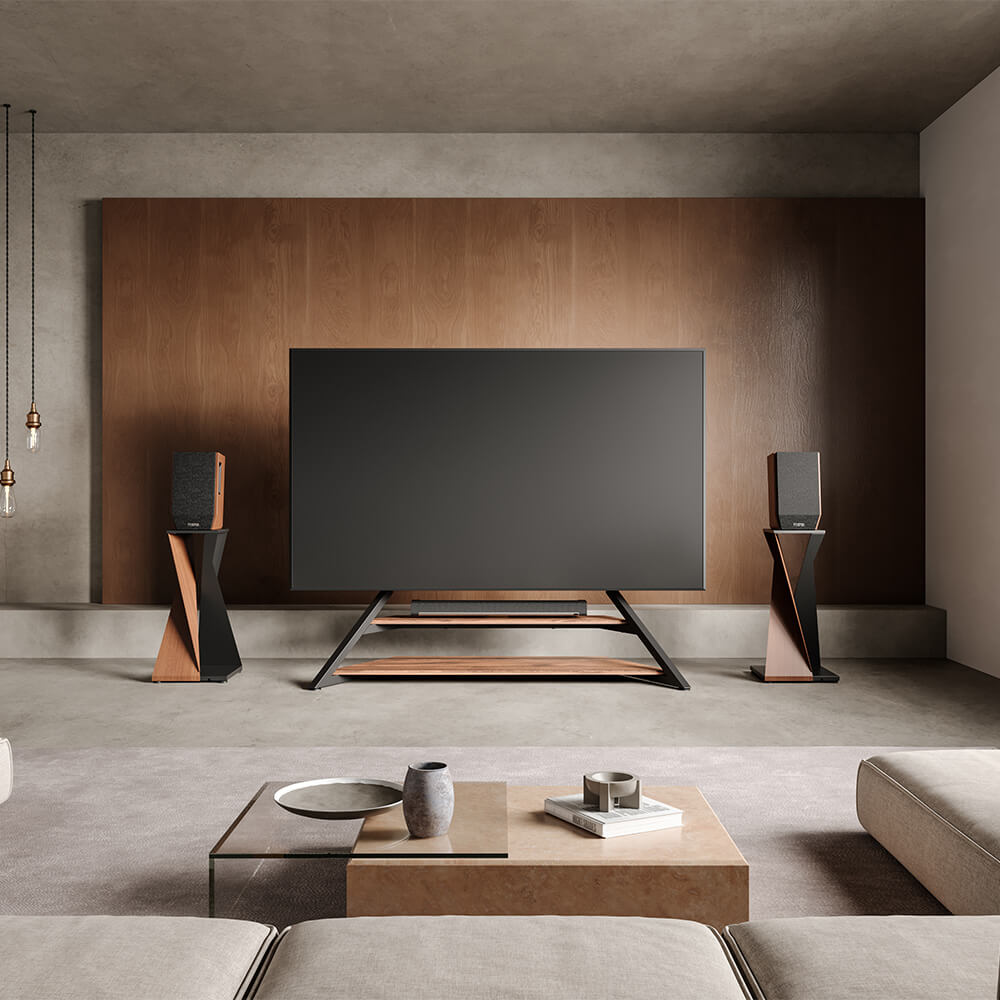
- Why this matters: Tripod stands (like the Picasso Series) have a rear leg that needs to fit into the wedge. You need to ensure your corner is clear of baseboard heaters, immovable outlets, or uneven flooring that might block that rear leg.
Step 2: Check Your Screen Width vs. Wall Clearance
Geometry is key here. If you have a 65-inch TV (approx. 57 inches wide):
- You don't need 57 inches of wall space on one wall.
- You need to position the stand far enough out from the corner so that the left and right edges of the TV don't touch the walls.
- The Rule of Thumb: For a 55-65 inch TV on a floor stand, the center of the stand usually needs to sit about 18-24 inches out from the actual corner point. This "air gap" behind the TV is actually beneficial for ventilation and cooling.
Step 3: Choose Your Style
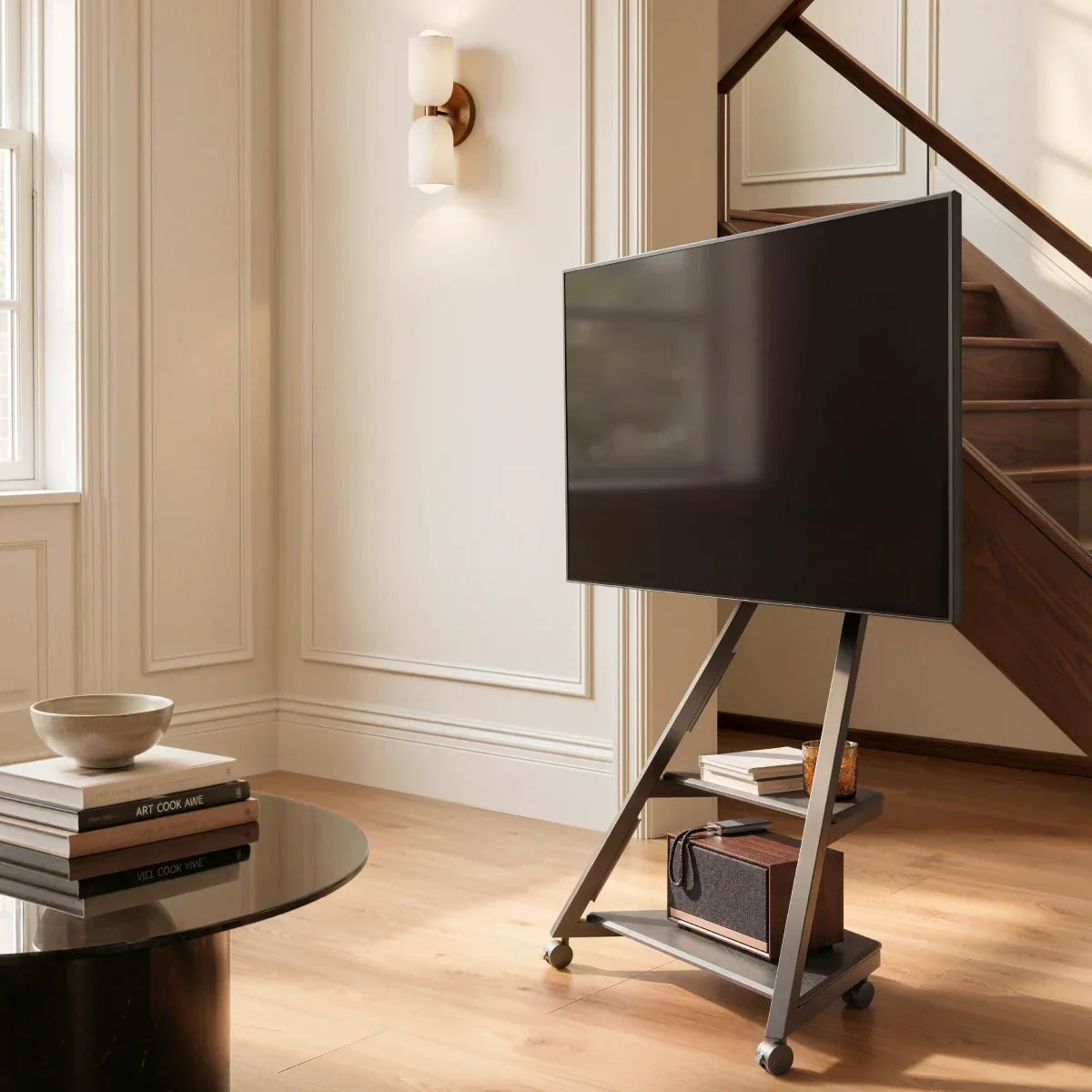
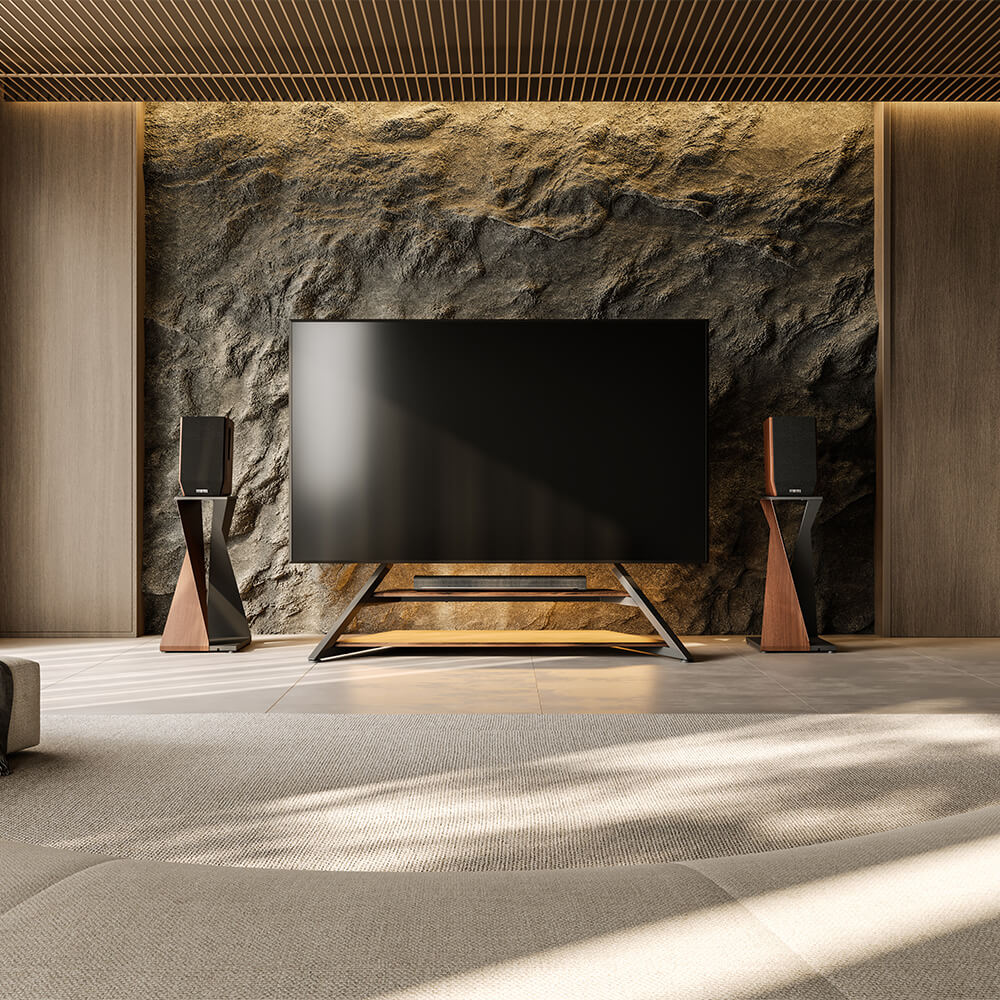
- For the Artistic Vibe (Tripod Style): If you want your TV to look like a piece of art, go for a tripod design like the Picasso Series. The back leg fits deep into the corner wedge, maximizing floor space, while the front two legs frame the space elegantly.
- For the Sleek Look (Column Style): If you prefer a "floating" look, choose a single-column stand like the Master Series. The low-profile base is flat and can often slide under rugs or nearby furniture, getting the TV tight into the corner.
Step 4: Cable Management Mastery
Once assembled, place the stand in the corner. Sit on your sofa in your favorite spot and swivel the TV until it faces you directly.
- The Final Polish: In a corner setup, cables can sometimes be seen from the sides. Use the integrated cable management channels (hidden inside the legs or column of FITUEYES stands) to route your HDMI and power cords. Hiding the wires is the secret to making the setup look like a high-end design choice rather than a temporary fix.
Frequently Asked Questions
Q: Do corner TV stands actually save space?
A: Yes, absolutely. By utilizing the unused corner area, you free up the long flat walls for larger, more functional furniture like sofas or desks. This makes the room feel significantly larger and less cluttered because the center of the room remains open.
Q: Can I put a 65-inch TV in a corner?
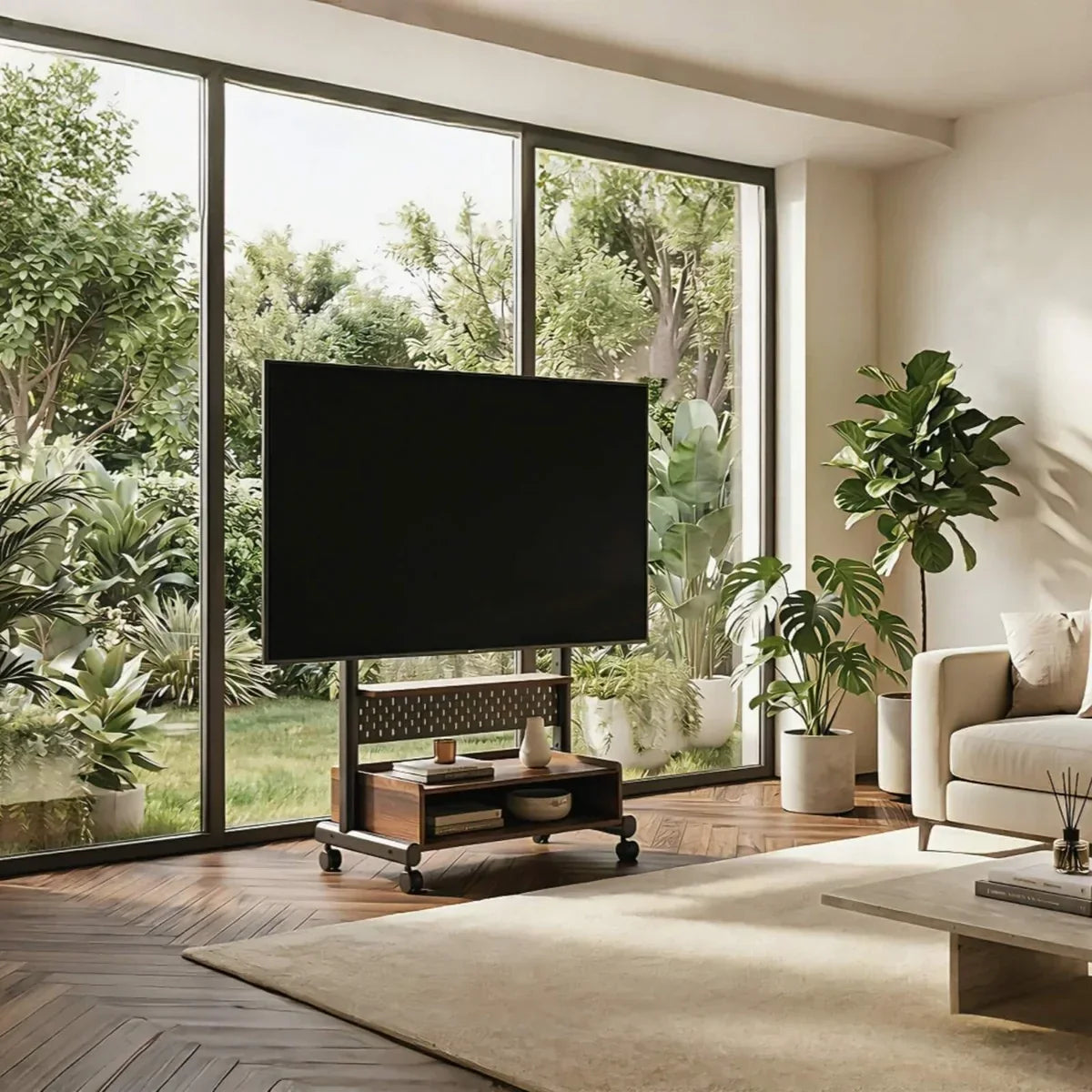
A: You can, but a traditional cabinet will be very bulky and might not fit. We recommend using a minimalist swivel TV mount floor stand. Since it holds the TV by the center back (VESA mount), you can push the TV deeper into the corner without the stand itself taking up huge amounts of floor space.
Q: How far should a corner TV stand be from the wall?
A: With a FITUEYES floor stand, you can get very close. You usually only need about 2-4 inches of clearance behind the screen edges to ensure the TV has room to swivel and vent heat properly.
Q: Is a corner TV layout bad for your eyes?
A: Not at all, provided you can angle the TV towards your seating area. This is why choosing a stand with a swivel feature is crucial. It ensures the screen faces you directly, preventing neck strain and eye fatigue that would come from watching a screen at an angle.
summary
Don't let a small floor plan dictate your entertainment experience.
Your home should be your sanctuary, not a storage unit. By switching to a modern Corner TV Stand, you turn a dead zone into a dynamic focal point, leaving the rest of your room open for living. It is the smartest upgrade you can make for a small apartment.
Ready to transform your small living room? Grab a tape measure, check your corner depth today, and explore the FITUEYES Collection to find the perfect space-saving solution for your home.