


When you unbox a 75-inch television, the initial feeling is pure awe. Whether you are a dedicated home theater enthusiast chasing an authentic cinematic experience, a gaming fan wanting immersive visuals, or a family looking to lift weekend movie nights to a new level, a screen of this scale completely changes the energy of your home. But right after the excitement comes a very practical question: Where exactly is this massive display going to sit?
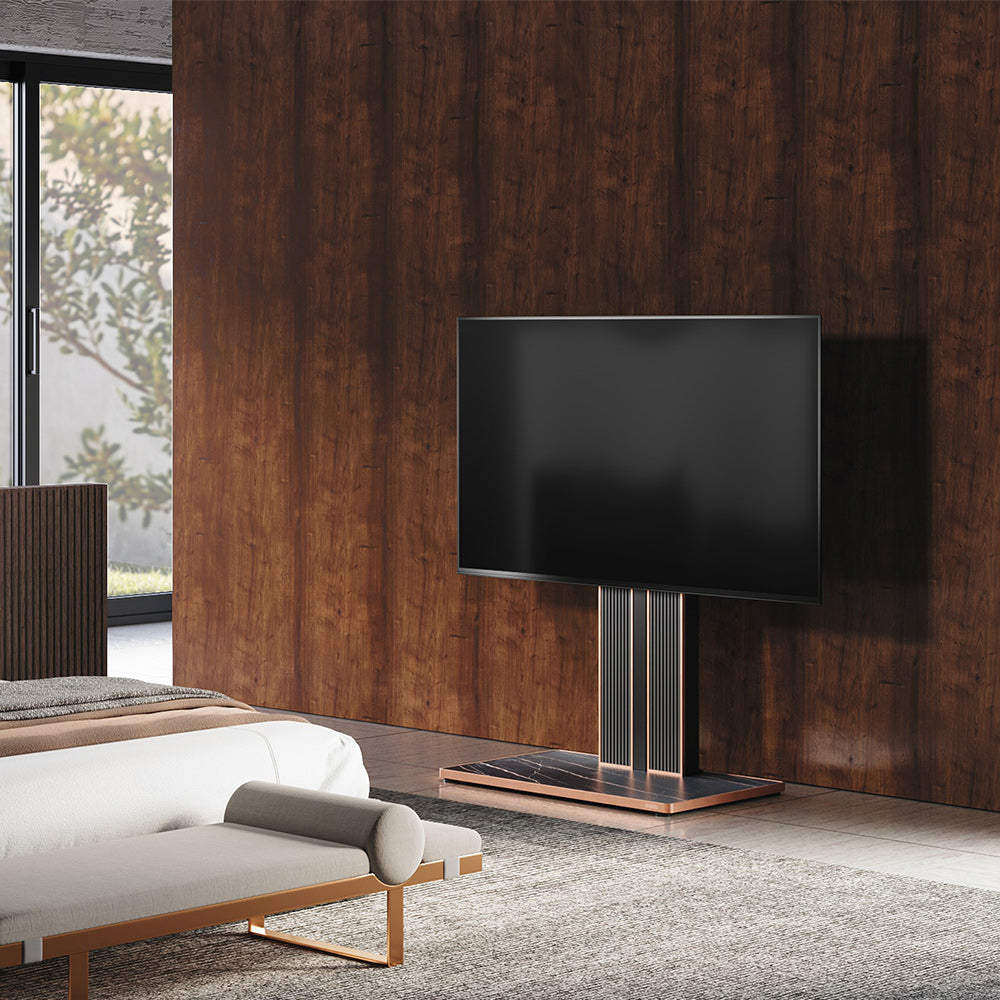
If you are looking for a quick, direct answer to plan your layout, a standard 75-inch TV features a physical horizontal width of approximately 66 inches. If you choose a traditional wooden media console, it must be at least 72 to 80 inches wide to keep the TV's wide factory legs from dangerously overhanging the edges. However, modern vertical TV stand for 75-inch TV configurations completely rewrite these rules. By supporting your display from a centralized, heavy-duty mounting column, these innovative floor, rolling, and easel designs eliminate the need for giant, room-swallowing furniture or destructive wall drilling, offering a sleek, tenant-friendly "floating look" that you can easily set up yourself over a single afternoon.
For high-end renters, design purists, and modern families trying to balance a premium viewing experience with a clean, safe living space, navigating this transition can feel overwhelming. At FITUEYES, we redefine entertainment furniture by designing artistic, ultra-stable alternatives that require zero wall damage. Let's break down the actual math behind large screens, explore modern alternatives to bulky cabinets, and see how easy it is to achieve a perfectly stable, beautiful setup on your own terms.
Cracking the Math: 75-Inch TV Dimensions and Stand Rules
The single biggest mistake you guys make when upgrading their entertainment space is confusing a TV's advertised diagonal size with its actual horizontal footprint. Getting this math wrong can lead to awkward room proportions, blocked walkways, or the frustration of repackaging an incorrect online furniture return.
How Wide Is a 75-Inch TV?
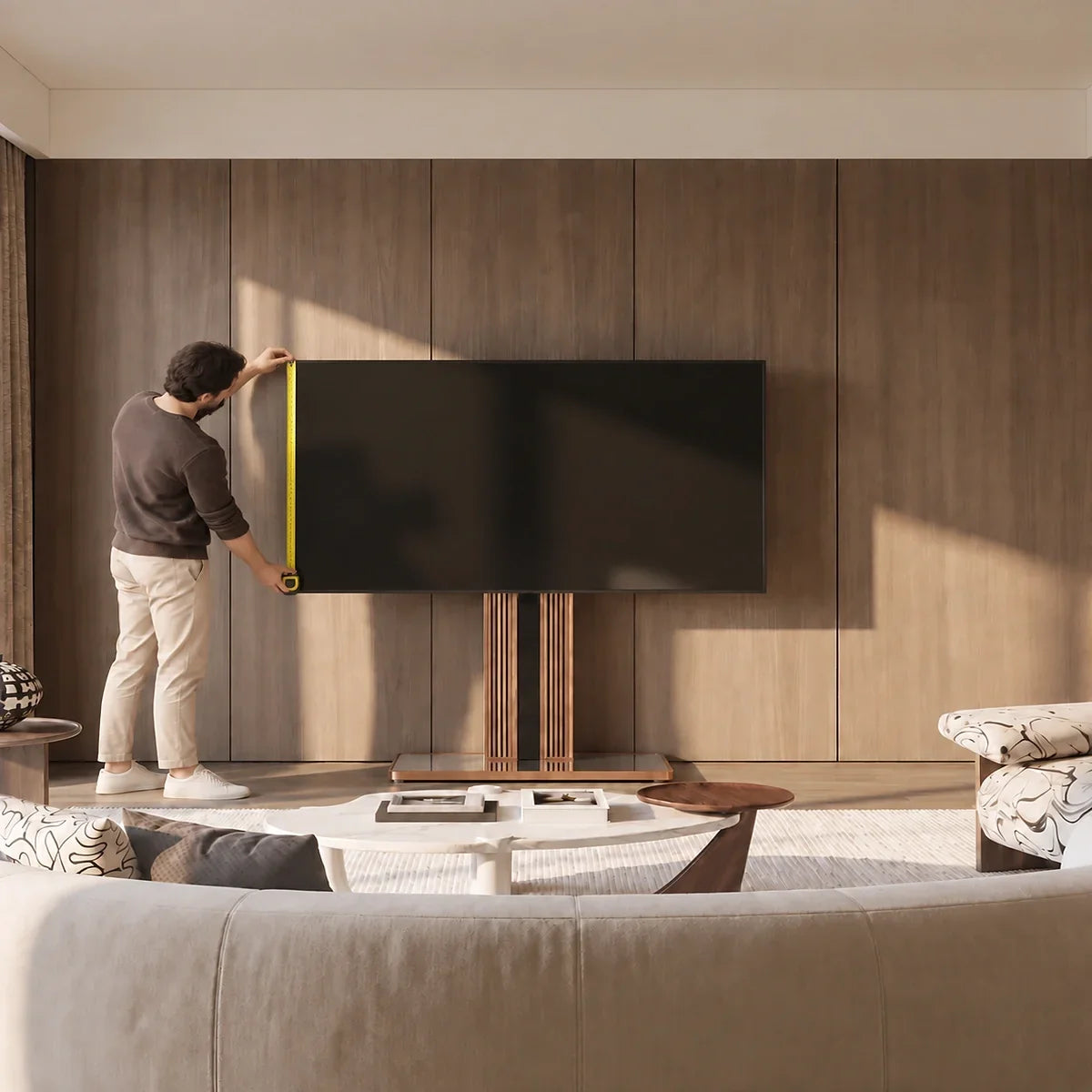
Television sizes are always measured diagonally from one corner of the screen to the opposite corner. Because a modern 75-inch display features a widescreen aspect ratio, its actual horizontal width is roughly 65 to 66 inches (165 to 168 cm).
While the exact measurement can fluctuate by a fraction of an inch depending on the thickness of the manufacturer's outer bezel, using 66 inches as your spatial baseline guarantees you will never be caught off guard by its physical presence in your room.
Recommended Reading: Planning a complete home theater overhaul? Read our comprehensive breakdown on the Dimensions of a 75-Inch TV: Everything You Need to Know to map out your wall and floor layout with absolute precision.
What Size TV Stand for 75-Inch TV Do You Need?
If your heart is set on a traditional wooden cabinet or low-profile media table, the piece must be significantly wider than the display itself. Placing a 66-inch wide television on a 60-inch console creates a major structural and visual hazard. Not only do the factory-included base legs sit right at the absolute edge of the surface, but the setup also looks top-heavy and crowded. To achieve an aesthetically balanced look with standard furniture, you have to hunt down a massive console that spans 72 to 80 inches.
For apartment dwellers, and space optimizers, introducing a seven-foot block of heavy wood can completely ruin the flow of a room. This is where a vertical 75-inch TV stand changes the game. Because the television mounts directly to a centralized, structural steel column, the physical width of the furniture's base is no longer tied to the width of the screen. You get maximum spatial efficiency without sacrificing structural integrity.

Quick Dimension Comparison: Traditional Consoles vs. Centered Floor TV Stands
| Display Feature | Average 75" TV Specs | Traditional TV Console Requirements | Centered Floor TV Stand Design |
|---|---|---|---|
| Physical Width | ~66 inches (168 cm) | Minimum 72–80 inches wide | Ultra-compact footprint (Reclaims valuable floor space) |
| Weight Range | 55 to 85 lbs (25–39 kg) | Requires massive, heavy furniture | Built with high-grade steel & tempered safety bases |
| VESA Pattern | 400x400 mm to 600x400 mm | Relies entirely on wide factory legs | Universal adjustable steel bracket integrated into the column |
Finding Your Match: Choosing the Best TV Stand for 75-Inch TV Setups
Modern interior design is all about adaptability. Your furniture should match your life, your rental agreements, and your personal style. By moving away from rigid, old-fashioned cabinets, you open the door to three distinct design archetypes engineered specifically for large screens.
Minimalist Floor TV Stands for Space Optimizers and Renters
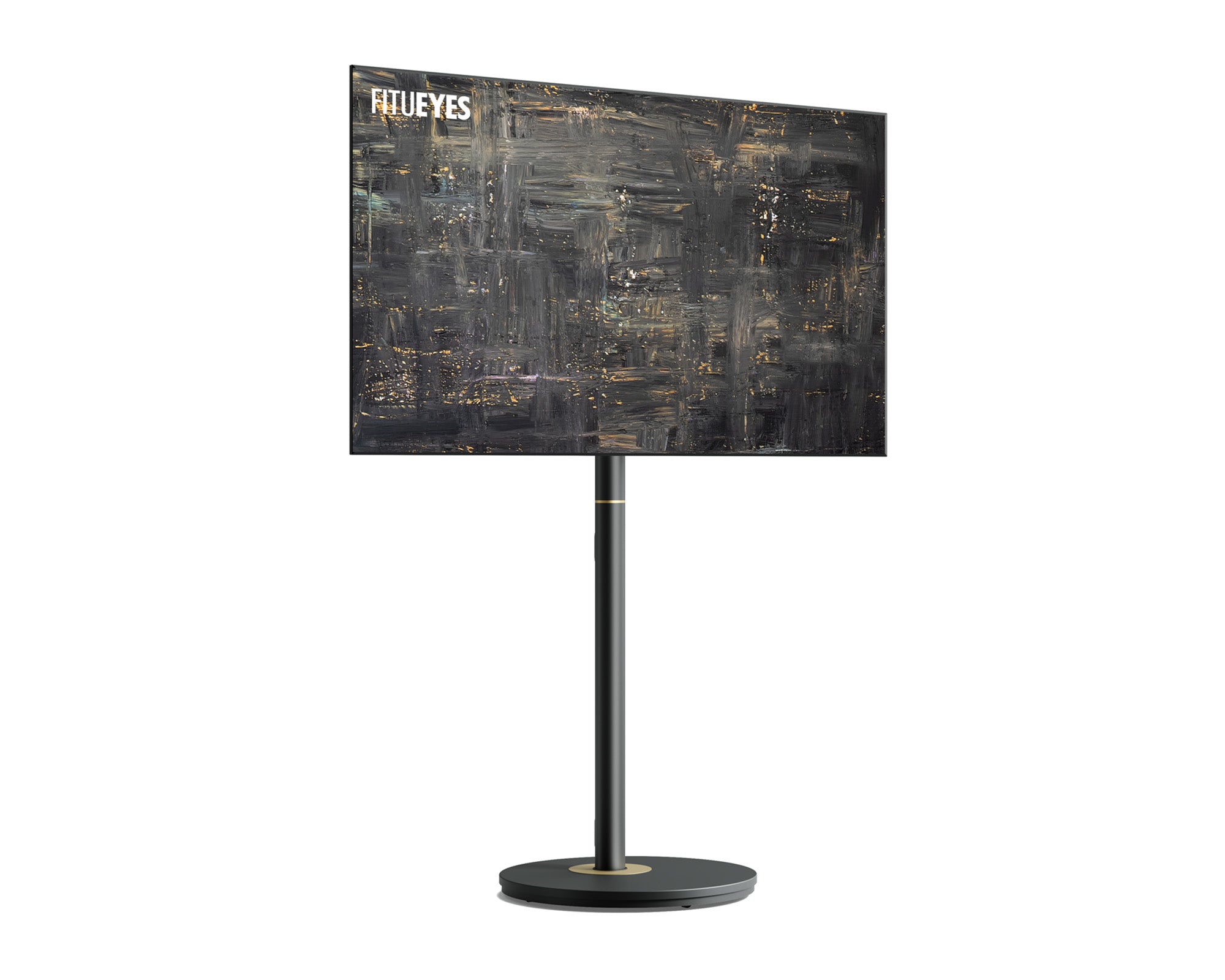
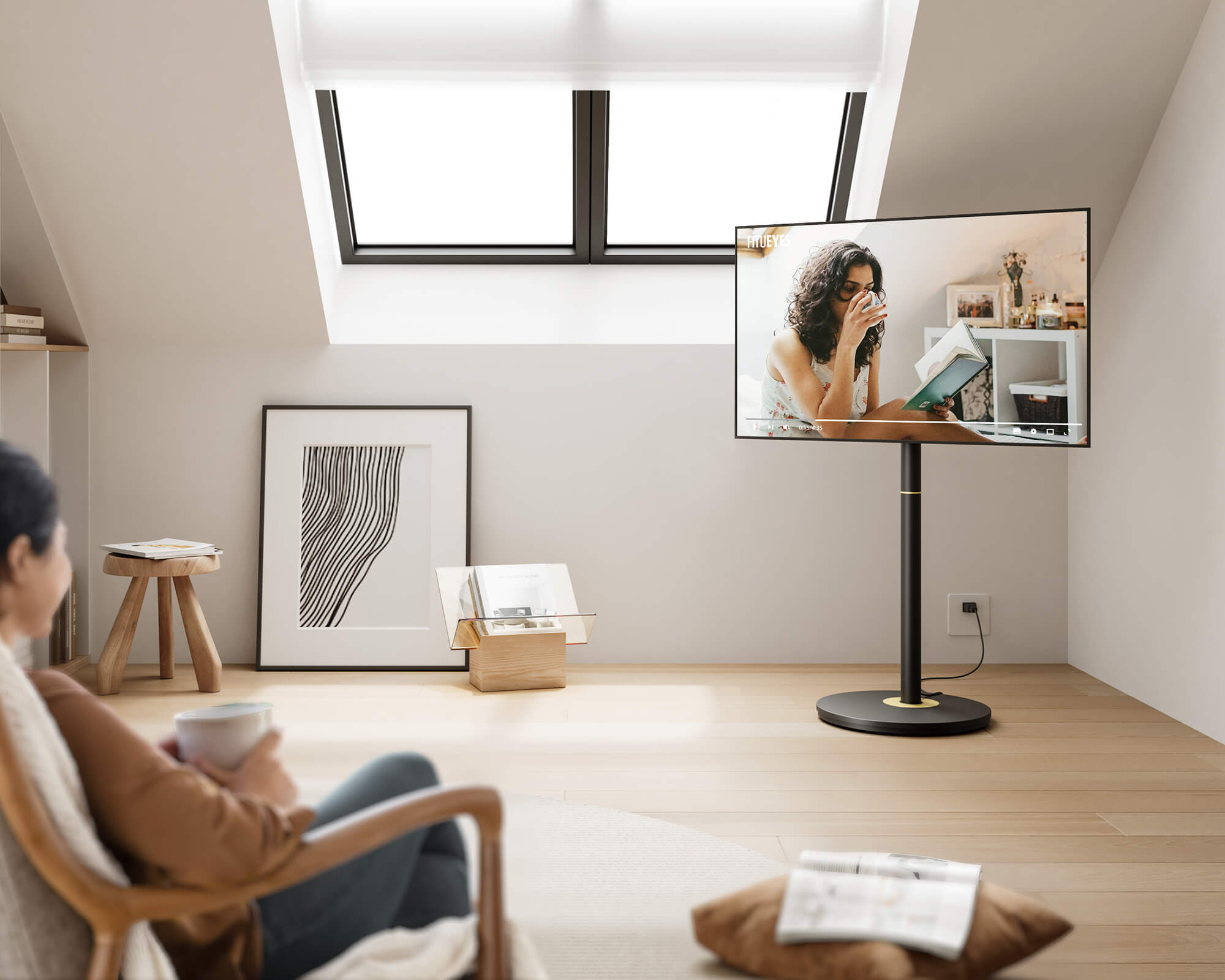
If you love the streamlined, high-end aesthetic of a wall-mounted display but cannot or do not want to drill into your walls, a specialized no drill TV stand is an elegant compromise. These designs utilize a heavy, low-profile base mated to a slender vertical column.
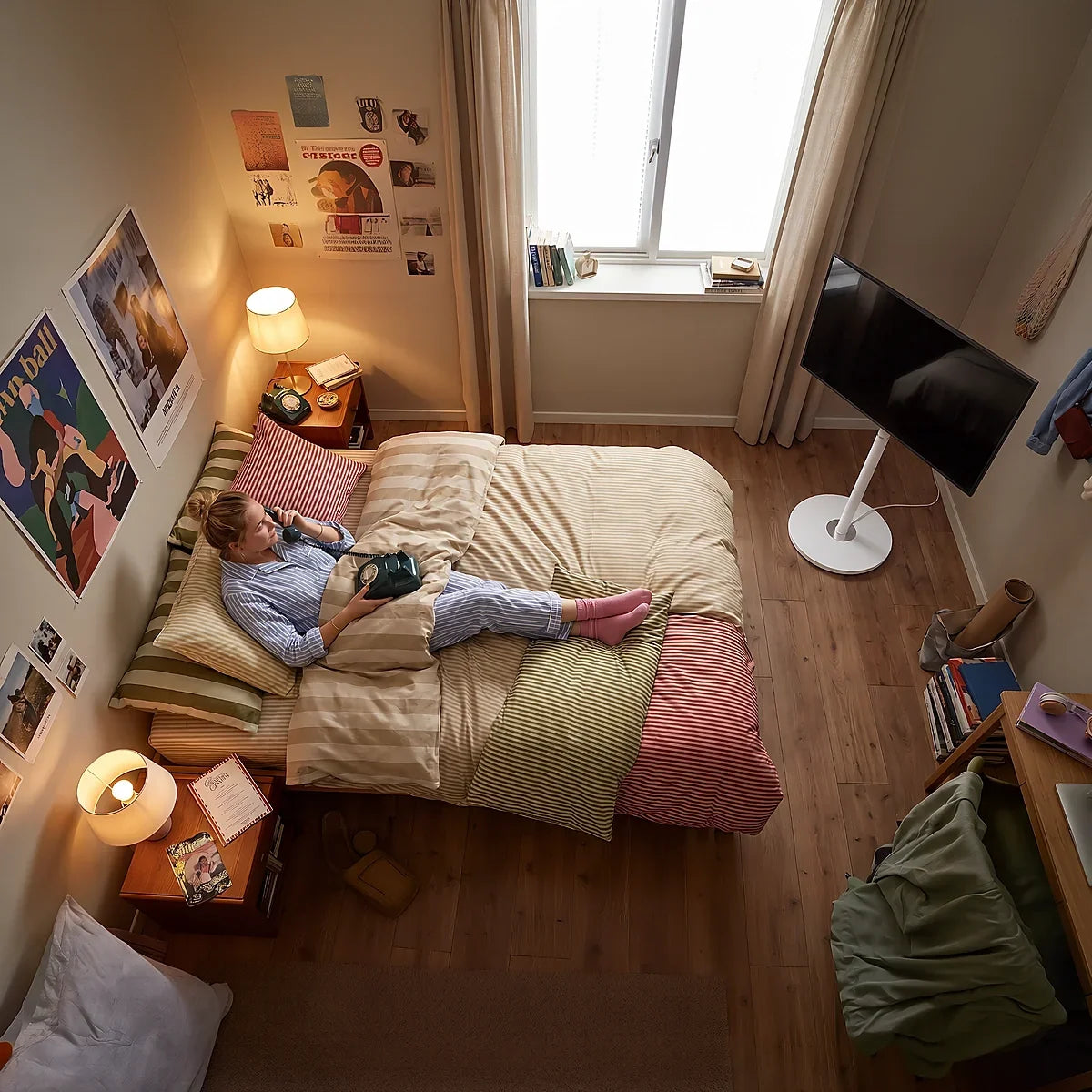
The beauty of this engineering lies in its footprint: the base can easily slide beneath low-clearing sofas, accent tables, or existing decor, allowing your 75-inch screen to hug the wall closely. It gives smaller rooms an open, airy feeling while keeping the television anchored with absolute stability.
Explore the FITUEYES Master Series Floor Stand Collection to find a ultra-slim foundation that reclaims your living room footprint.

Mobile Rolling TV Stands for Flexible Living and Remote Work
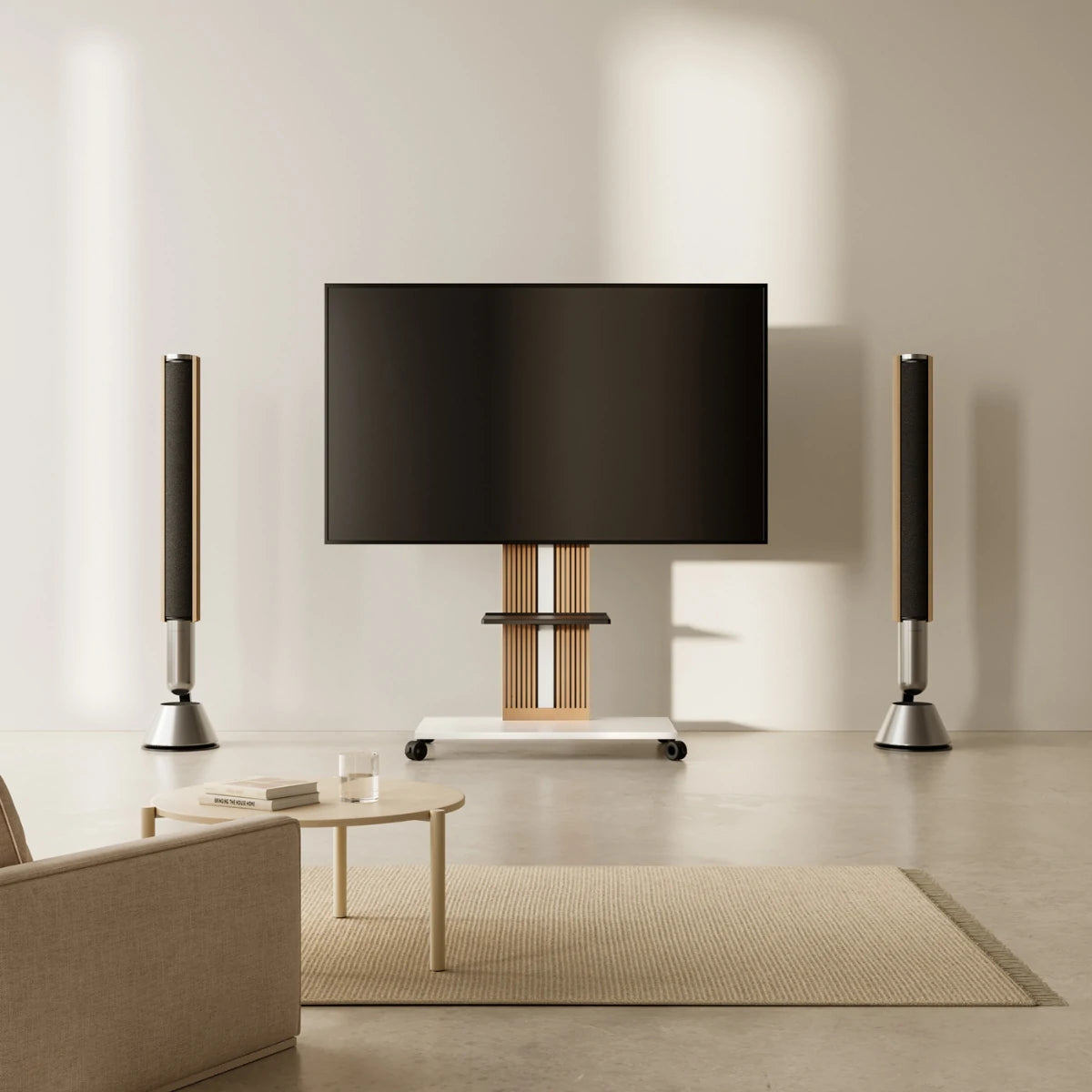
For remote workers, open-concept home layouts, or individuals who transform their living spaces for temporary work presentations, a static screen can feel restrictive. A premium rolling TV stand with wheels introduces fluid mobility to your home theater.
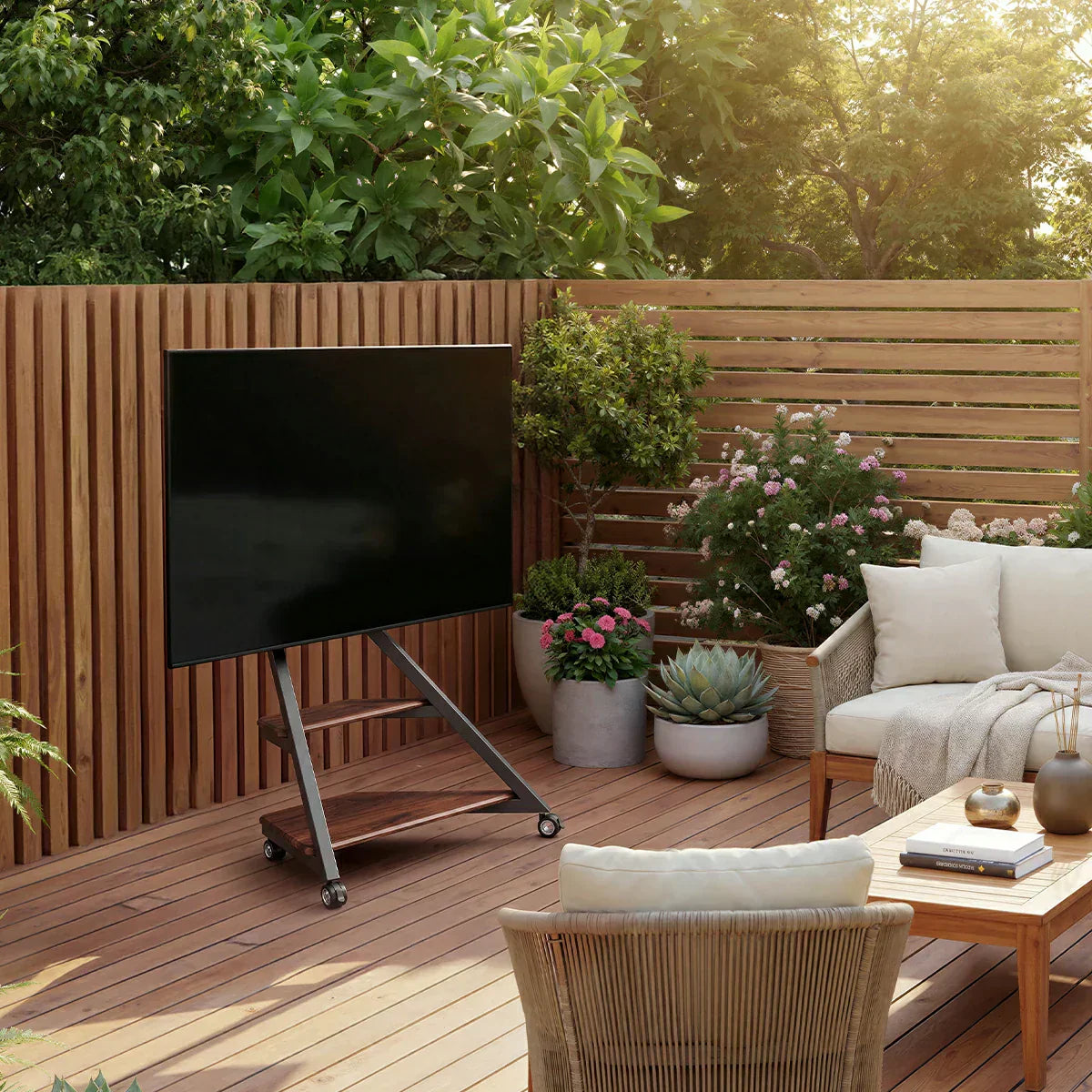
Featuring heavy-duty, smooth-gliding locking casters, these stands let you effortlessly roll your 75-inch display from the main living room couch to a home office corner or even an outdoor patio space for an evening gathering. Once in position, the wheels lock securely, ensuring your investment stays perfectly in place.
Discover how the FITUEYES Mobile TV Stand Series brings dynamic, effortless movement to your home or office layout.
Artistic Easel Stands for Home Aesthetics Pursuers
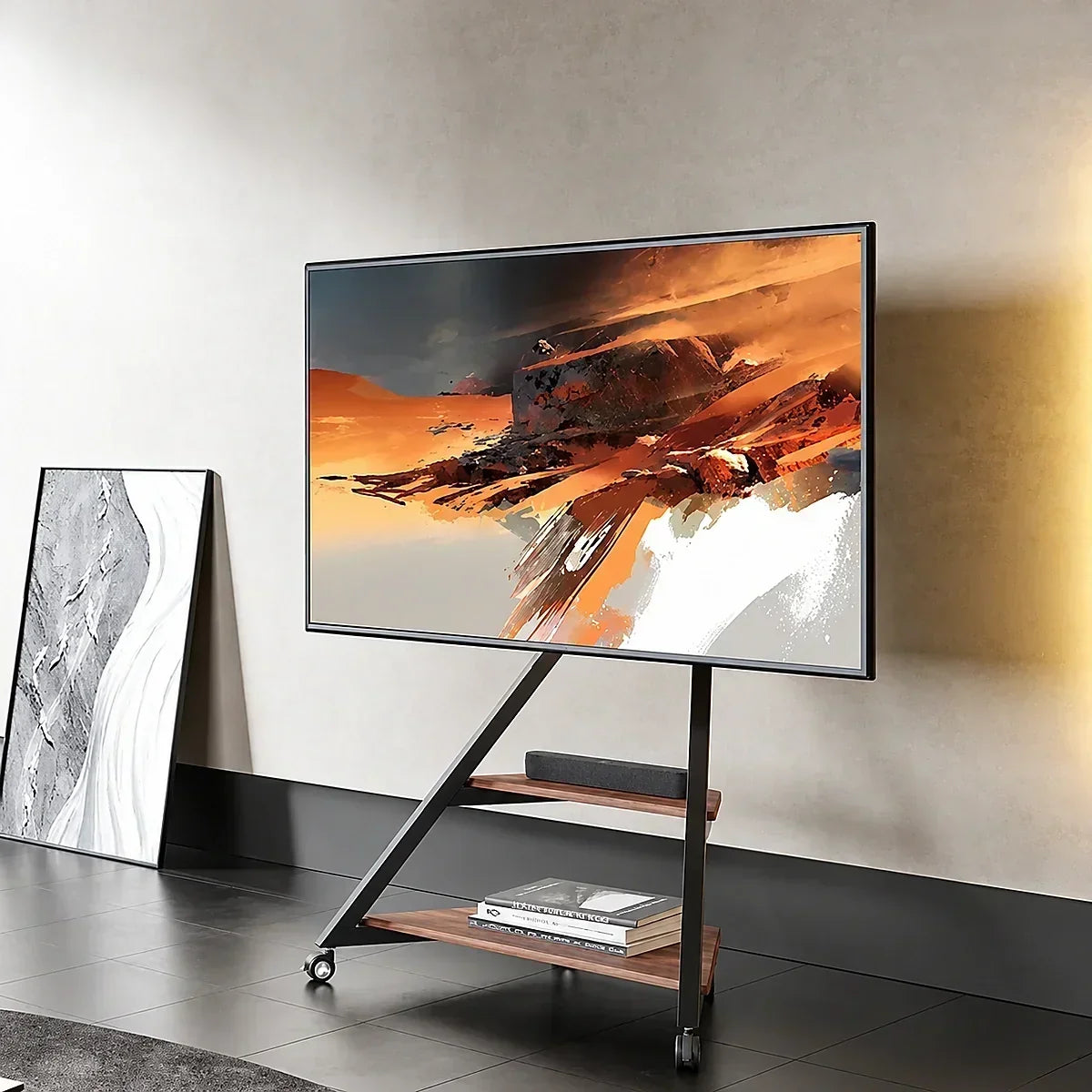
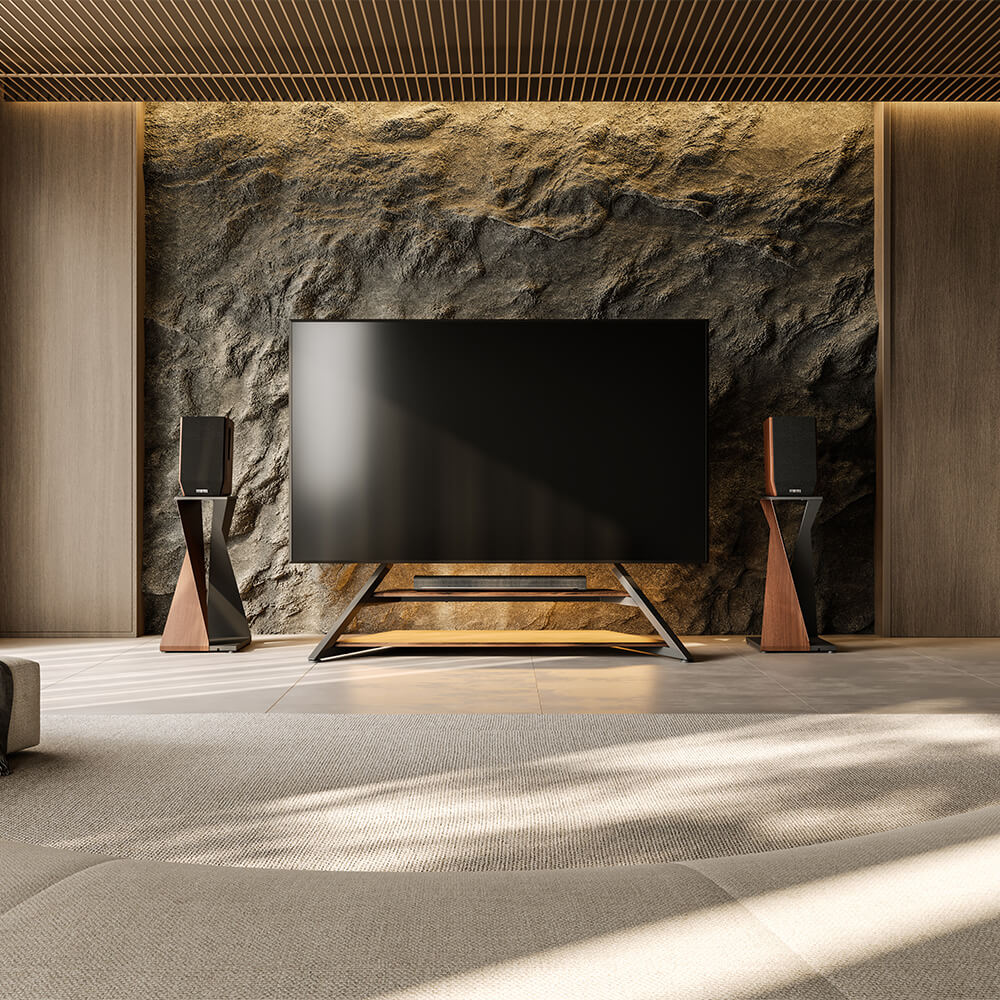
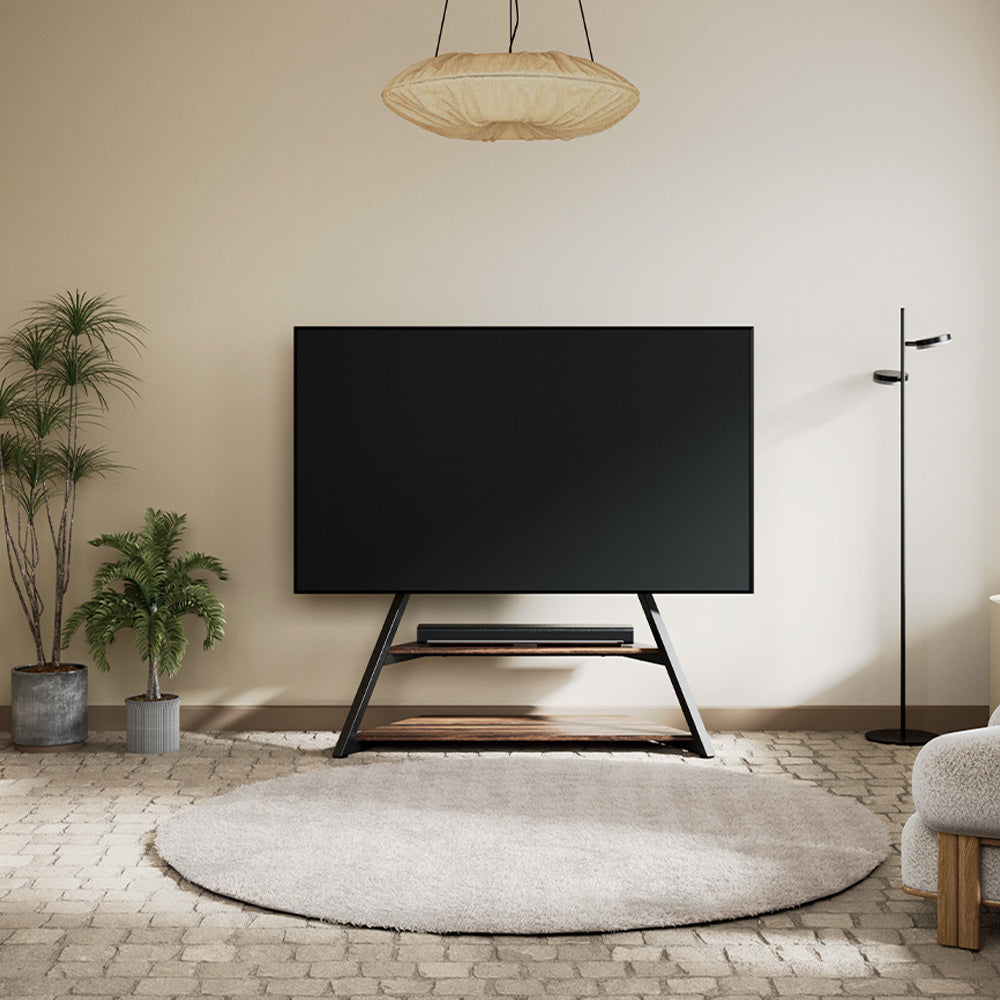
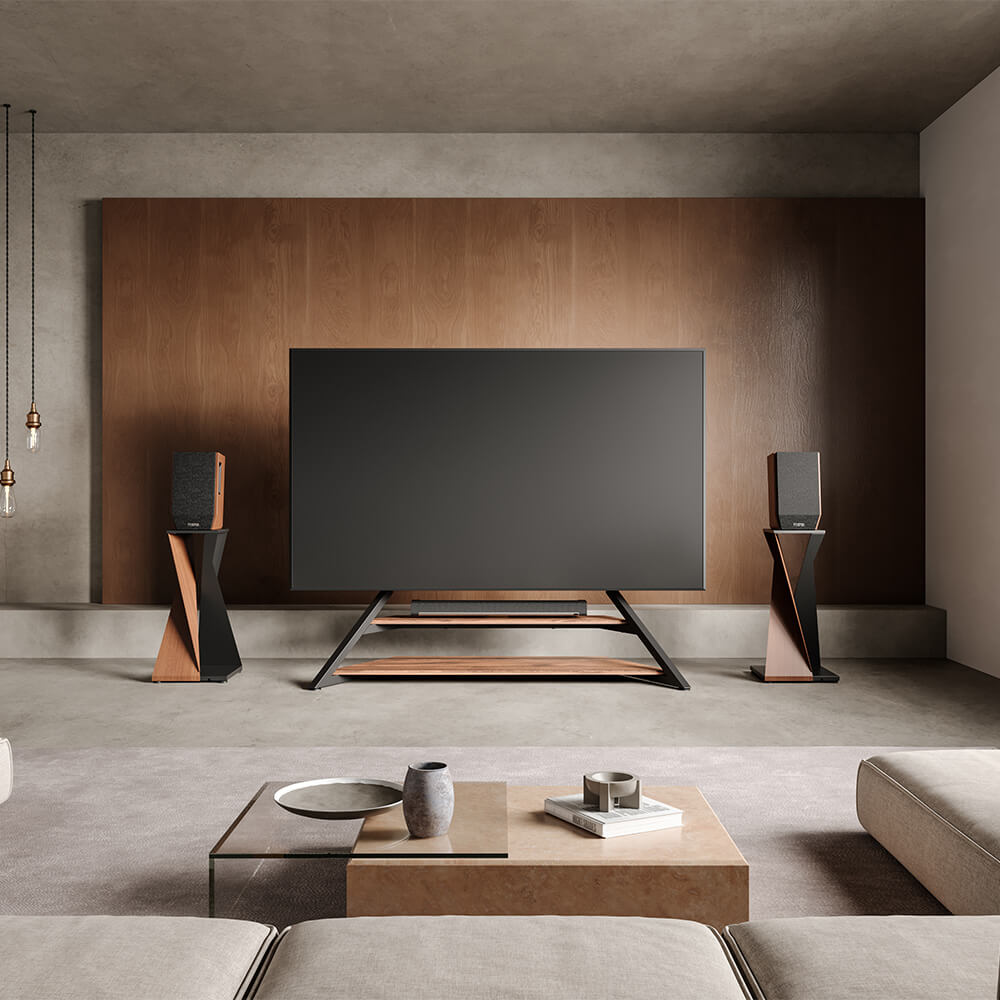
For design-sensitive consumers who view their living space as a curated sanctuary, standard metal brackets can feel cold and industrial. An artistic easel or tripod-style frame completely redefines entertainment furniture by turning a massive television into a gallery-worthy centerpiece. Blending seamlessly with Scandinavian, mid-century modern, or industrial-loft decor, these stands use solid wood accents and architectural geometry to make your display look like a deliberate piece of structural art.
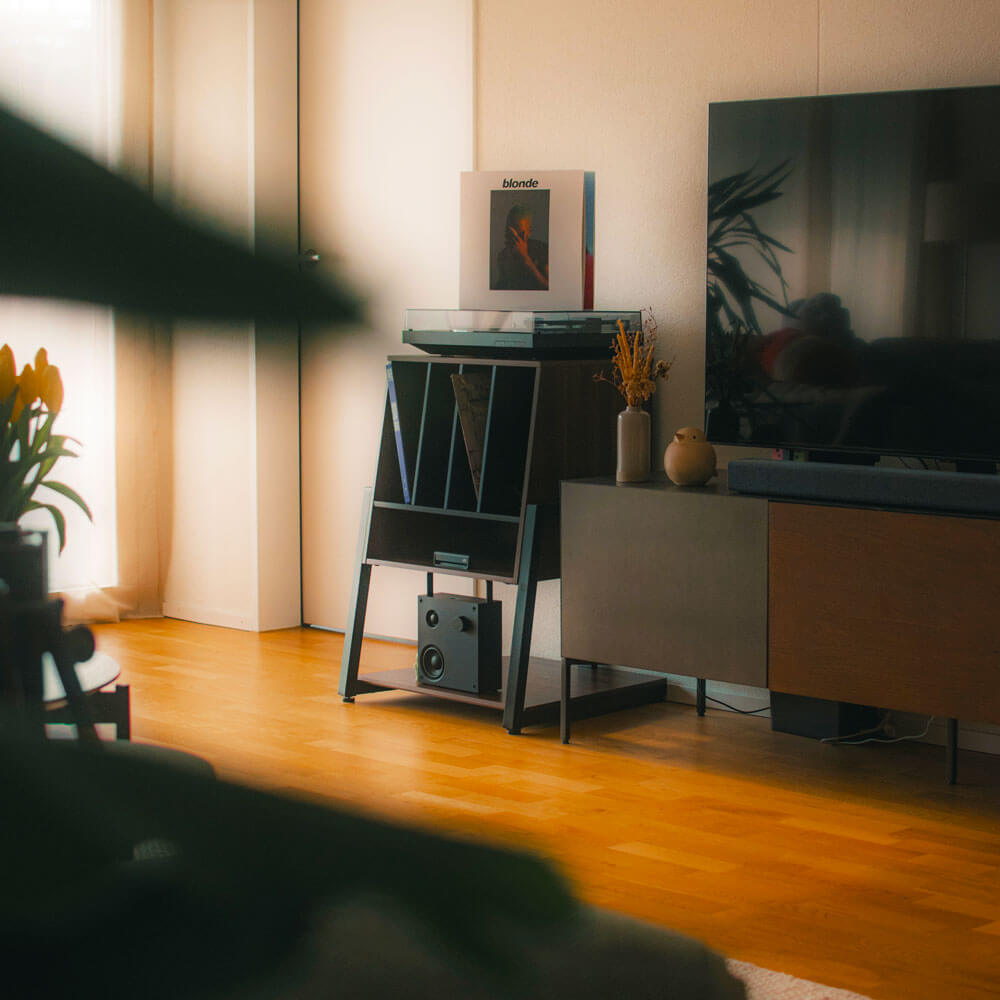
A Quick Tip on Equipment Ventilation: For audio-visual enthusiasts and gamers, these open-structure vertical stands offer a massive performance benefit: unrestricted airflow. Tucking a high-performance gaming console or an AV receiver inside a closed wooden cabinet traps heat, which can degrade your hardware over time. An open shelf system ensures your gear stays perfectly cool during intensive use.
Check out the iconic FITUEYES Eiffel Series to turn your large display into a Parisian-inspired artistic masterpiece with integrated device shelving.
Safe and Simple: The DIY Setup and Stability Expectations
One of the biggest hurdles that keeps people from choosing a premium vertical stand is installation anxiety. It is completely natural to look at an 80-pound piece of glass and technology and think, "Am I actually qualified to assemble this safely, or do I need to pay a professional installer?"
The truth is, FITUEYES consumer-focused stands are explicitly engineered to eliminate this friction. They are built from the ground up for straightforward, tool-friendly DIY installation by everyday home users. You do not need background experience in carpentry or a truck full of specialized equipment to achieve a magazine-worthy setup.
Eliminating Installation Anxiety with Built-In Support
When you unbox a well-designed 75-inch TV stand, the journey from parts to a completed setup is surprisingly intuitive:
- Pre-Sorted Hardware: Instead of facing a chaotic bag of mixed screws and washers, components are separated into clearly labeled blister packs that match the step-by-step visual manual exactly.
- Simple Frame Assembly: Using basic hand tools that come right in the package, you simply connect the heavy-duty base plate to the central structural column.
- Attaching the VESA Faceplate: You secure two vertical brackets directly to the factory-made mounting holes already located on the back of your television.
- The Final Lift: While assembling the stand itself is a comfortable one-person job, lifting a 66-inch wide television onto the central column is a brief, two-person task purely due to the physical size of the display. Once lifted, the brackets drop securely onto the column with a reassuring lock.
If you ever find yourself staring at the back of your display wondering which bolt thread matches your specific brand, or if you need clarity on leveling the display, you are never left to figure it out alone. Our responsive online customer support team is always available to provide real-time guidance, setup troubleshooting, and instant peace of mind.
Engineered Stability for Kids and Pets
For middle-to-high-income families, home safety is a non-negotiable priority. A large, heavy television can pose a real tipping hazard if it relies on flimsy plastic legs or an unweighted table. High-quality heavy-duty TV stand designs counteract this by utilizing a low center of gravity, dense solid wood or tempered safety glass foundations, and heavy-gauge structural steel pillars. These systems are rigorously balanced to absorb accidental bumps from running pets or busy children, keeping your screen secure and your family safe.
FAQs: Quick Solutions for Large Screens
How High Should a 75-Inch TV Be Mounted?
To avoid neck fatigue and eye strain during long movie marathons, the center of your television screen should align naturally with your eye level when you are seated on your couch. For the vast majority of standard household sofas, finding how high should a 75-inch TV be mounted comes down to an eye-level sweet spot of roughly 42 to 48 inches from the floor to the absolute center of the screen. FITUEYES vertical floor stands solve this perfectly by offering built-in height adjustments, letting you dial in the exact ergonomics of your room without any guesswork.
How Far Should You Sit from a 75-Inch TV?
To enjoy maximum visual immersion without straining your eyes or noticing individual pixels, the ideal distance for how far should you sit from a 75-inch TV is between 7.5 and 10.5 feet (2.3 to 3.2 meters). If your room is slightly compact, opting for a streamlined corner TV stand for 75 inch TV configuration allows you to slide the frame deep into the corner of the room, maximizing your sitting distance and reclaiming precious floor area.
Do I Need a Professional to Install a Large TV Stand?
No, you do not. A premium vertical stand completely removes the need for professional installation services or structural wall modifications. Because the stand balances the television completely independently on its own weighted foundation, there is no risk of damaging drywall or missing a wall stud. The instructions use clear, step-by-step visual illustrations rather than confusing technical jargon, allowing a single household user to comfortably finish the project over a relaxed afternoon.
The Ultimate Buyer's Checklist for Your 75-Inch Setup
Before you finalize your home entertainment upgrade, use this practical checklist to ensure complete safety, performance, and style:
- [ ] Confirm VESA Patterns: Check your television's user manual to ensure its rear mounting holes match standard ranges (most 75-inch displays use a 400x400 mm or 600x400 mm pattern, which modern universal brackets support out of the box).
- [ ] Ensure Device Airflow: High-performance gaming consoles, media boxes, and audio receivers generate significant heat. Always choose a stand that offers open-air shelving to prevent your expensive electronics from overheating.
- [ ] Utilize Integrated Cable Management: Look for a central column featuring internal routing paths or rear clips. Tucking your power cords and HDMI cables completely out of sight keeps the room looking pristine and protects wires from curious pets.
- [ ] Check for Ergonomic Articulation: If your room features multiple seating angles or receives direct sunlight from a nearby window during the day, prioritize a stand that offers smooth swivel capabilities so you can easily eliminate distracting glare.
By stepping away from massive, outdated media cabinets and permanent wall drilling, you open your home to a world of flexible, beautiful, and incredibly safe design. Setting up your ideal view is entirely within your reach.
Ready to transform your living space into the ultimate home theater? Head over to the FITUEYES Design TV stand Collection today to find a safe, rock-solid, and beautifully styled foundation for your 75-inch screen. Remember, whether you need a bit of guidance during your easy DIY setup or have any other questions along the way, our friendly support team always has your back—with a guaranteed response within 2 business days at the very latest!