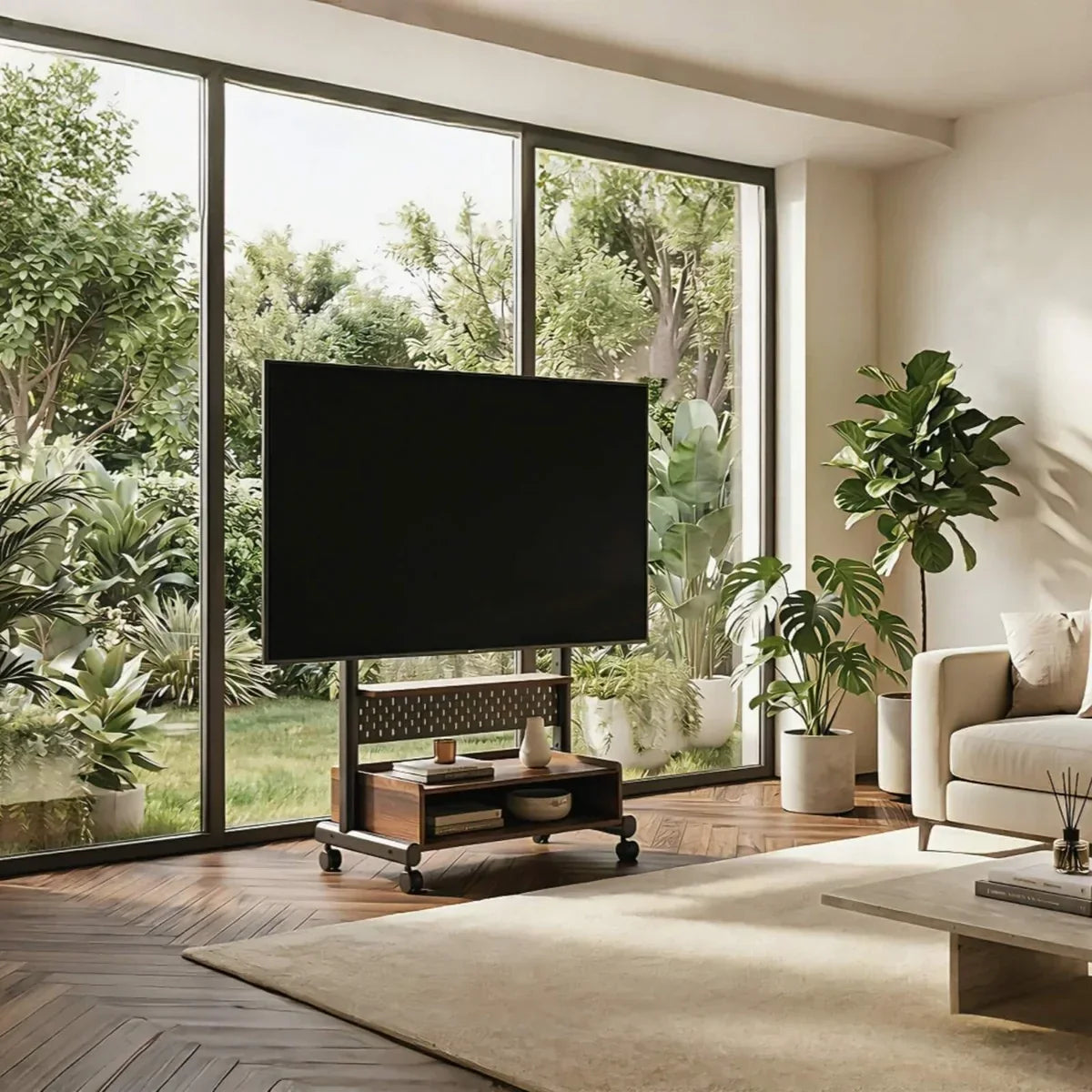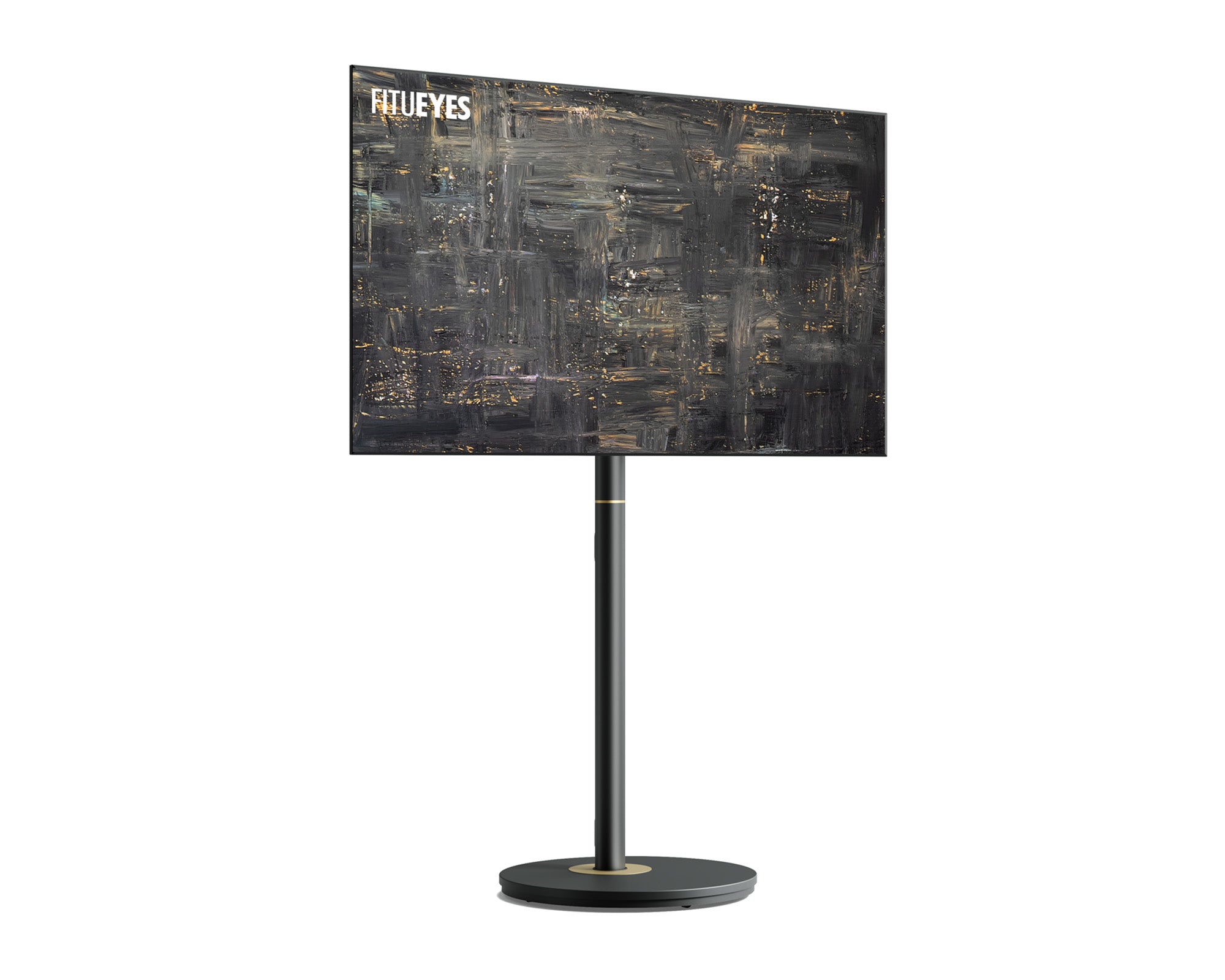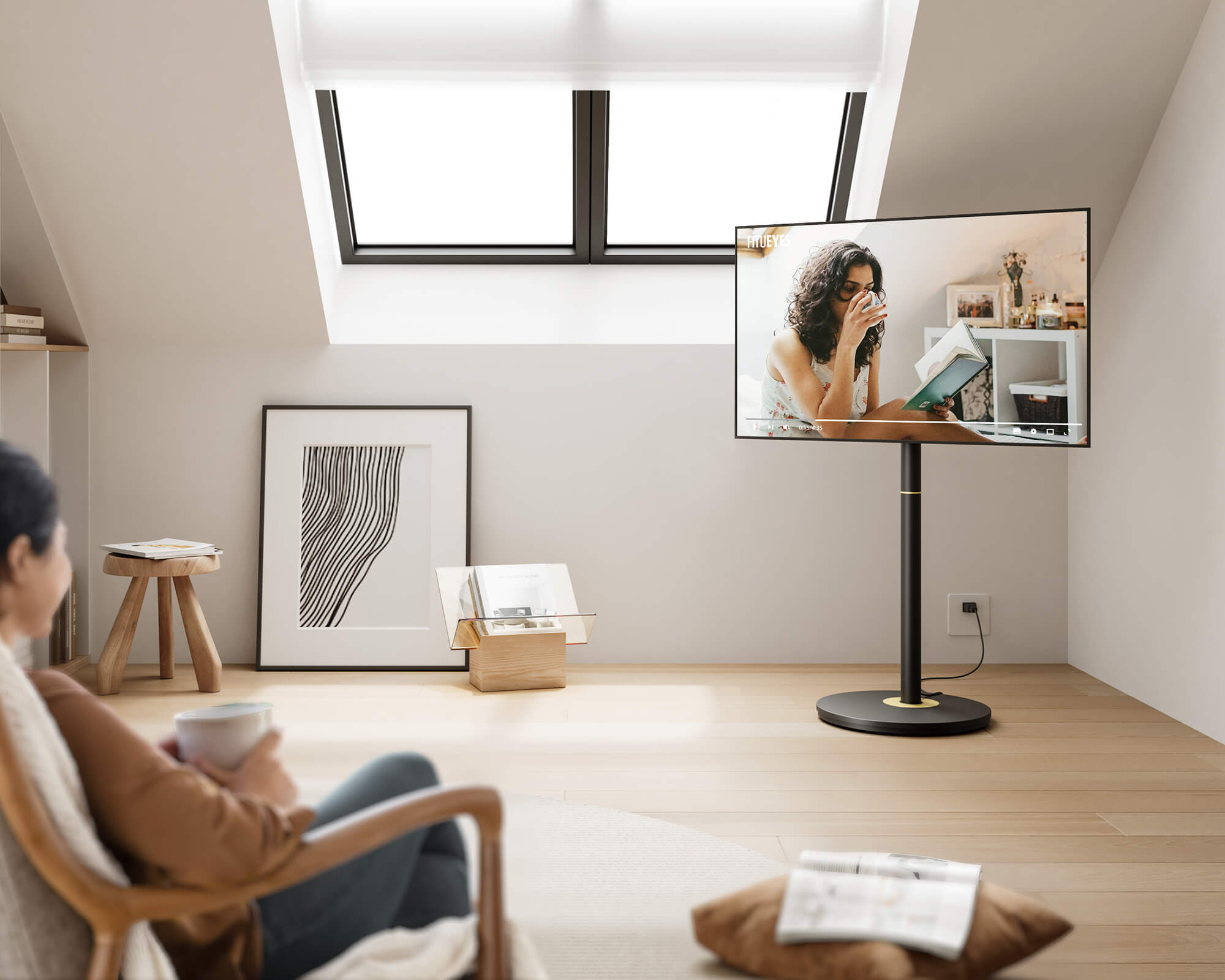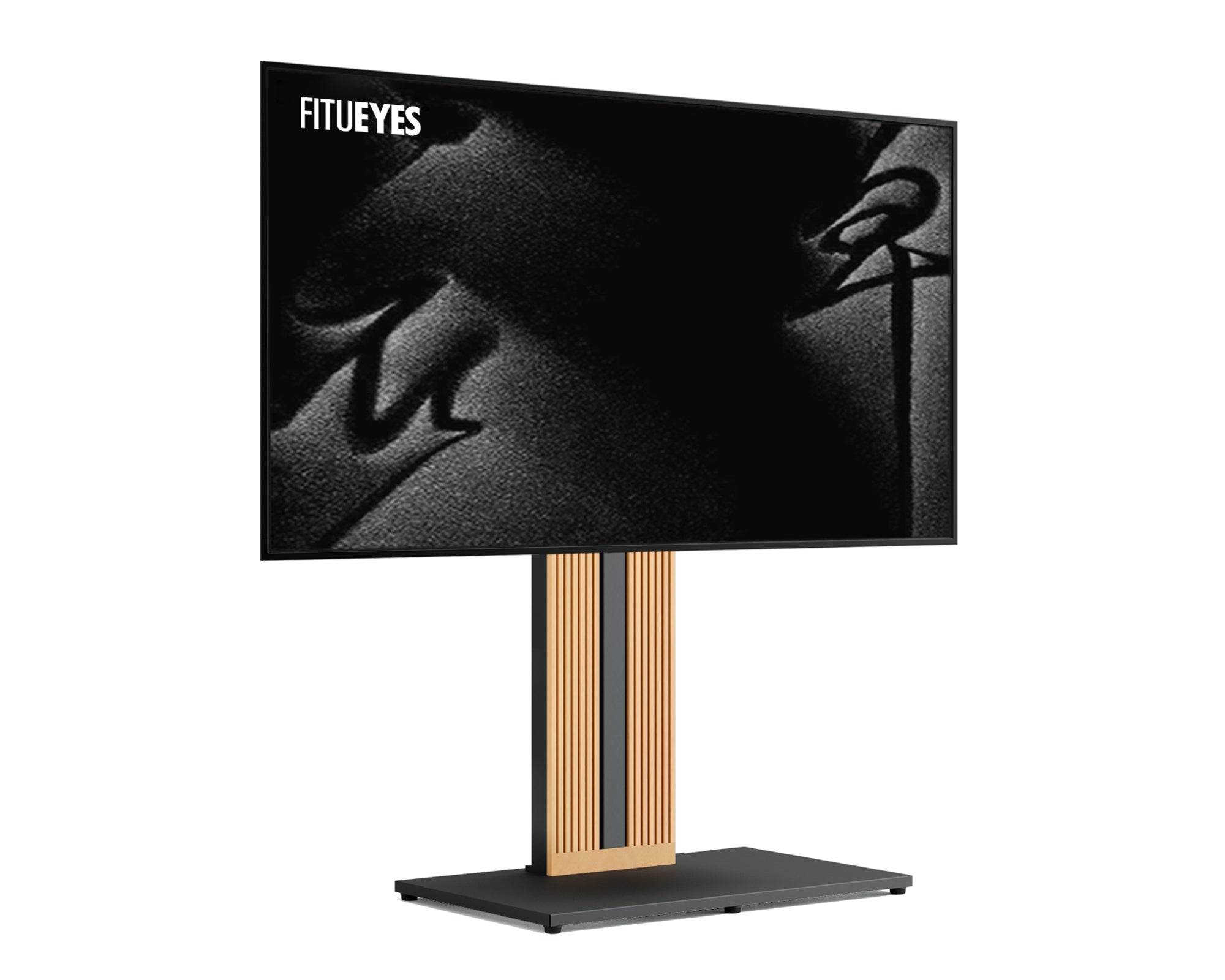



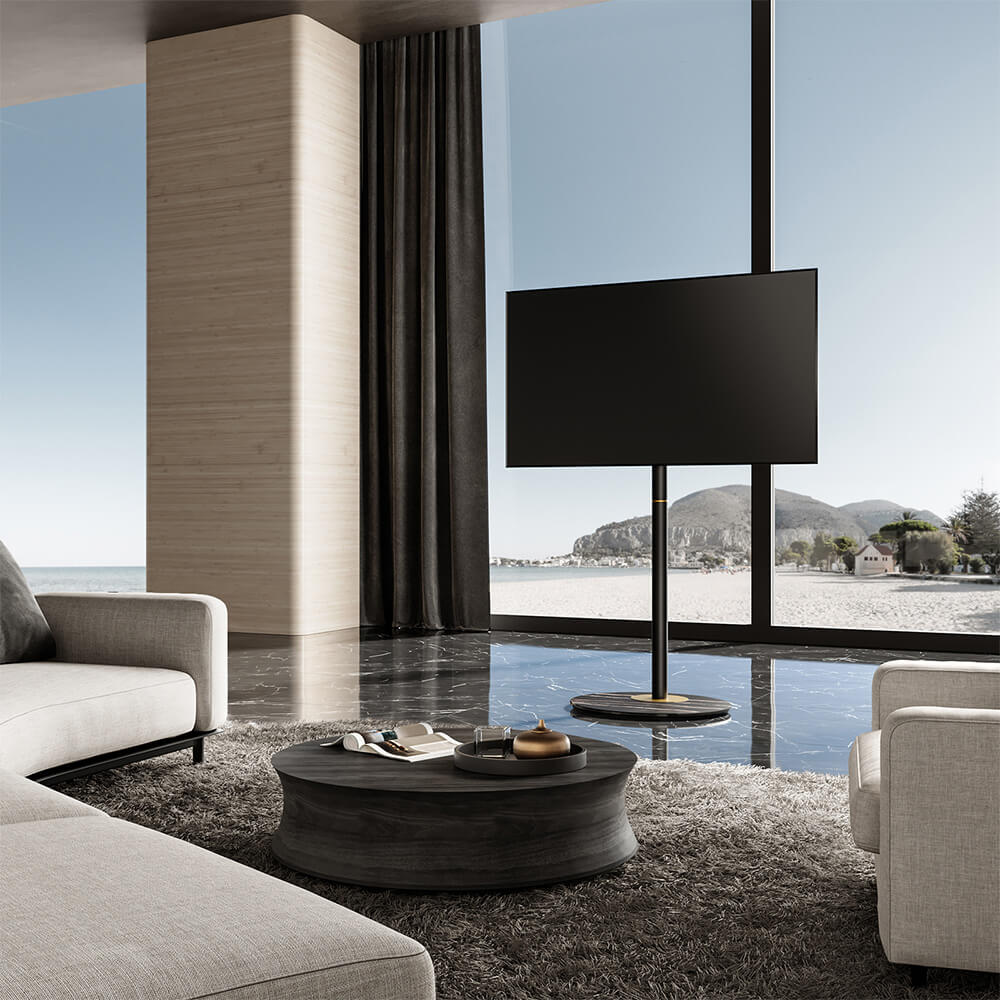
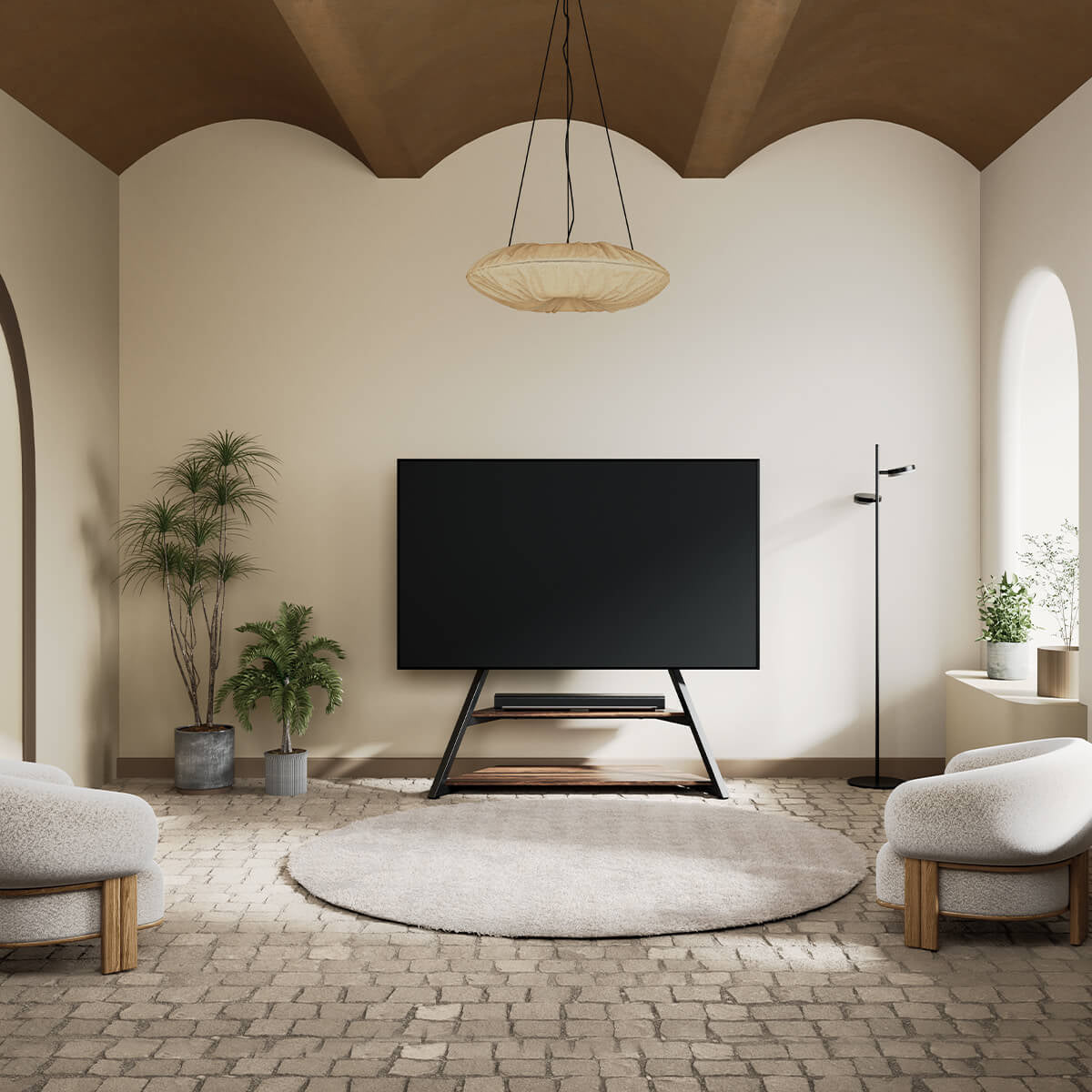
Large screens are getting bigger and heavier every year, making stability more important than ever.If you’re trying to choose a heavy-duty Rolling TV Stand for a large screen, you’re probably running into the same frustrations most people face: too many similar-looking options, unclear weight limits, confusing VESA terms, and real concerns about wobbling or tipping once the TV is mounted. The truth is, not every TV stand with wheels is built to safely support a 65–98 inch display—so if you’re unsure how to pick the right one, you’re not alone.
This guide gives you a simple, practical way to decide. You’ll learn which features actually matter for stability, how to confirm compatibility with your TV, what mistakes to avoid, and the step-by-step process professionals use to choose the right heavy-duty TV stand. By the end, you’ll know exactly what to look for and feel confident choosing a Rolling TV Stand that’s safe, sturdy, and easy to use.
Why Choosing The Right Rolling TV Stand Matters For Large Screens?
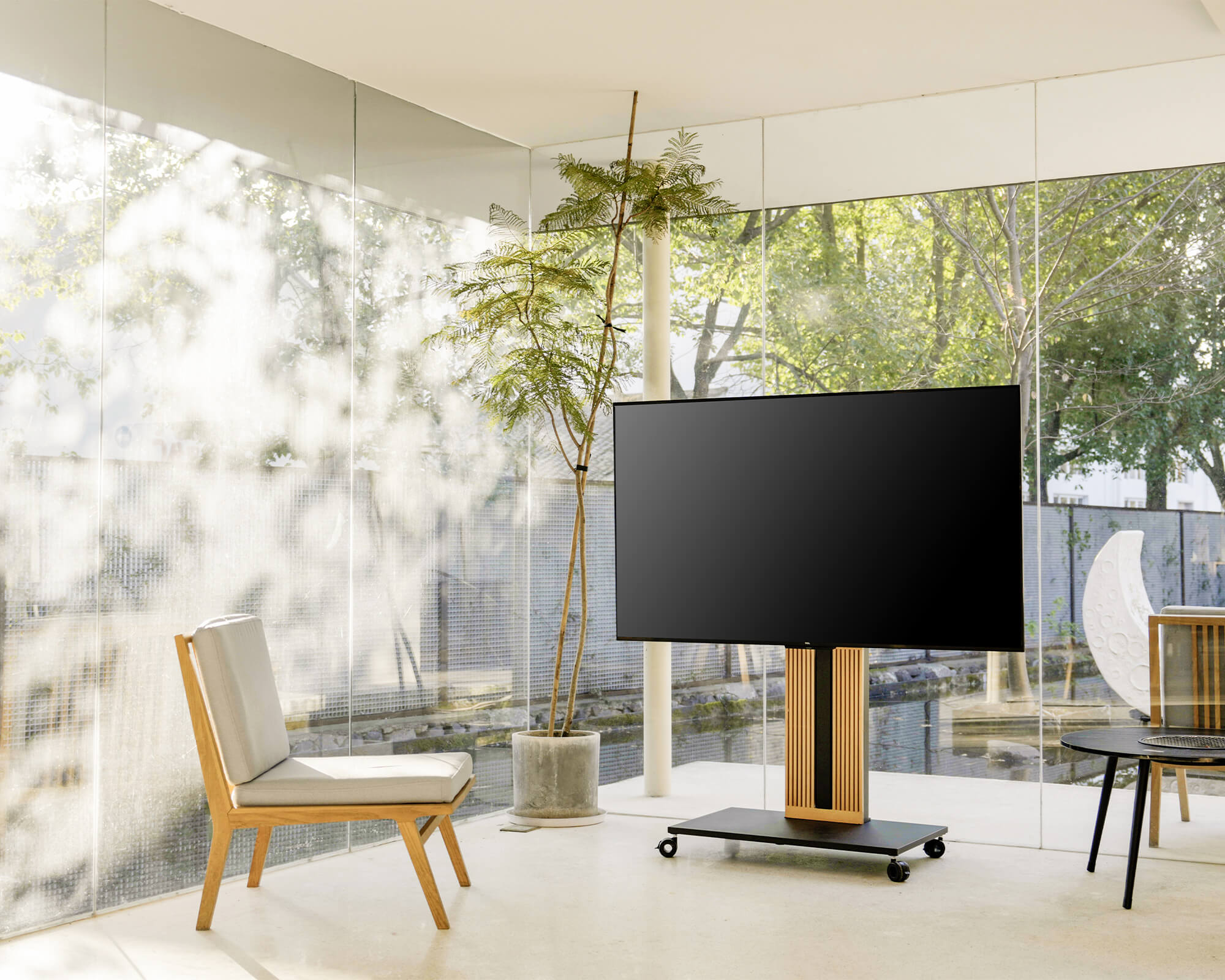
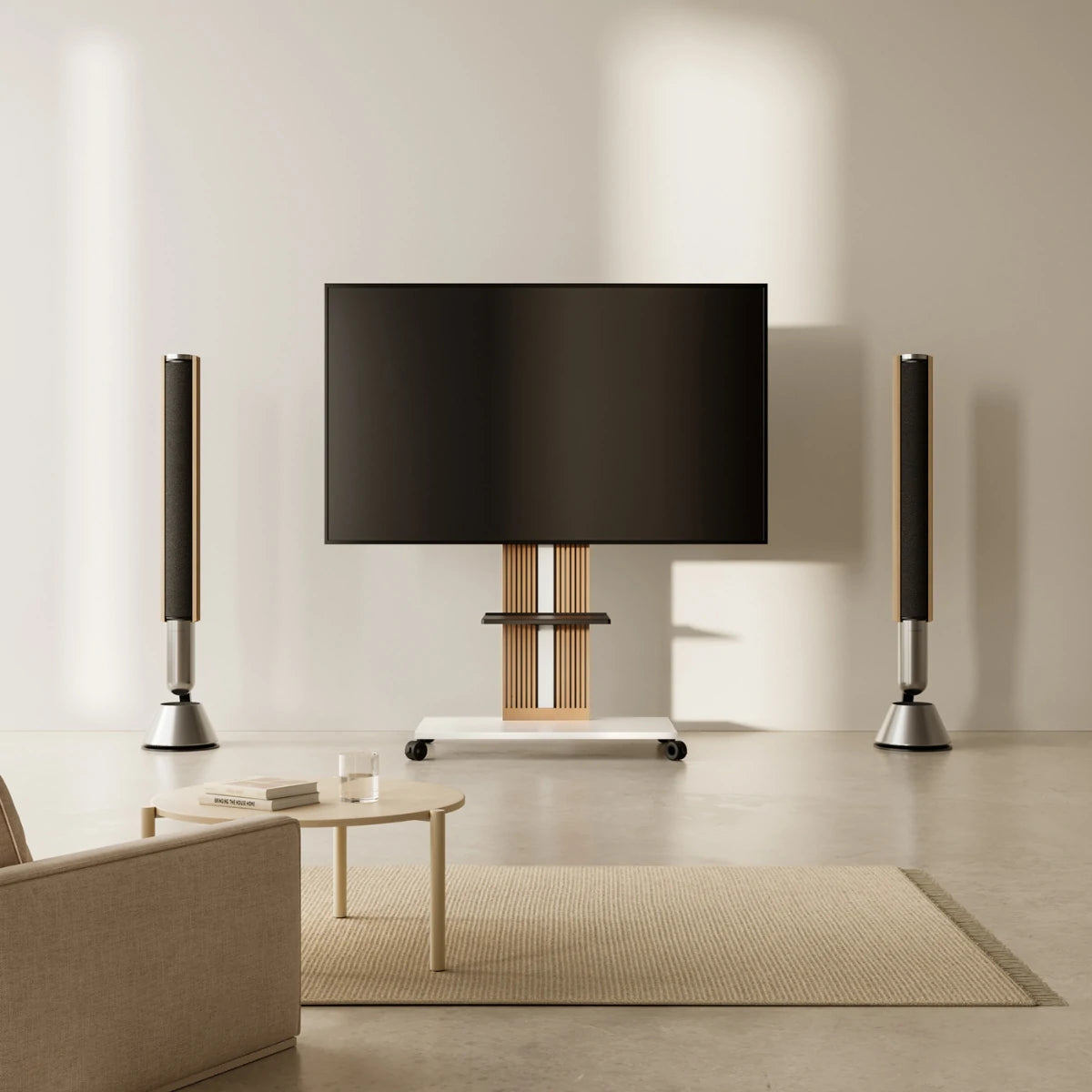
A Rolling TV Stand is more than a piece of furniture—it’s a support system for a large, heavy, and often expensive display. Making the wrong choice can affect safety, usability, and long-term reliability.
This is why brands such as FITUEYES, known for modern display solutions, put extra emphasis on real-world stability engineering to prevent wobble and tipping. Here are what people want when making a purchase.
-
Smooth mobility without losing stability
-
A structure that truly supports oversized screens
-
A safe stand that protects their investment
-
Clear guidance to avoid buying the wrong model
- A clean, modern TV stand with wheels that fits their interior
If you want additional guidance on choosing a mobile display solution, you may also enjoy our related guide: 6 Tips for Choosing the Best Mobile TV Stand for Your Flat-Screen TV. It offers practical insights that complement this article and help you compare different rolling and mobile stand styles.

Identify Your Real Needs Before Choosing A Rolling TV Stand
Understanding how you plan to use the stand is the most important part of the decision-making process.
Decide How Often You’ll Move Your TV
Your movement habits determine the level of durability you need.
If you move your TV daily (offices, studios, classrooms):
-
Choose 3–5 inch industrial casters
-
Look for dual steel columns
-
Prioritize reinforced steel construction
If you rarely move the TV:
-
Prioritize a wider base
-
Choose a stand with clean cable management
-
Consider aesthetic design
Measure Your Pathways And Room Layout
This prevents compatibility issues later.
Steps:
-
Measure doorways and hallways.
-
Compare these to the stand’s base width.
-
Check your flooring type (tile, hardwood, carpet).
-
Choose casters that match your floor surface.
Think About The Devices You Need To Store
If you use consoles, webcams, or soundbars, choose a stand with:
-
Strong metal shelves
-
Cable routing channels
-
Accessory mounts
Brands with detail-oriented design (such as FITUEYES) often integrate wide cable channels to keep setups clean

The Caster wheel needs to be purchased.
Check The Engineering Behind A Heavy-Duty Rolling TV Stand
To handle a 75–98 inch screen safely, the stand must be engineered intentionally—not just enlarged.
Look At Column Design For Sway Reduction
Dual columns help:
-
Reduce wobble
-
Spread weight evenly
-
Maintain rigidity during movement
Choose The Right Base Shape For Stability
Different base designs offer different levels of safety:
-
H-base: Best stability for large TVs
-
T-base: Sleeker but slightly less stable
-
Wide steel bases: Ideal for 75–98 inch screens
Understanding base geometry helps you pick the right structure for your room.
Understand Wheel Quality (Not All Casters Are Equal)
Casters directly determine mobility and floor safety.
Choose:
-
3–5 inch diameter wheels
-
PU or rubber material
-
Strong locking systems
-
Smooth bearings
A well-built mobile TV cart—like those engineered by FITUEYES—uses casters designed for hardwood and tile without leaving marks. It is also suitable for moving on grass and gravel.
Ensure Compatibility With Your TV (More Than Just VESA)
You need to check all three compatibility factors.
Confirm VESA Pattern, Weight Limit, And Screen Size
Confirm:
-
Your TV’s VESA pattern
-
Your TV’s weight
-
The stand’s supported screen size
Check Center-Of-Gravity Alignment
Even if VESA fits, the TV may sit too high or too forward. A slight forward-leaning angle can significantly increase tipping risk when rolling.
Solution:
-
Choose adjustable height designs
-
Look for reinforced upper brackets
Match Viewing Height To Your Usage
Different environments require different ideal heights:
-
Living room: 42–48 inches
-
Meeting room: 52–60 inches
-
Classroom: higher for visibility
A heavy-duty TV stand with a flexible height range is easier to adapt across rooms.

Step-By-Step Guide To Choosing The Best Rolling TV Stand
A practical checklist you can use immediately.
Step 1 — Measure Everything
TV size, VESA pattern, doorway width, floor type.
Step 2 — Identify Movement Frequency
Daily movers need stronger construction.
Step 3 — Choose The Right Support Structure
Look for:
-
Dual columns
-
Wide H-base
-
Thick steel gauge
Step 4 — Check Shelf Capacity And Cable Management
Especially useful for accessories and home theaters.
Step 5 — Review Assembly Requirements
Look for clear diagrams and labeled hardware.
Step 6 — Select A Trusted Brand
Your TV is valuable.
Choosing a brand with proven engineering—such as FITUEYES—helps ensure your stand offers long-term stability and thoughtful design.
FAQs
Q: Can A Rolling TV Stand Hold A 75–98 Inch TV Safely?
Yes, if it includes reinforced steel, dual columns, and a stable base.
Q: Will A TV Stand With Wheels Scratch My Floor?
Not if it uses PU or rubber casters.
Q: What Is The Most Important Feature For Stability?
Base width and column structure.
Q: How Do I Know If My TV Is Compatible?
Match VESA, weight, and screen size to the stand’s specs.
Q: Can I Assemble A Heavy-Duty TV Stand Alone?
It’s possible, but two people are recommended for safety.
Final Thoughts
Finding the best Rolling TV Stand doesn’t have to feel overwhelming. When you identify your real needs, review the stand’s engineering, and make sure it matches your TV and your space, the decision becomes simple. A well-built heavy-duty TV stand keeps your large screen safe, stable, and easy to move—whether at home, in a meeting room, or in a classroom.
Like the FITUEYES, known for the balance of stability engineering and clean modern design, helps make this choice easier by focusing on practical details that matter for use.