



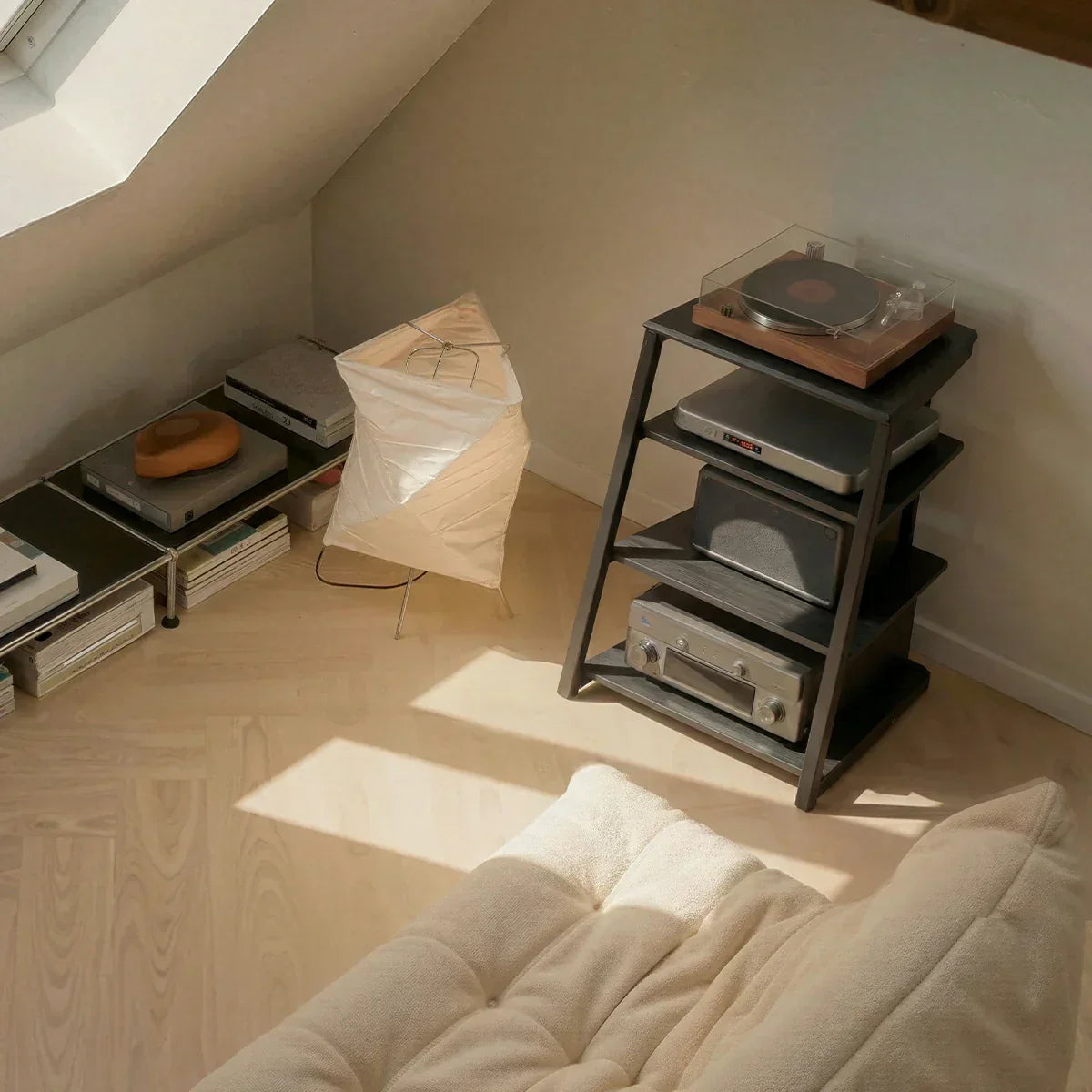
An open record player stand is usually better for frequent listening because records, equipment, and cables remain easy to reach. An enclosed stand is often better for reducing dust exposure and hiding accessories in a shared living space. If you want an accessible turntable but prefer to keep your vinyl collection behind doors, a partially enclosed design may provide the best balance.
The right choice depends on more than appearance. You also need to consider ventilation, equipment dimensions, cable access, cleaning habits, and how often you change records. This guide compares the three main designs and helps you identify which one better fits your listening routine.
Open vs. Enclosed Record Player Stands at a Glance
When comparing record player stands with vinyl storage, focus on the actual structure rather than terms such as “stand,” “cabinet,” or “console.” Product names are not always consistent, so check which compartments are covered and how your equipment will fit inside them.
| Design | Main Advantages | Main Tradeoffs | Usually Better For |
|---|---|---|---|
| Open | Fast access, natural airflow, visible records, and easier cable changes | More dust exposure and visible clutter | Frequent listening and equipment upgrades |
| Enclosed | Reduced dust exposure and a cleaner appearance | Extra access step and closer ventilation checks | Occasional listening and shared living rooms |
| Partially enclosed | Balances access, protection, and display | Benefits depend on the location of doors and openings | Users who want both convenience and concealment |
Open Record Player Stands: Pros and Cons
Advantages of an Open Record Player Stand
An open stand keeps records, equipment, and cables within easy reach. You can browse albums, change records, adjust components, or check connections without opening doors. This is especially convenient for frequent listeners and users who regularly upgrade their audio systems.
Open shelves also allow air to circulate naturally around amplifiers, receivers, and other heat-producing equipment. Rear connections are usually easier to access when replacing cables or troubleshooting loose plugs.
Drawbacks of an Open Record Player Stand
The main drawback is greater exposure to dust and pet hair. Cables, power strips, and cleaning accessories also remain visible, so open stands generally require more frequent cleaning and careful organization.
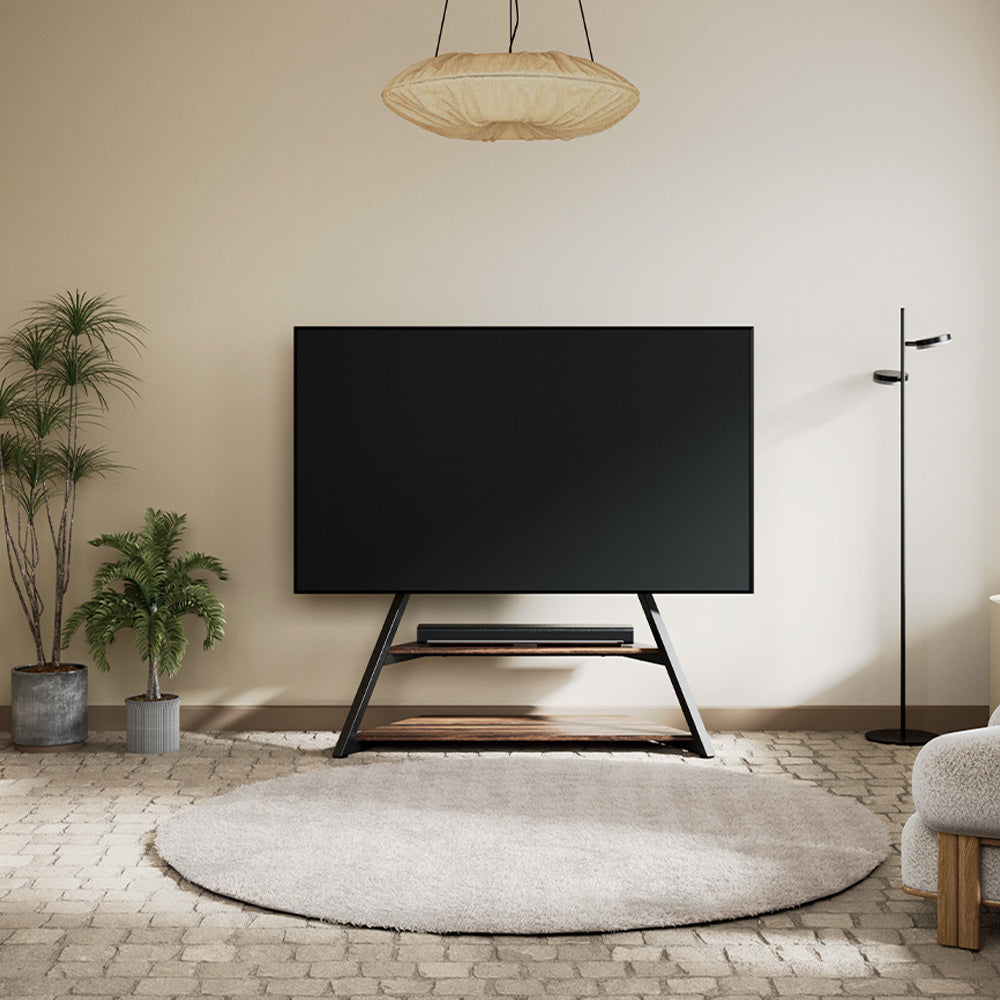
Records and equipment may also be easier for children or pets to reach. The open-design Eiffel AS07 record player stand addresses this with a stable Eiffel-inspired trapezoidal frame and built-in cable management that helps keep loose wires out of the way. Its two freely adjustable middle shelves accommodate different audio components, while a designated rear storage area keeps the power board organized and less exposed.
Even with these features, place equipment securely and keep the stand away from high-traffic areas.
Enclosed Record Player Stands: Pros and Cons
Advantages of an Enclosed Record Player Stand
An enclosed stand helps reduce the dust and pet hair reaching records, equipment, and accessories stored behind its doors. It can also hide cables, cleaning brushes, headphones, and power strips, creating a tidier appearance in a shared living room.
Doors provide an additional layer of separation from pets and young children, although stable furniture, secure equipment placement, and controlled cables remain essential.
The Eiffel V2 AS07 enclosed record player stand combines enclosed storage with ventilated mesh panels that support airflow around audio components. Built-in cable management helps organize wires, while adjustable middle shelves accommodate equipment of different heights. Its four-level layout separates the turntable, audio components, records, and accessories, and optional casters make repositioning and rear access easier.
Drawbacks of an Enclosed Record Player Stand
Enclosed storage reduces dust exposure but is not completely dust-proof. Dust can still enter through door gaps, ventilation panels, and cable openings.
Ventilation and access also need closer attention. Before placing an amplifier or receiver inside, compare the compartment dimensions and openings with the equipment manufacturer’s clearance requirements. Make sure cables have room to bend naturally and that the doors can open without hitting nearby furniture.

Open or Enclosed Record Player Stand: Which Is Better?
Start by eliminating any stand that cannot safely accommodate your system. Check the internal dimensions, load capacity, ventilation, cable space, turntable clearance, and door-opening area where applicable.
Some multi-tier stands have enough shelf space for compact speakers, amplifiers, receivers, and other audio components. However, fitting speakers on the same stand does not necessarily make it the best arrangement for playback. Even when the speakers and turntable are placed on different shelves, bass vibrations may travel through the shared frame and reach the stylus. Flexible floors can also transfer vibration from footsteps into the stand.
Whenever practical, place speakers on separate supports and position the record player stand on a firm, level area away from heavy foot traffic. If separate placement is impractical or you notice rumble, feedback, or skipping, turntable isolation feet or an isolation platform may help. However, isolation accessories cannot compensate for an unstable or uneven stand.
Once equipment compatibility and vibration control have been addressed, consider which everyday tradeoff matters more. If frequently opening doors, adjusting equipment, or reaching cables would become frustrating, an open stand is likely the better choice. If visible clutter, dust, and pet hair are the bigger concerns, an enclosed stand may suit your space better.
Your final choice should therefore be based on the problem you most want the stand to solve.
A Balanced Alternative: Partially Enclosed Storage
Open and enclosed storage do not always have to be an either-or choice. Reflecting FITUEYES’ “In Between” concept of fusion, the new Picasso RS05 record player stand combines elements of both in a partially enclosed design.
Measuring 21.9 × 17.7 × 35.4 inches (55.6 × 45 × 89.9 cm; W × D × H), the stand uses a space-efficient vertical layout. Its open top keeps the turntable easy to operate and supports up to 88 lbs, while the door-covered storage area holds up to 120 records in 12-inch, 10-inch, and 7-inch formats. This makes it suitable for both full-size LPs and smaller records without requiring separate storage.
Damped hinges allow the doors to close slowly and gently, while the front display area keeps a favorite or currently playing album visible. This design makes more sense if you want convenient turntable access, organized storage, and less direct dust exposure for your collection without completely hiding it.

The Best Choice Depends on How You Listen
The best record player stand is the one that fits your equipment and removes the most friction from your listening routine. Prioritize dimensions, ventilation, stability, and cable access first, then decide how much accessibility, dust protection, and concealment you need.
FITUEYES record player stands offer open, enclosed, and partially enclosed options for different listening habits and living spaces. The right choice should make your music corner easier to operate, organize, and maintain—not simply look attractive in a product photo.
FAQs
1. Can Vinyl Records Be Stored Flat?
A few records can be placed flat temporarily, but a large collection should not be kept in a tall horizontal stack. The accumulated weight may place uneven pressure on the records and sleeves.
Store records upright with enough side support to prevent strong leaning. Avoid packing them so tightly that individual albums become difficult to remove.
2. Can a Record Player Stand Sit on a Carpet?
Yes, but thick or soft carpet can make the stand more difficult to level and may allow it to rock. Check the base design and whether the stand includes adjustable feet or suitable lockable casters.
After assembly, confirm that every support point is firm and that the turntable surface remains level.
3. Does an Enclosed Stand Replace a Turntable Dust Cover?
Not necessarily. If the turntable sits on an open top, doors on the lower storage compartments will not protect it from dust.
Follow the turntable manufacturer’s guidance and make sure its dust cover has enough room to open fully.
4. How Much Space Should Be Left Above a Turntable?
There is no universal clearance because turntable and dust-cover designs vary. Measure the unit with its cover fully open, then leave enough additional space to handle records and operate the tonearm comfortably.
If the cover cannot open completely or your hand repeatedly hits a shelf, the space is too restrictive even if the turntable technically fits.