


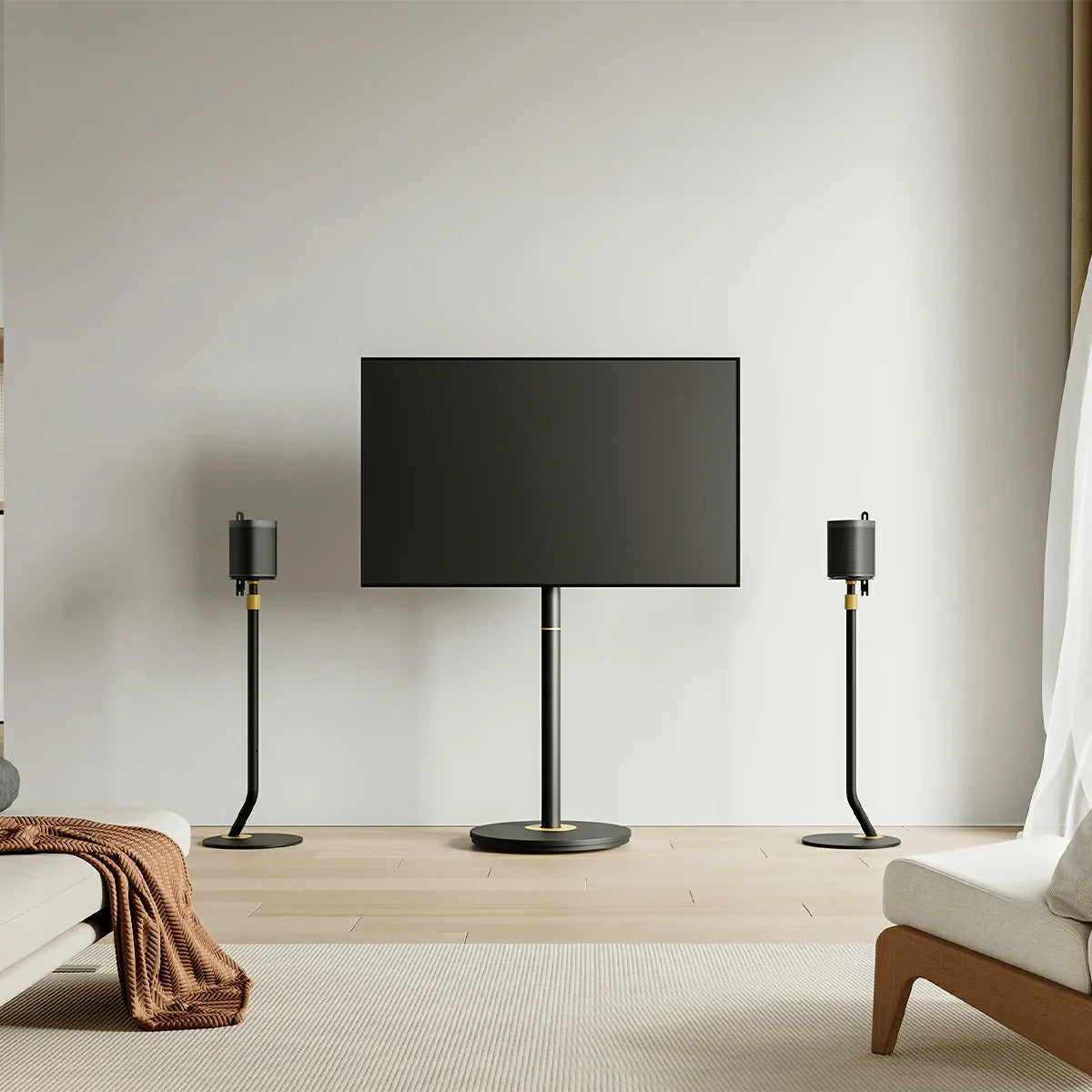
Looking for the quick answer? To choose the best speaker stand, focus on three key factors: Height (aim for ear level, approx. 28"-30"), Stability (choose a weighted base with a low center of gravity), and Compatibility (ensure the top plate supports at least 75% of your speaker's base). The right stand isn't just a decoration—it is essential for "decoupling" your speaker from the floor to eliminate muddy bass.
You’ve invested in a great pair of speakers. You unboxed them with excitement, hooked them up, and hit play. But if they are currently sitting on a bookshelf, a crowded desk, or—worst of all—directly on the floor, you aren't hearing what you paid for.
While many think stands are just about aesthetics, their primary purpose is acoustic physics. Without proper isolation, sound waves transfer into your furniture, creating vibration and distortion. This guide will walk you through exactly how to select a stand that solves these problems, keeping your home safe and your sound crystal clear.

Why Do You Actually Need a Stand? (The Physics of Sound)
Many people think stands are just expensive pedestals. While a design-focused stand definitely upgrades your living room aesthetic, its main job is physics.
The "Muddiness" Problem
When a speaker sits on a hollow cabinet, the furniture vibrates along with the bass. This creates "muddy" or muffled sound. A high-quality stand acts as an "isolation" tool. By lifting the speaker onto a stable platform, you stop those vibrations from transferring. The result? Tighter bass and clearer vocals.
The Height Rule: Why "Adjustable" Can Be a Game Changer
High frequencies are directional. If your tweeters aren't at ear level, the sound will seem dull.
- The Standard: For most sofas, a fixed height of roughly 28 inches is the universal "sweet spot." This works for 90% of listeners.
- The Problem: Not all sofas are the same height, and not all listeners are the same height.
- The Solution: If you have a unique setup (like a low bean bag or a high bar stool) or use smaller satellite speakers, look for height-adjustable stands.
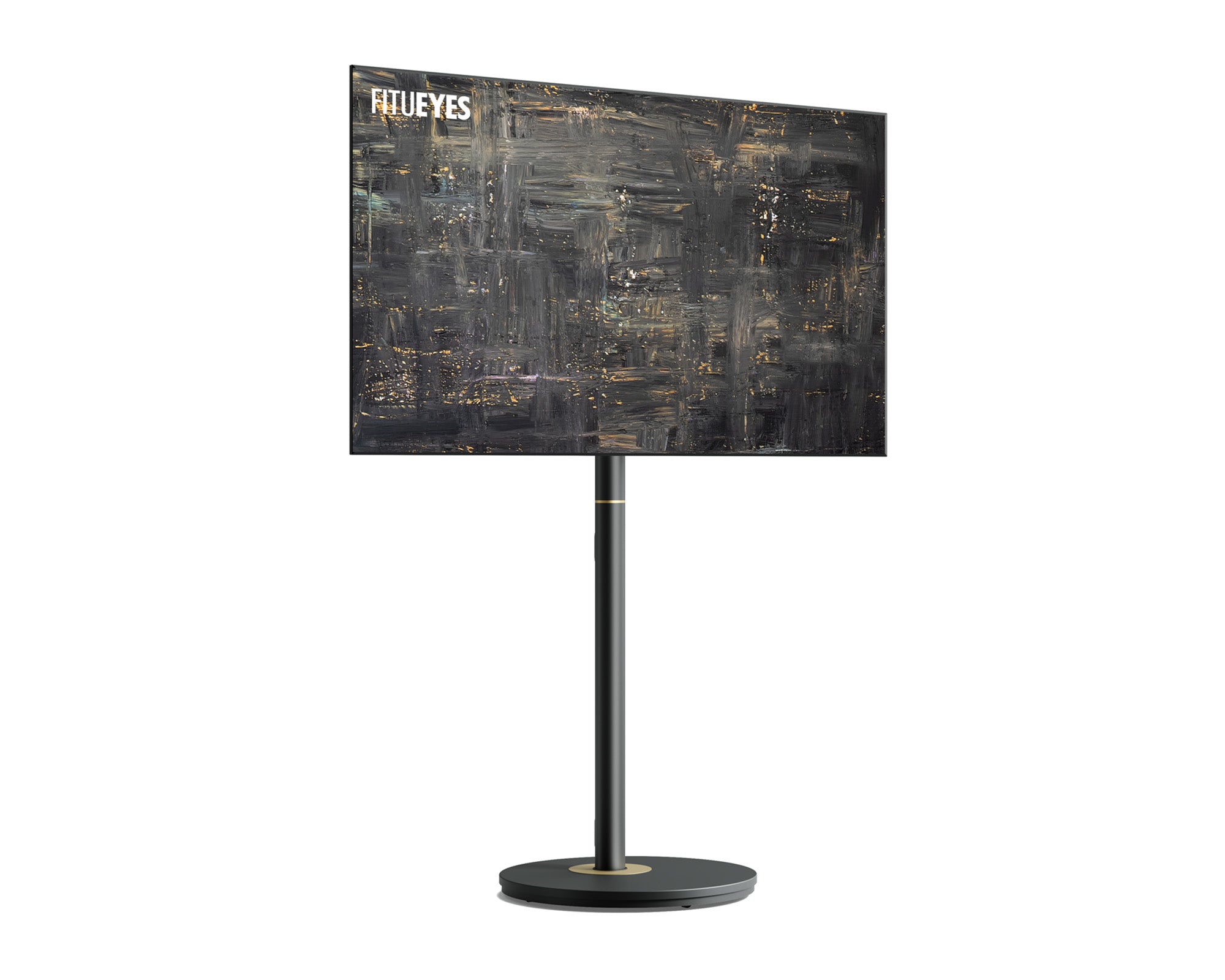
Pro Tip: Stands like the FITUEYES Master Series (SS08) allow you to adjust the height from 27.6" to 39.4". This lets you dial in the tweeter position with laser precision, ensuring the sound hits your ears perfectly.
Safety & Stability: Solving the "Tip-Over" Fear
This is the #1 fear for pet owners: "Will my cat knock this over?"
The "Heavy Base" Solution
Old-school advice says you must fill stands with sand. Modern engineering works differently. You need a low Center of Gravity.
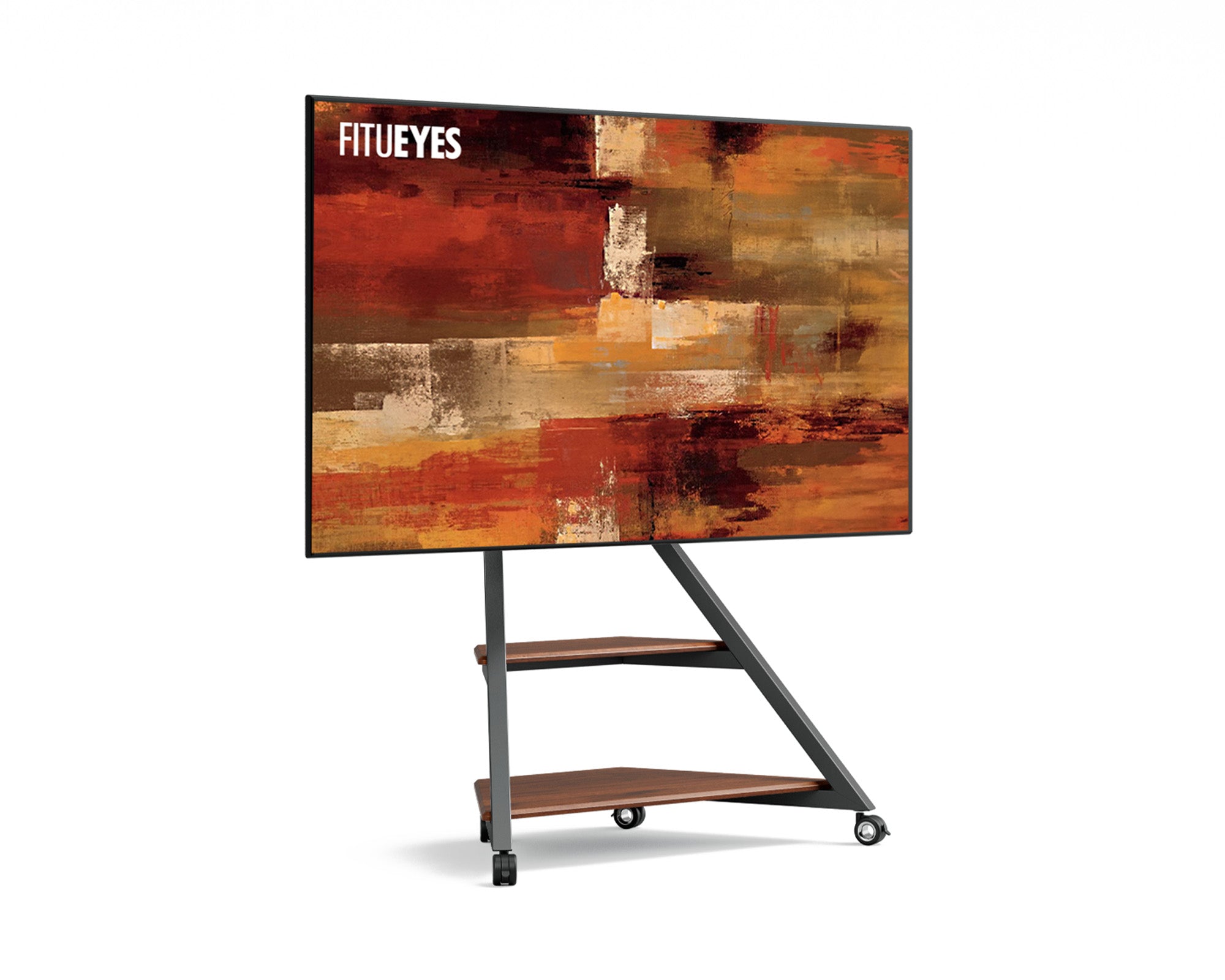
- For Heavy Speakers (Up to 60+ lbs): You need a stand built like a tank. Look for a robust, trapezoidal base design.
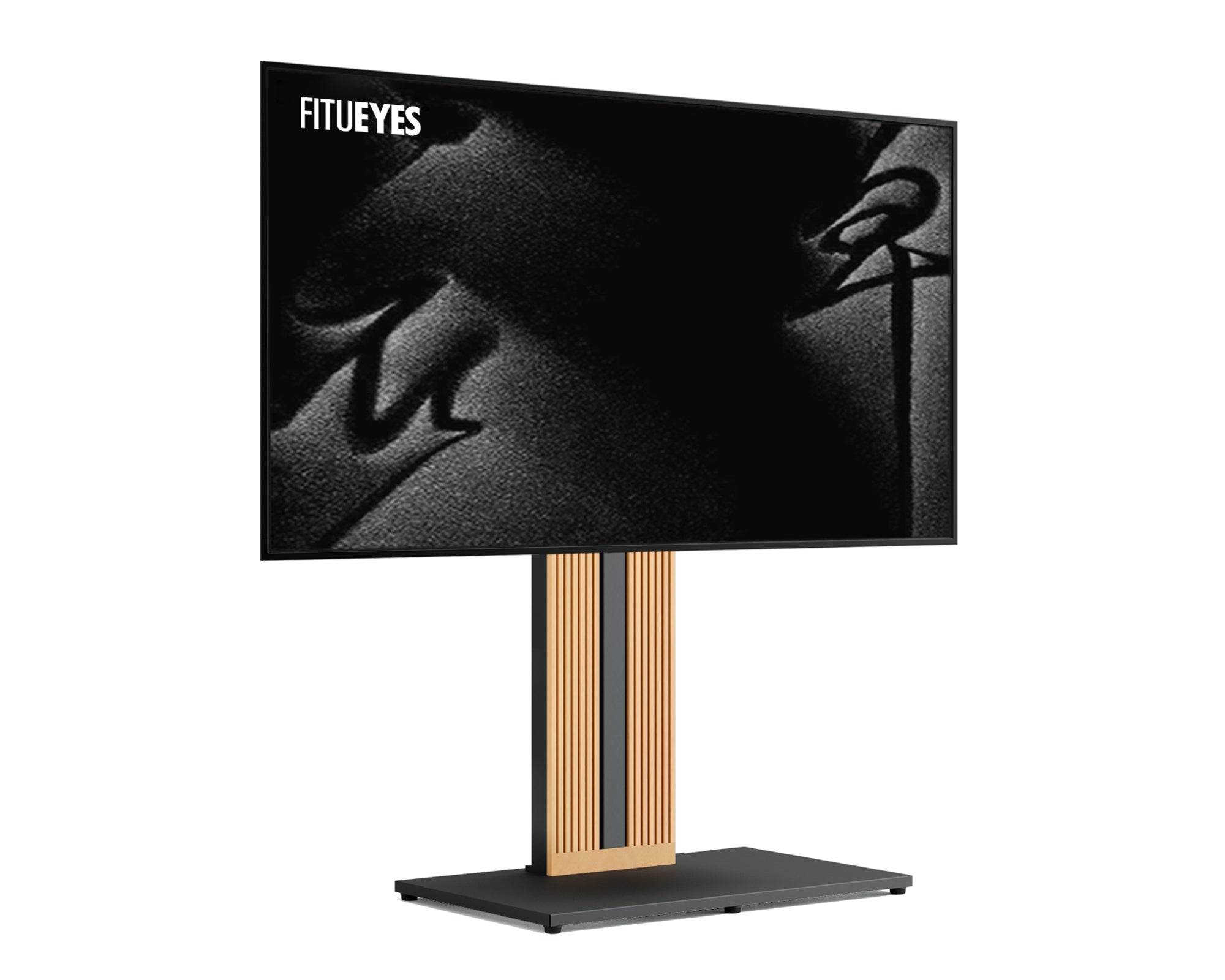
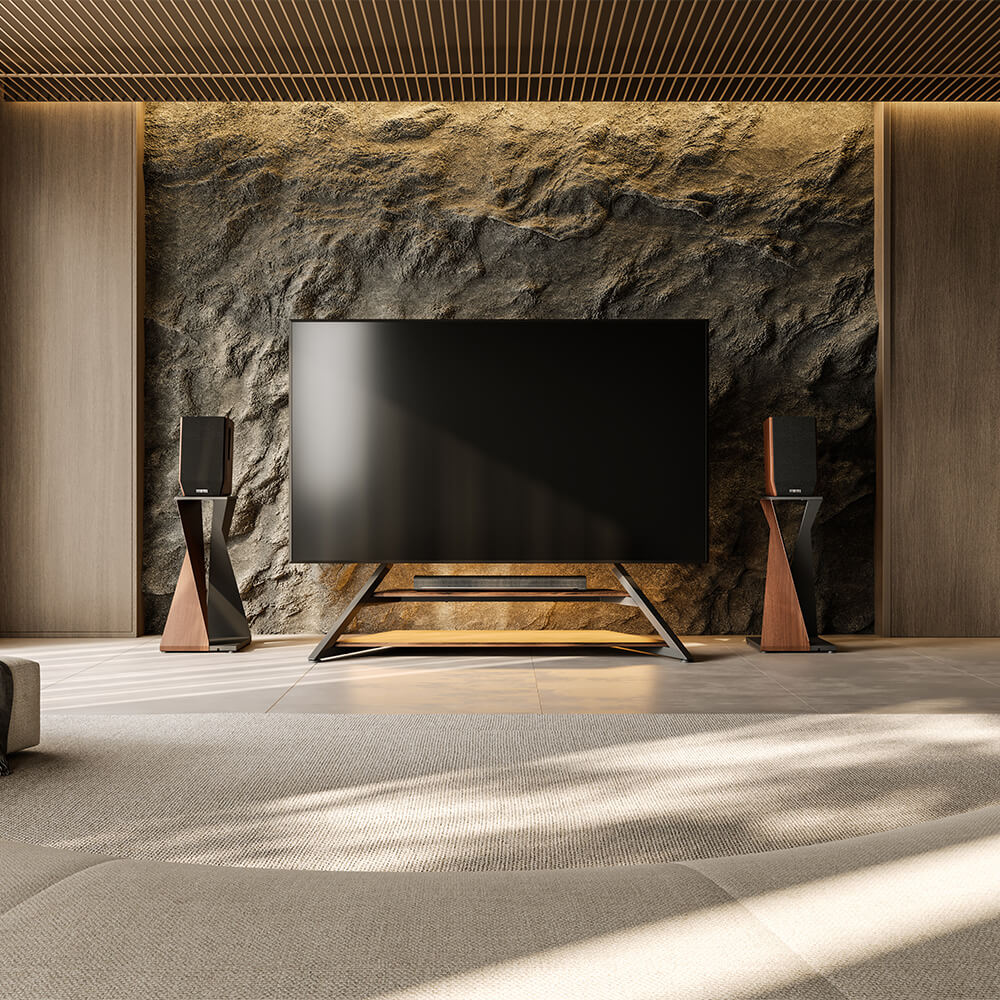
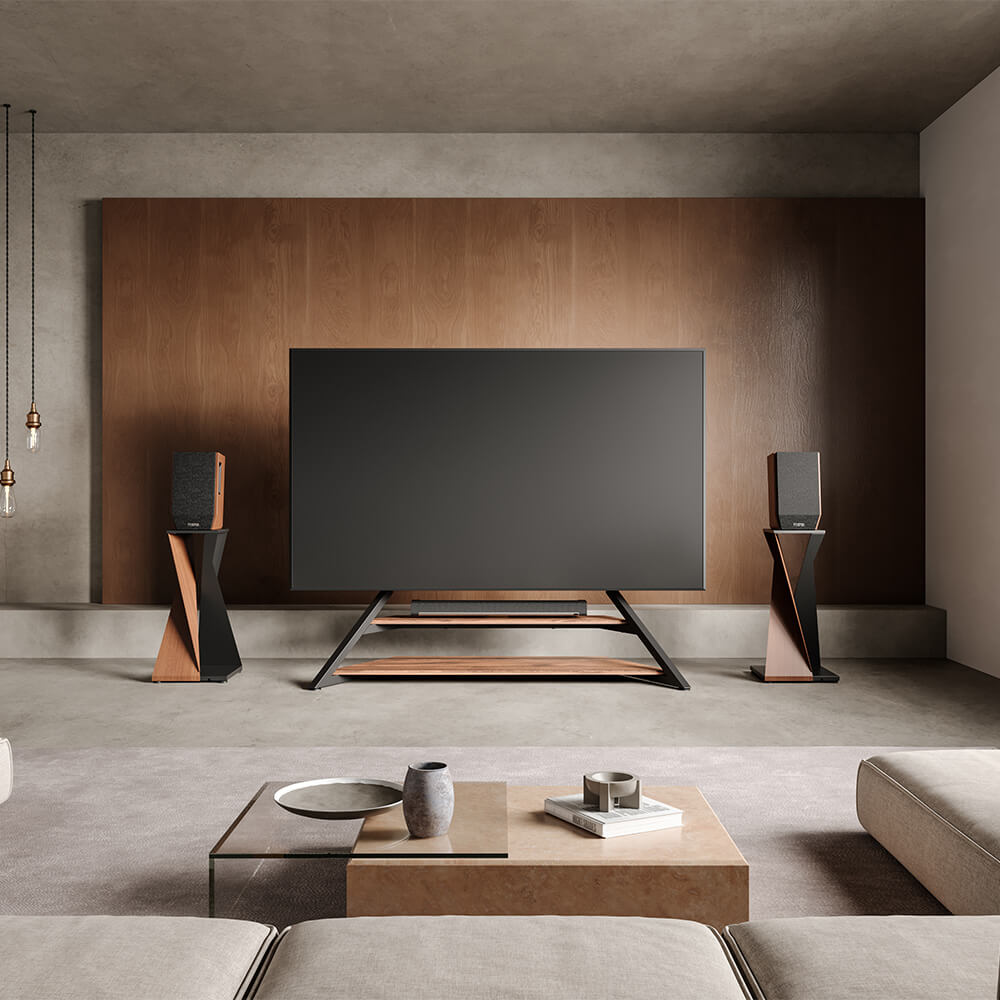
- Example: The FITUEYES Eiffel Series (SS11) supports up to 66 lbs thanks to its heavy-duty steel and wood frame. Its wide footprint creates a "pyramid-like" stability that is incredibly difficult to tip over, without needing messy sand fillers.
- For Smaller Speakers: A heavy-duty metal round base anchors the stand effectively, keeping lighter satellite speakers secure even in high-traffic areas.
No Drilling Required (Protecting Your Gear)
A common myth is that you must screw your speakers into the stand. Please, do not drill holes in your speakers!
- Non-Slip Security: Look for stands with large top platforms equipped with non-slip pads. These create friction to hold the speaker in place safely, protecting your equipment's finish while keeping it secure.

Aesthetics Matter: Blending Audio with Interior Design
Let's be honest: traditional speaker stands can be an eyesore. Many look like cold, industrial studio equipment that clashes with a warm, cozy home.
The "Furniture First" Approach
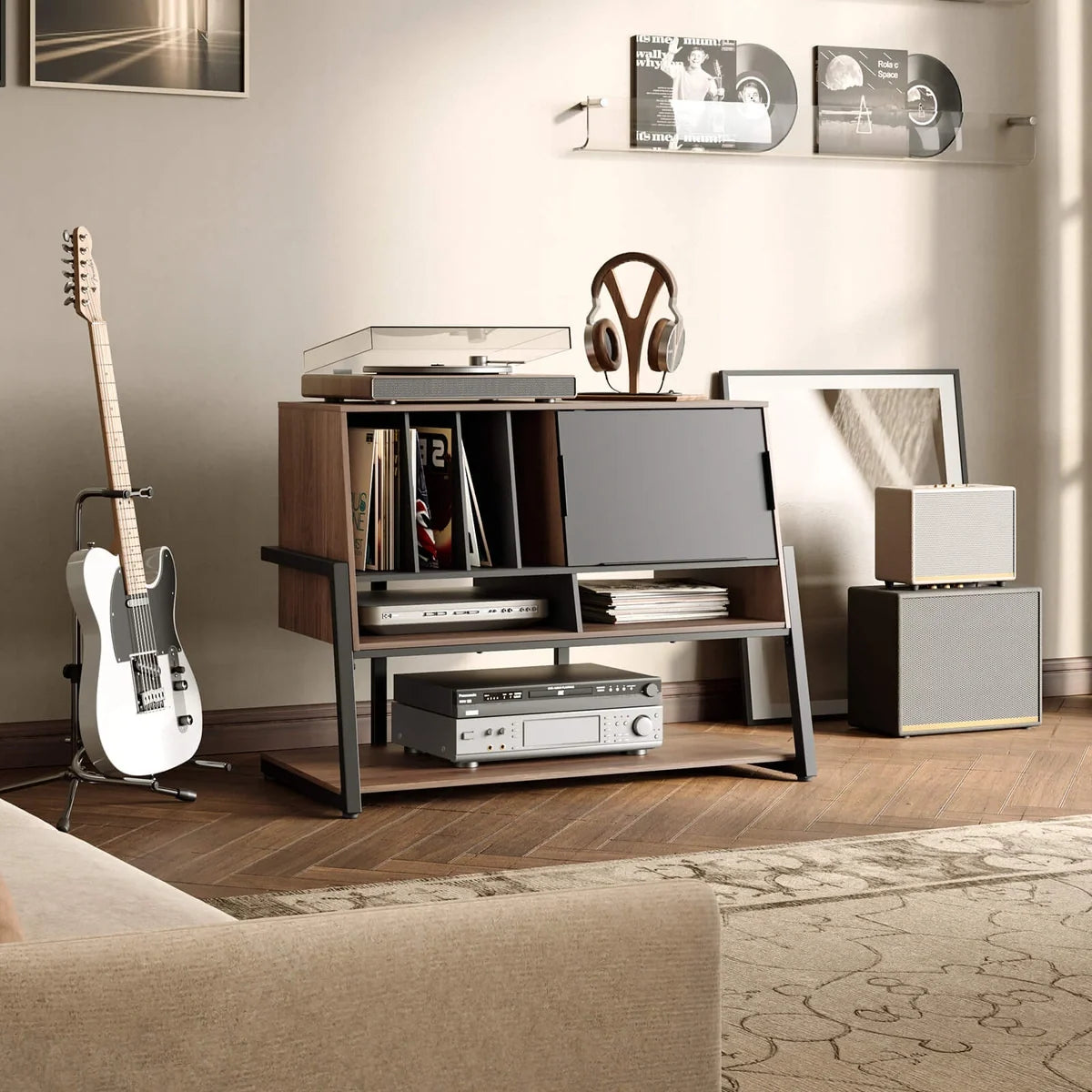
If you care about interior design, stop looking at "gear" and start looking at "furniture."
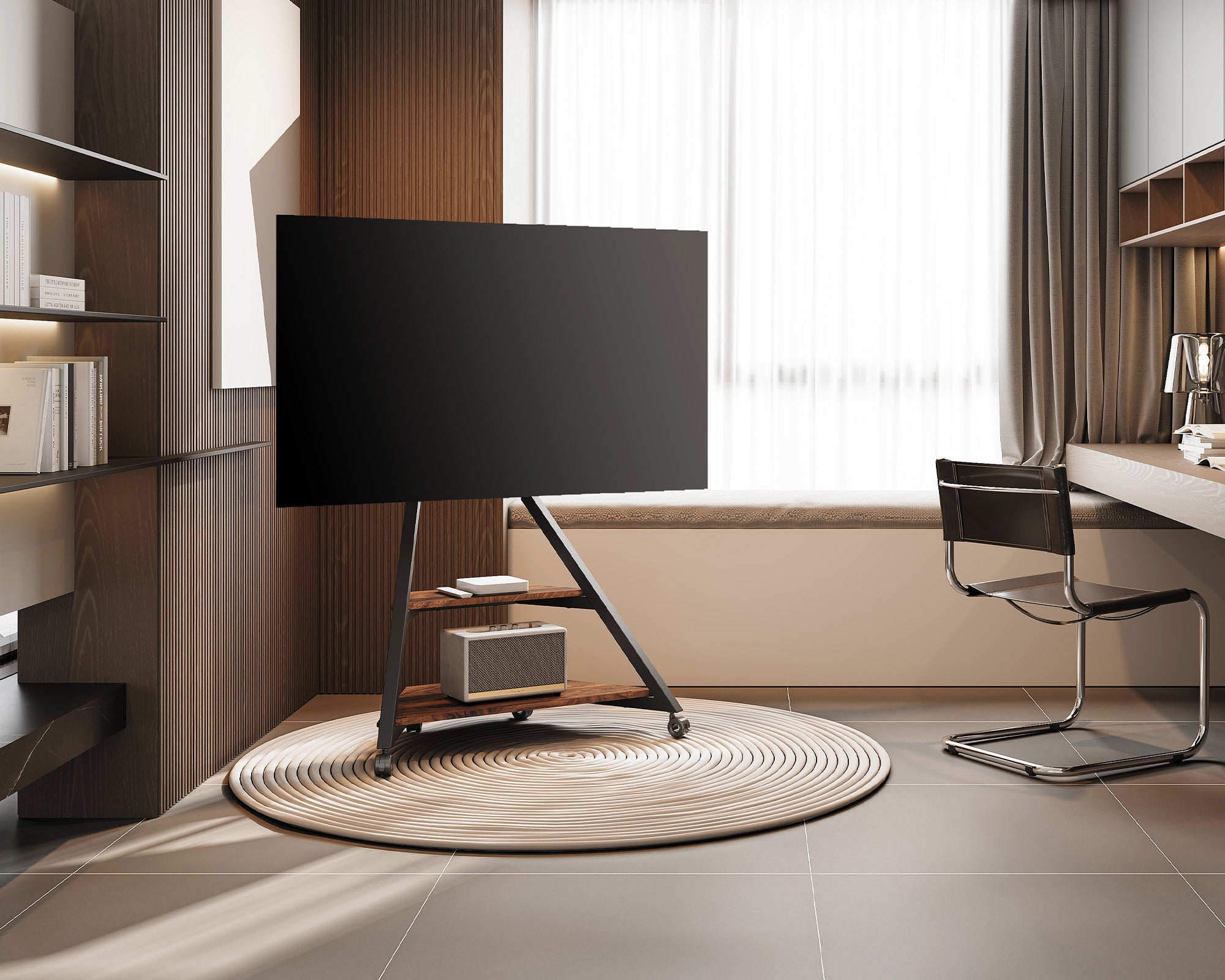
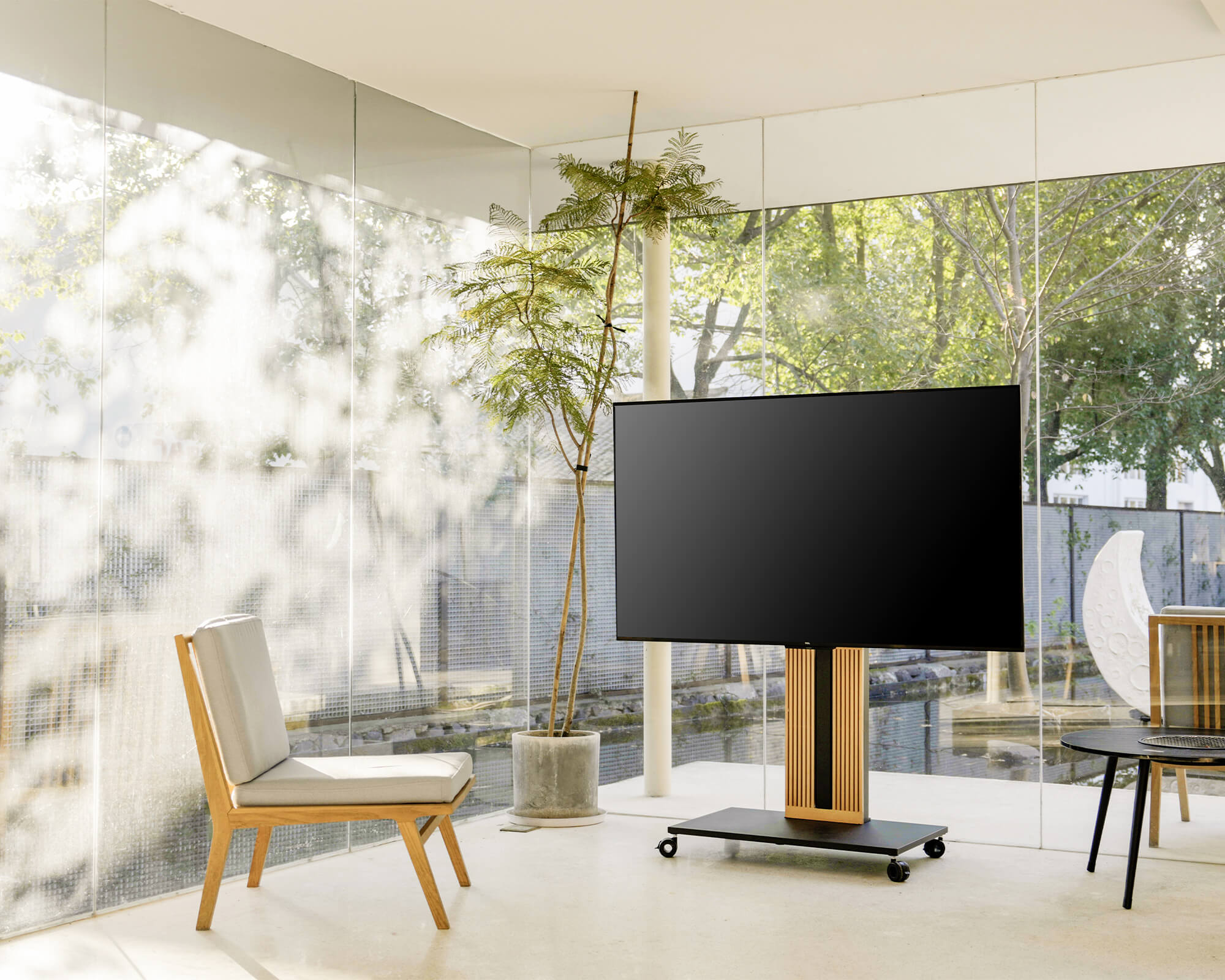
- The Retro/Modern Look: If you have a warm living room vibe, avoid cold black metal pipes. Look for stands that incorporate wood textures or artistic shapes. The Eiffel Series is designed to look like a piece of mid-century modern furniture, blending into your decor rather than standing out like a sore thumb.
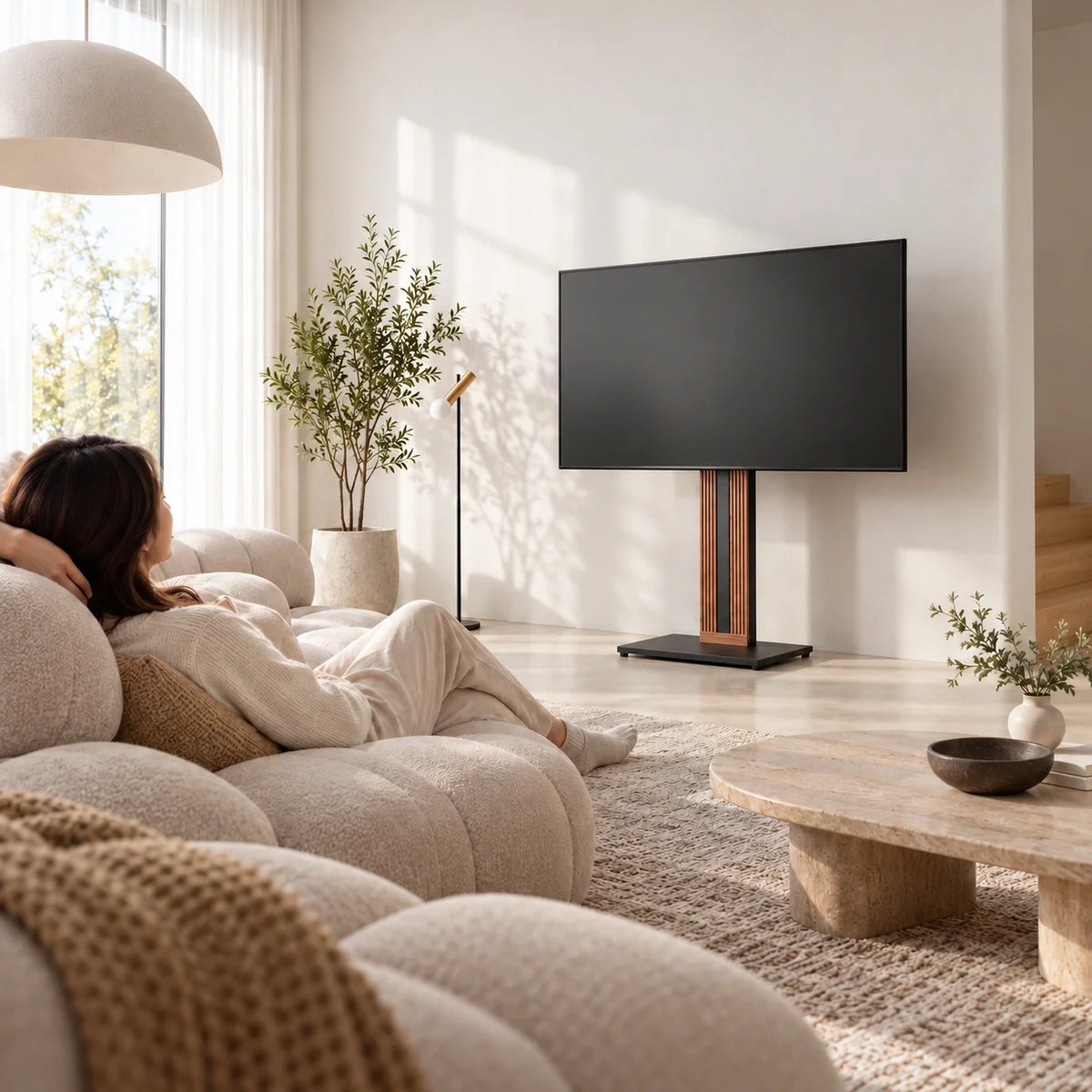
- The Minimalist Look: If you prefer a clean, "invisible" aesthetic, a sleek metallic stand with hidden cable management (like the Master Series) disappears into a modern room, leaving just the sound.
The "Lazy" Setup: Assembly & Floor Protection
Hassle-Free Installation
We get it. The last thing you want to do is spend hours deciphering complex instructions.
- Look for "Easy Install" Designs: Some modern stands are designed for "lazy" audiophiles. The Eiffel Series, for instance, is renowned for its hassle-free setup, so you can get straight to listening.
Protecting Your Floors
- Uneven Floors: If you have old hardwood or tile that isn't perfectly flat, look for stands with adjustable foot pads. These let you level the stand perfectly so it never wobbles.
- Scratch Protection: Always ensure your stand comes with rubber or felt pads if you are placing it on wood floors. (All FITUEYES stands are designed to be floor-safe).

The Final Note: Elevating Your Experience
Upgrading to proper speaker stands is about more than just buying a piece of metal or wood. It is about unlocking the full potential of the music and movies you love.
Whether you are looking to protect your expensive equipment from accidental bumps, clean up the tangled mess of wires in your living room, or simply close your eyes and hear your favorite song exactly as the artist intended, the right stand makes all the difference.
(Recommended Reading: Once you have your stands set up, it's time to curate the vibe. Check out our guide on Music. Mood. Space. How to Build Your Own Immersive Listening Corner at Home for inspiration on lighting, layout, and atmosphere.)
Don't let your speakers perform at 50% capacity. Give them the support they need, and enjoy the upgrade in sound, safety, and style.