


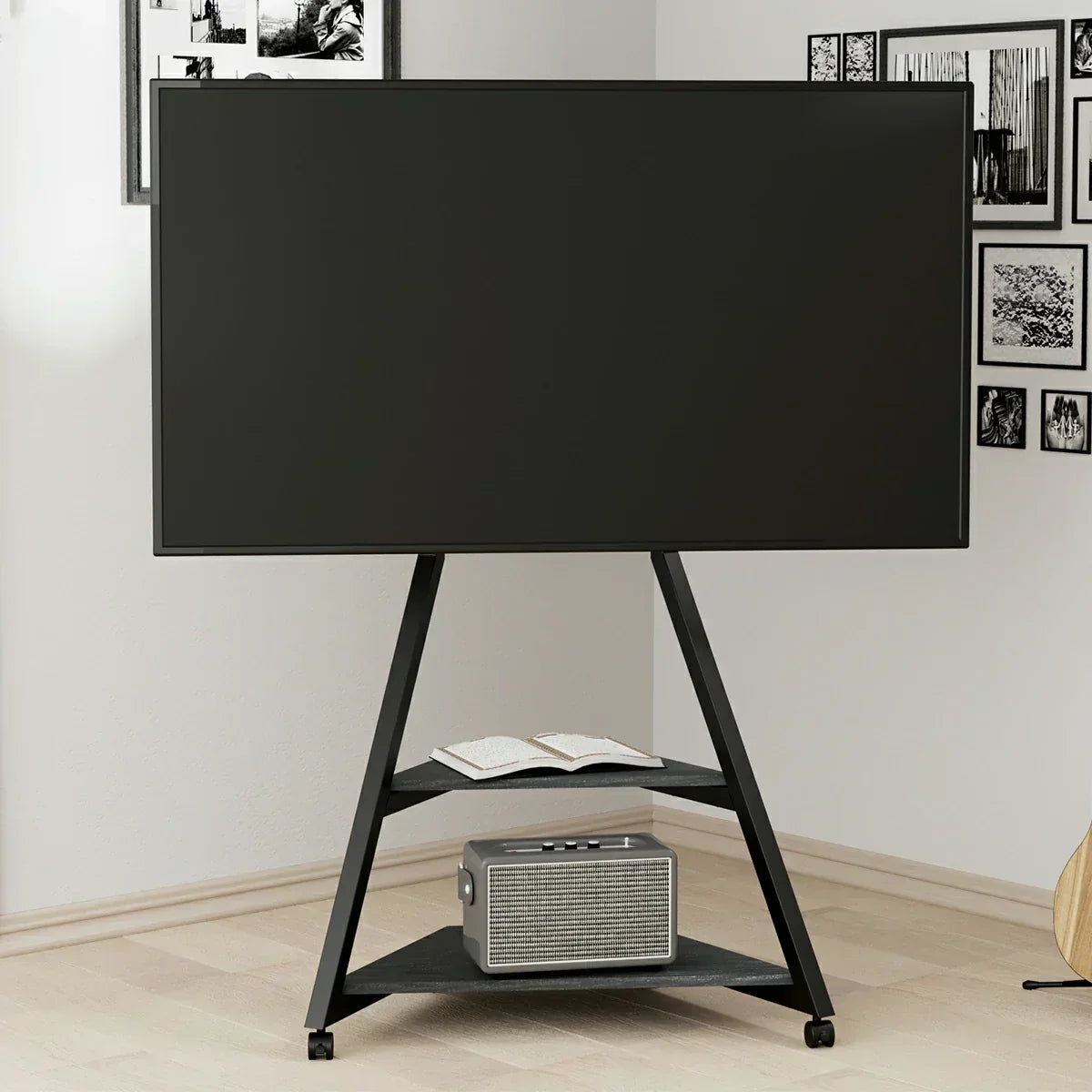
Traditional bulky media centers often swallow valuable floor space and create unnecessary visual noise. For modern renters and small-apartment owners, finding sleek ways to display screens without drilling walls is a major design priority. Embracing minimalist TV stand ideas allows you to preserve open floor areas while seamlessly integrating clean aesthetics and smart features. Read on to discover how these minimalist layouts and design concepts can beautifully transform your entertainment area.
Why Choose a Minimalist TV Stand Setup?
When evaluating room layouts, traditional television consoles—which often measure 18 inches or more in depth—can easily dominate a space. Choosing a minimalist design is primarily about significantly reducing visual noise and opening up your environment. Instead of heavy wooden cabinets that gather dust, a minimal approach strips away the excess.
By prioritizing clean lines and exposed floor space, these setups allow natural light to flow more freely. This design philosophy helps create a calmer, more breathable atmosphere. Whether you are dealing with a compact urban apartment or simply prefer a clutter-free aesthetic, moving away from heavy furniture makes your viewing area feel larger and more intentional.

Popular Minimalist TV Stand Styles Explained
The term "minimalist" encompasses several distinct design languages. Understanding these styles can help you select a piece that naturally complements your existing home decor.
Low-Profile Consoles for Grounded Depth
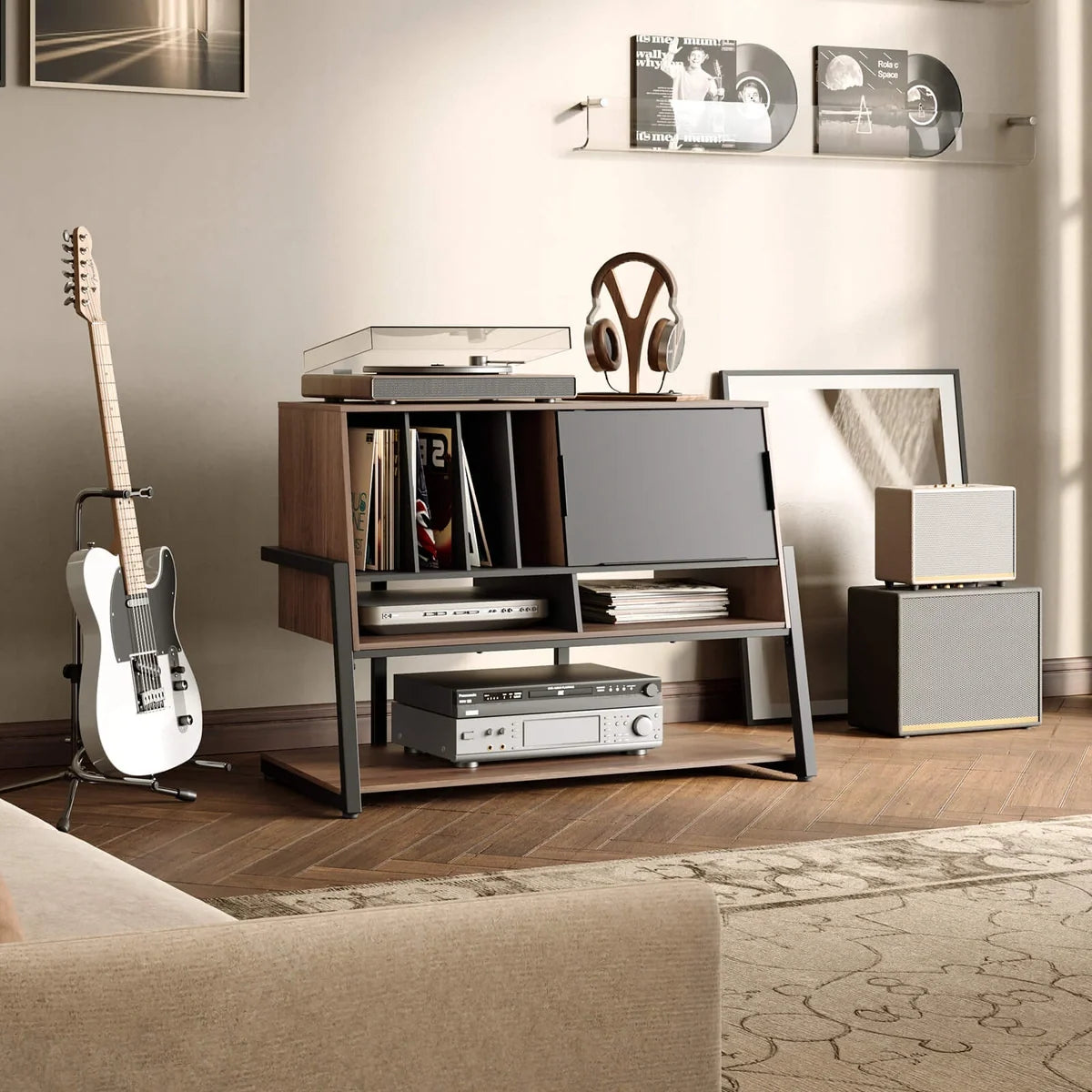
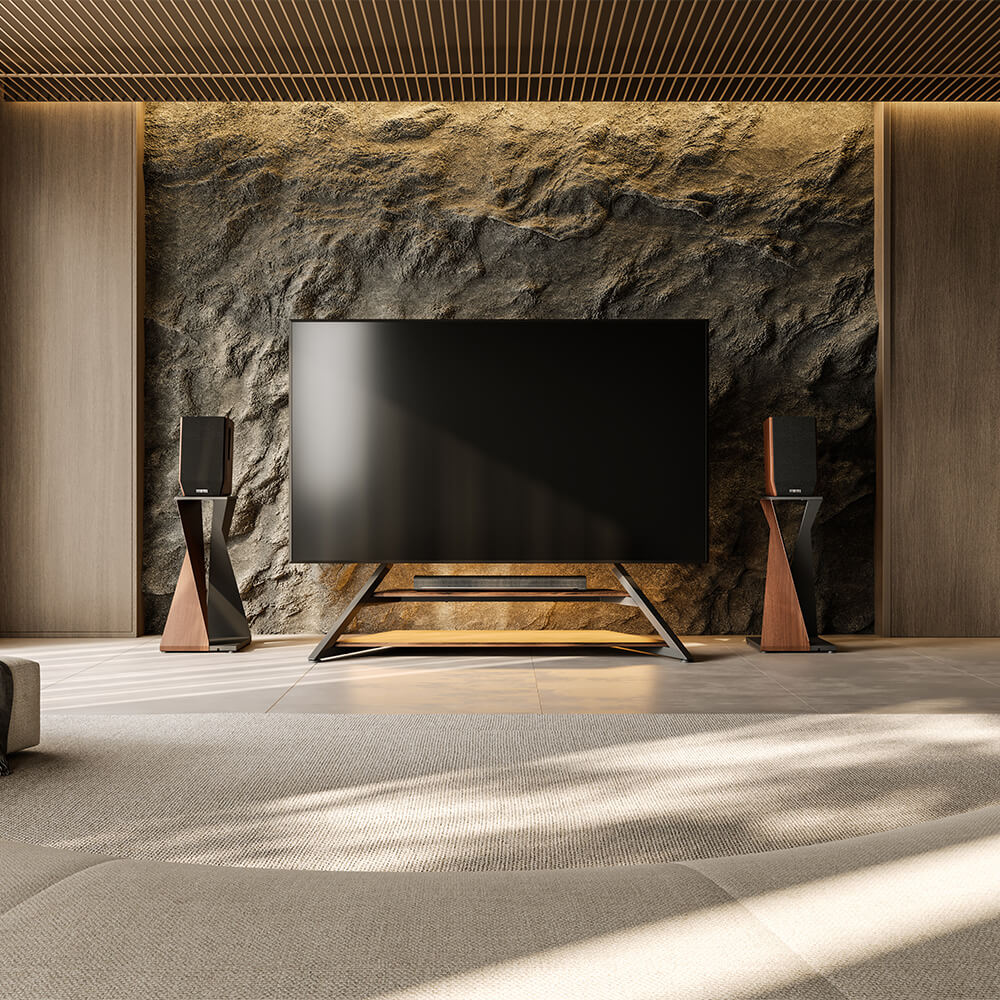
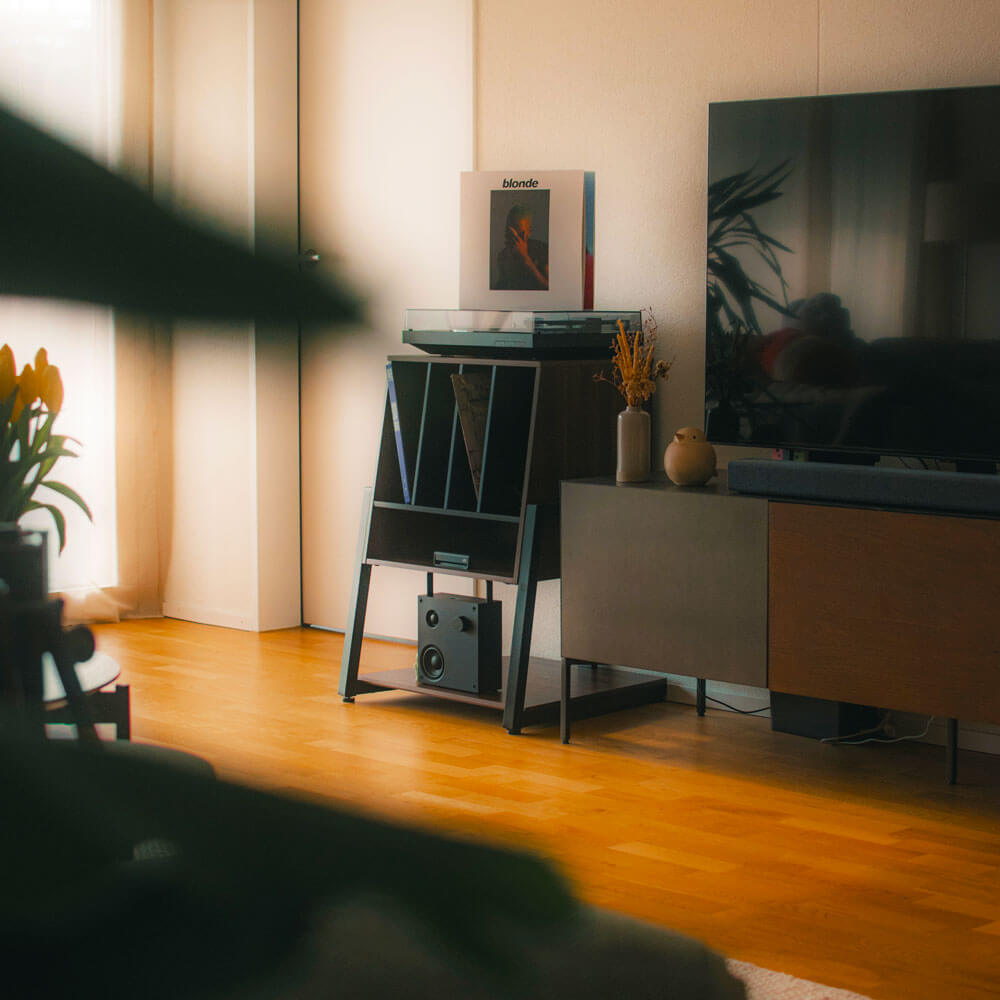
For those who still prefer a traditional cabinet look but want to avoid bulk, a low-profile console is an appealing choice. Featuring a height of under 15 inches, these units create an elongated appearance that draws the eye horizontally across the room. This low-lying profile works well in modern interiors, offering a sense of floating weightlessness, especially when equipped with slim metal legs. It provides just enough surface area for a soundbar or a few curated decor pieces without overpowering the room.
Artistic Easel and Tripod Stands
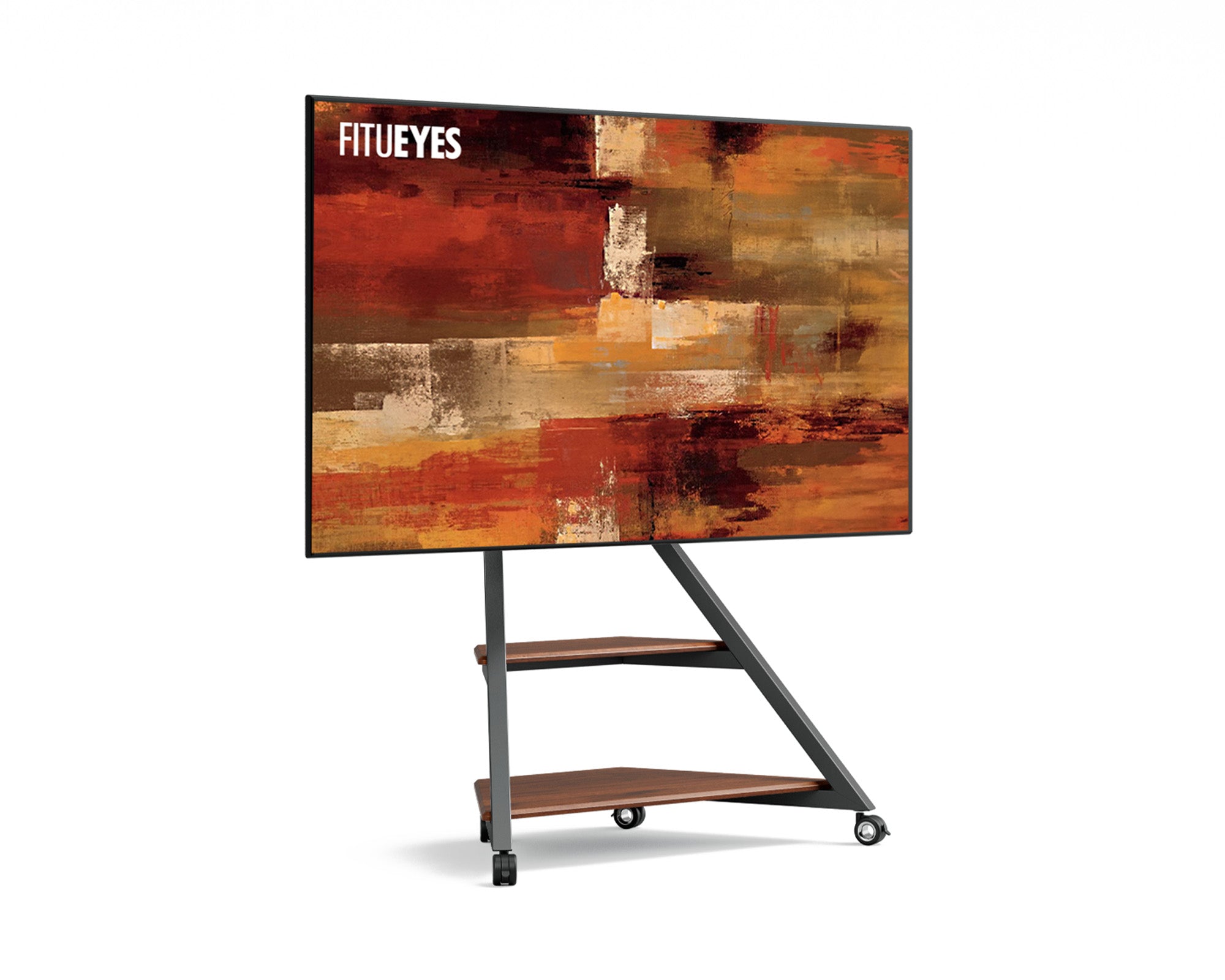
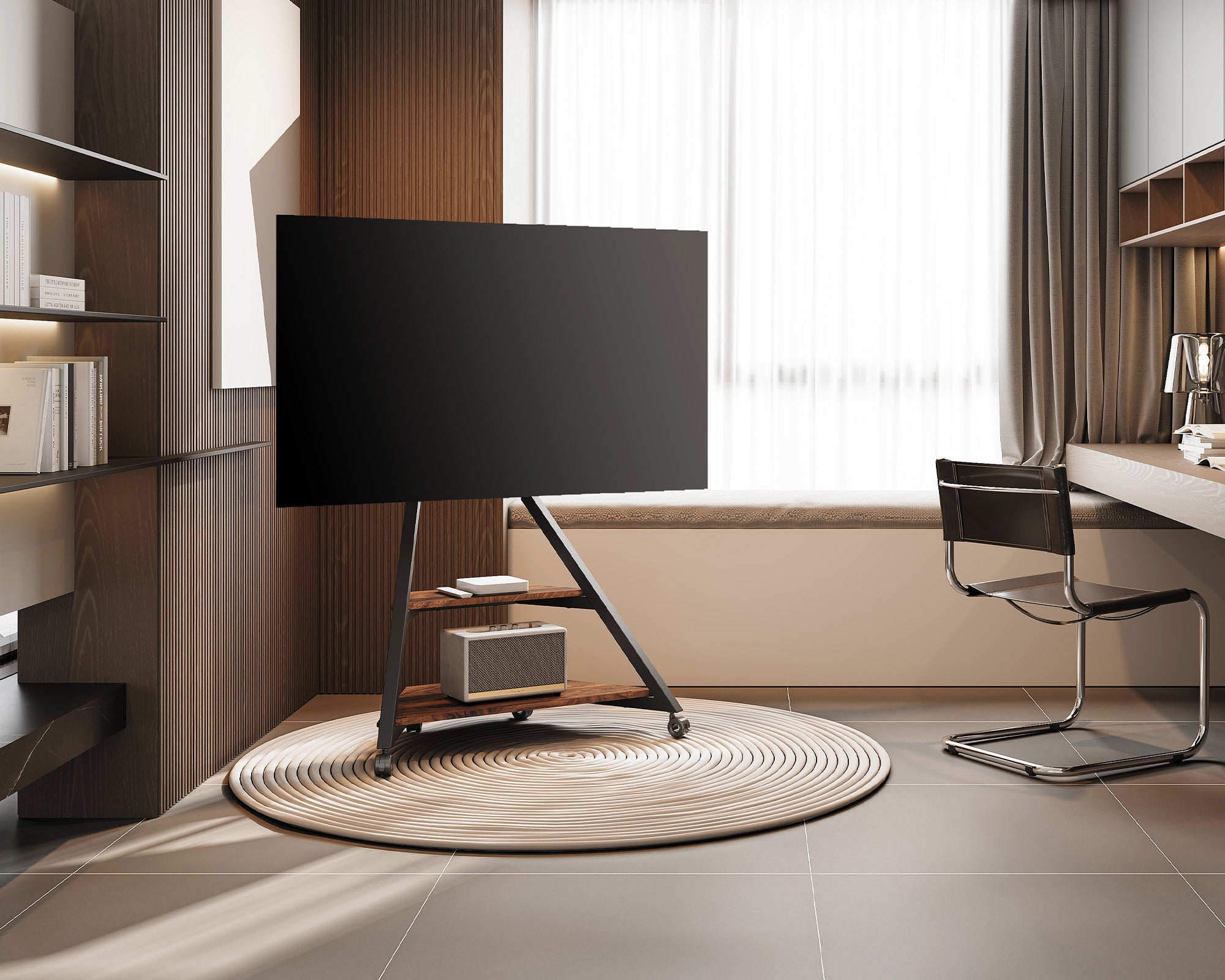
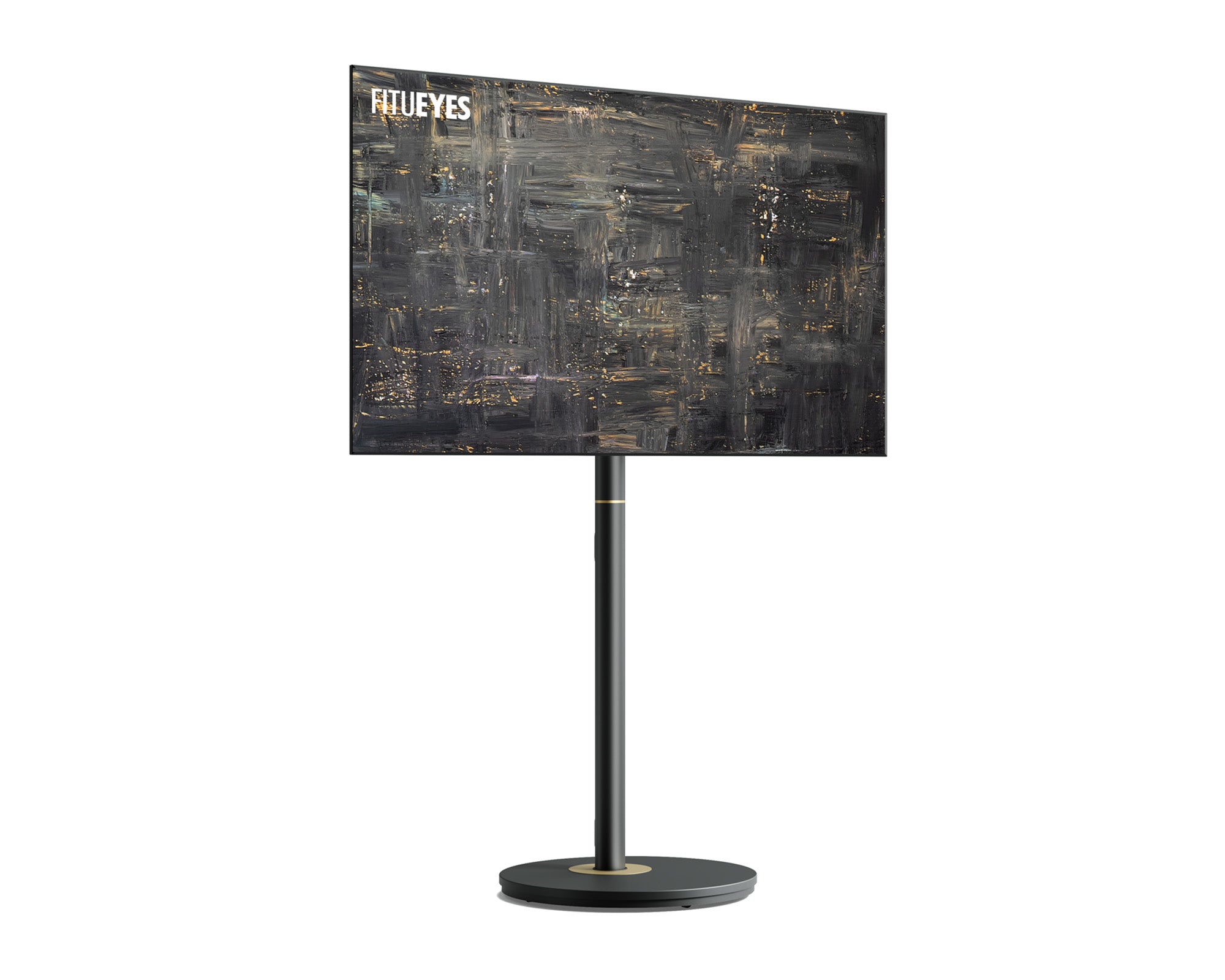
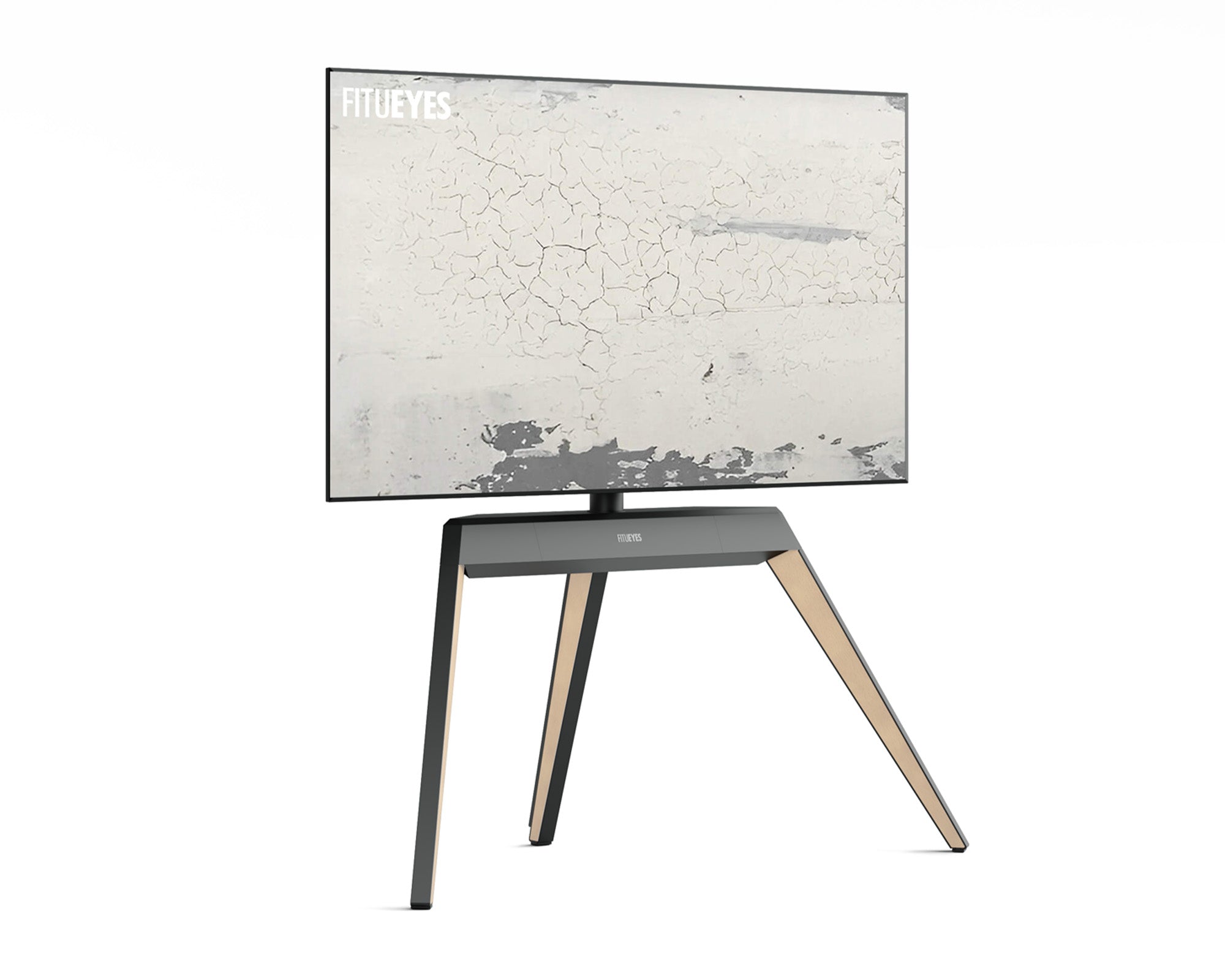
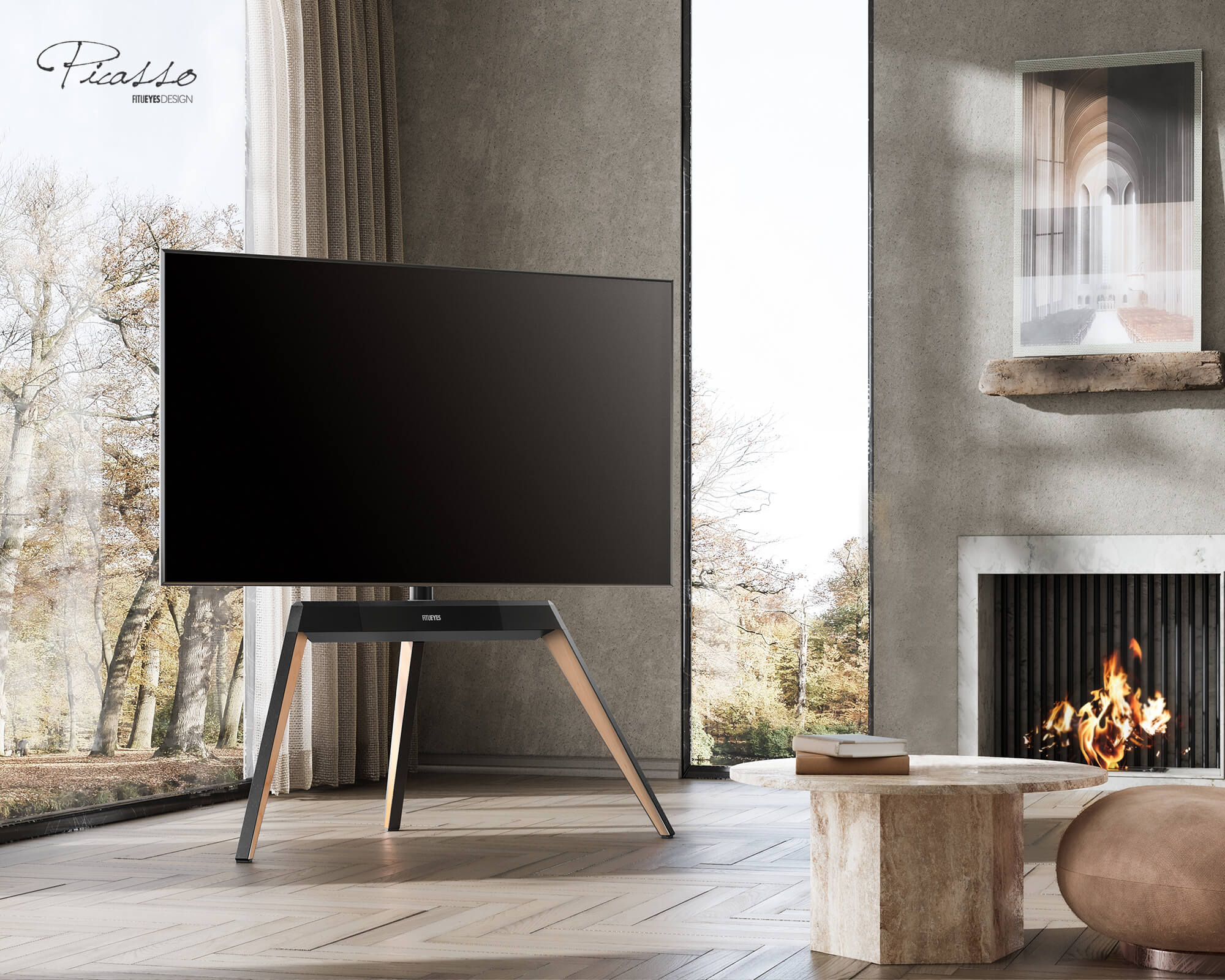
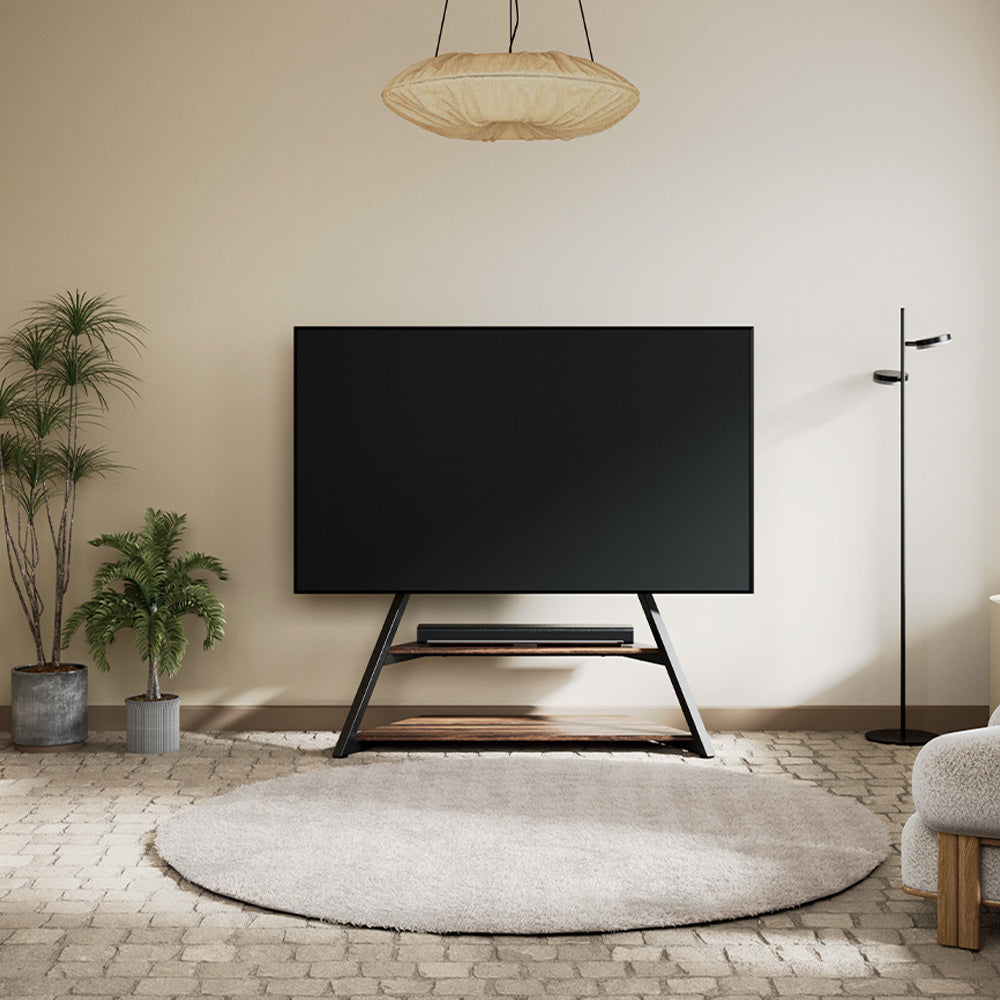
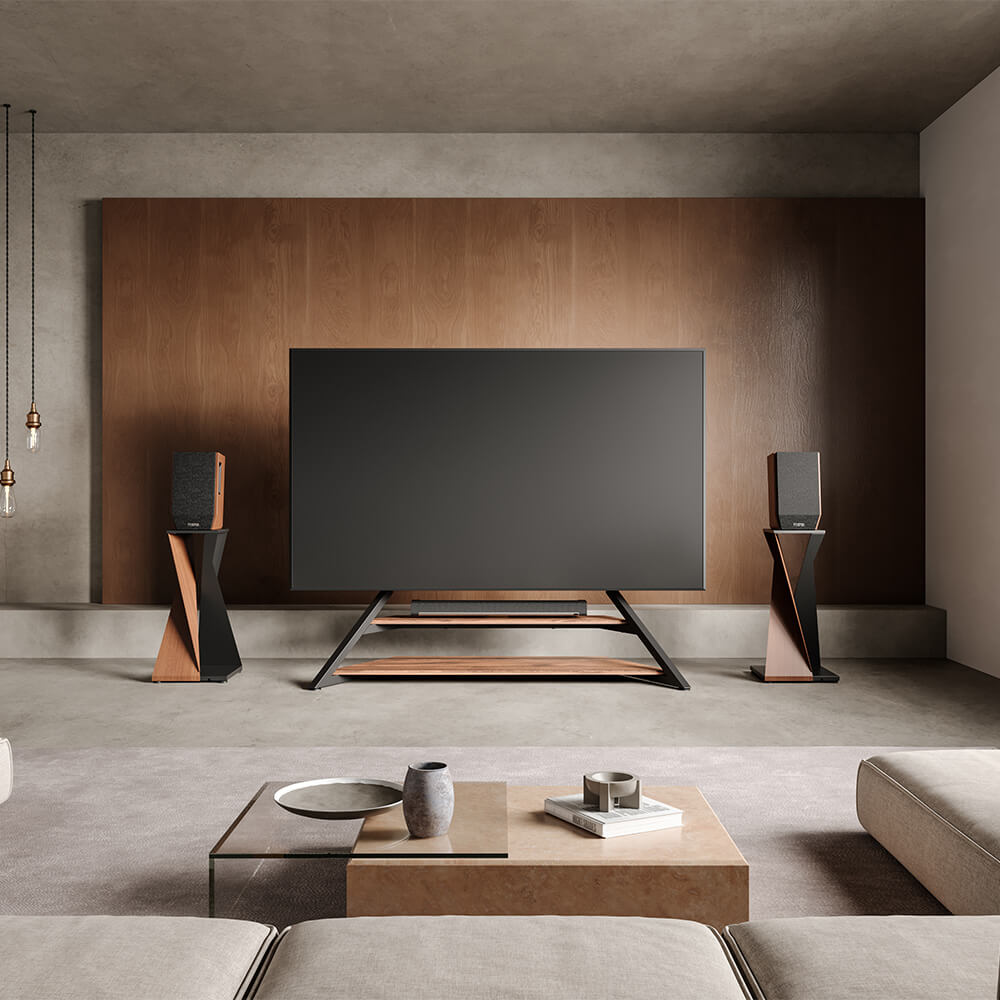
If you want your television to feel more like an art installation than an electronic device, easel and tripod styles are brilliant alternatives. Featuring a distinct architectural frame, these minimalist stands bring an undeniable artistic flair to your space. The slender legs provide strong support while maintaining a highly transparent visual footprint. Because they resemble classic artist studio equipment, they blend beautifully into creative spaces, turning the TV into a standalone focal point rather than just a screen sitting on a heavy, space-consuming box.
Slim No-Drill Floor Stands
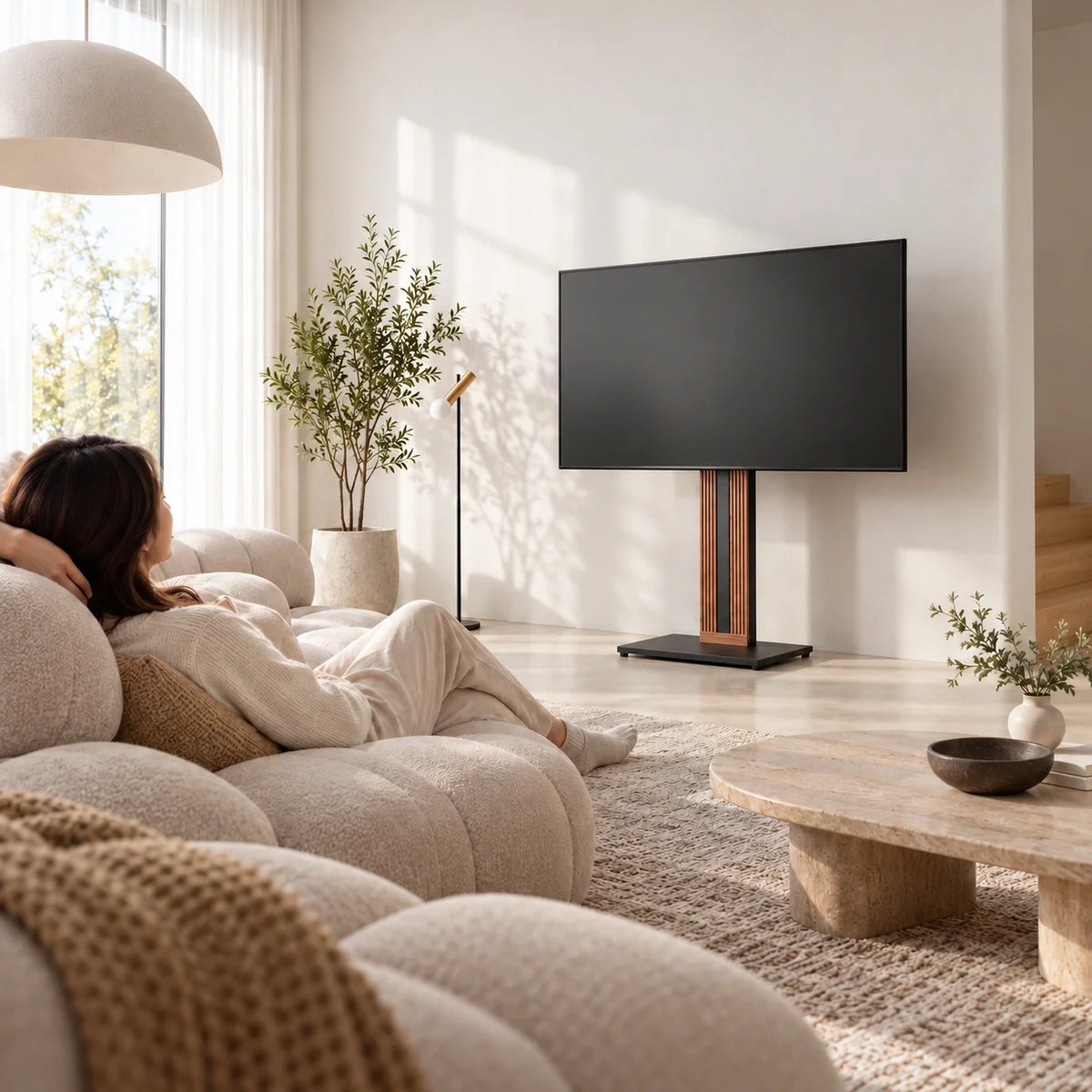
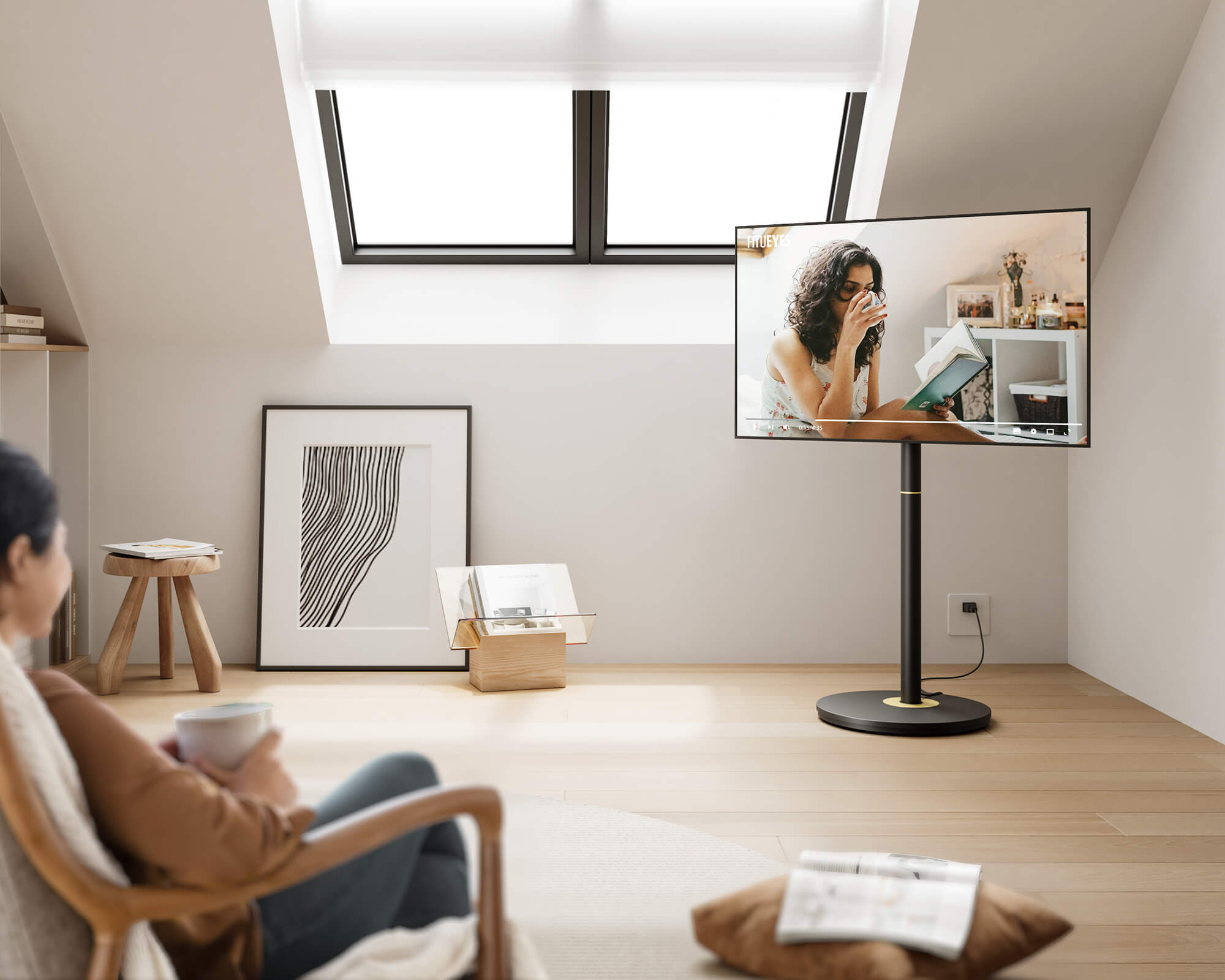
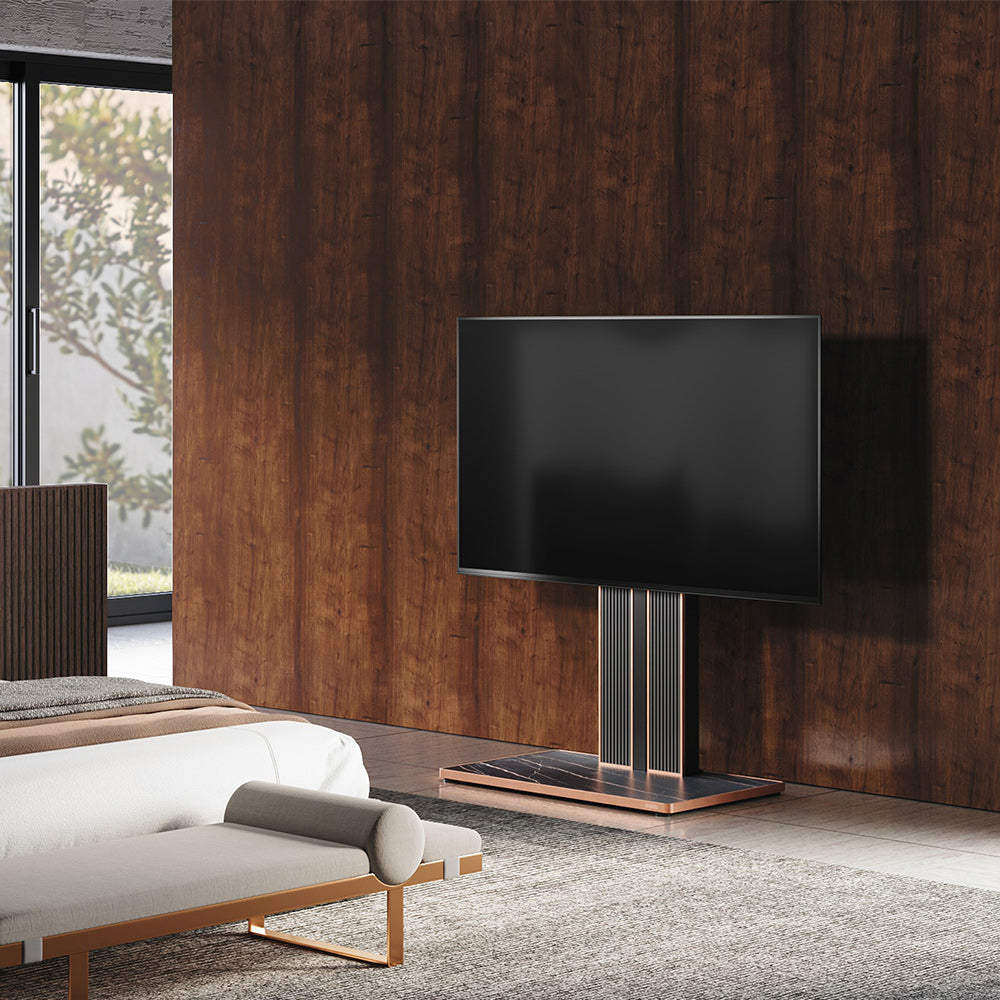
A slim floor stand provides a seamless way to mimic a custom wall-mounted installation without opening a toolbox. The best models are engineered to sit almost flush against the wall, leaving a gap of less than two inches. To ensure safety, these stands rely on heavy-duty, ultra-flat bases that slide easily under sofas or low media units. This clever engineering uses gravity and balance rather than wall anchors, making it an ideal, renter-friendly setup that requires zero drilling while keeping the screen securely in place.
Top Minimalist TV Stand Ideas by Space Type
Finding the right setup often depends on the specific dimensions and primary use of your room. Here are some tailored concepts for different areas of your home.
Sleek Solutions for Small Living Rooms
When working with limited square footage, traditional horizontal media consoles might not be the most practical option. When looking for small living room TV stand ideas, maximizing open floor area is generally crucial. Browsing a modern floor TV stands collection highlights options that offer a significant advantage over standard cabinets by utilizing vertical space rather than expanding horizontally. These stands typically occupy a fraction of the floor footprint, leaving room for essential decor or a clean pathway. By elevating the screen on a slim pillar, you can achieve an uncluttered look that prevents your space from feeling overcrowded.
High-Profile Picks for Cozy Bedrooms
Bedroom setups require a slightly different approach, primarily because your viewing angle changes completely when you are lying down. Standard low cabinets can cause neck strain if the screen sits too close to the floor. Finding the right vertical height is essential when browsing bedroom TV stand ideas. Ideally, the center of your screen should sit around 40 to 45 inches from the floor. Additionally, a minimalist stand with a swivel function allows you to adjust the viewing angle to reduce window glare, ensuring comfortable viewing without bulky furniture.
Smart Layouts for Awkward Corner Spaces
Unused corners are frequent casualties of challenging room layouts, often left empty or crammed with mismatched decor. In both compact living regions and shared multi-functional areas, utilizing a corner arrangement with a slim-profile stand helps you reclaim lost square footage. Instead of wedging a heavy, wedge-shaped corner cabinet into the space—which deeply eats into your open floor plan—utilizing a space-saving easel stand allows the screen to glide gracefully into tight angles. This positioning opens up the rest of the room, allowing you to effortlessly turn a neglected nook into a clean, highly functional entertainment zone.

Practical Styling and Setup Tips for Minimalist Living
Transitioning to a streamlined entertainment zone raises valid practical questions. Here is how to resolve common functional challenges while maintaining an elevated aesthetic.
Managing Extra Media Components
When transitioning away from traditional cabinets, handling additional gear can seem challenging. Fortunately, minimalist stands are inherently engineered with hollow columns to route power cords and HDMI cables cleanly out of direct view. For components that require a physical surface, such as gaming consoles or streaming devices, you can easily customize your configuration by exploring versatile TV stand accessories. Supplementing your frame with specialized floating shelves or rear-mounted brackets allows you to support extra electronics while preserving a clean, lightweight layout.
Overcoming Style Matching Concerns
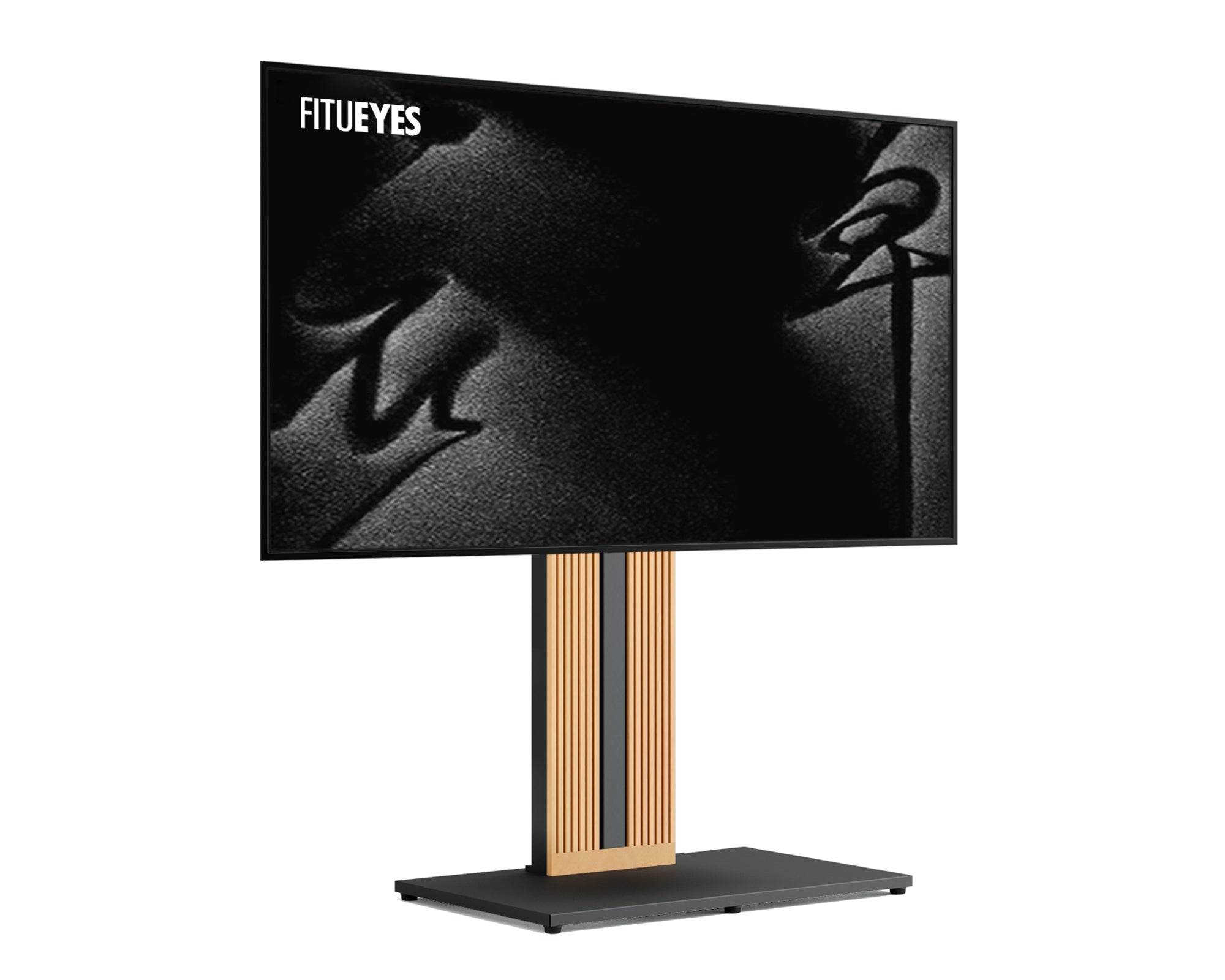
If you worry that a streamlined frame might look too clash with your existing furniture, the secret lies in balancing textures. Selecting a design that pairs sleek matte metals with warm wood grains—such as rich walnut or light oak—introduces an inviting touch that softens the presence of the television. To ensure a cohesive look, practice visual restraint with surrounding decor. Limiting the immediate area to two or three curated items, like a single green plant or a few design books, allows the clean lines of the stand to blend naturally into your overall home aesthetic.
Achieving Whole-House Adaptability
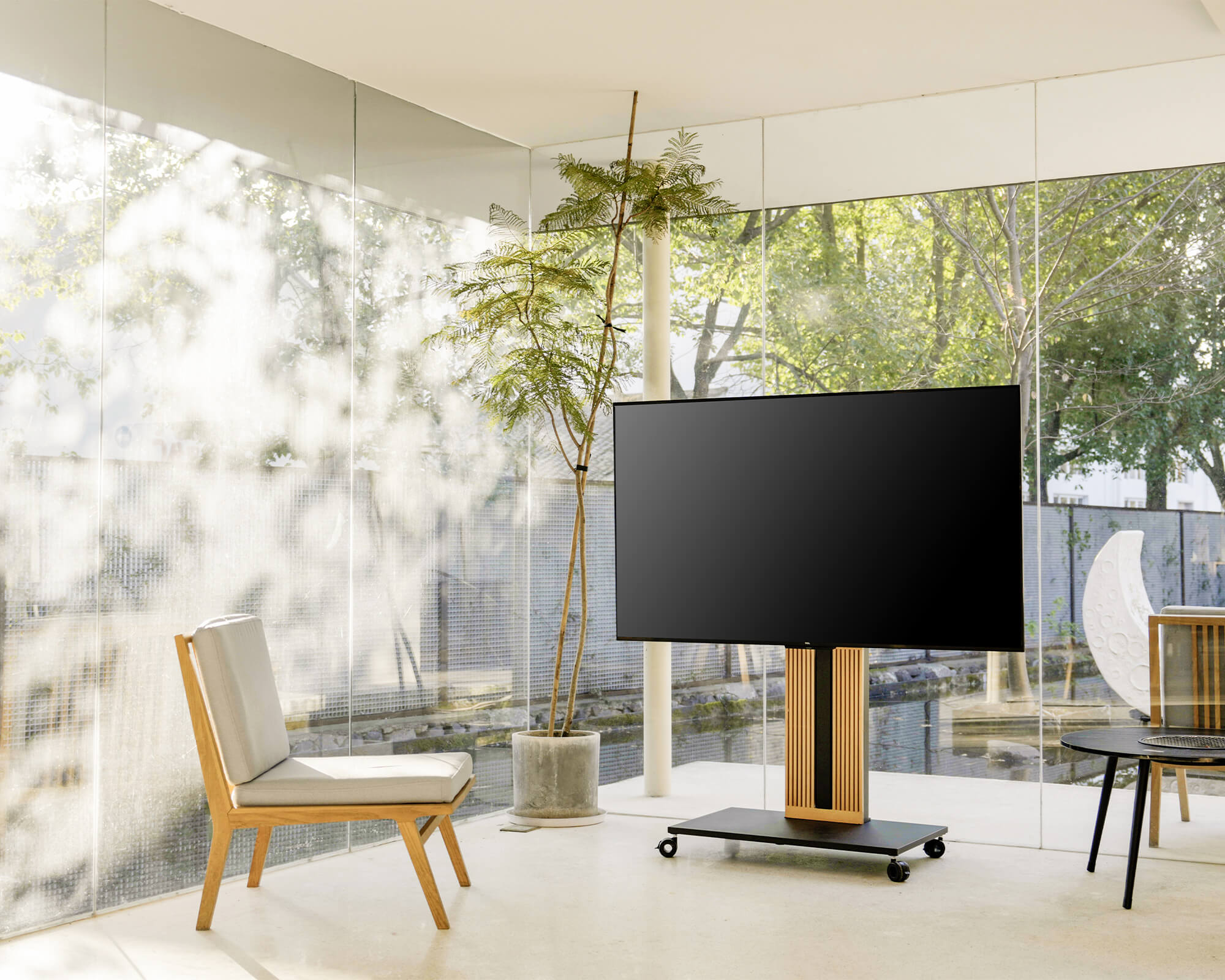
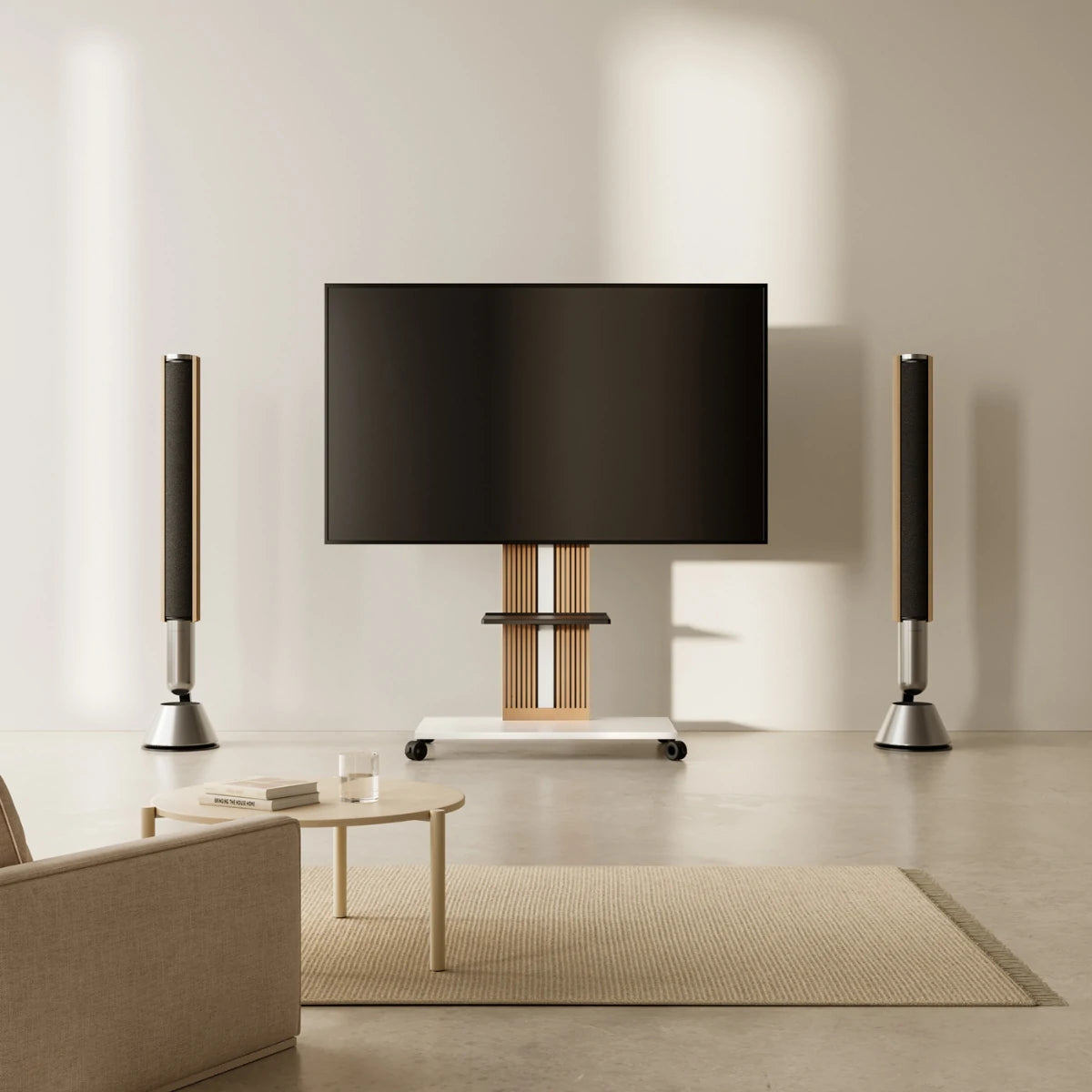
A great minimalist stand easily adapts across your entire home. For fluid transitions, you can choose a mobile setup with sleek casters, or opt for a stationary stand that can be upgraded with wheels later as your lifestyle changes. Ultimately, the understated design of these frames acts as a visual chameleon—simply moving the stand to a new room allows it to blend beautifully into its new surroundings.
Transforming Your Space: The Minimalist Way Forward
Choosing a minimalist layout is more than an aesthetic choice; it embodies a design philosophy where artistic innovation seamlessly meets everyday functionality. By replacing heavy media consoles with sleek floor stands or design-forward easel solutions, you reclaim your home’s physical and visual space, creating an environment focused entirely on relaxation. Every modern setup is engineered to support your unique lifestyle, ergonomic viewing height, and cable-hiding needs without adding unnecessary bulk. Start exploring these minimalist TV stand ideas today, and let FITUEYES accompany you on the journey toward a cleaner, more refined, and truly inspired home viewing experience.
FAQs
1. How do I prevent a heavy minimalist floor stand from leaving permanent dents on thick carpets?
Fiber Protection: High-quality stands use wide, flat solid steel or tempered glass bases to distribute weight evenly, which naturally minimizes deep indentations far better than sharp, traditional furniture legs. To completely protect delicate or plush carpet fibers, you can place a low-profile, heavy-duty felt pad trimmed to the exact shape of the base underneath; this safeguards your flooring without compromising the stand’s ultra-low center of gravity and anti-tip stability.
2. Where do you hide bulky power strips and media hubs in a minimalist setup?
Integrated Management: Well-designed minimalist stands are engineered to solve this challenge natively through built-in structural features. Rather than leaving you to rig up external fixes, these frames utilize spacious hollow central columns or integrated rear-spine storage tracks specifically scaled to house power strips and bulky adapters. By routing all wiring inside the stand's own backbone, the entire electrical layout stays neatly concealed within the clean silhouette of the furniture.
3. Is it difficult to assemble a freestanding minimalist TV stand by yourself?
Assembly Expectations: Most minimalist stands feature a highly straightforward design consisting of a heavy base, a central structural spine, and a top bracket. Putting the physical framework together typically takes one person about 20 to 30 minutes using basic hex tools. However, when it comes to lifting and securely locking a large television screen onto the mounting plate, having a second pair of hands is highly recommended to avoid accidental drops or strain.