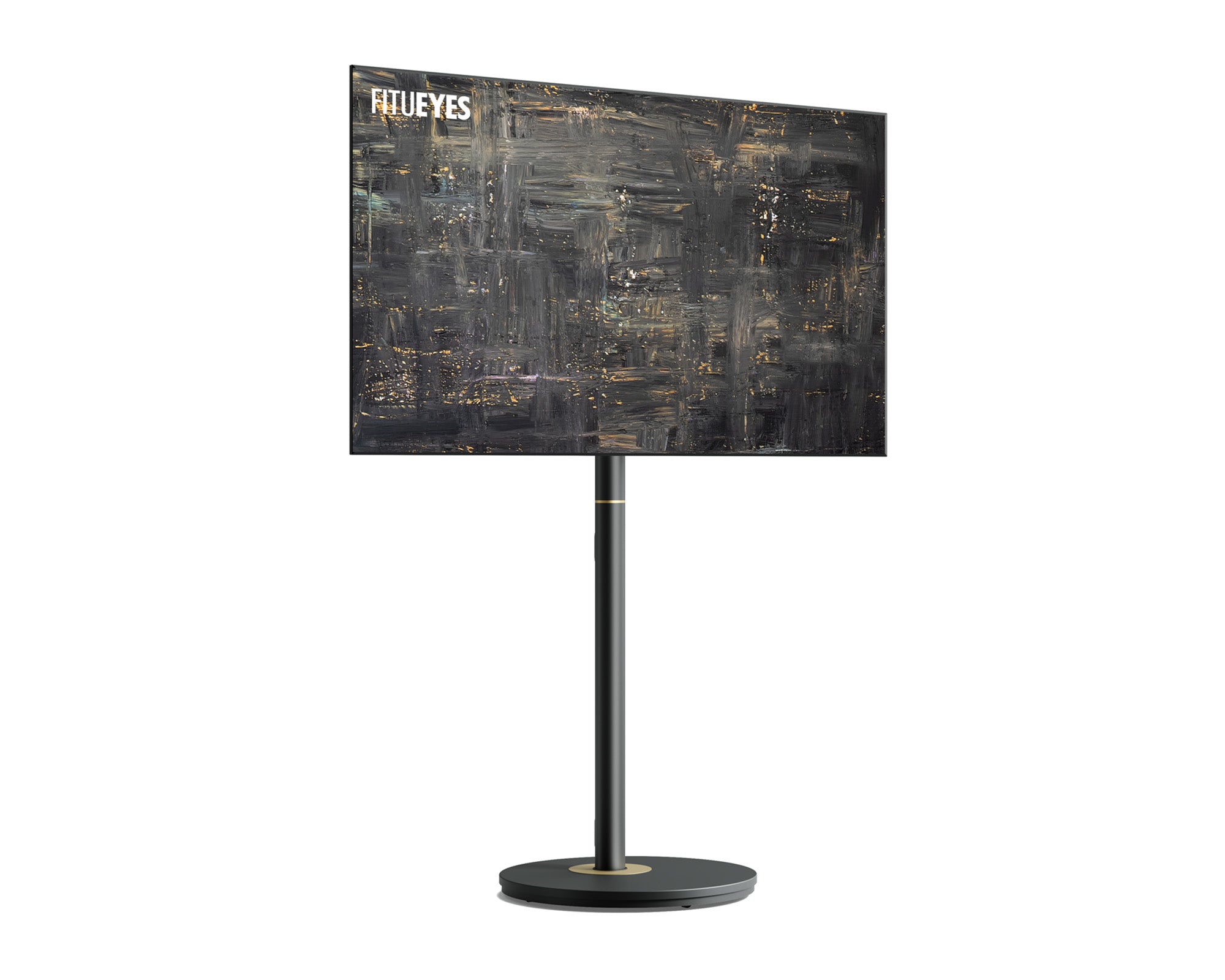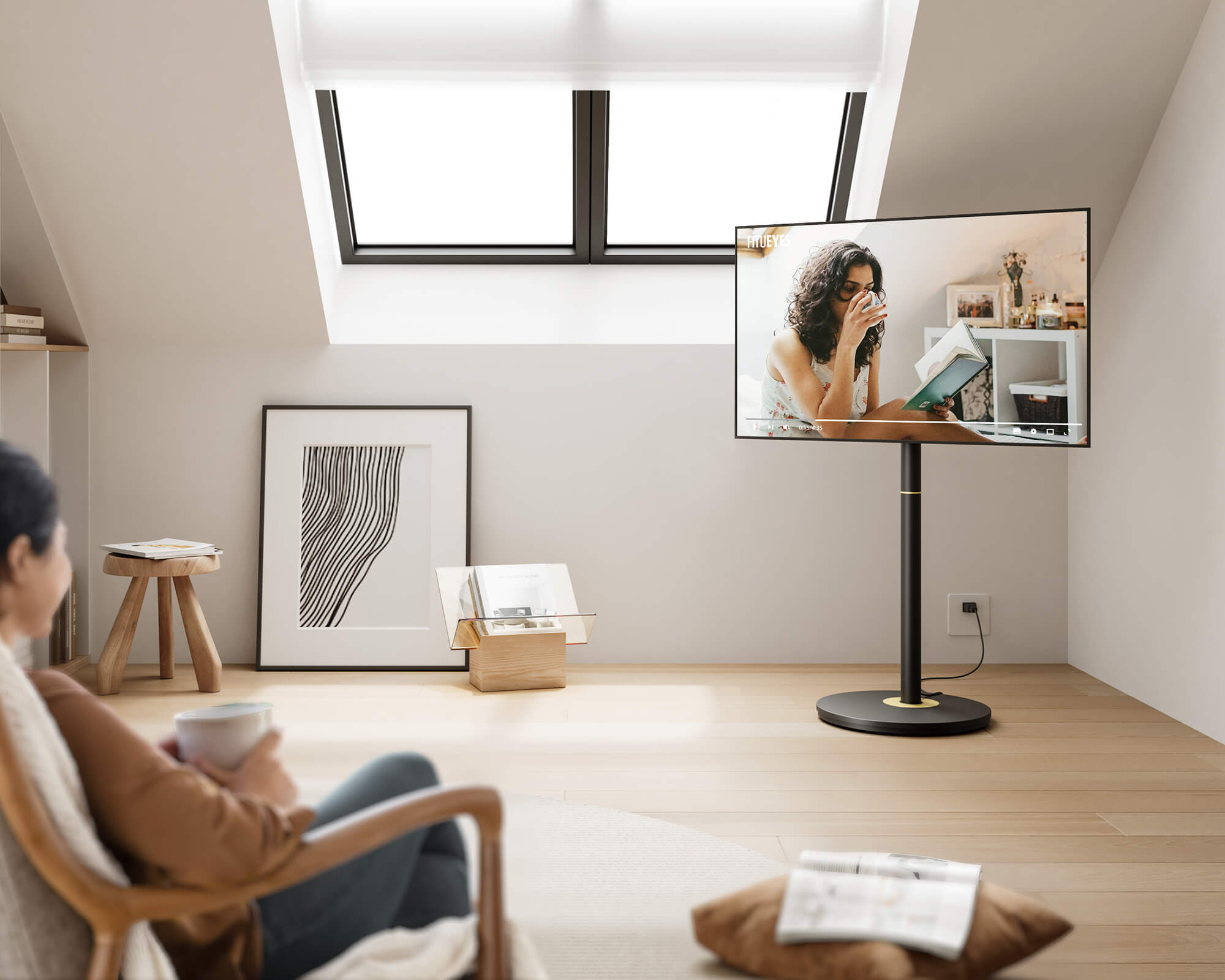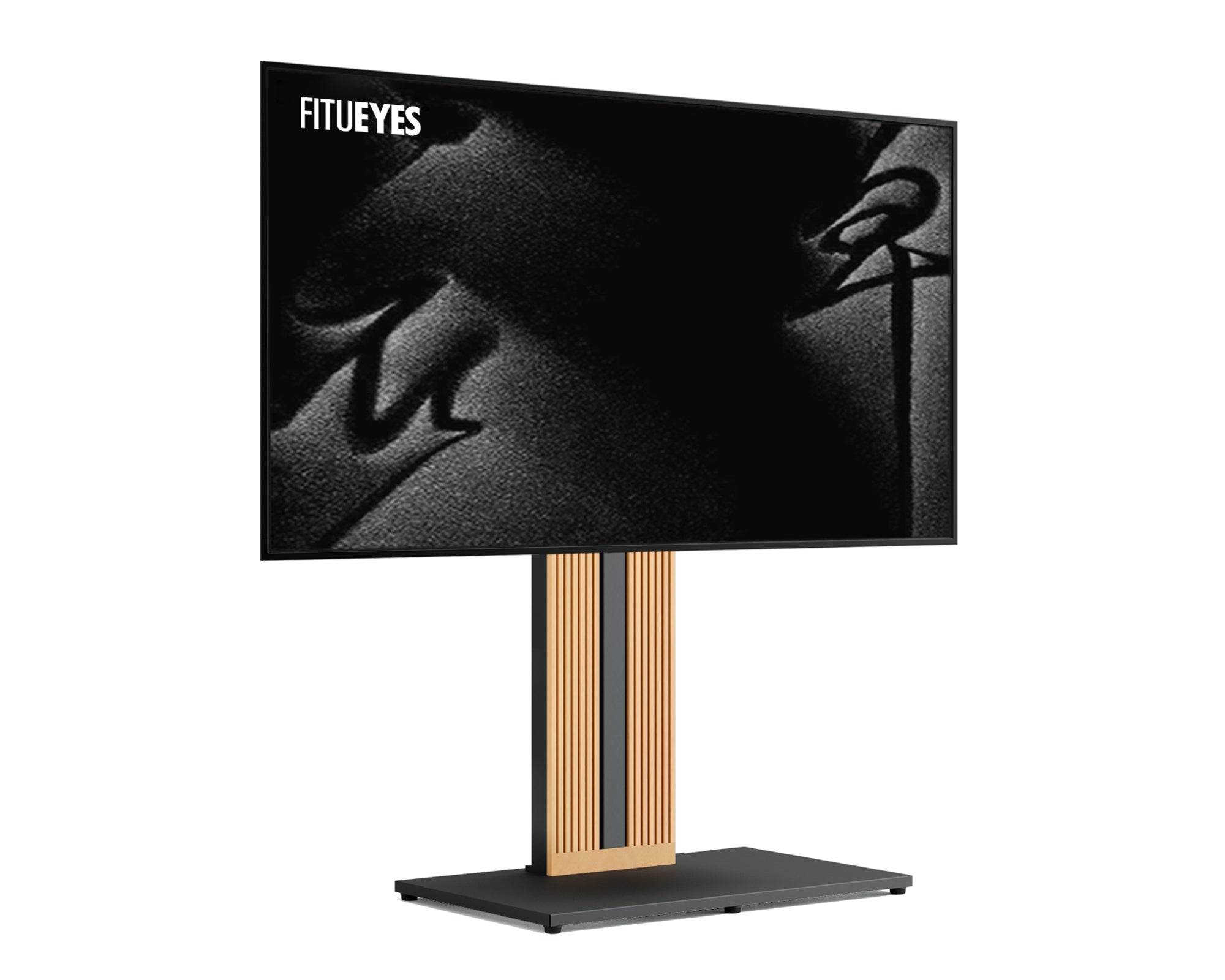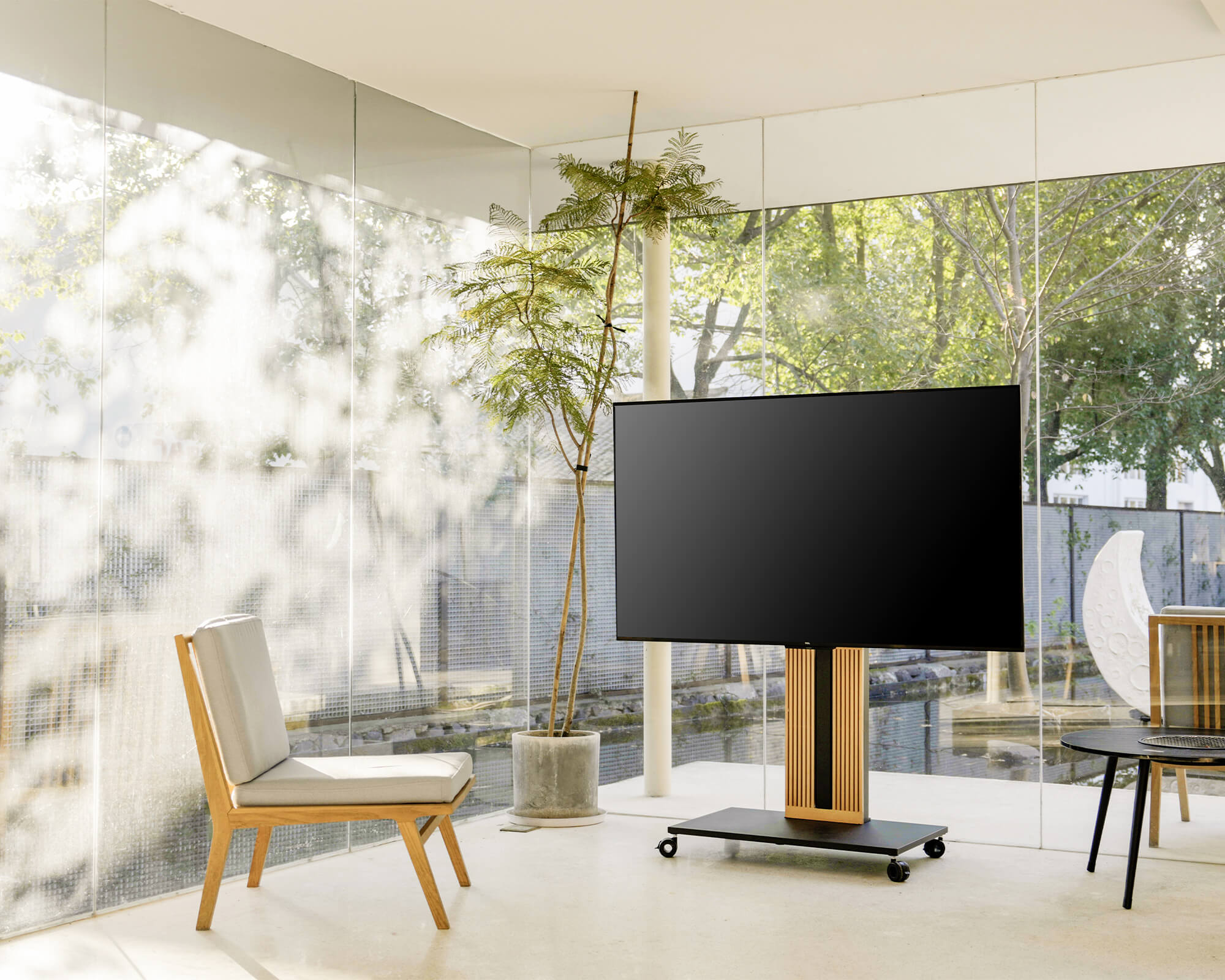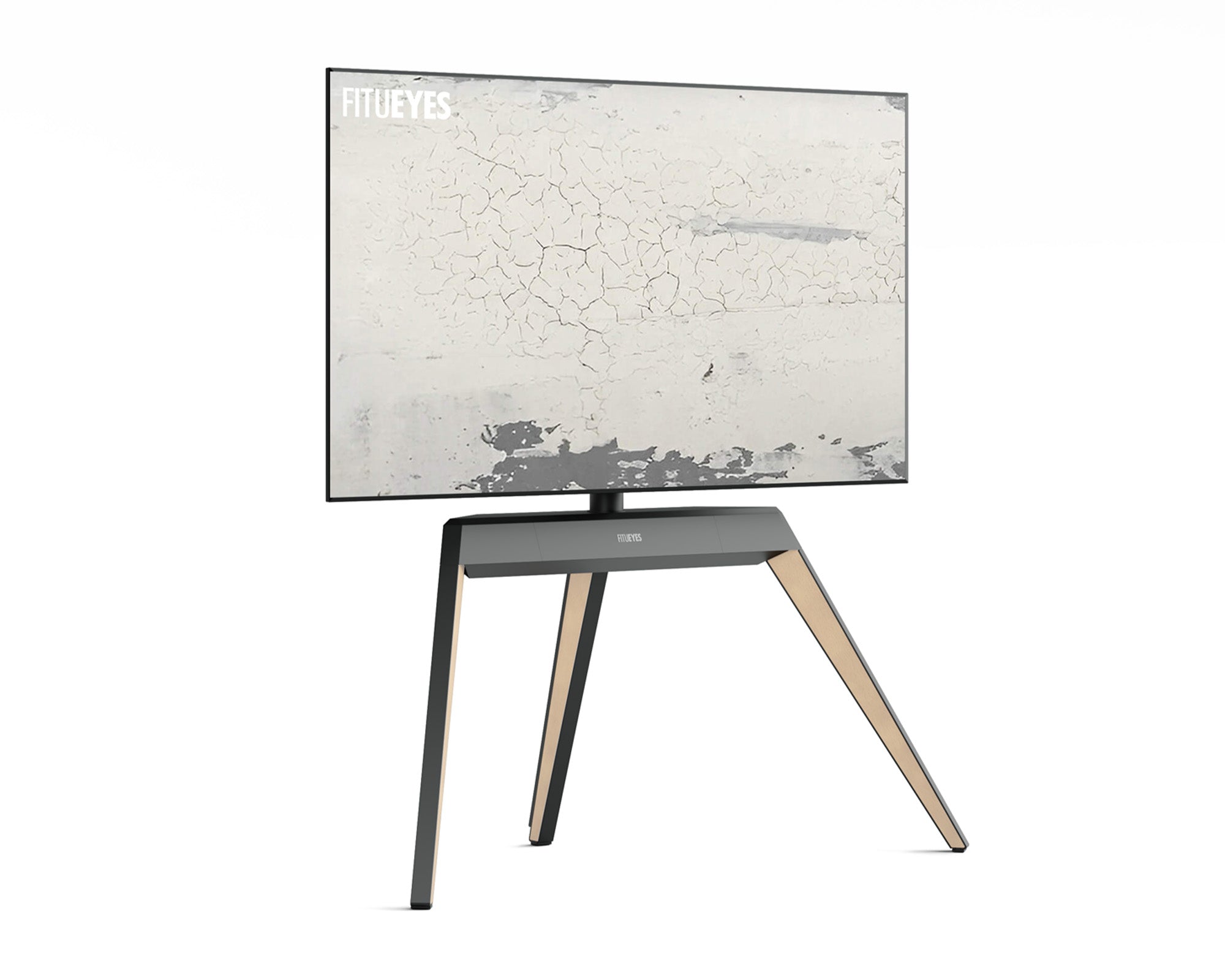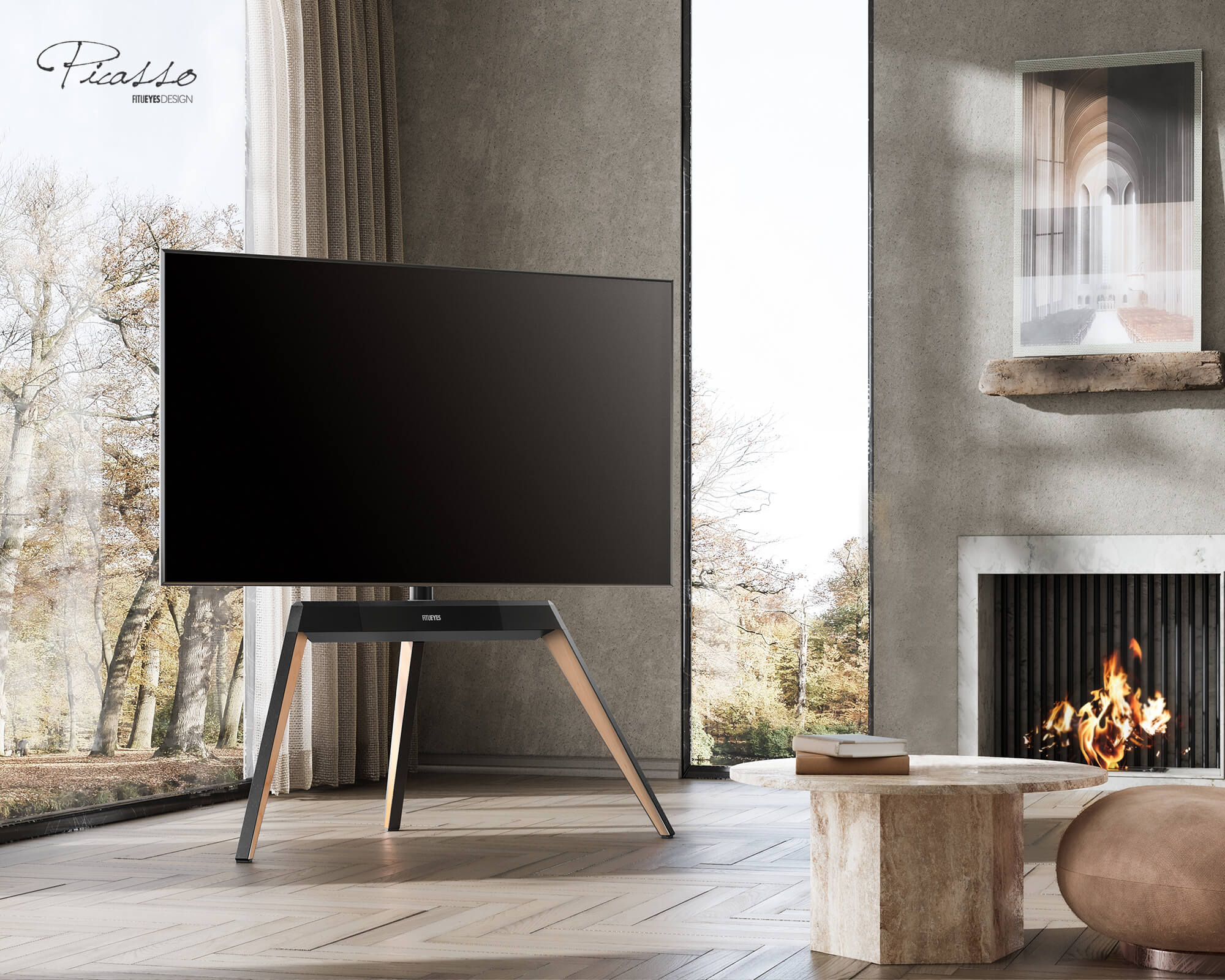



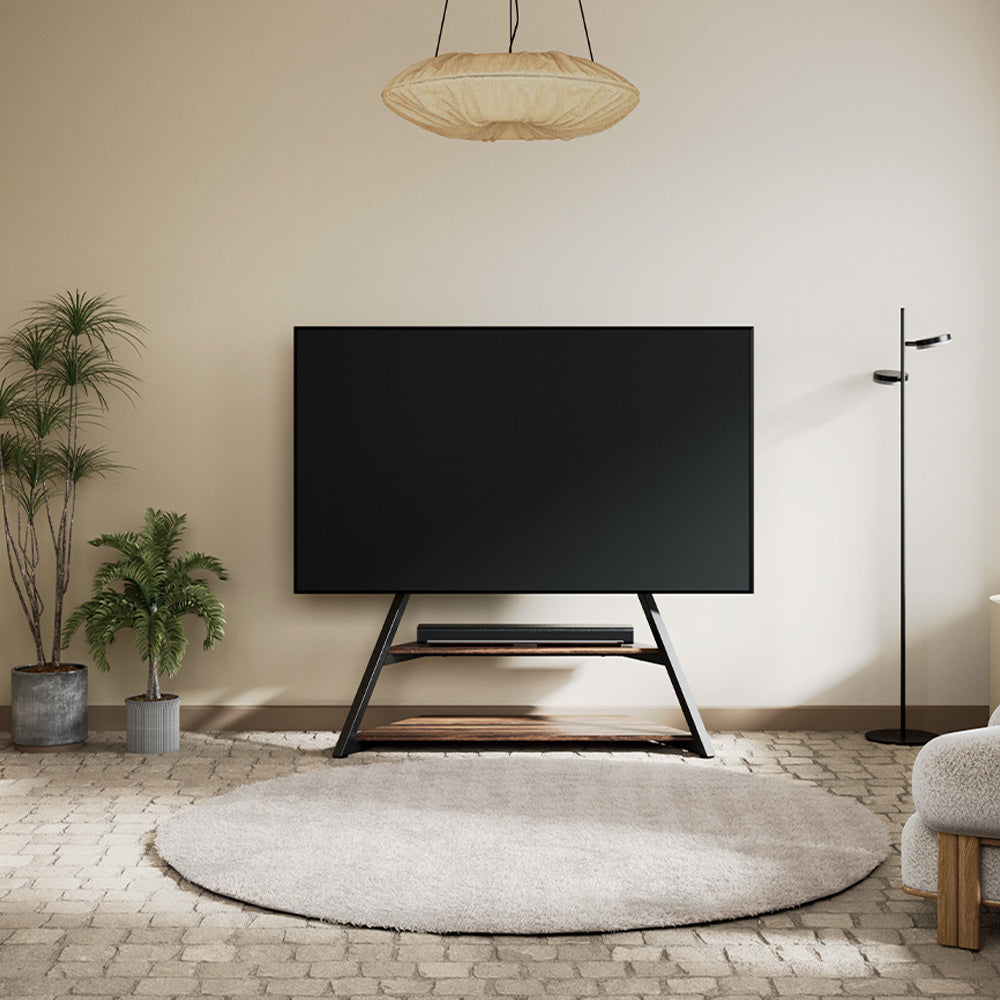
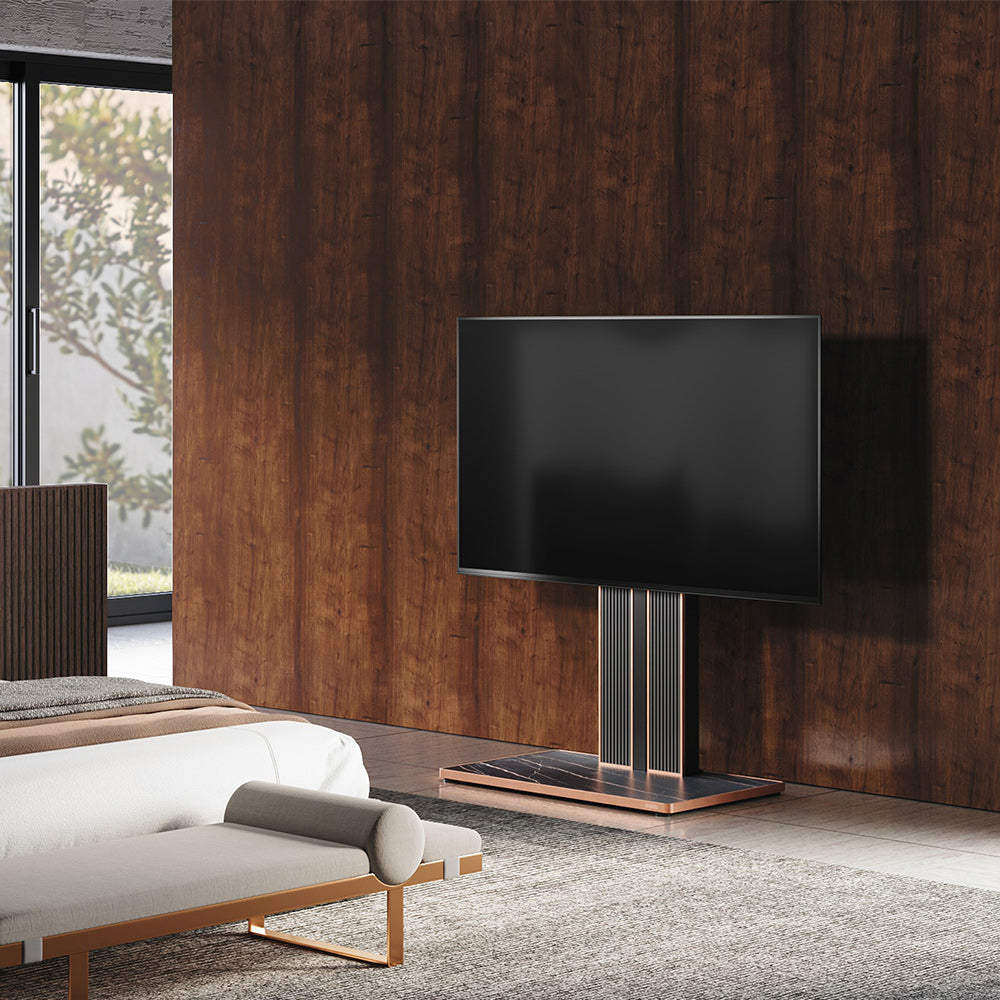
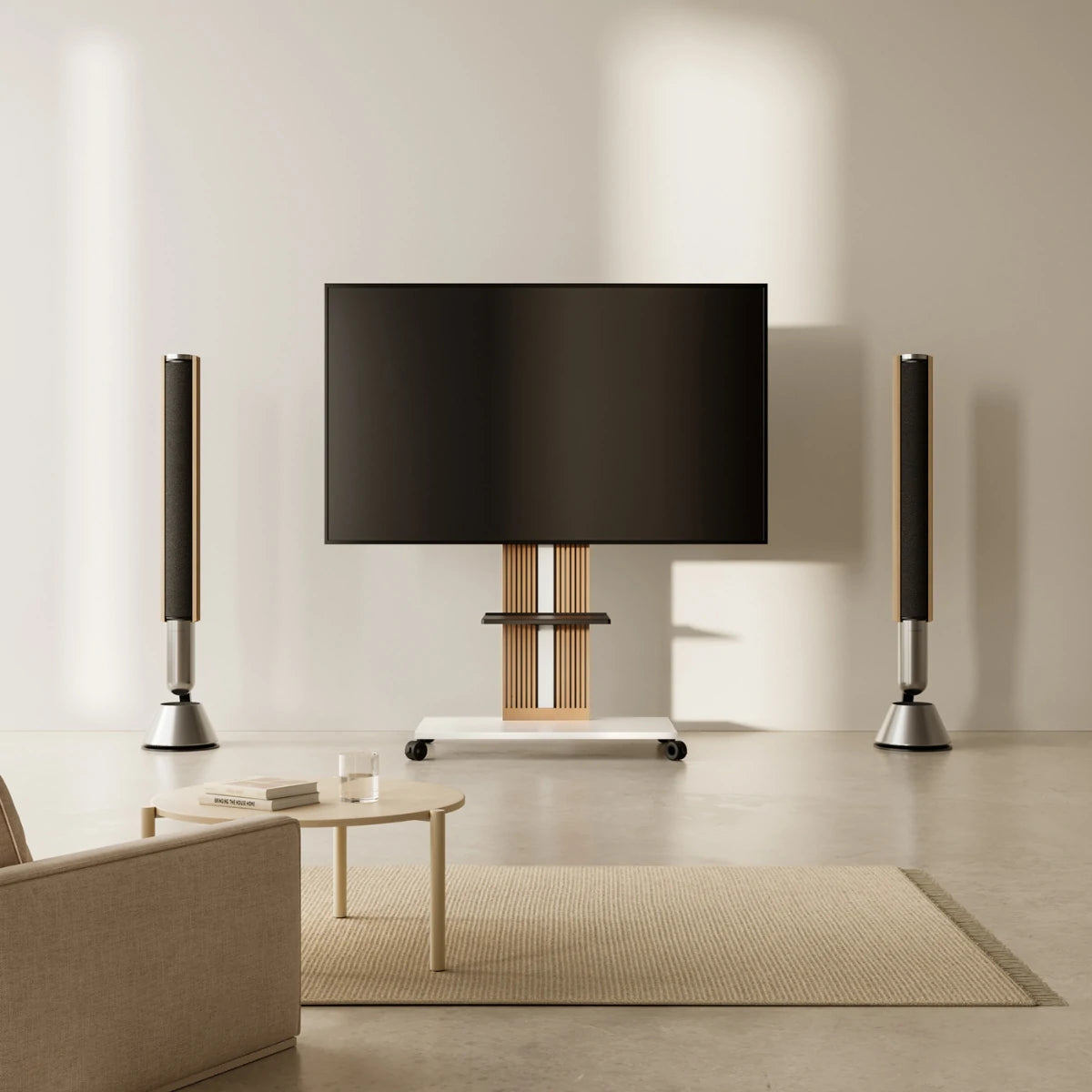
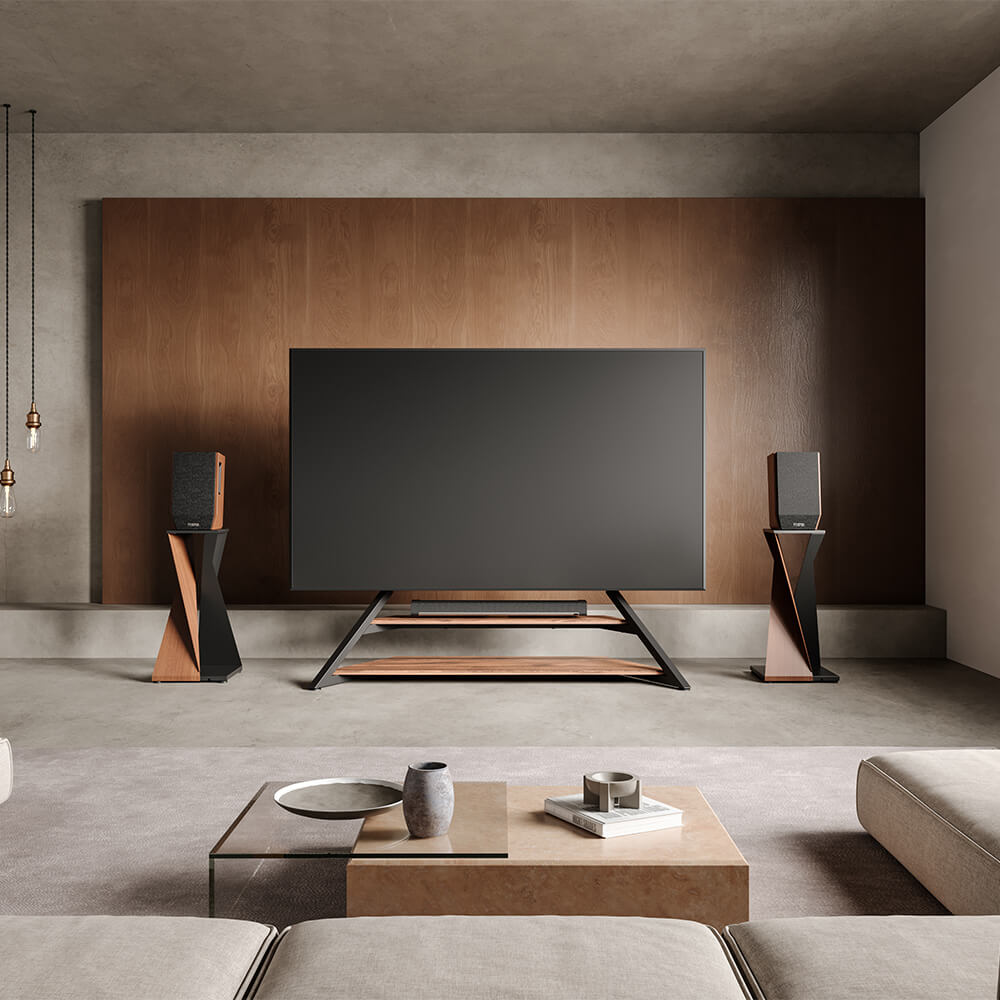
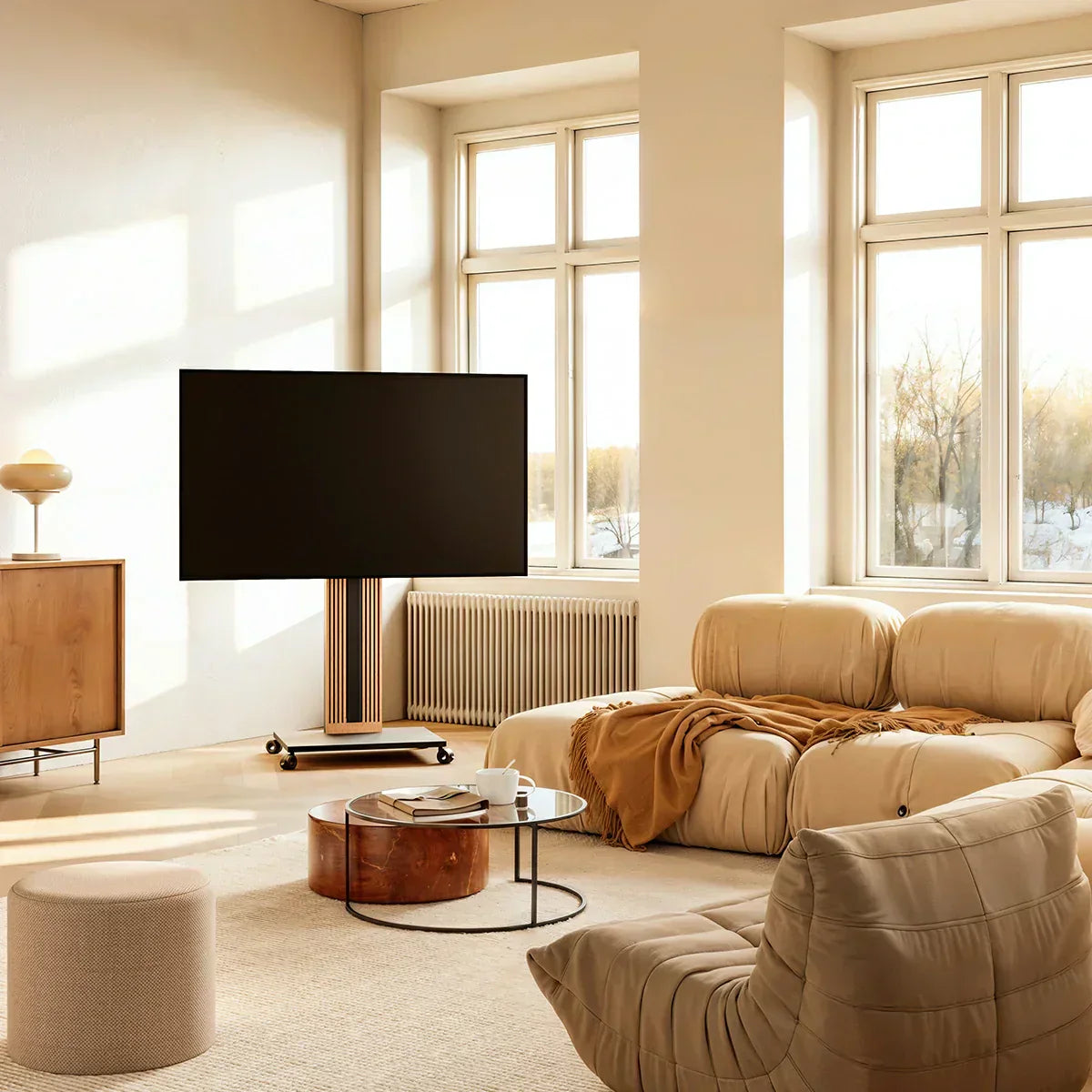
The ideal tall TV stand height isn't a rigid number, but a comfortable zone that aligns your screen with your natural line of sight—typically 42 inches from the floor for a standard couch, or up to 50 inches for an elevated bed. Instead of dealing with low consoles that leave your display feeling mismatched with your seating, a taller alternative tailors your entertainment to your specific room layout. This guide breaks down how to choose the perfect setup for bedrooms, living rooms, and multi-functional spaces without the guesswork, ensuring your entertainment area looks great and feels incredibly comfortable.

Why Your Space Needs the Right TV Stand Height?
The height of your media furniture plays a massive role in your comfort. Traditional, low-profile media cabinets are designed for low-slung couches, but they quickly fall short if your home features deep-cushion sofas, recliners, or high-profile bed frames. Forcing your eyes to constantly adjust or your neck to tilt upward leads to subtle, nagging physical fatigue over time.
Good ergonomics suggest that your line of sight should rest comfortably within 10 to 15 degrees below the horizontal plane when looking at the screen. A well-chosen tall TV stand lifts the display into this sweet spot, ensuring that your posture stays completely relaxed whether catching up on the news or diving into a multi-hour gaming session. Shifting to a taller layout harmonizes your room's vertical space with your body's natural alignment, preventing neck pain seamlessly.
The Golden Rule: Tailoring Placement to Seated Eye Level
To get started on your layout, establish your room's unique baseline using a simple step-by-step approach.
Step 1: Estimate Your Seated Eye Level
Sit naturally in your favorite viewing spot—whether a living room couch or curled up against your bedroom headboard. Measure the vertical distance from the floor up to your eyes. For standard living room setups, this number lands around 40 to 42 inches, serving as the anchor point for your furniture decisions.
Step 2: Factor in Your Screen's Vertical Profile
A common pitfall when looking at a TV stand height guide is relying purely on the diagonal size listed on the product box. Instead, measure the actual vertical height of the screen's outer frame from top to bottom. Divide that dimension by two to find the exact horizontal centerline of your display.
Step 3: Account for Your Mounting Style
If resting the TV directly on its factory legs, measure the small gap those legs create—usually an extra 2 to 4 inches. Subtract this leg clearance and your half-screen height from your seated eye level to find your target cabinet surface height. If you use a modern floor stand with an integrated VESA bracket, you can easily slide the bracket along a central pole to customize your fit.
How Screen Dimensions Shift Your Height Decisions?
The physical height of your screen dictates how low or high your console needs to be. As screens get larger, their centerpoints move upward, meaning a stand that is perfect for a small screen might accidentally push a massive display into an uncomfortable position.
Vertical Dynamics for 24 to 65-Inch Screens
A typical 55-inch television has a physical width of about 48 inches and a vertical height of roughly 27 inches. Because its screen profile is compact, it pairs beautifully with true tall cabinets measuring between 26 and 30 inches high. When exploring a dedicated catalog of TV stands for 24-65 inch TVs, always choose a console wider than the display itself; a base of at least 54 inches wide avoids an awkward, top-heavy look.
Proportional Height for 65 to 88-Inch Displays
Moving up to a 65-inch screen—measuring around 57 inches wide and 32 inches tall—means the top surface of your furniture needs to step down to compensate for the expanding screen area. A stand height of 22 to 26 inches keeps the center of the image right where it needs to be. Reviewing tailored options within a specialized collection of TV stands for 65-88 inch TVs ensures you get the structural integrity and generous width required to keep your living room proportions looking intentional and clean.
Heavy-Duty Heights for 85 to 100-Inch Home Theaters
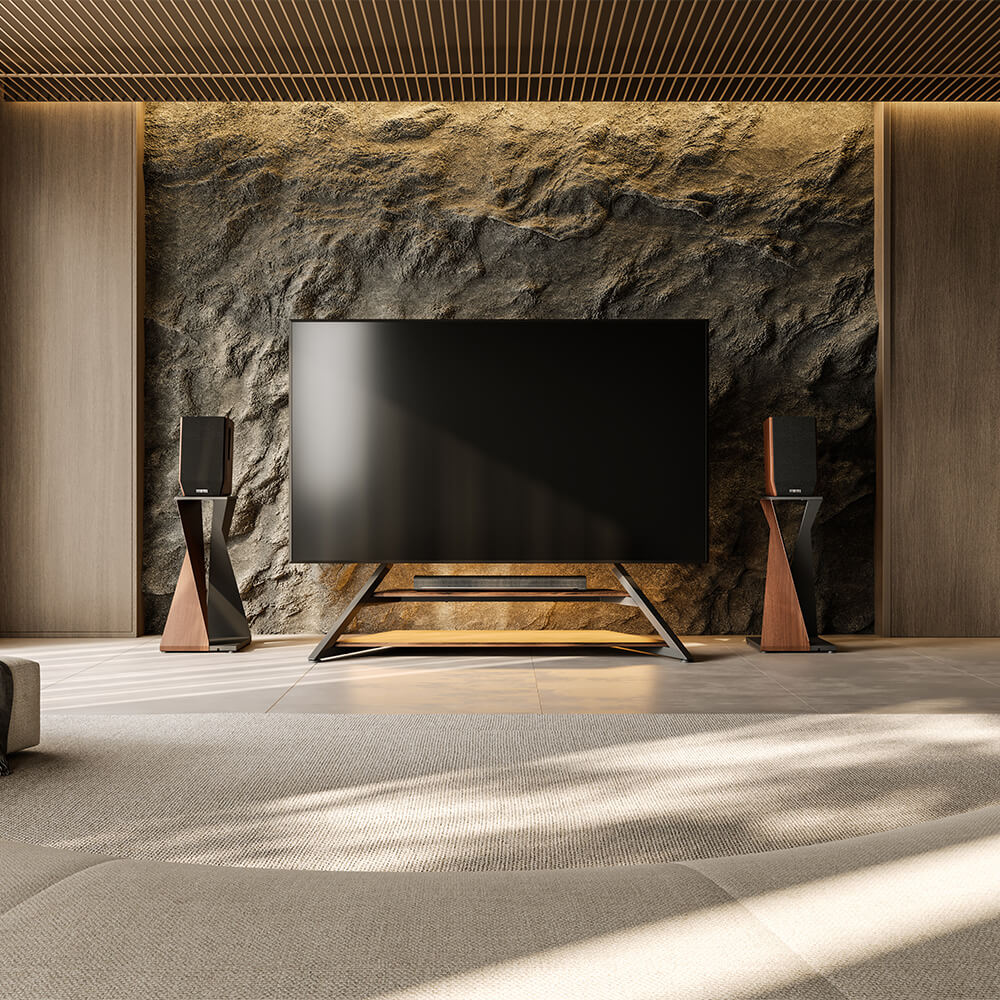
Transitioning into ultra-large home theater territory with 75-inch to 100-inch screens means traditional wood furniture can feel incredibly bulky. For a much sleeker, safer alternative, sourcing your setup from a premium lineup of TV stands for 85-100 inch TVs allows you to securely lock these heavy displays onto a solid steel spine. This completely removes the bulk of a massive cabinet while effortlessly handling substantial weight capacities up to 187 lbs without any risk of tipping forward.
Room Layouts: Adjusting Heights for Bedrooms and Living Rooms
Every space behaves differently, meaning a living room solution rarely solves a bedroom dilemma. In a living room, your seating is low and your posture is upright, keeping your eye level close to the ground. However, when looking for a high TV stand for bedroom layouts, the math changes completely. Because standard mattresses sit significantly higher than couch cushions, a low console forces you to tuck your chin uncomfortably just to watch a movie.
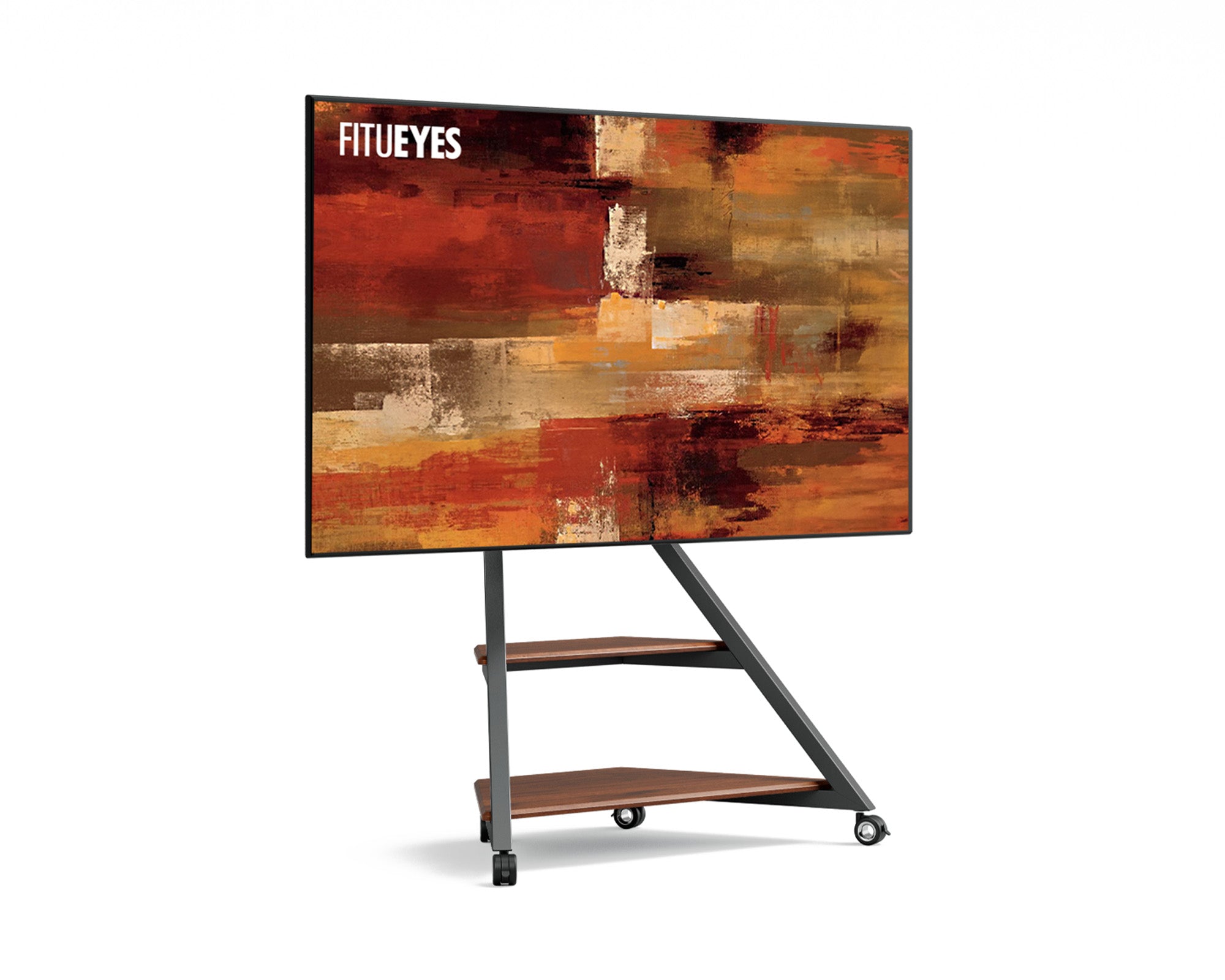
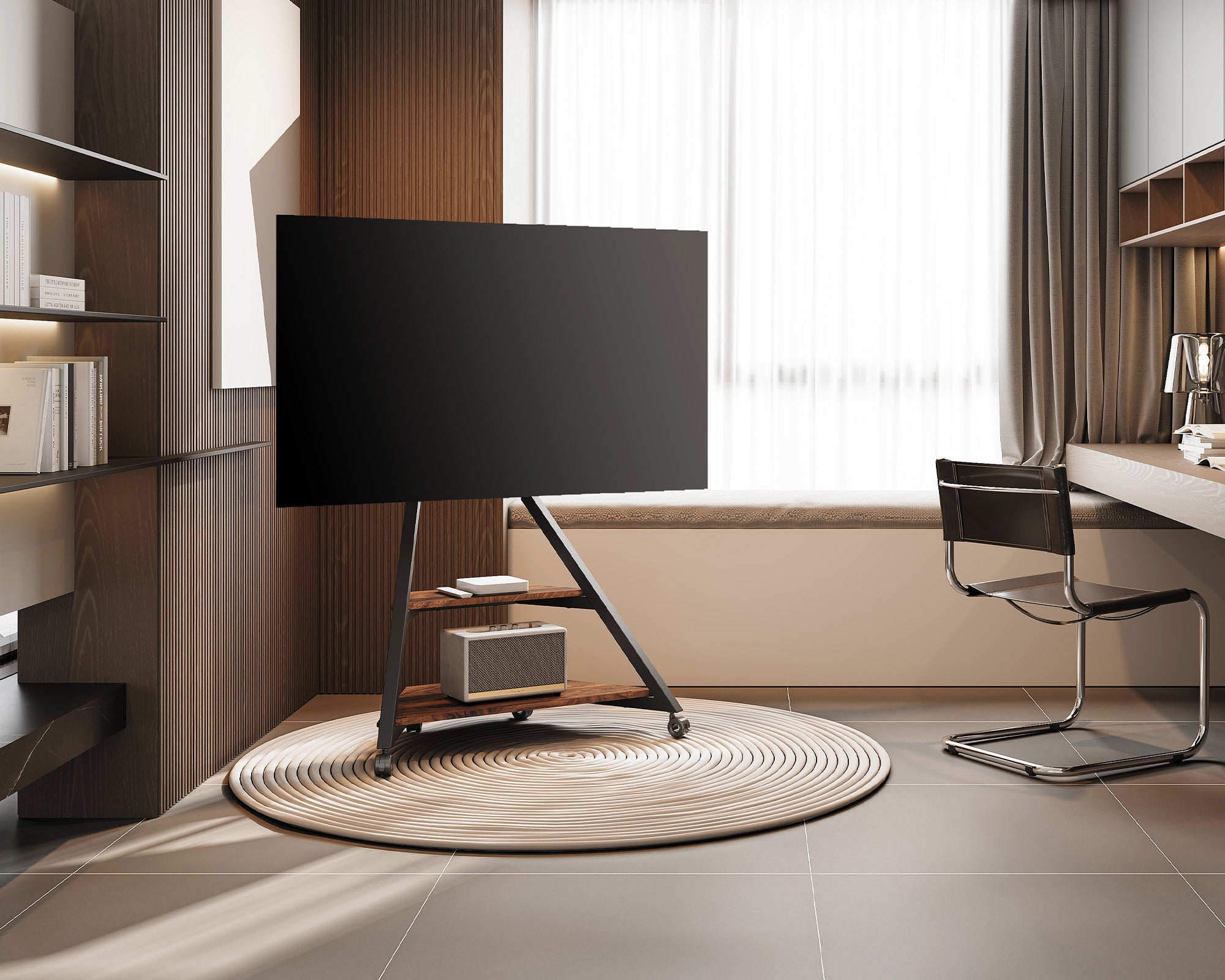
To solve these cross-room challenges, highly adaptable furniture options like the Eiffel V2 FT88 TV Stand offer an ideal layout solution. Engineered with smooth optional wheels, customizable height adjustments, and dynamic swivel angles, this type of rolling mount allows you to seamlessly wheel your entertainment display from the living room couch directly to your bedside while perfectly matching your natural line of sight.

Floor TV Stands vs. Wall Mounts: The No-Drill Space Saver
If you want an elevated, clean look, you might assume drilling into drywall for a traditional wall mount is your only choice. However, freestanding floor stands offer the ultimate middle ground. While a wall mount looks sleek, it requires finding studs and drilling heavy lag bolts—a permanent change that landlords often forbid.
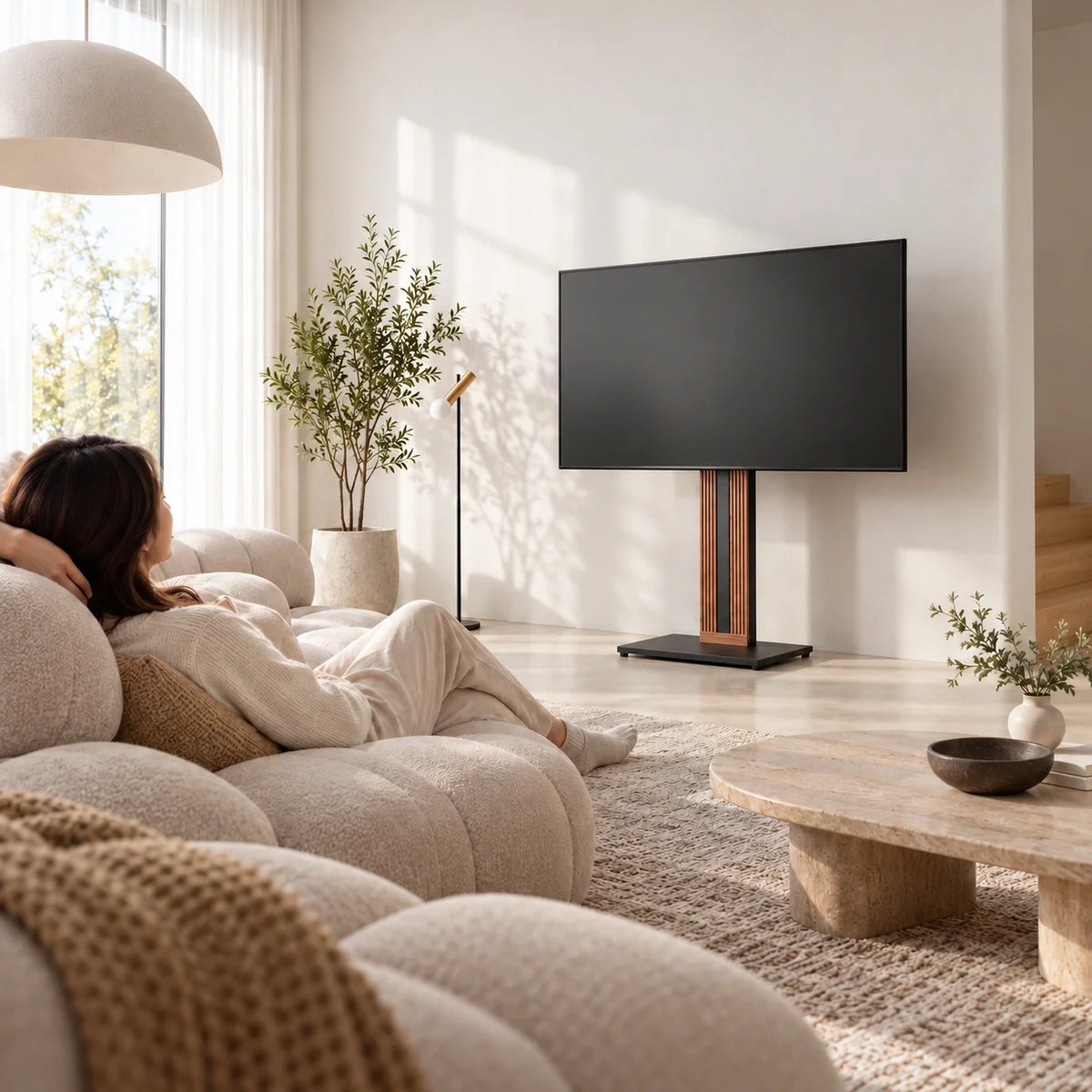
Choosing a freestanding pillar gives you that exact same "floating" aesthetic without a single drill bit ever touching your walls. If you are currently navigating strict lease agreements but still crave this clean look, diving into the logic behind a no-drill solution: why TV stands are perfect for renters will help you confidently choose an adaptable setup without risking your security deposit.
FAQs
1. Is a tall floor TV stand safe for homes with curious toddlers or pets?
Yes, high-quality floor stands are specifically engineered to minimize tip-over risks. They utilize heavily weighted, heavy-duty bases to significantly lower the unit's center of gravity, paired with an inherently stable structural design that securely holds the display in place and resists accidental bumps. This ensures rock-solid stability whether the stand is placed on sleek hard floors or thick carpets. If needed, an additional anti-tip device can be purchased separately to use alongside the stand.
2. Can I easily fit a soundbar on a tall floor TV stand?
Absolutely. Most modern stands act as modular entertainment ecosystems rather than rigid poles. You can easily expand your storage capacity or mount gaming consoles by pairing your unit with versatile FITUEYES TV stand accessories. If you want a clean audio configuration, integrating a dedicated soundbar mount allows you to attach your speaker directly to the central column, keeping it perfectly aligned right beneath the screen.
3. Will a tall TV stand make a compact apartment feel cluttered?
Not at all—it actually maximizes tight spaces by utilizing vertical air space instead of consuming valuable floor real estate. A tall, slim stand draws the eye upward, which visually elongates your walls and makes ceilings feel higher. By elevating the screen, you clear up lower sightlines and open up the room, keeping your compact layout feeling bright, airy, and completely uncrowded.