


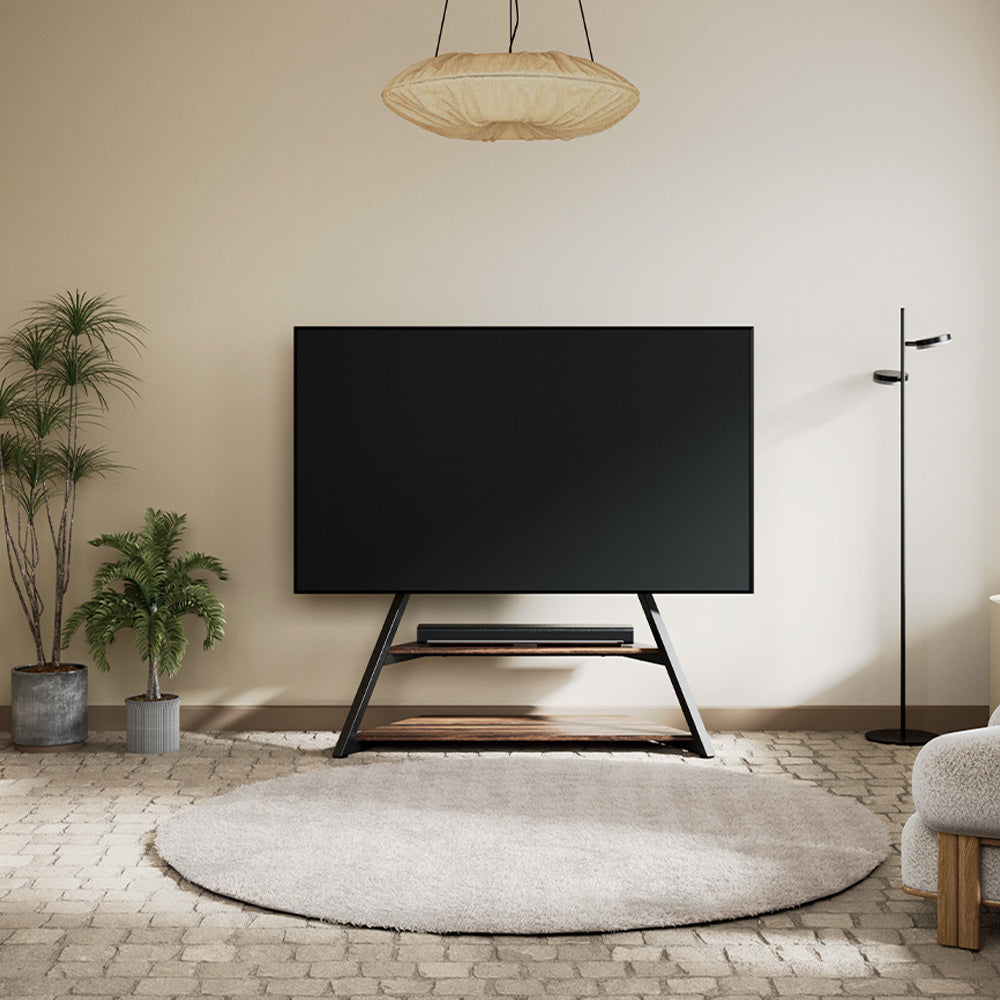
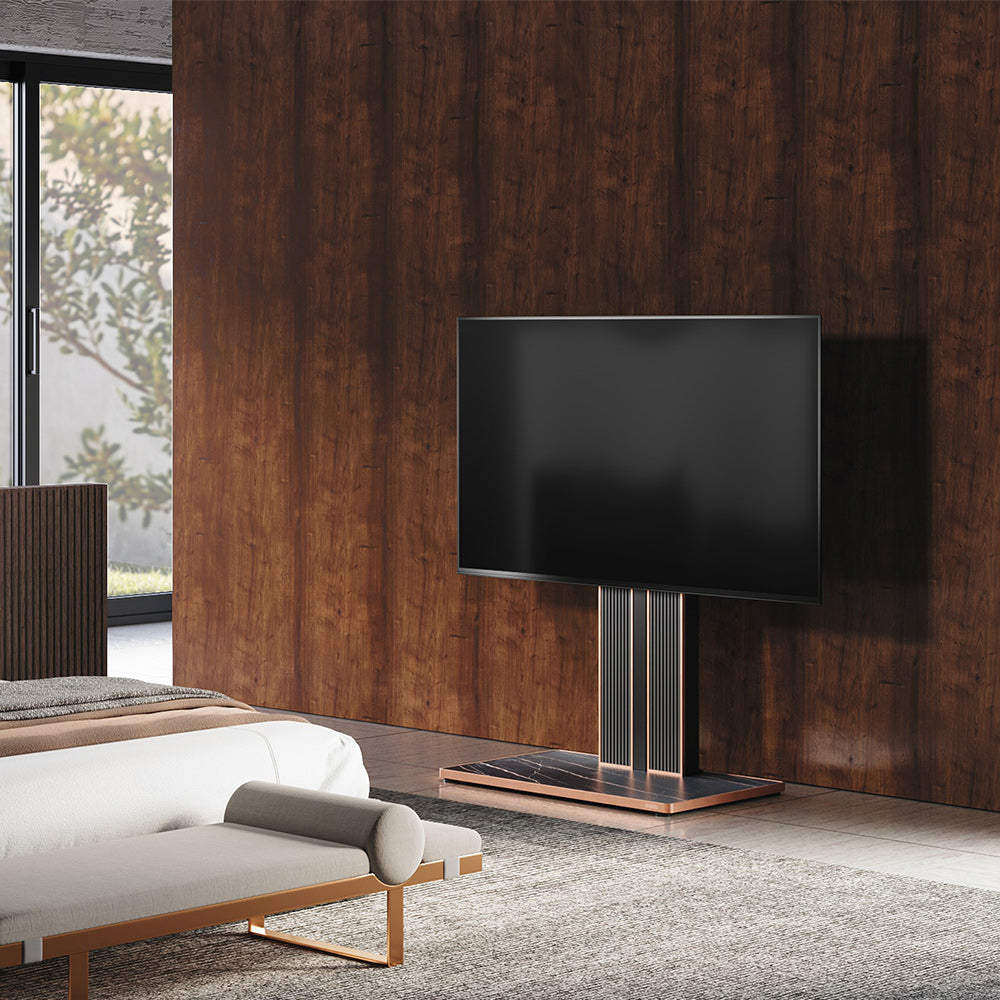
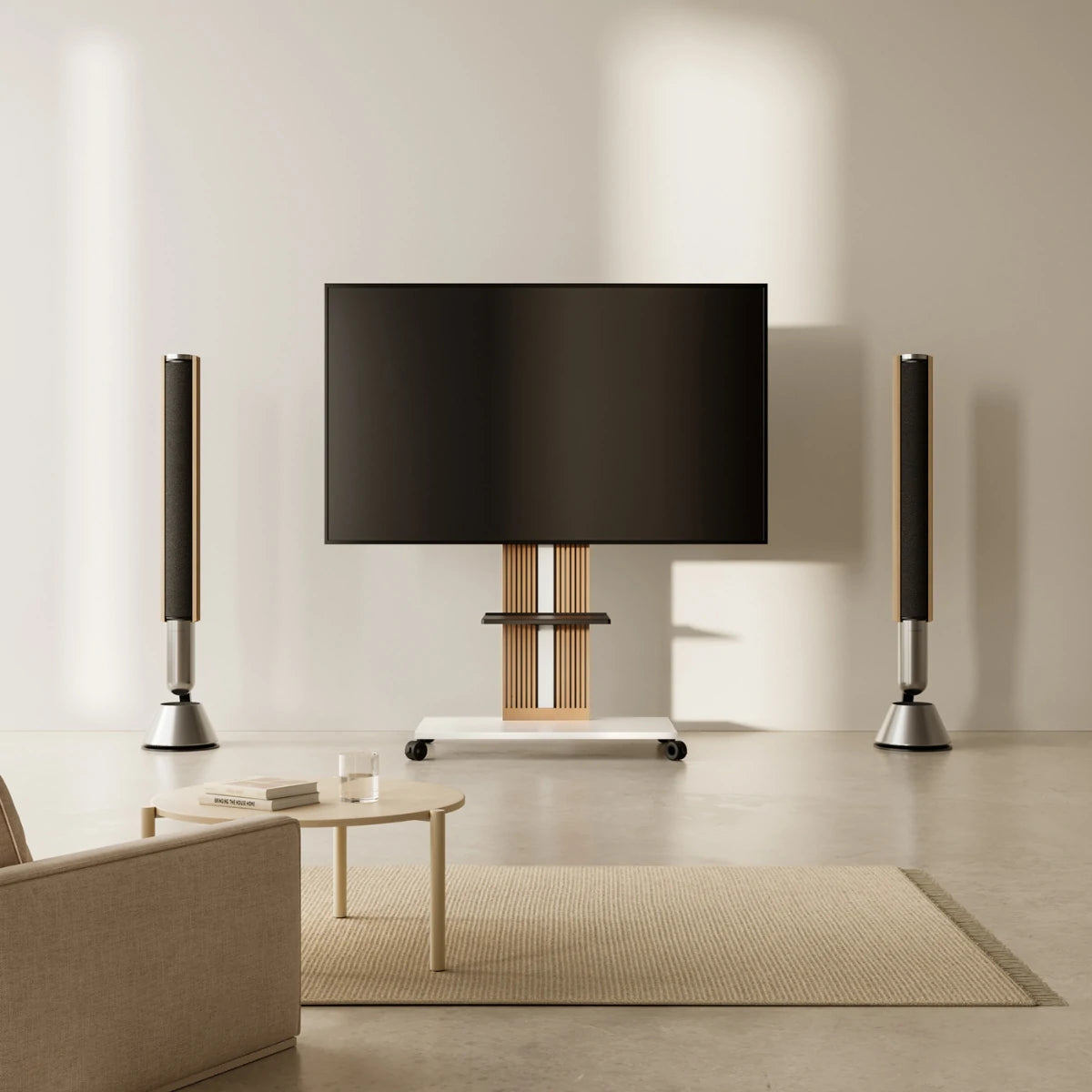
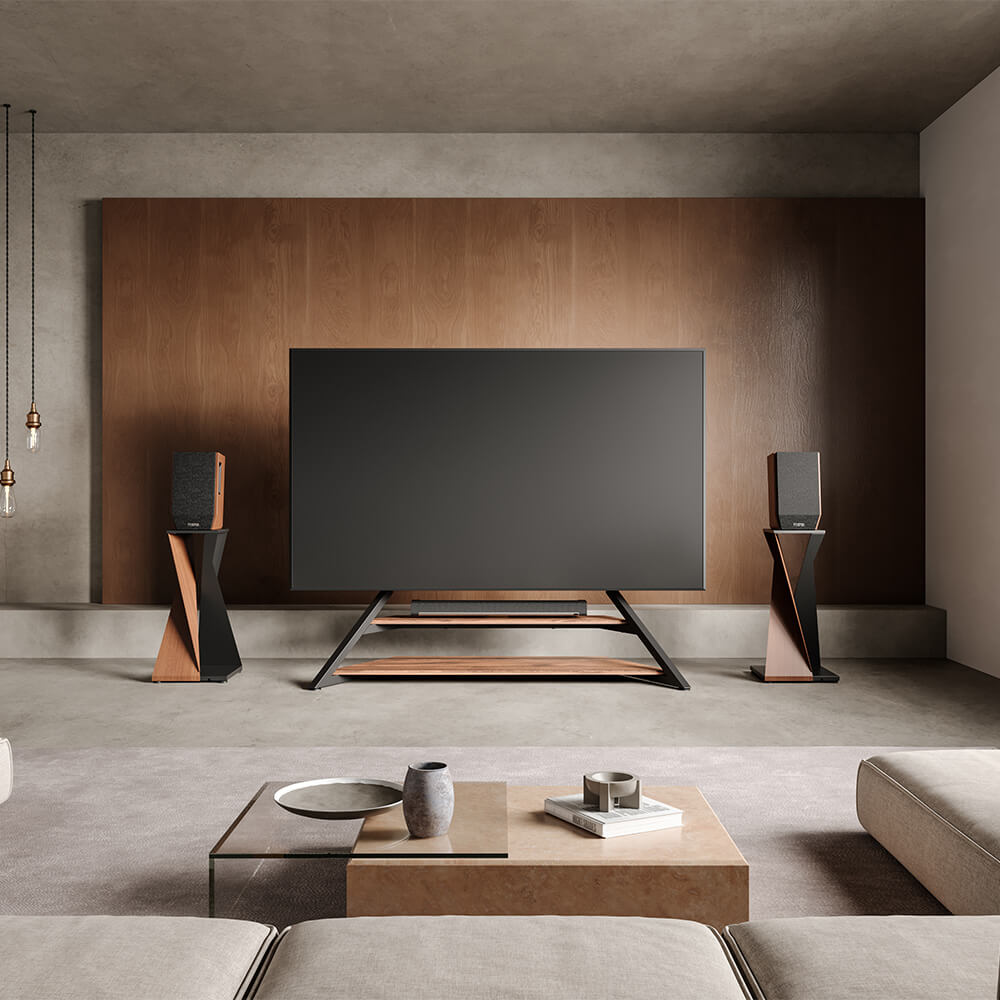
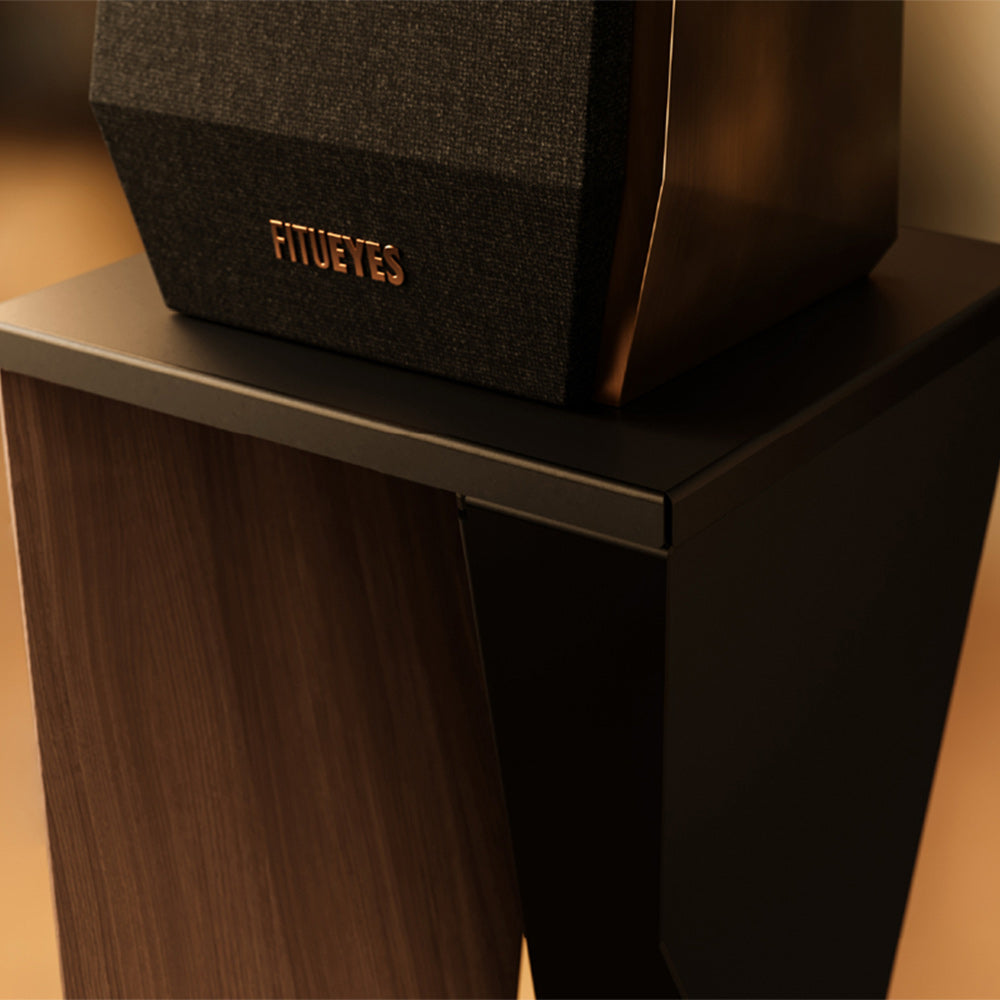
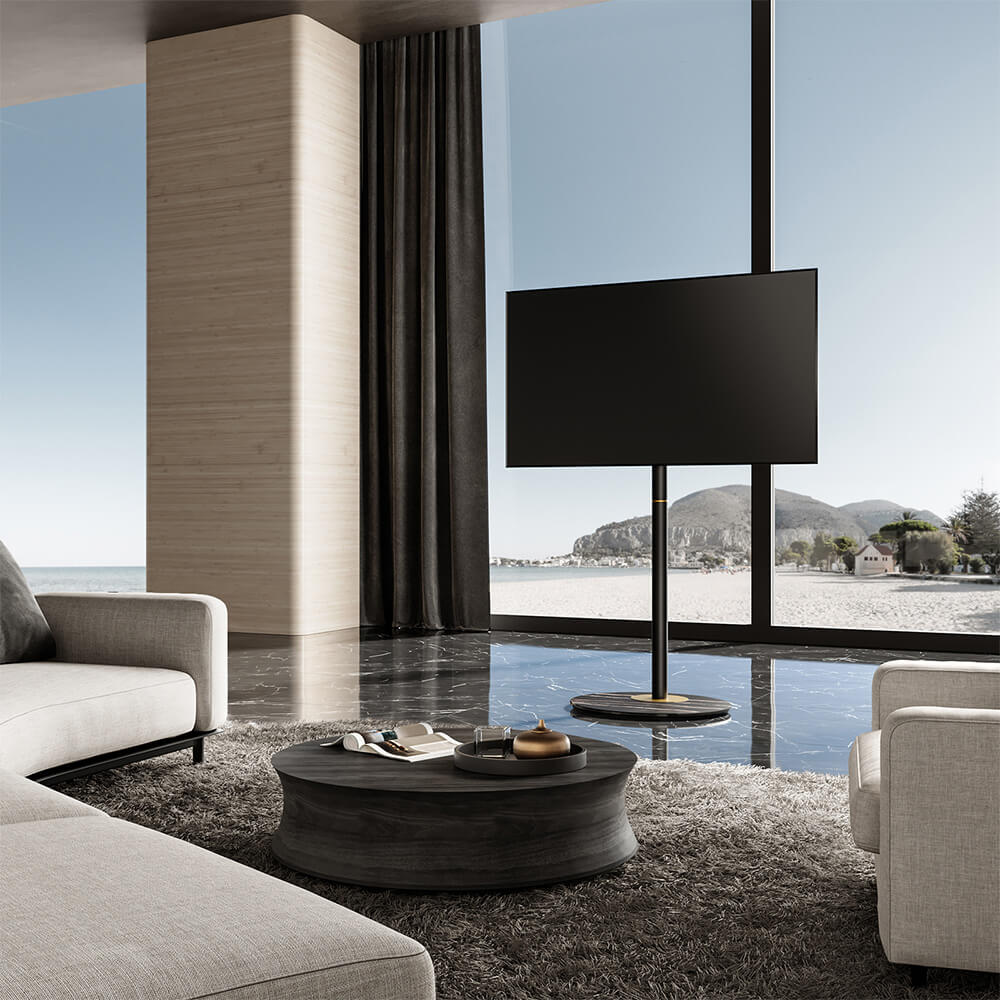
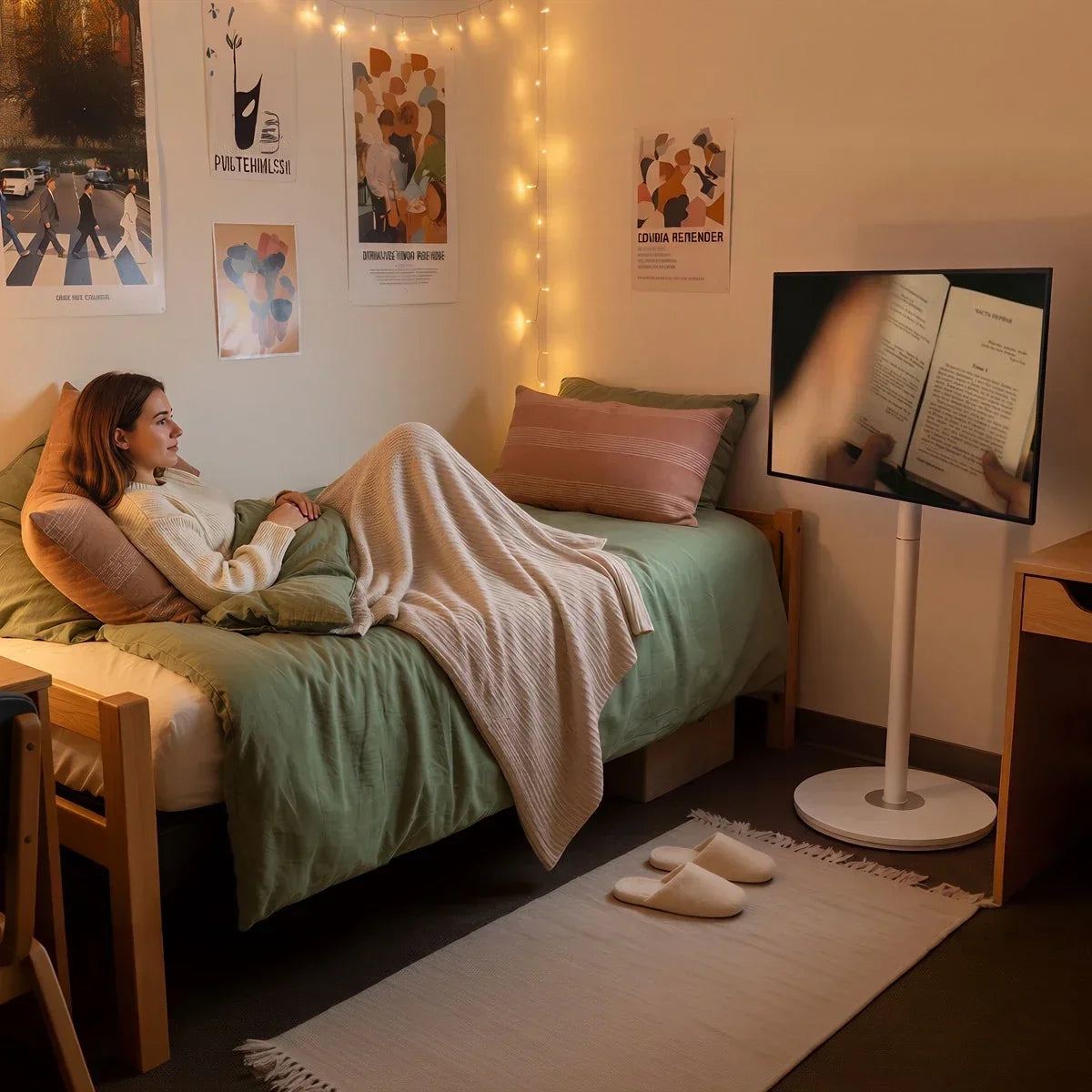
An end-of-bed TV stand setup places the TV on a floor stand at the foot of the bed, creating a direct viewing position without relying on a wall mount or dresser. It can work well when the room leaves enough usable space beyond the bed, but the screen, base and cables all need to fit the layout safely.
Before choosing a stand, measure three things: the usable floor area beyond the bed, the screen-center height from your normal viewing position, and the clearance required by the stand’s complete base. The screen should remain visible above the footboard and bedding, while the base and cords stay clear of the walking route. Use those measurements to compare stand dimensions, height ranges and TV compatibility.
Measure the Usable Space at the Foot of the Bed
Measure from the bed frame or footboard to the nearest wall, dresser, bench or door swing. Include overhanging bedding and note vents, outlets, closet doors and furniture corners. A base can physically fit yet still obstruct a drawer or nighttime route.
Record four figures:
- Bed or footboard width
- Distance from the bed to the next obstruction
- Walking space that must remain open
- Maximum width and depth available for the base
Mark the proposed base with tape instead of relying on a universal walkway minimum. Walk the route and operate nearby furniture. Use these limits to compare floor TV stands and eliminate footprints that are too large for the space.

Test the Screen Sightline From Your Normal Bed Position
Sitting against a headboard creates a different eye line from reclining. Your knees, bedding and footboard can also block the lower part of the screen.
From your usual viewing position, note the minimum height at the foot of the bed where the bottom edge of your TV would clear the footboard and normal bedding. Use your TV’s actual height to estimate the corresponding screen-center height, then check whether that viewing position feels comfortable without requiring you to look noticeably upward. Repeat the check from the other side of a shared bed or a regularly used chair.
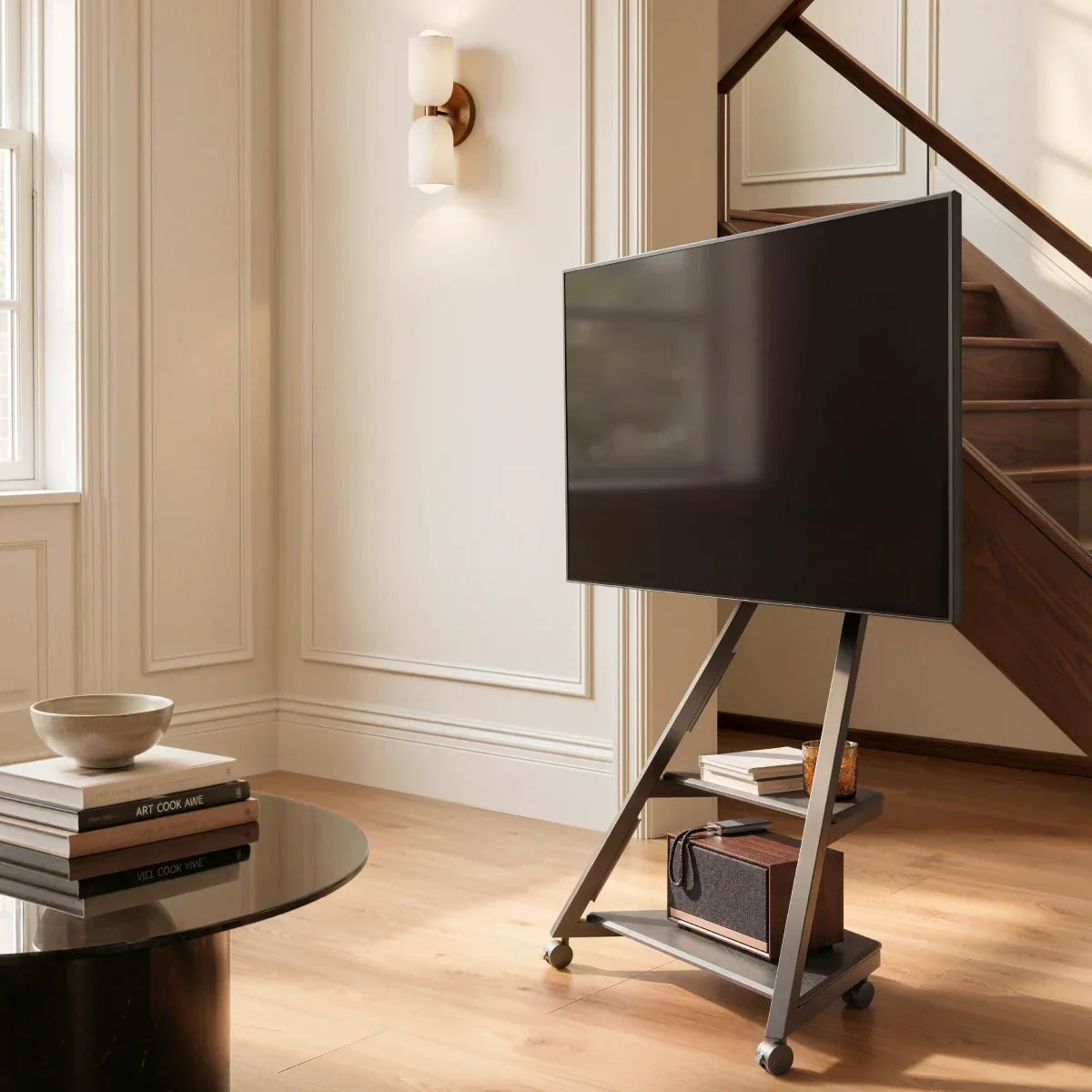
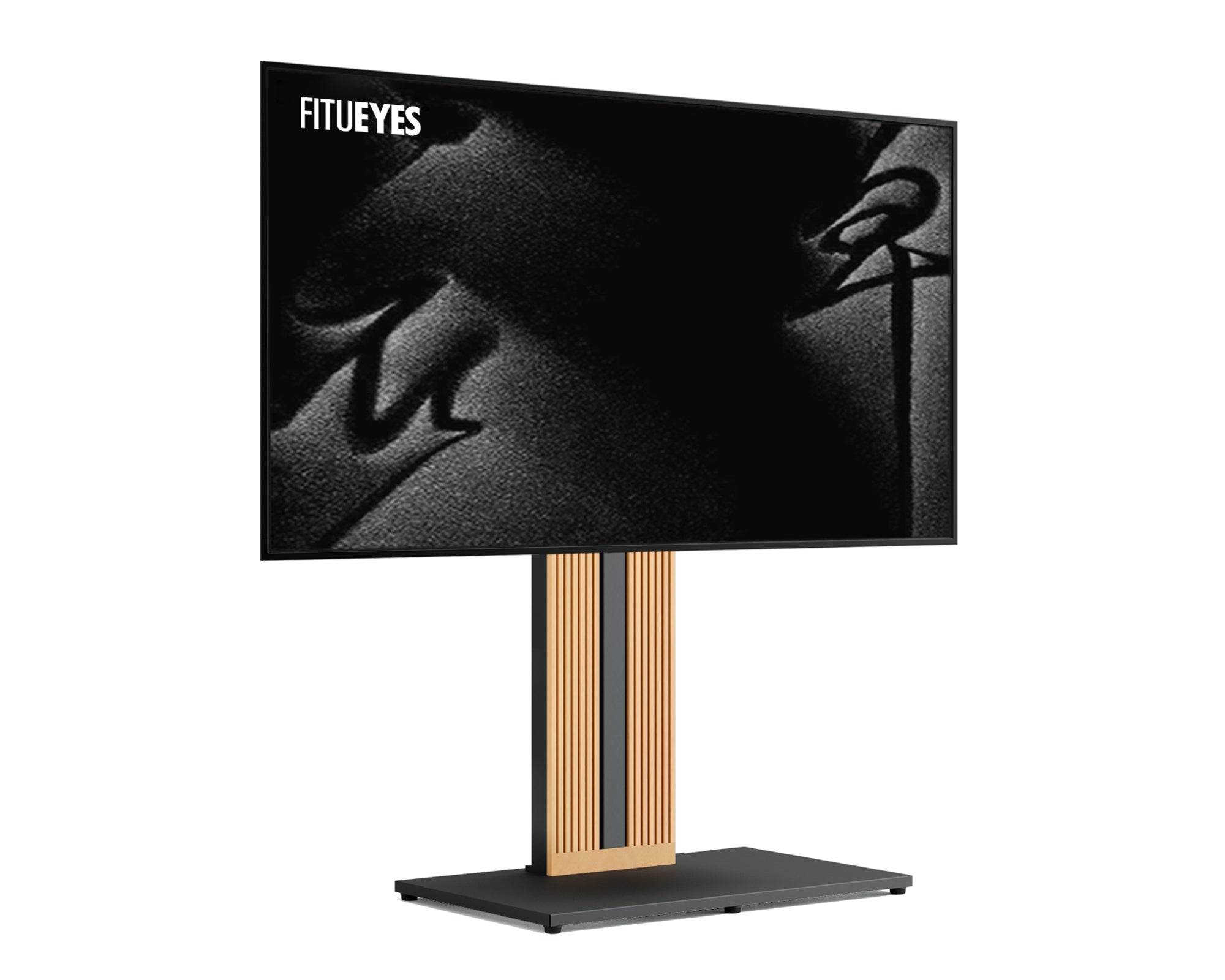
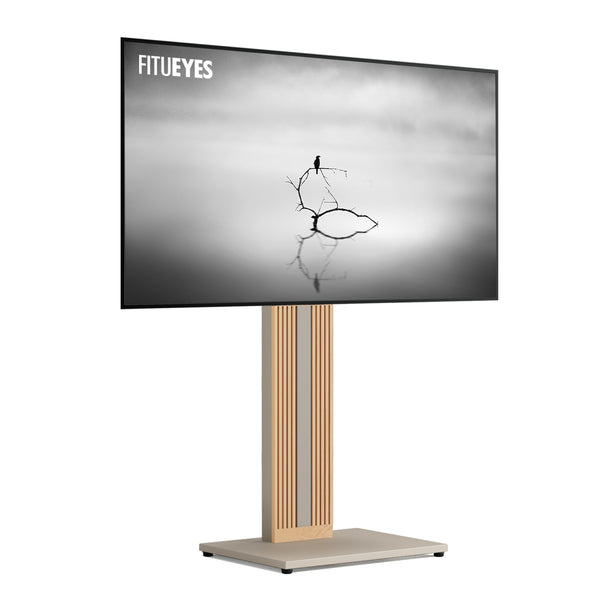
This test also shows whether one fixed direction works or angle adjustment solves a real problem. When the TV must face both sides of a shared bed or occasionally turn toward a chair, the Zen FT65 TV stand offers five screen-center heights from 41.3 to 49.2 inches (about 105 to 125 cm) and up to 30 degrees of swivel to either side. Its slim frame also includes concealed space for small devices and cables, helping reduce visible clutter near the bed. Check its complete footprint against your taped area and confirm the TV’s weight and VESA pattern before choosing it.
Convert the Sightline Into the Stand Height You Need
Measure from the floor to the screen-center height that felt comfortable from the bed, then compare that result with the stand’s available screen-center range. Do not substitute overall stand height or mounting-plate height; these measurements describe different points.
Next, use your TV’s actual height and rear VESA position to estimate where the top and bottom edges of the screen will sit once mounted. Equal-size TVs can place their VESA holes differently, so two 55-inch TVs may not end up at exactly the same height on the same stand.
The mounted TV should clear the footboard and normal bedding without forcing you to look noticeably upward. If the stand’s available height settings cannot achieve both, choose a different height range or stand rather than relying on screen size alone.
Check Whether the Base Fits the Bed and Walkway
Compare the stand’s complete width and depth with the taped footprint. Mark every tripod foot, the full plate-style base, or the casters at their widest, including room for wheels to change direction.
Do not assume a base can slide beneath the bed. Check the bed’s clear height, center legs, drawers, mechanisms and hanging fabric. A base that technically fits underneath is not useful if it interferes with moving parts or contradicts the stand’s intended placement.
Floor type can also affect how the base behaves. On carpet, check whether the product instructions approve the surface and whether the pile could contact the underside, restrict wheel rotation or prevent the base from sitting level. On hard flooring, use the supplied feet or casters as directed and engage wheel locks when the stand is parked, if the model provides them. After assembly, all contact points should remain supported without rocking.

Decide Whether the Stand Should Stay Fixed or Move
Mobility is useful when the stand must move aside for cleaning, restore a narrow passage or serve another part of the room. It also requires a clear route and cords long enough for every intended position.
Trace that movement with the taped footprint. Check the narrowest point, direction changes and rug edges or thresholds. Measure the cable route in both the viewing and parked positions, then decide where the extra length will be retained so the cords neither pull tight nor form loops near the wheels or walkway.
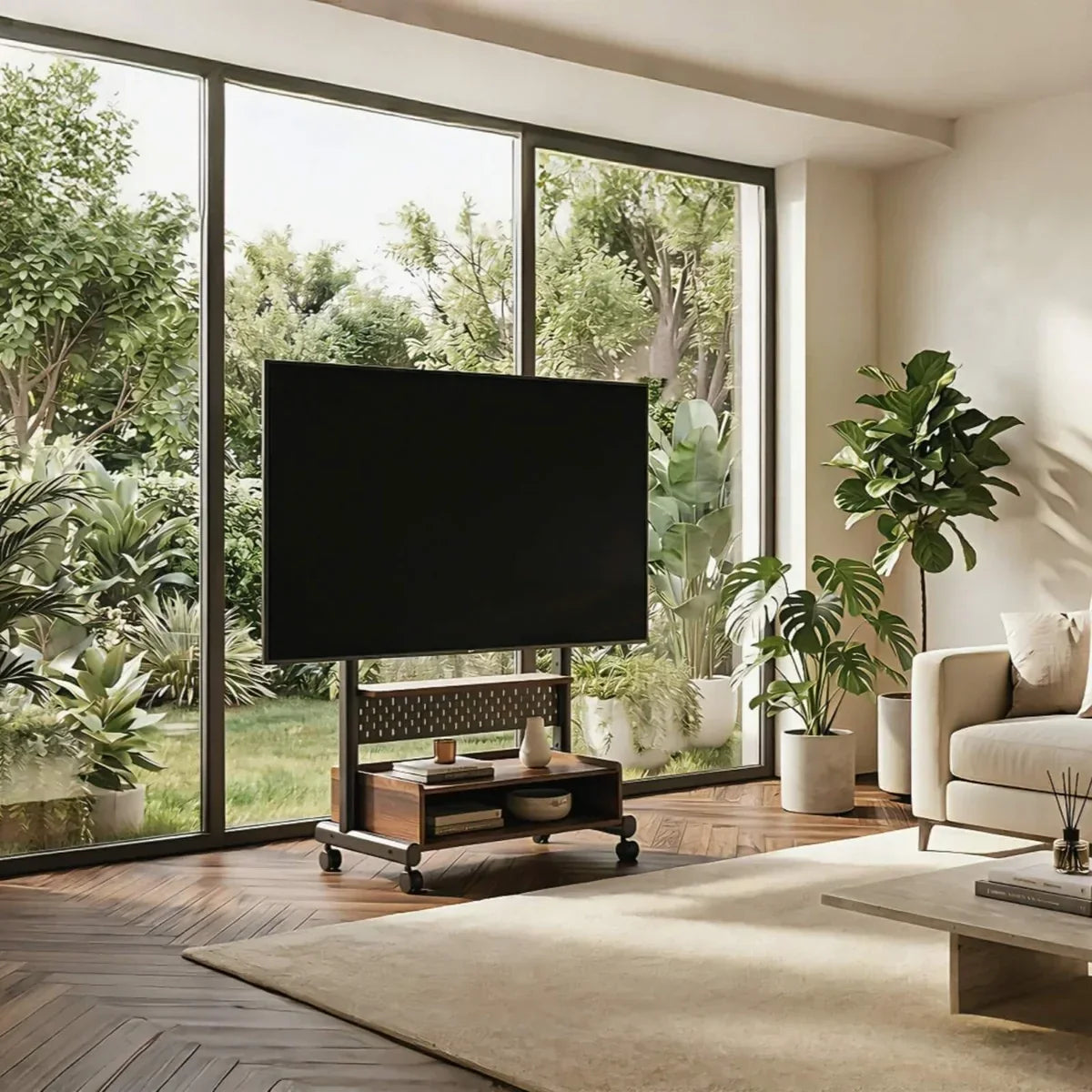
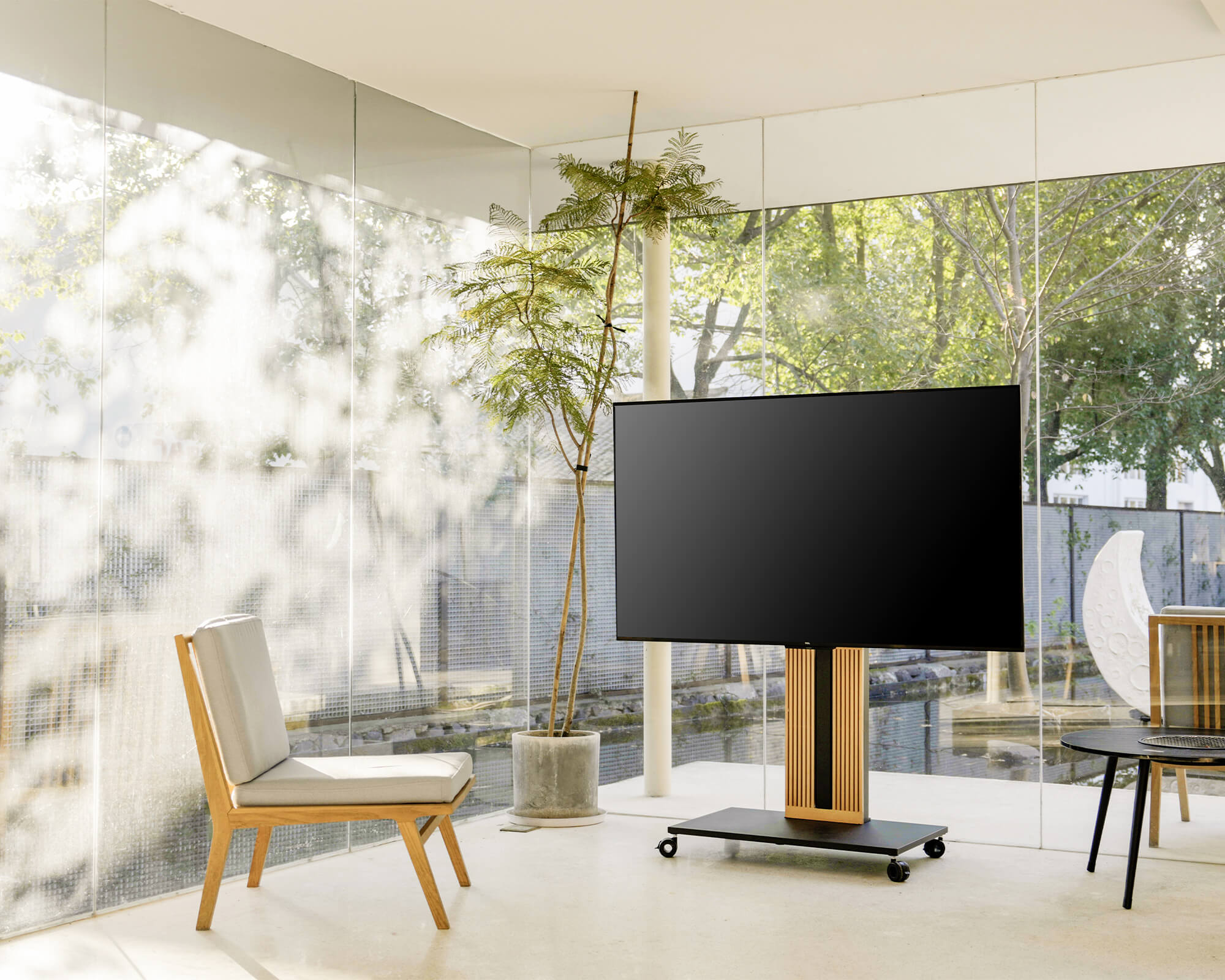
If the main need is moving the complete setup between a viewing position and a nearby parking spot without displaying conventional casters, the Master V2 FT65 TV stand uses concealed wheels within a 22.2-by-22.2-inch base. Its screen-center height adjusts from 39.4 to 47.2 inches (about 100 to 120 cm), while covered storage can keep a compact device and its connections together with the stand. Confirm that the base can complete the planned route and that the TV matches the model’s weight and VESA ranges.
For a setup that will move regularly, compare rolling TV stands by complete footprint, wheel design, device storage and cable behavior. “With wheels” is only an initial filter; the stand still needs to pass your measured route.
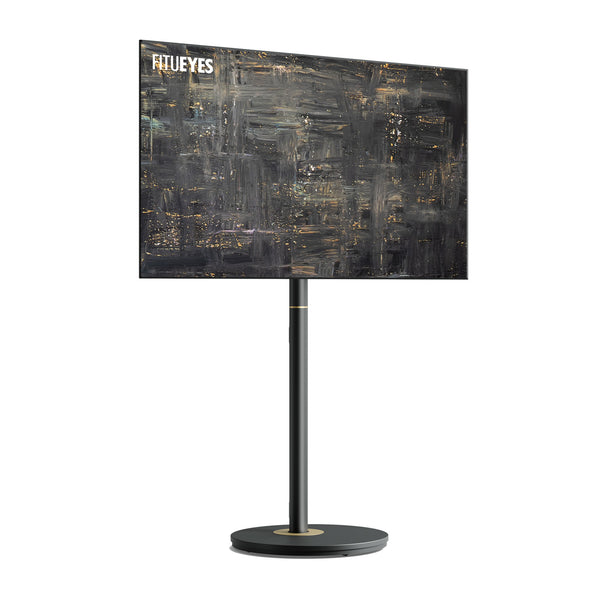
Confirm TV Compatibility, Devices and Cable Clearance
After the room measurements work, compare the TV’s weight without its original feet with the stand’s capacity. Measure the VESA holes horizontally and vertically, then follow both products’ mounting instructions. A “32–65 inch” label alone does not establish compatibility.
Decide where each streaming box, console, soundbar and adapter will sit. A shelf or compartment helps only when its dimensions, ventilation and access suit the device. Leave room for plugs to bend; TV body depth excludes rear cable clearance.
Trace every connection to the outlet, keeping cords away from feet, wheels and bed mechanisms. A position fails if power must cross the remaining walkway.
Test the Full Setup Before You Buy
Return to the taped base outline with the bedroom in its normal condition. Recheck the planned screen height against your TV’s actual dimensions, let the bedding fall naturally, open nearby doors and drawers, and place any devices where they would actually sit. If the stand will move, mark both its viewing and parked positions and trace the cable route between them.
The setup works when the full screen remains visible from the bed, the base stays clear of the walking route, nearby furniture can still be used, and the cords reach without pulling tight or crossing open floor.
If the available position still blocks circulation, leaves the screen too low behind the footboard, or creates an unsafe cable route, consider a different location instead. These bedroom TV stand ideas cover alternatives such as corner, side-wall and window-side arrangements.
Choose the Stand That Fits the Setup
Once the required height, footprint, cable route and movement needs are clear, use those measurements to narrow the remaining options. Features such as swivel, mobility and storage can then help distinguish between stands that already fit the space and TV.
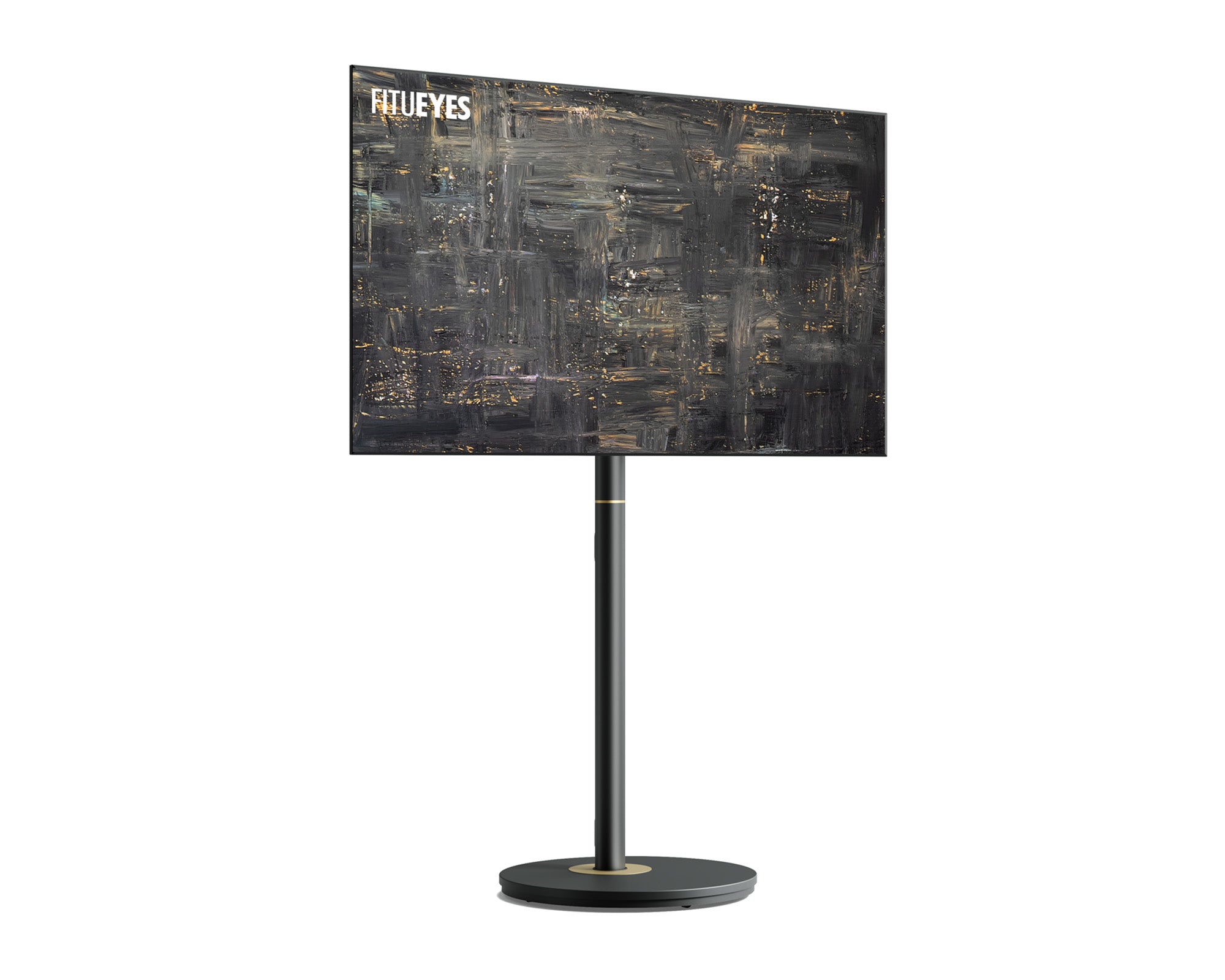
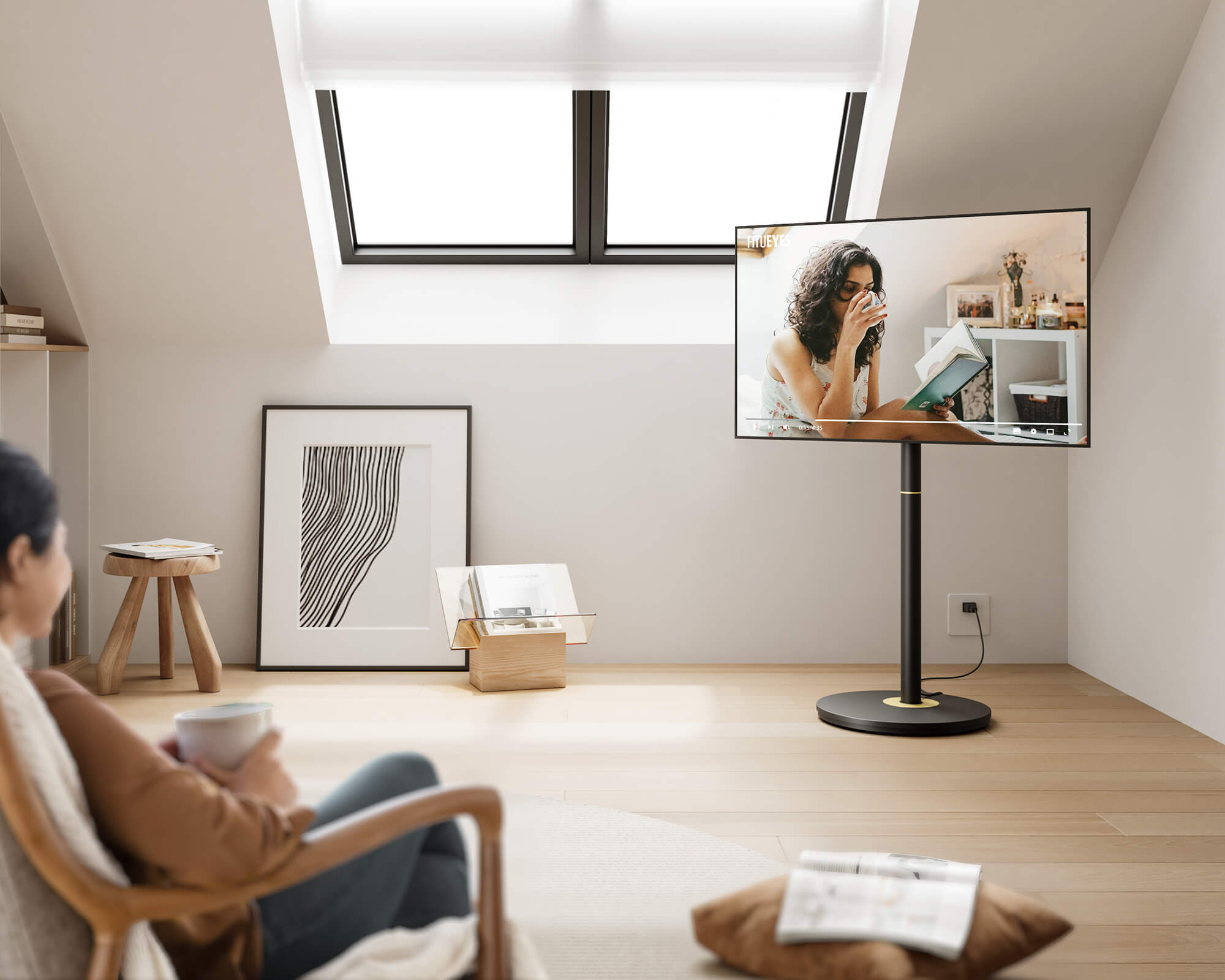
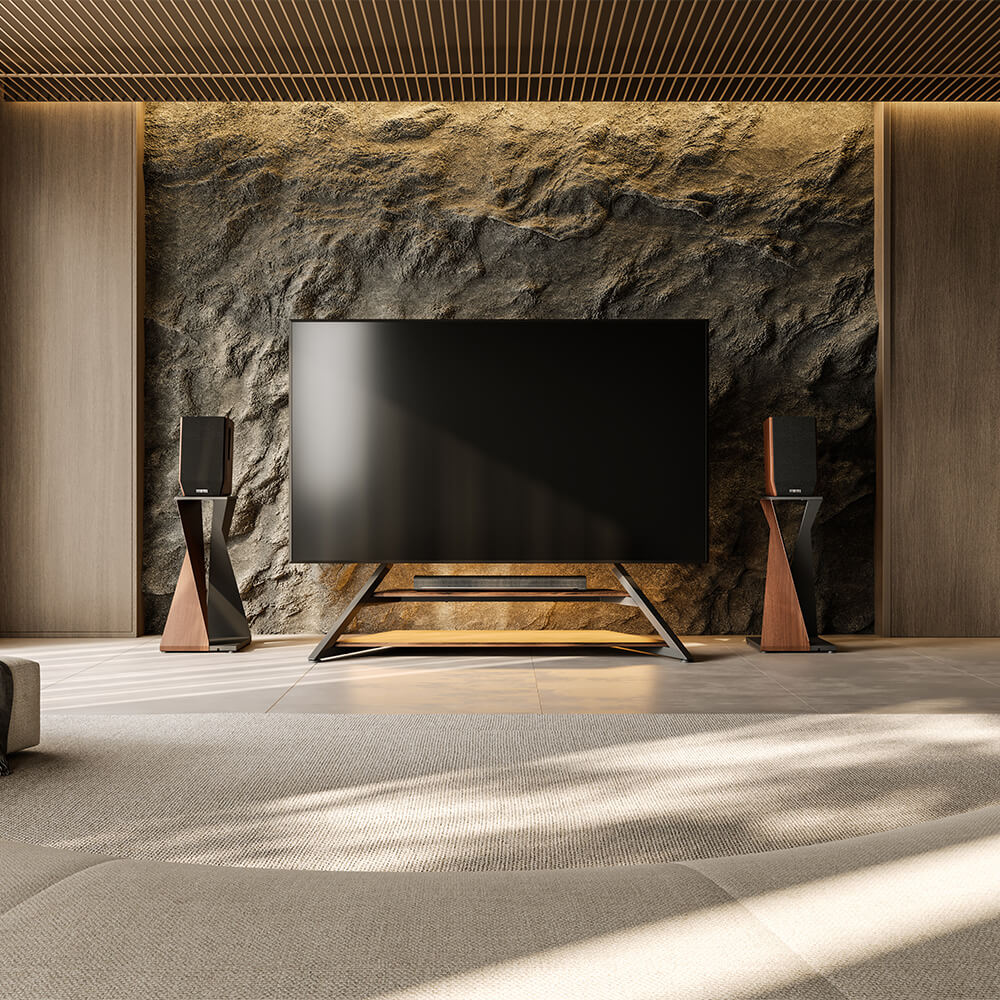
FITUEYES offers floor TV stands in fixed and mobile configurations for different bedroom layouts. Compare the individual model’s dimensions, height range, TV compatibility and movement features against the measurements you have already taken before making the final choice.
FAQs
Can I use an end-of-bed TV stand with an adjustable bed?
Yes, if the setup clears the bed throughout its intended movement. Test sightline and clearance with the bed flat and in every raised position you use. Keep the base, cords and devices outside the mechanism’s travel, and follow both manufacturers’ instructions.
What TV size works best at the end of a bed?
Start with the viewing distance from your normal pillow or seated position to the TV. As a practical reference, about 50 inches suits roughly 6–7 feet, 55 inches about 7–8 feet, and 65 inches about 8–9 feet for general viewing.
Then check whether that screen can clear the footboard and bedding without forcing the stand into the walkway. If it cannot, reduce the TV size or move the stand to another position.
Can I place a bench between the bed and the TV stand?
Yes, if the bench and TV stand fit without eliminating the walking route or blocking the lower part of the screen. Measure the bench at its deepest point and include any drawers, lids or cushions that extend during use. Check the screen from bed with the bench in place rather than calculating the TV stand position from the bed frame alone.