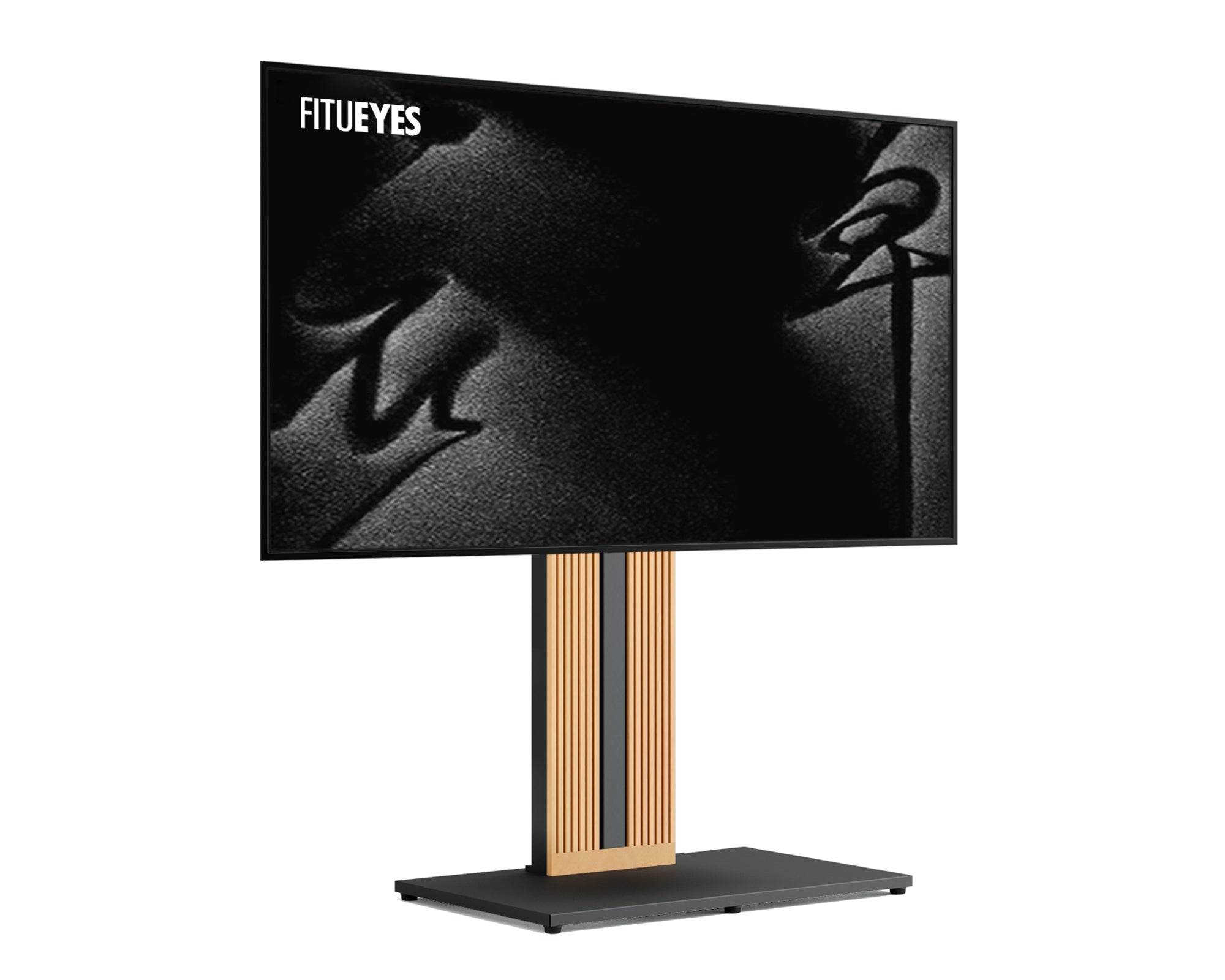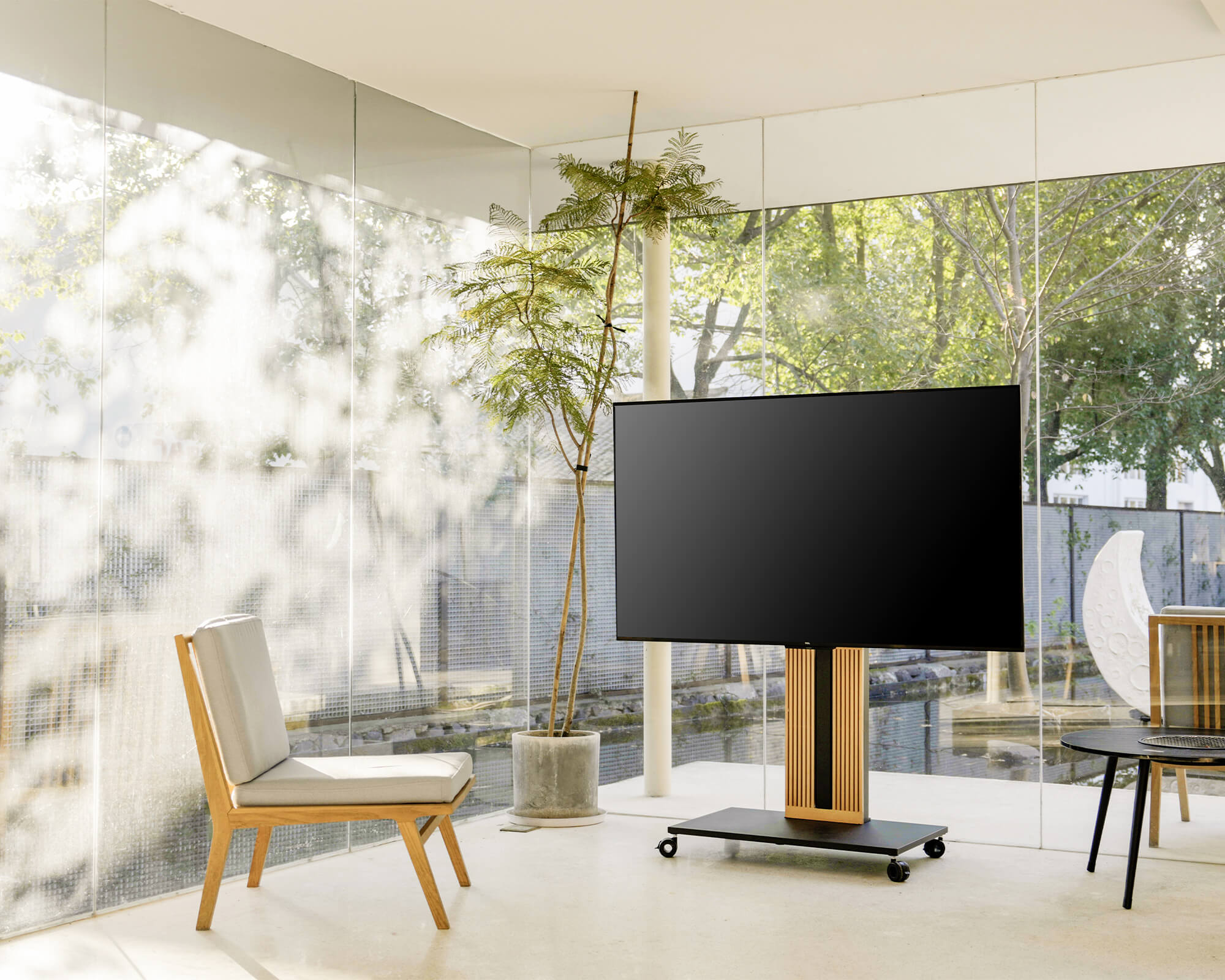



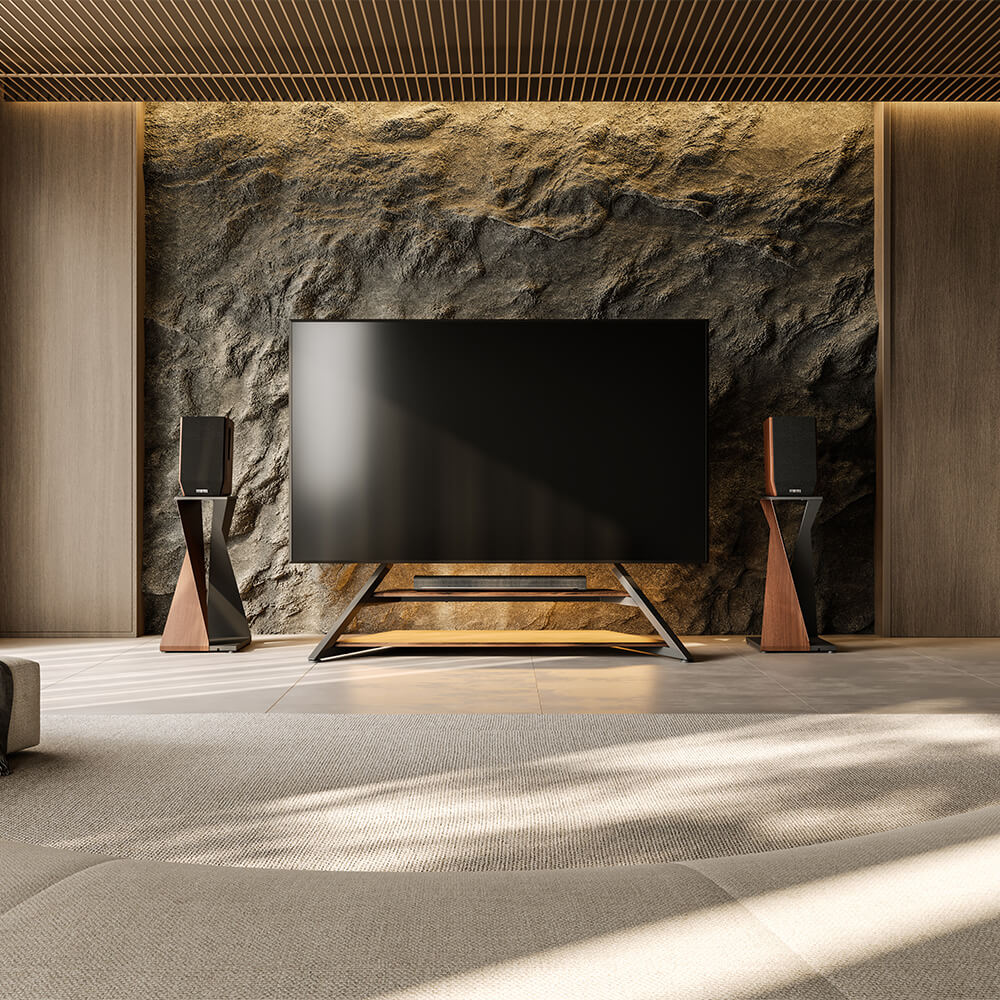
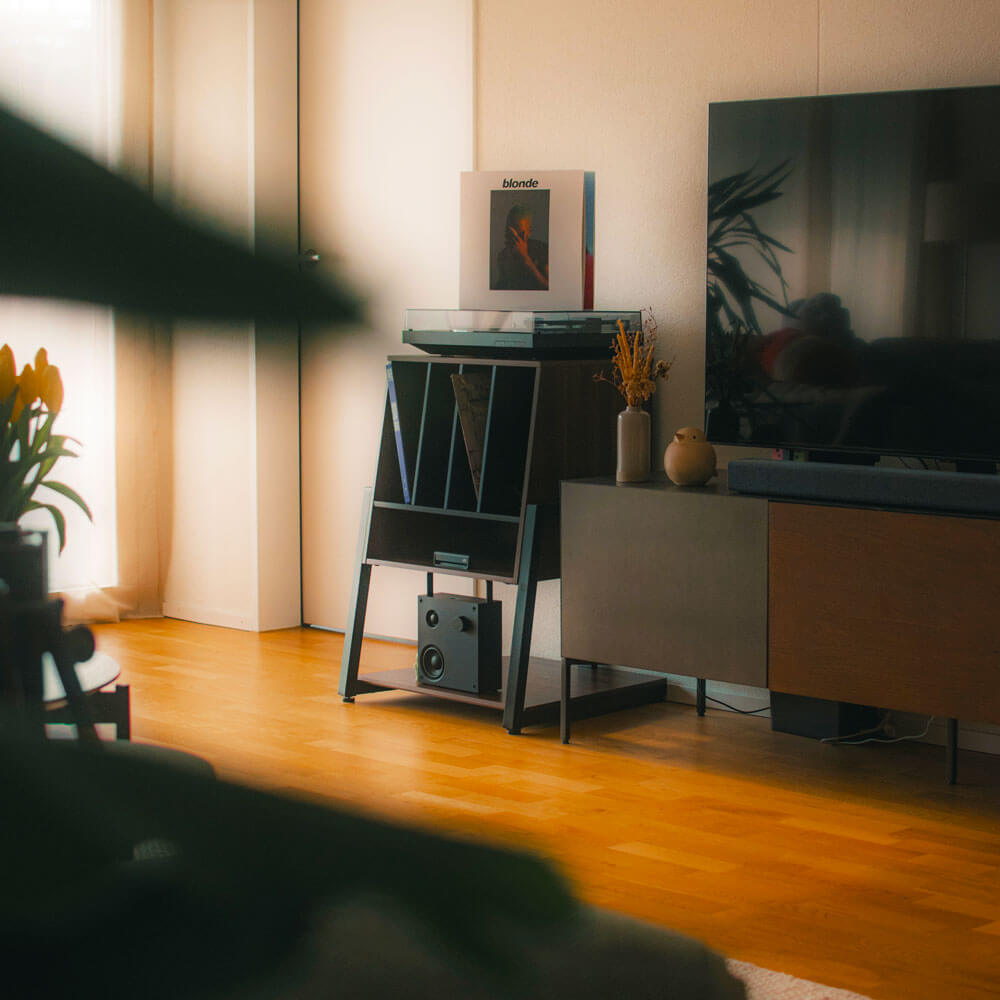
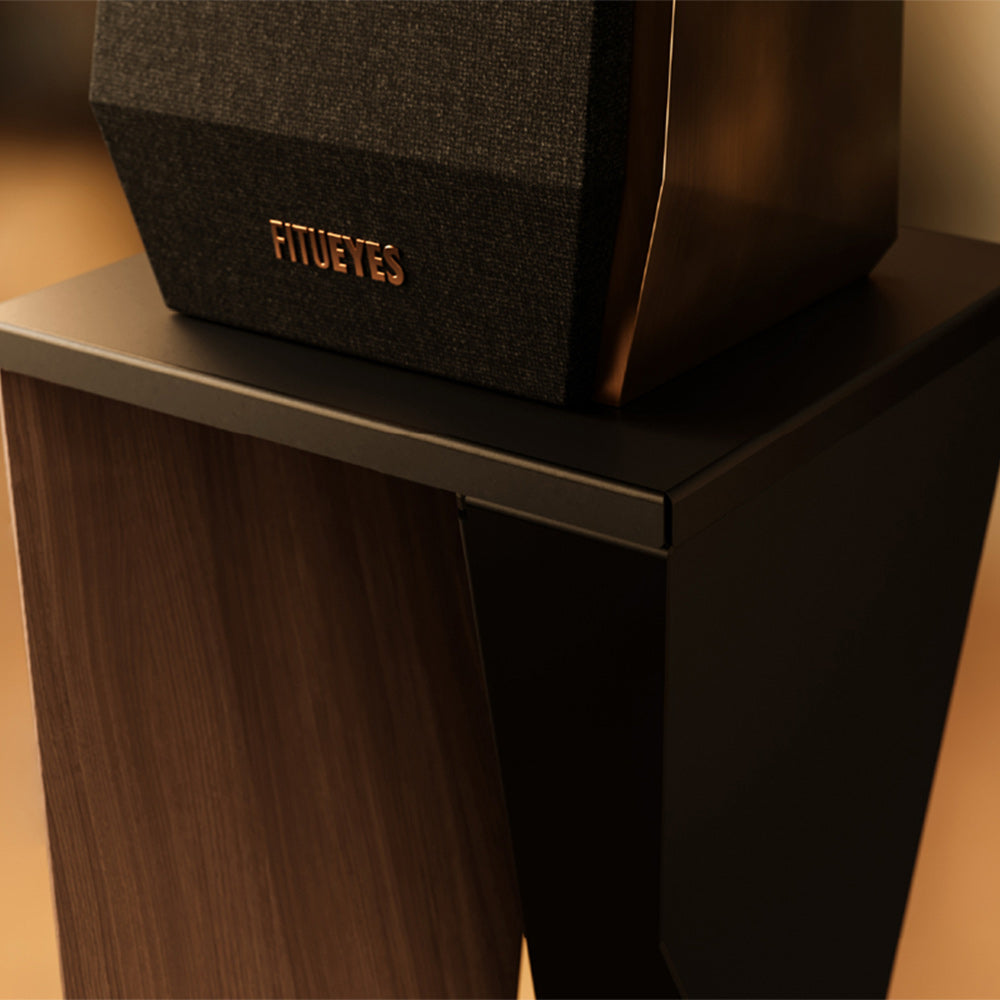
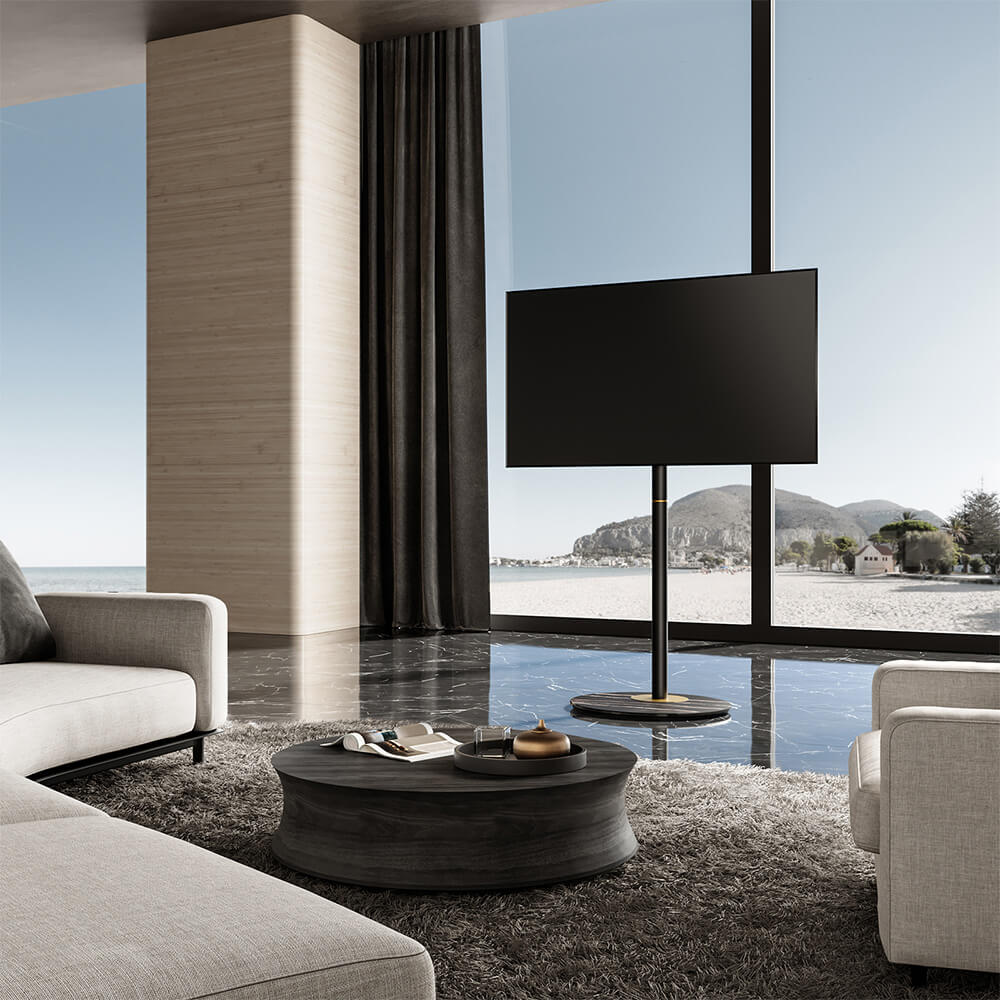
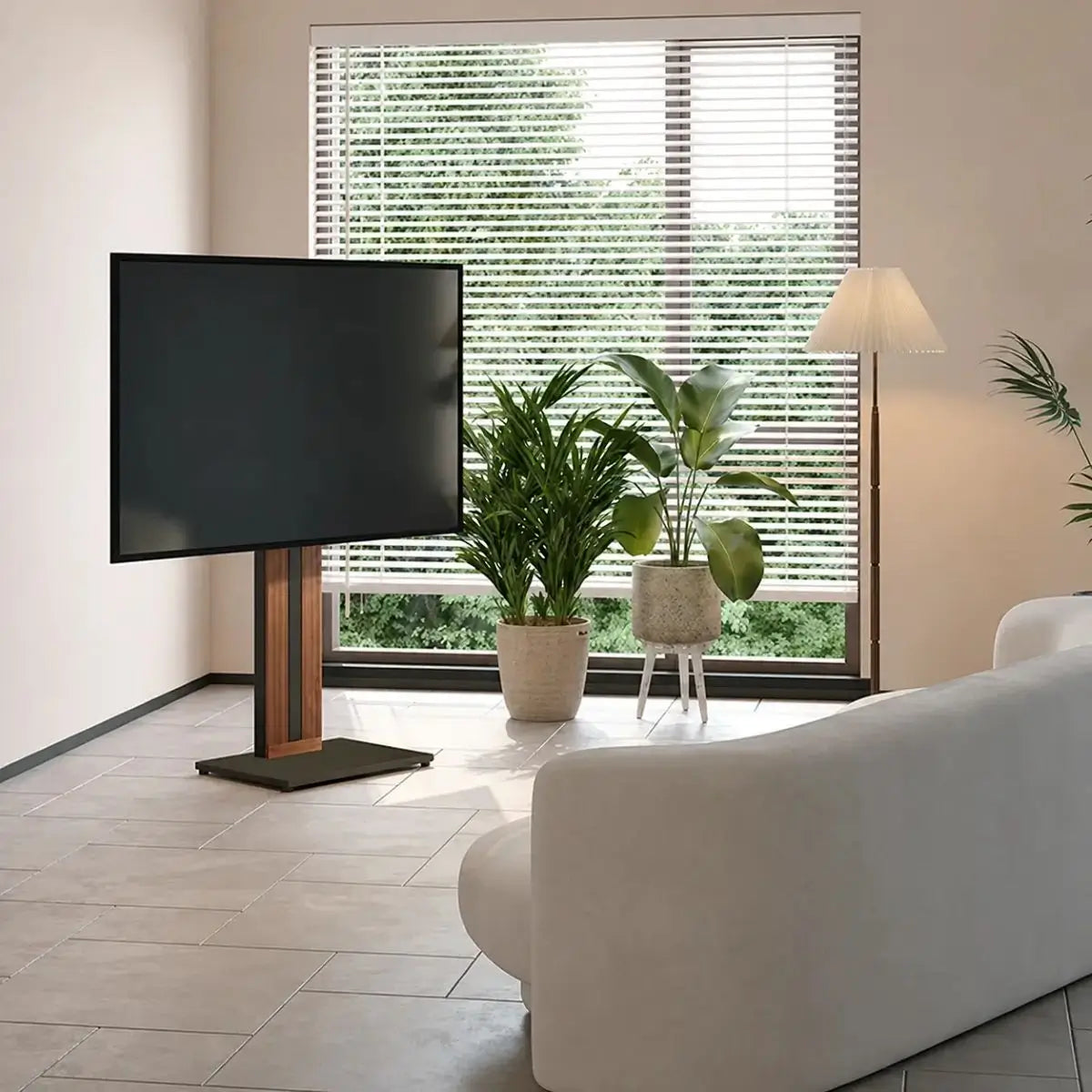
A floor TV stand is usually better when the television needs to work independently of furniture, move between viewing zones, or sit where a console would be awkward. A tabletop TV stand is usually better when a stable, correctly sized console already provides useful storage and places the screen near the right height. The deciding question is whether the floor or your furniture should carry the complete setup.
That support path changes what you measure, where equipment can go, and how you calculate final screen height. A floor stand transfers the TV load to its own base; a tabletop stand transfers the combined load of the TV and mount to the furniture below.
Floor TV Stand and Tabletop TV Stand: How Support Changes the Setup?
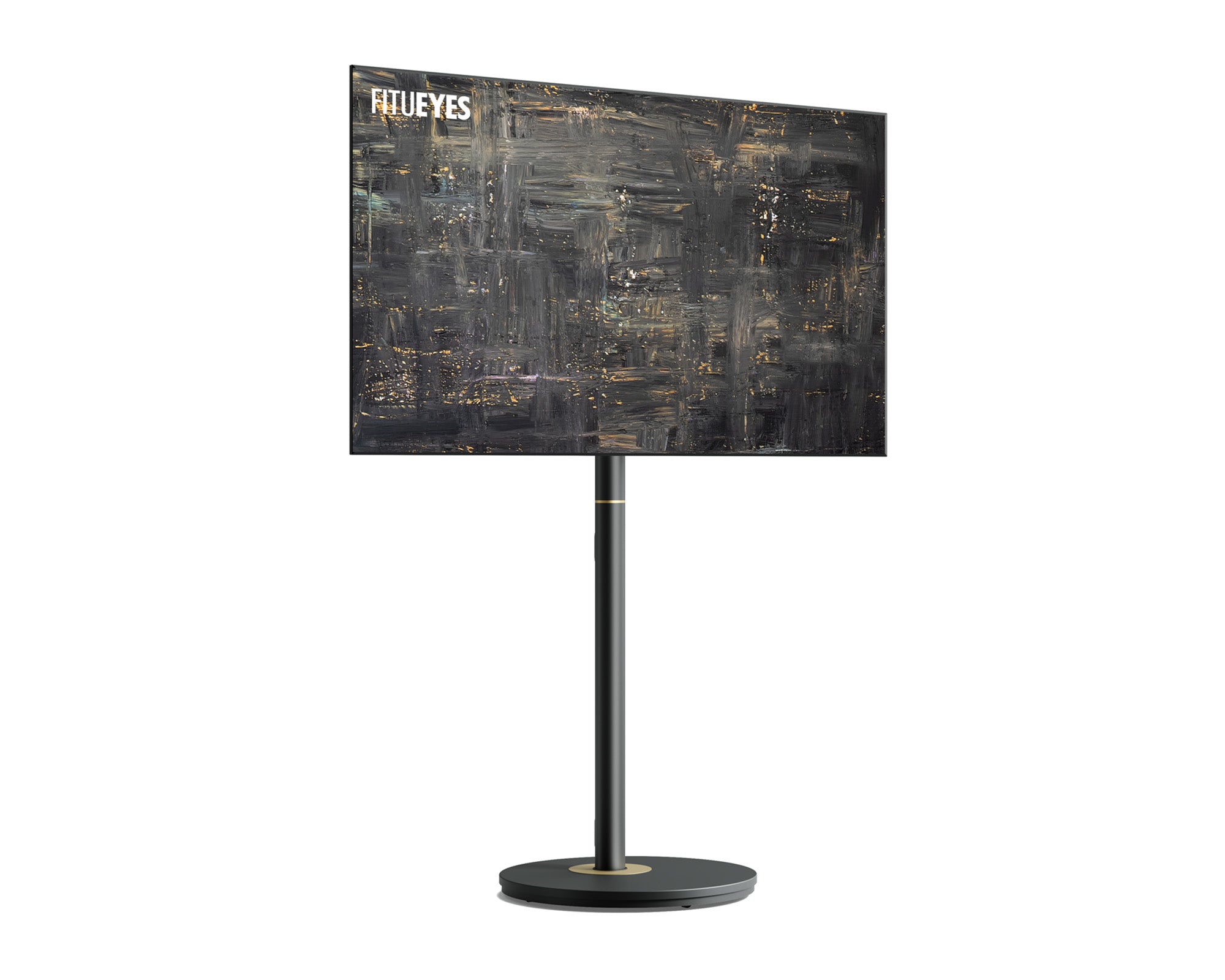
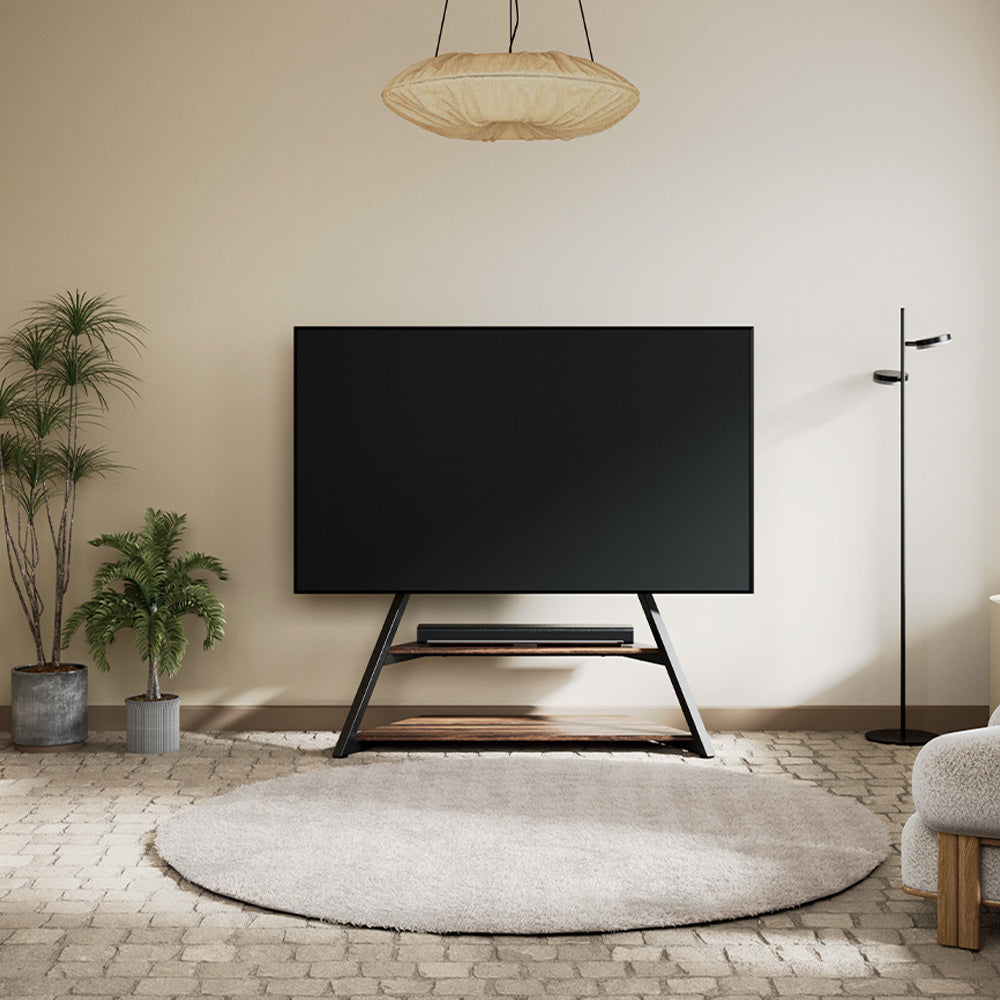
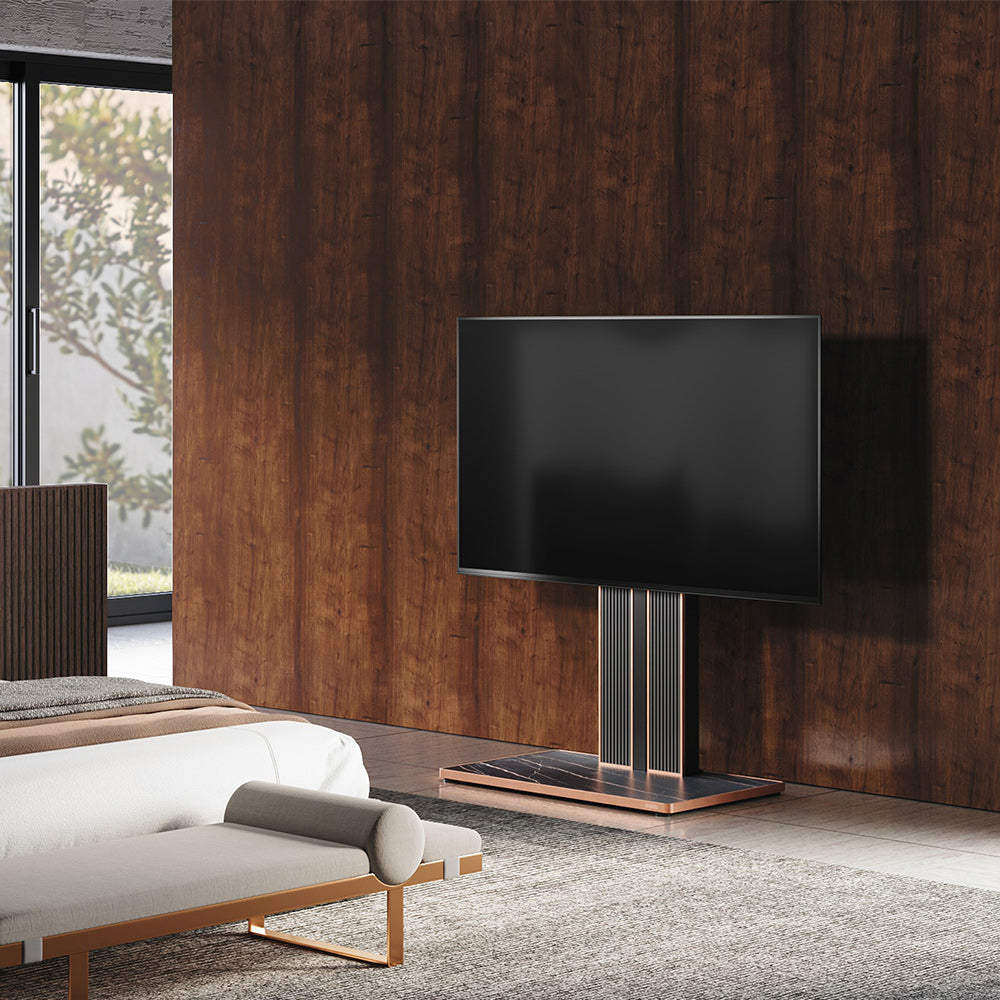
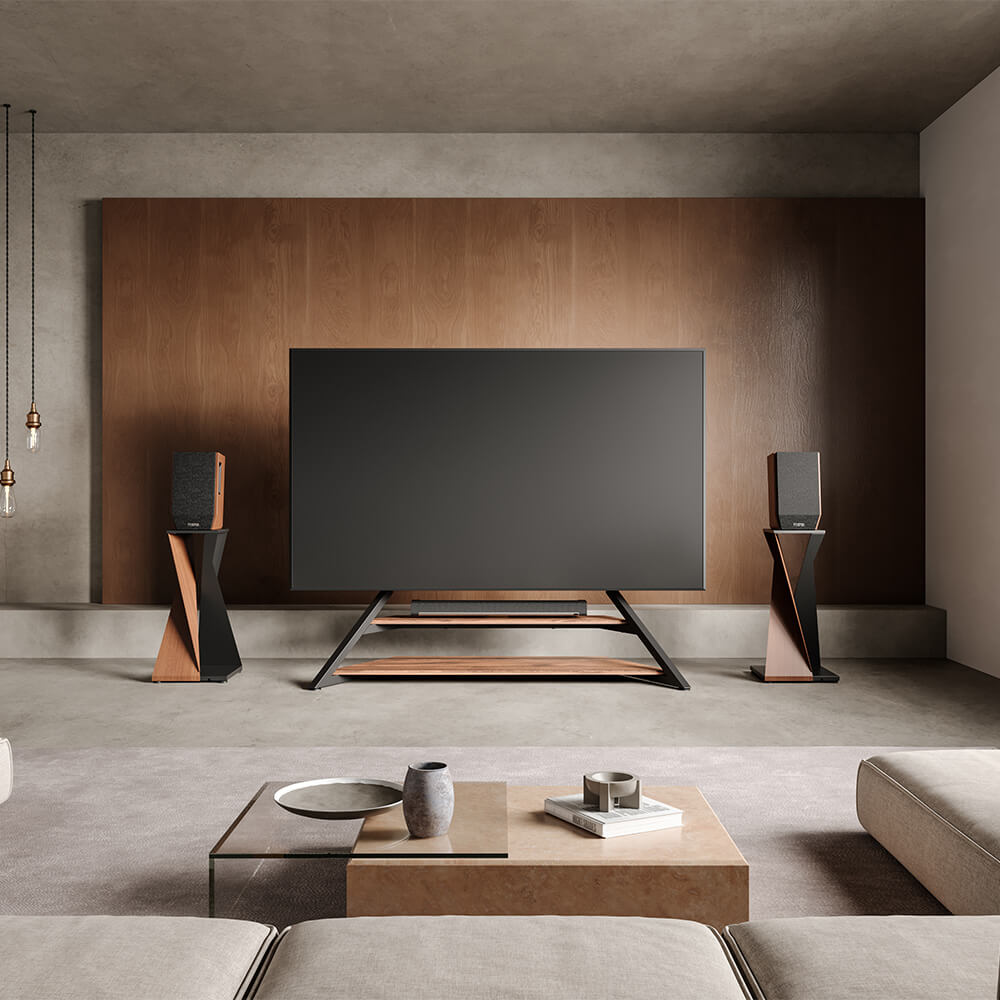
A floor TV stand uses a base on the floor and a vertical frame to hold the screen through its rear VESA mounting holes. It does not need a cabinet beneath the television, so it can work in a corner, beside an irregular wall, or behind low furniture. Some models add shelves, swivel, height adjustment, or wheels.
A tabletop TV stand also attaches through the VESA holes, but its base sits on a cabinet or media console. It can replace original TV legs that are missing, widely spaced, or too low for a soundbar. Because the furniture becomes part of the support system, its dimensions, condition, level surface, and rated capacity all matter.
Choose between them by identifying the hardest constraint to solve: unsuitable furniture, limited floor area, screen height, storage, movement, or equipment access.
Floor TV Stand vs Tabletop TV Stand at a Glance
| Comparison Point | Floor TV Stand | Tabletop TV Stand |
|---|---|---|
| Main support | Uses its own floor base | Sits on a cabinet or media console |
| Furniture required | No | Yes—a stable, correctly sized surface is essential |
| Placement freedom | High; can work in corners or away from furniture | Limited to the location and size of the furniture |
| Floor space | Requires space for the complete base | Uses existing furniture but adds no separate floor base |
| Storage | Usually open shelves or limited equipment storage | Can use the cabinet’s drawers, shelves, or enclosed storage |
| Screen height | Determined by the stand’s adjustment range | Determined by furniture height plus the stand’s mounted height |
| Mobility | Some models include wheels for moving between zones | Usually intended to remain on the same piece of furniture |
| Soundbar clearance | Depends on mounting height and shelf layout | Can replace low original legs and create more clearance |
| Main measurements | Floor footprint, clearance, travel path, TV weight, and VESA | Furniture width, depth, capacity, final height, TV weight, and VESA |
| Often best for | Rooms without suitable TV furniture or setups that need flexible placement | Rooms with a stable console that provides useful storage |
The table provides a starting point rather than a final decision. Whichever support type appears more suitable must still be checked against the TV’s exact weight, VESA pattern, screen size, and the stand manufacturer’s installation requirements.

When Is a Floor TV Stand Better?
Your Furniture Cannot Support the Setup
Choose a floor stand when available furniture is too narrow, shallow, unstable, damaged, or uncertain in capacity. The stand carries the television independently, allowing the furniture to serve as storage or décor instead of structural support.
This can also help when a wide console would crowd a small room. Compare floor TV stands by their complete base dimensions, then check doors, rugs, drawers, and walking routes.
You Need More Placement Freedom
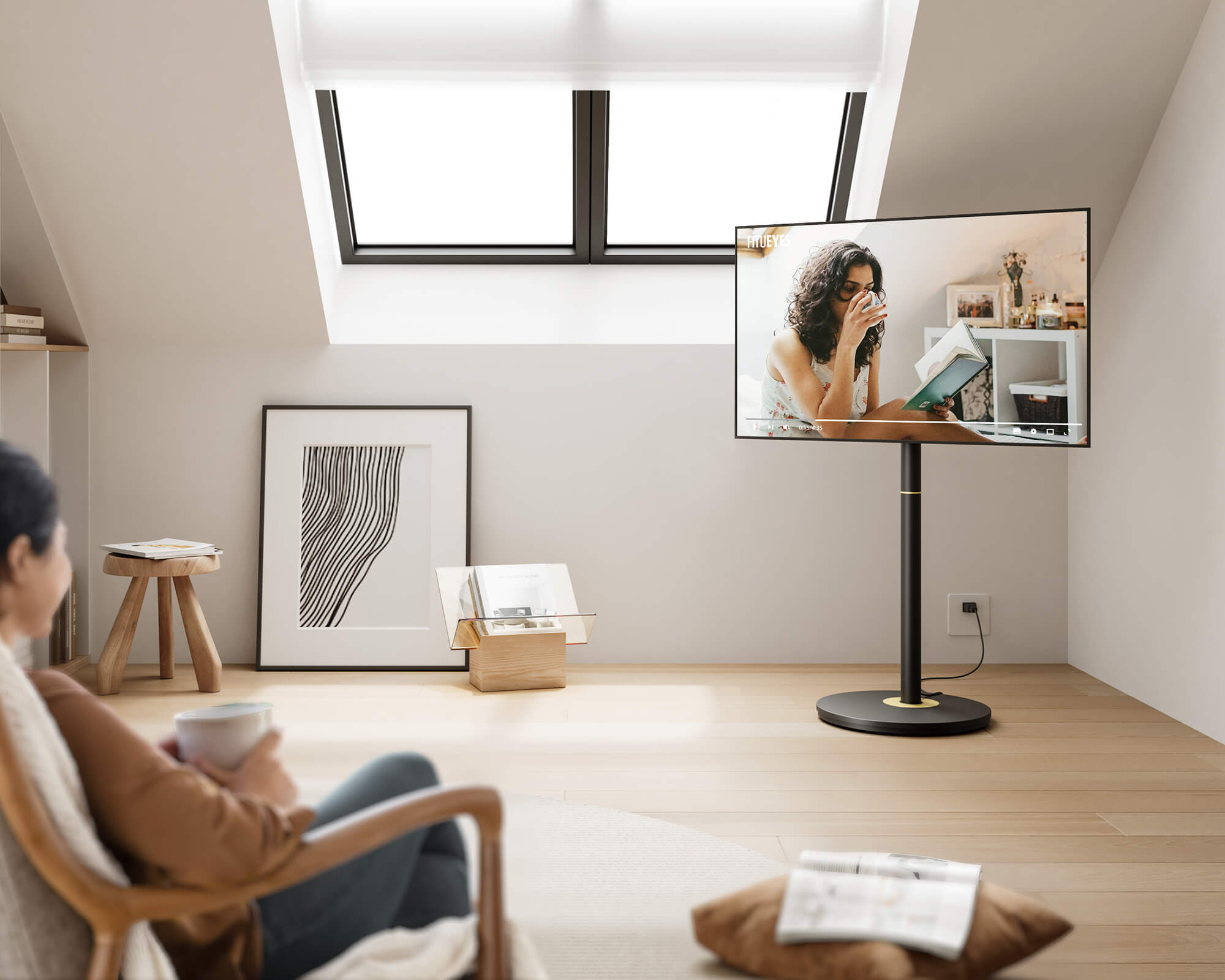
A floor-supported screen can occupy an unused corner, sit between windows, or move toward another seating area. Swivel changes screen direction, height settings change viewing level, and wheels move the complete unit.
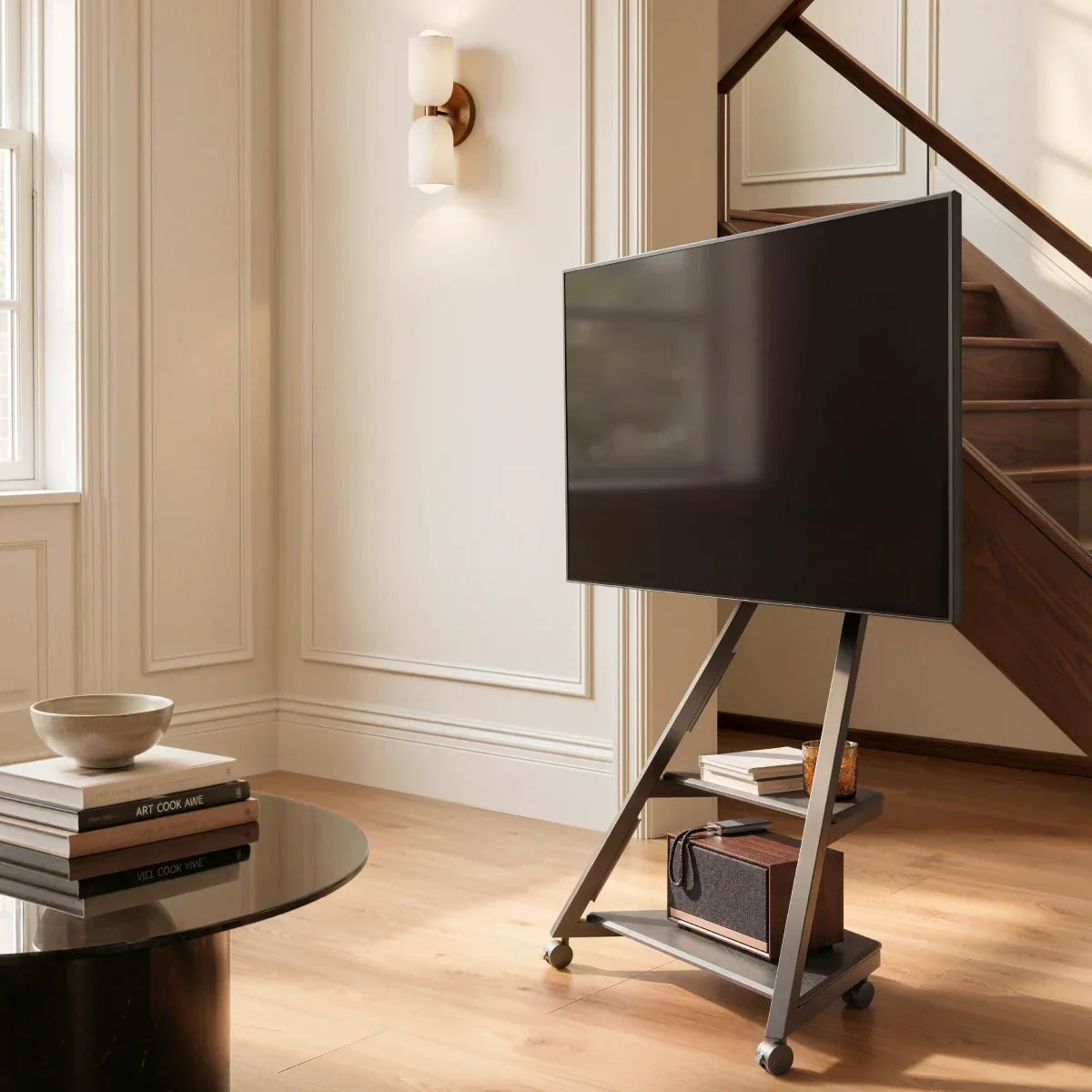
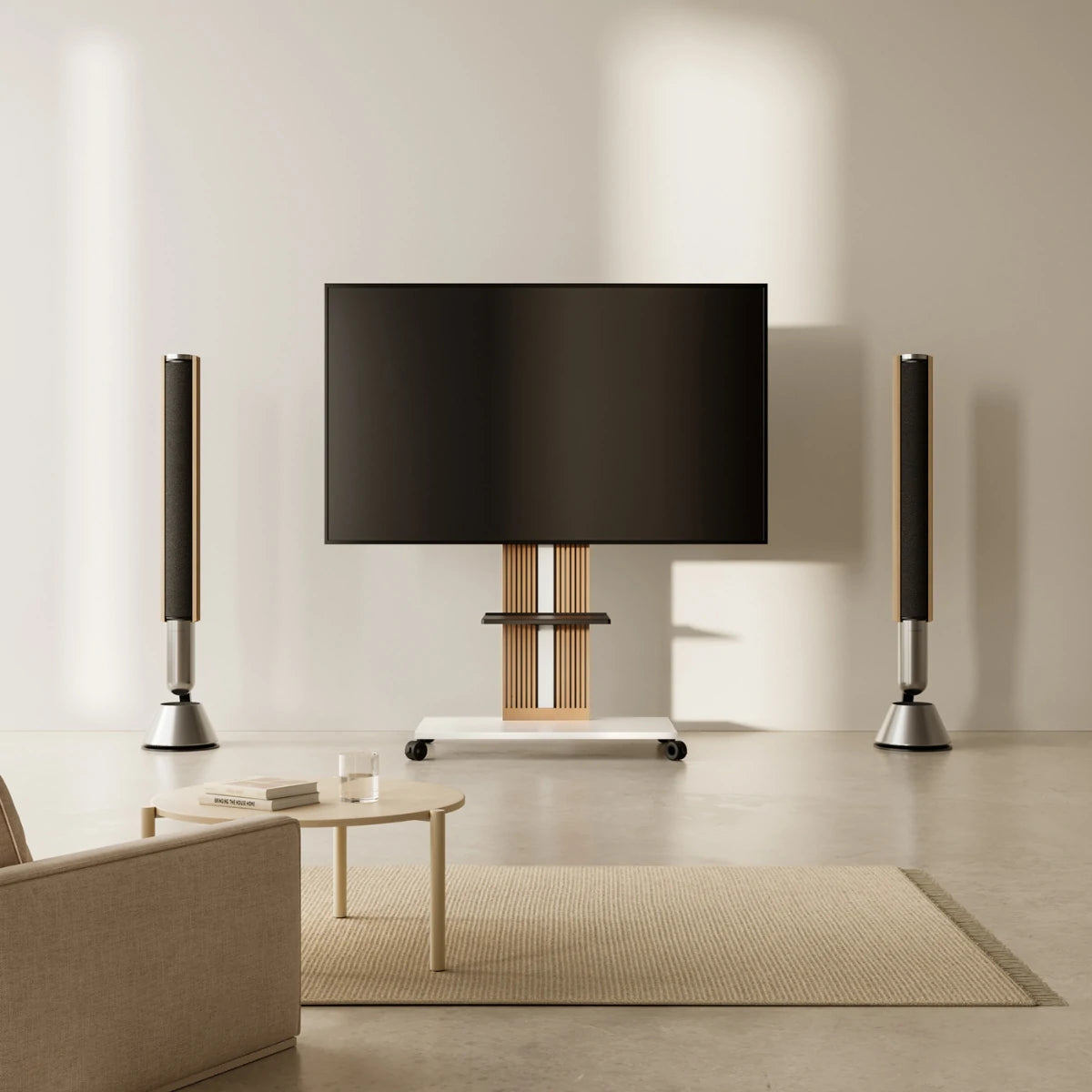
For a large screen that needs to move with its equipment, the Eiffel V2 FT88 rolling TV stand brings those functions into one setup. It supports most 55- to 88-inch TVs (about 140–224 cm) weighing up to 132 pounds (about 60 kg), with VESA compatibility from 100 × 100 to 600 × 400 mm. Its TV center height adjusts from 43.3 to 51.2 inches (about 110–130 cm), and the screen swivels up to 20 degrees left or right.
Wheels let the screen change zones, while cable routing, a TV-box shelf, and open shelves keep devices with it. It does not tilt, so it suits height control, horizontal adjustment, and whole-unit mobility. Confirm the exact TV weight and VESA pattern.
You Want to Keep a Console Without Making It Carry the TV
A floor stand can sometimes sit behind or partly beneath a media console, preserving storage without making the furniture carry the TV. The base must not prevent drawers from opening, cover ventilation, pinch cables, or block a walkway. If suitable furniture already occupies the best fixed viewing position, tabletop support may use the space more efficiently.
When Is a Tabletop TV Stand Better?
Your Existing Furniture Is Already in the Right Place
A tabletop stand is practical when the console is stable, level, deep enough for the entire mount base, and rated for the combined load. Add the television, tabletop stand, soundbar, and other equipment; the total must remain within the furniture’s stated capacity, with no base overhang.
A media cabinet can hide accessories and keep equipment nearby without adding another floor base.
The Original TV Legs Do Not Work
Original legs near the screen edges may be wider than an otherwise useful cabinet. They can also leave too little clearance for a soundbar. A compatible tabletop stand replaces those legs with a centralized VESA-mounted base and may add height or swivel.
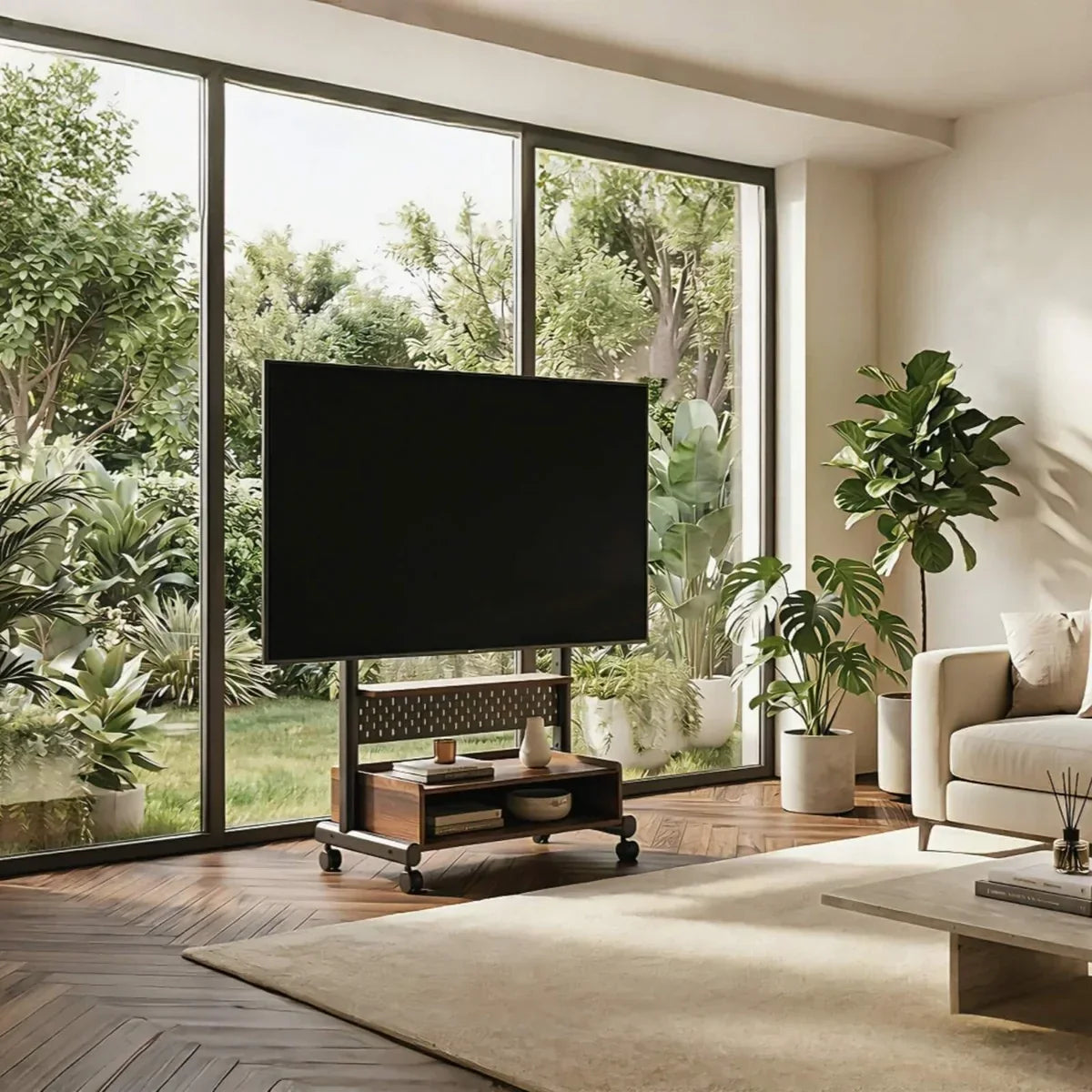
For a larger TV that needs centralized support on existing furniture, the Eiffel V2 TT88 Tabletop TV Stand supports most 55- to 88-inch flat screens weighing up to 121 pounds (about 55 kg), with VESA patterns from 100 × 100 to 600 × 400 mm. Its TV-center height adjusts from 29.5 to 34.3 inches (about 75–87 cm), which can help create clearance for a soundbar, while ±20-degree swivel lets the screen face seating on either side of the room.
Confirm that the complete base sits fully on the furniture and that the cabinet can support the combined weight of the television, stand, soundbar, and other equipment. Because the stand’s published TV-center height is added to the furniture height, a tall cabinet may still place the screen too high even at the lowest setting.
Storage and Equipment Access Take Priority
Tabletop support works well when equipment needs enclosed storage or cable access. Confirm that the mount base will not cover ventilation, block a center speaker, or compete with a soundbar. Avoid furniture that rocks, bows, or cannot support the full base.
Three Real-World Scenarios: Which Stand Should You Choose?
Scenario 1: A Small Living Room Without a Suitable TV Console
A small living room does not automatically mean a tabletop stand will save more space. If the available cabinet is too narrow, unstable, or poorly positioned, buying a larger console simply to support the TV may take up more room than necessary.
In this situation, prioritize a floor TV stand with a compact base. It can place the screen in a corner or another unused area without requiring a wide media cabinet. Before ordering, measure the complete base rather than judging the stand only by the width of its vertical frame. Confirm that the base will not interfere with doors, curtains, heating vents, or walking routes.
Scenario 2: A Low, Stable TV Console That Provides Essential Storage
Suppose the room already has a low, level, structurally sound media cabinet that holds game consoles, streaming devices, remotes, and other accessories. If the cabinet is deep enough for the entire stand base and rated for the combined load, a tabletop stand can make better use of furniture that is already needed.
This setup is especially useful when the TV’s original legs are too widely spaced or leave insufficient room for a soundbar. Calculate the final screen-center height before buying, because the console height and tabletop stand height work together.
Scenario 3: An Office or Room With Multiple Viewing Areas
In an office, meeting room, studio, or multipurpose home space, the television may need to face different groups or move between areas. A fixed tabletop stand ties the screen to one cabinet and makes relocating the complete setup less convenient.
Prioritize a floor TV stand with locking casters if regular movement is required. Confirm that the wheels are designed for the floor surface and that the travel route is wide, level, and free of raised thresholds or loose rugs. Keep cables and connected devices secured to the stand so they move with the screen. Lock the casters whenever the TV is in its viewing position.
How to Compare the Two Setups in Four Steps?
1. Choose the support path. If existing furniture fails any requirement, evaluate floor support instead of forcing the surface to work.
2. Calculate final screen height. Measure seated eye level, then compare it with the proposed screen center—not the cabinet top or TV bottom. Include the mount’s adjustment range.
3. Map the footprint. Measure the floor base and clearance, or the furniture, mount base, and equipment together. Test drawers, ventilation, and cables.
4. Verify compatibility. Confirm the exact TV weight, supported screen range, VESA pattern, and mounting hardware. Screen size alone cannot establish fit. If floor support is the likely route, this guide to choosing a TV floor stand explains the model-level checks in more detail.
Choose by the Constraint, Then Verify the Complete Setup
Choose floor support when no suitable console exists, the screen must work away from furniture, viewing zones change, or a cabinet should not carry the TV. Choose tabletop support when stable furniture supplies essential storage, the original legs are the main problem, and the combined height remains comfortable.
Then verify more than screen size: VESA spacing, TV weight, supported size range, and specified hardware must all match. For a floor model, measure the complete base, screen clearance, and movement path. For a tabletop model, confirm furniture depth, total load capacity, surface condition, and full support below the base.
If both pass, floor support provides placement freedom while tabletop support uses furniture you already need. Follow the model instructions, never substitute screws by diameter alone, and get help lifting a large screen.

FAQs
What Should I Measure Before Ordering a TV Stand?
Record the TV’s width, height, weight, and VESA spacing. For a floor stand, map the base and any travel route, including doors and rugs. For tabletop support, measure the furniture’s usable width and depth, verify its total capacity, and include the soundbar and every device sharing the surface.
How High Should the TV Sit With a Floor or Tabletop TV Stand?
For a floor TV stand, compare your seated eye level with the stand’s published TV-center range. In most seated setups, the middle of the screen should be close to eye level. If a stand offers a TV-center height of 43.3 to 51.2 inches (about 110–130 cm), measure your eye level first and choose the nearest available setting.
For a tabletop TV stand, add the console height to the distance between the stand’s base and the center of the mounted screen. A low console is often about 20 to 24 inches (51–61 cm) high, but the final result also depends on the stand’s adjustment range. Check the combined measurement before buying to avoid placing the screen too high.
Can I Reuse the Stand After Replacing My TV?
Possibly, but compatibility must be checked again. The new TV must fall within the stand’s supported screen-size and weight ranges, match an available VESA pattern, and fit without causing shelf, soundbar, or floor-clearance problems.
Recheck the required screw length and spacer configuration as well. Hardware that fitted the previous television may not be suitable for the replacement model.
Choose the Support System That Fits the Room
The right stand should solve the setup’s main limitation without creating a new one. Before ordering, confirm that the proposed arrangement gives the screen a comfortable viewing height, leaves enough room for equipment, and keeps doors, drawers, ventilation openings, cables, and walking routes unobstructed.
Do not compromise on VESA compatibility, weight capacity, full base support, final screen height, or room clearance. Once these requirements are clear, explore FITUEYES and select a stand that fits the way the room is actually used.