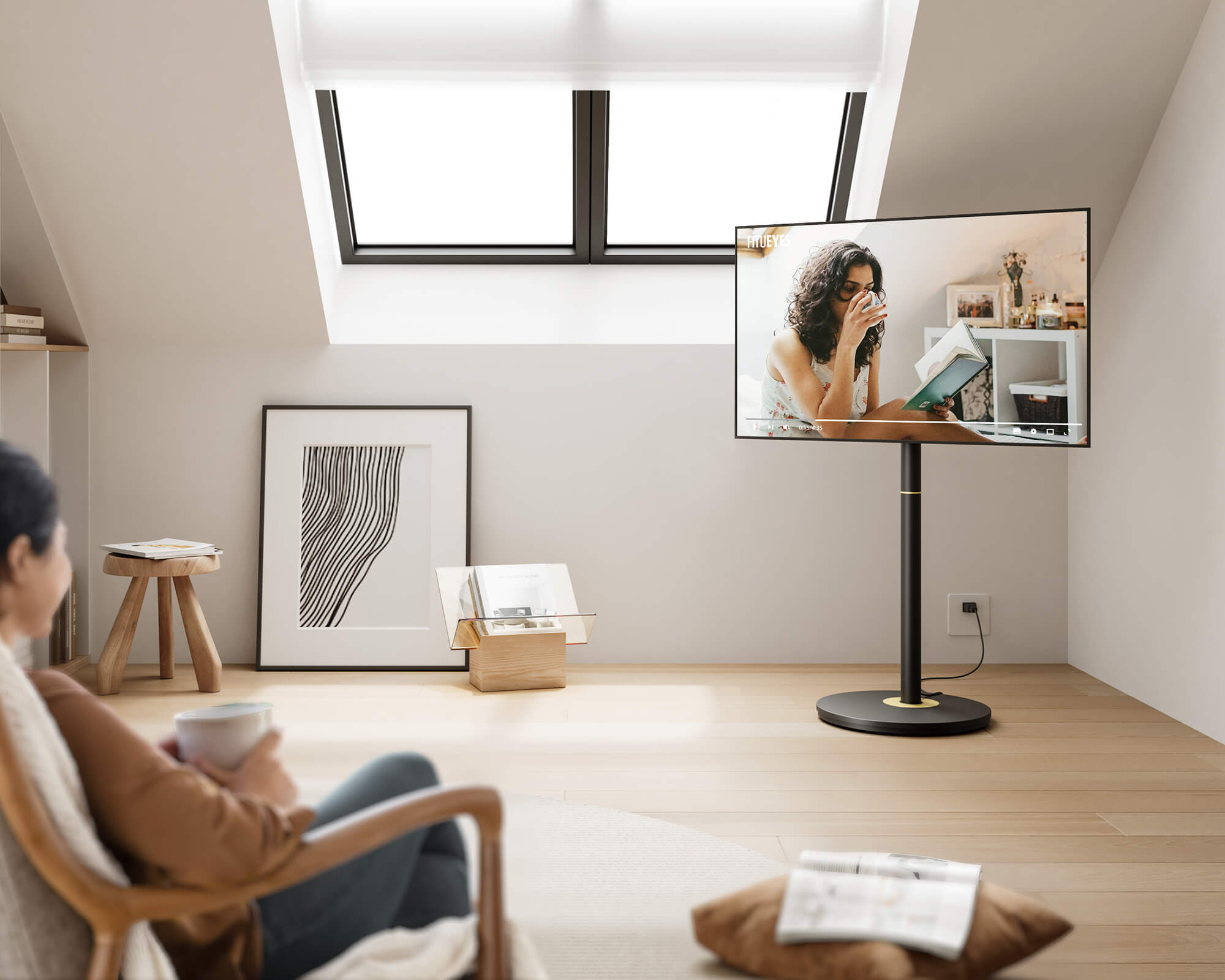



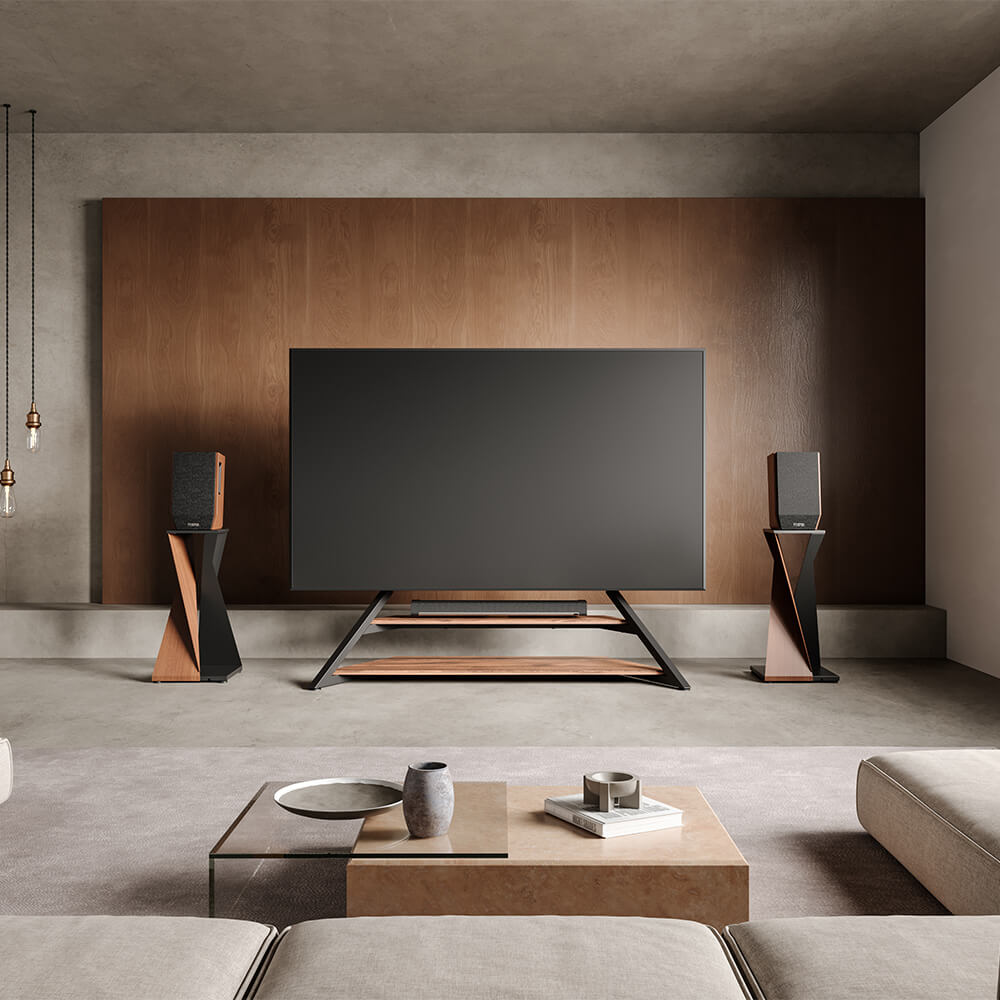
You do not need custom built-ins—or even a TV fixed to the wall—to make a TV wall look finished. A clear viewing zone can come from the relationship between the screen, the wall, and the elements around it rather than permanent cabinetry. Start by fixing the proportions, then use paint, lighting, plants, artwork, cable management, and the right TV stand to give the area a clear visual purpose.
For rooms where flexibility matters, freestanding TV stands can also create a defined TV zone without tying the screen to one wall. The goal is to make each element support the same layout rather than adding decor simply because the wall feels empty.
Fix the Proportions Before decorating
Before adding shelves, artwork, or wall treatments, look at the TV from the main seating position. Taking a straight-on photo while the screen is off can make awkward spacing easier to notice.
Ask whether the TV feels disconnected from the area around it, whether the setup occupies only a small part of a much larger wall, or whether several small accessories make the wall look more scattered rather than more complete.
If so, the problem is probably not a lack of decor. A large gap between the screen and the structure supporting it can make the two feel unrelated, while small pictures spread across a broad wall can create several separate visual islands.
Instead, create one recognizable TV zone. The screen, stand, backdrop, lighting, and nearby decor should read as one composition. The TV does not have to sit at the geometric center of the wall either; its position should make sense from the seating area while working around windows, doors, walkways, and the way the room is actually used.

Define the TV Zone Without Built-Ins
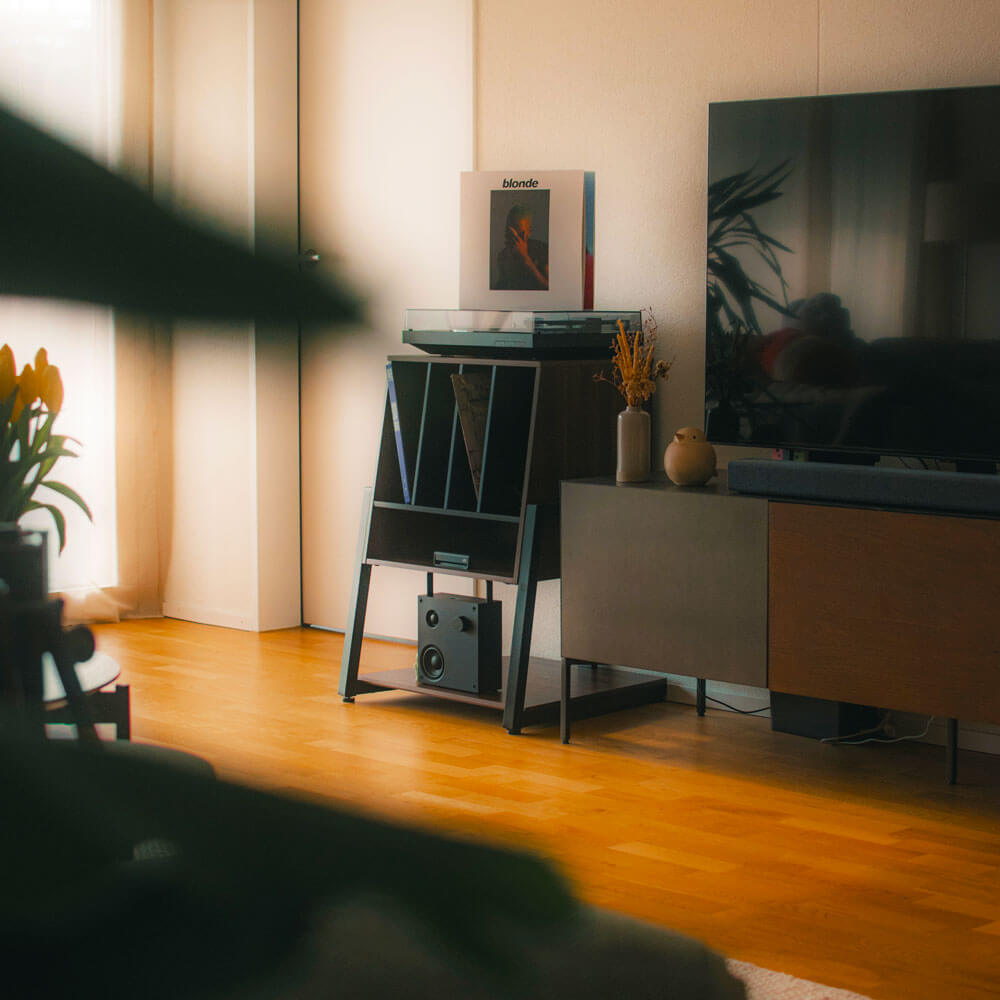
Many effective living room TV wall ideas work because they create a visual boundary around the screen. Built-in cabinetry is only one way to achieve that.
Use Paint or Texture
A TV can look isolated when it sits against a large, completely blank wall. A defined background helps connect it to the surrounding room.
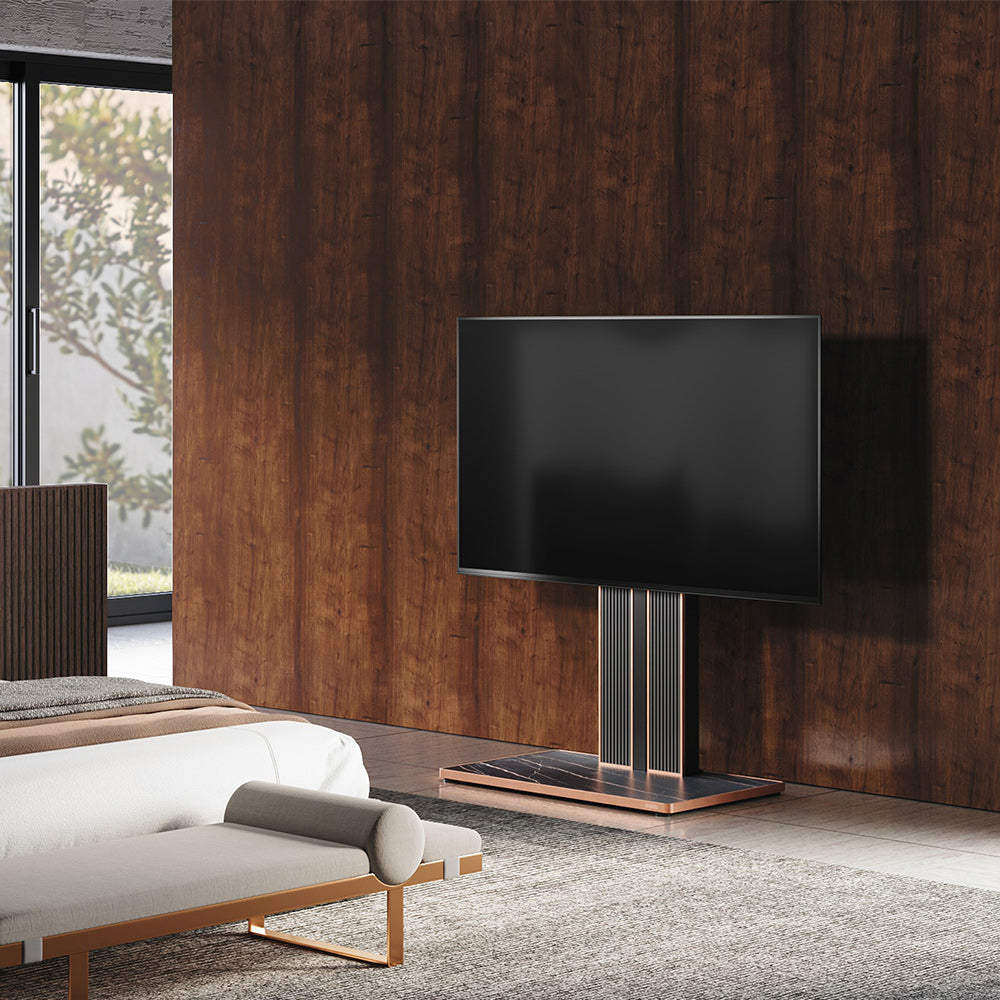
A darker or mid-tone paint color can reduce the contrast of the screen when it is turned off. Wallpaper or a wood-look finish can add texture without requiring storage units around the TV. The treatment does not need to cover the whole wall; concentrating it around the TV zone is often enough to create a clearer focal area.
If you prefer fewer permanent changes, removable wallpaper, floor lighting, freestanding decor, and leaning artwork can all help define the space. Paint, molding, or wall panels remain options when changing the wall surface itself is acceptable.
Add One Vertical Element
TVs and their stands naturally create strong horizontal lines. If the surrounding wall still looks empty, one taller element can create better balance than several small accessories.
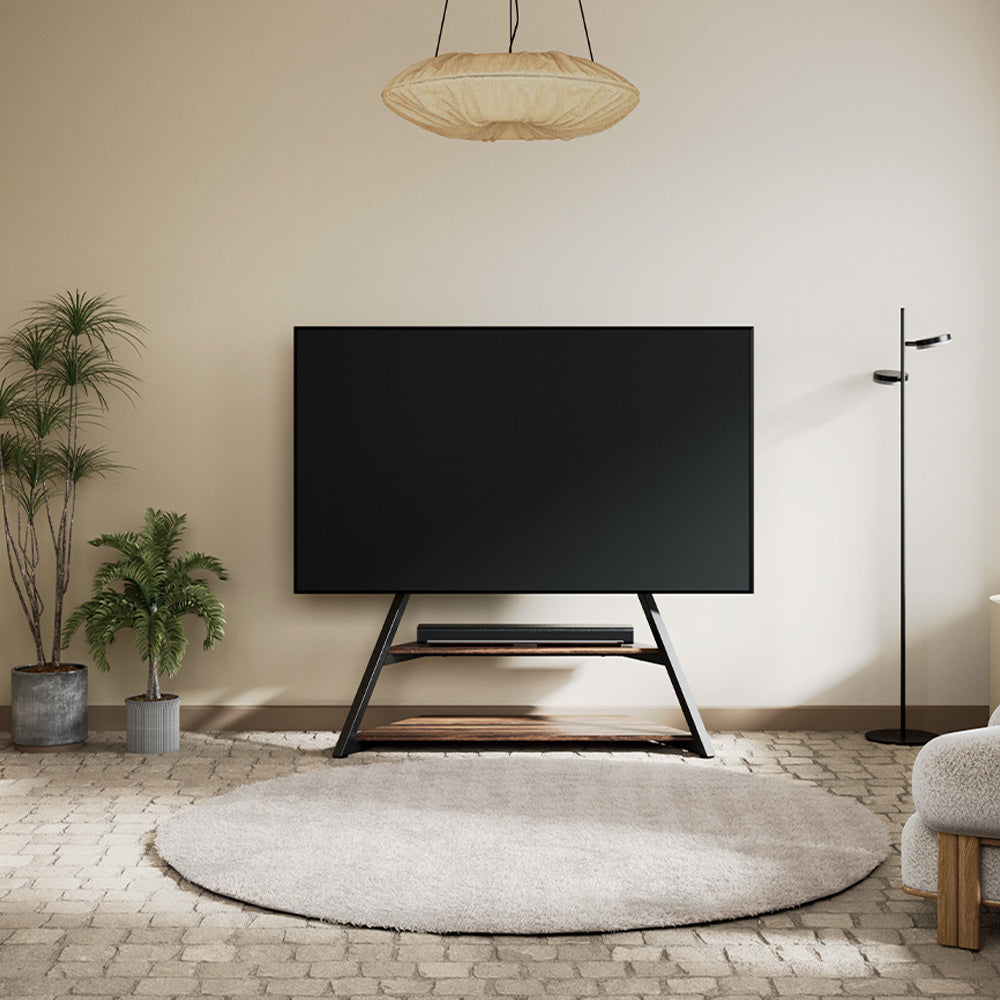
A floor lamp, tall plant, narrow freestanding shelf, or large leaning artwork can extend the composition vertically. Matching items on both sides are not required. One strong vertical feature often makes the setup feel more relaxed and intentional than two sides filled with identical decor.
Make Asymmetry Look Intentional
Windows, doors, fireplaces, and corners often make perfect symmetry unrealistic. Rather than forcing the TV into the center of everything, balance the overall visual weight.
If one side already has a window, for example, a tall plant or floor lamp on the other side may be enough. The two elements do not need to match in shape; they simply need to keep one side of the TV area from feeling noticeably heavier.
This approach works especially well in open-plan rooms where the TV must relate to seating, dining space, and circulation rather than one wall alone.
Choose a Strong Visual Anchor
Without built-ins, the TV still needs something that makes its position feel deliberate. That does not mean adding bulky furniture simply to fill the space below it.
Let the Stand Define the Zone
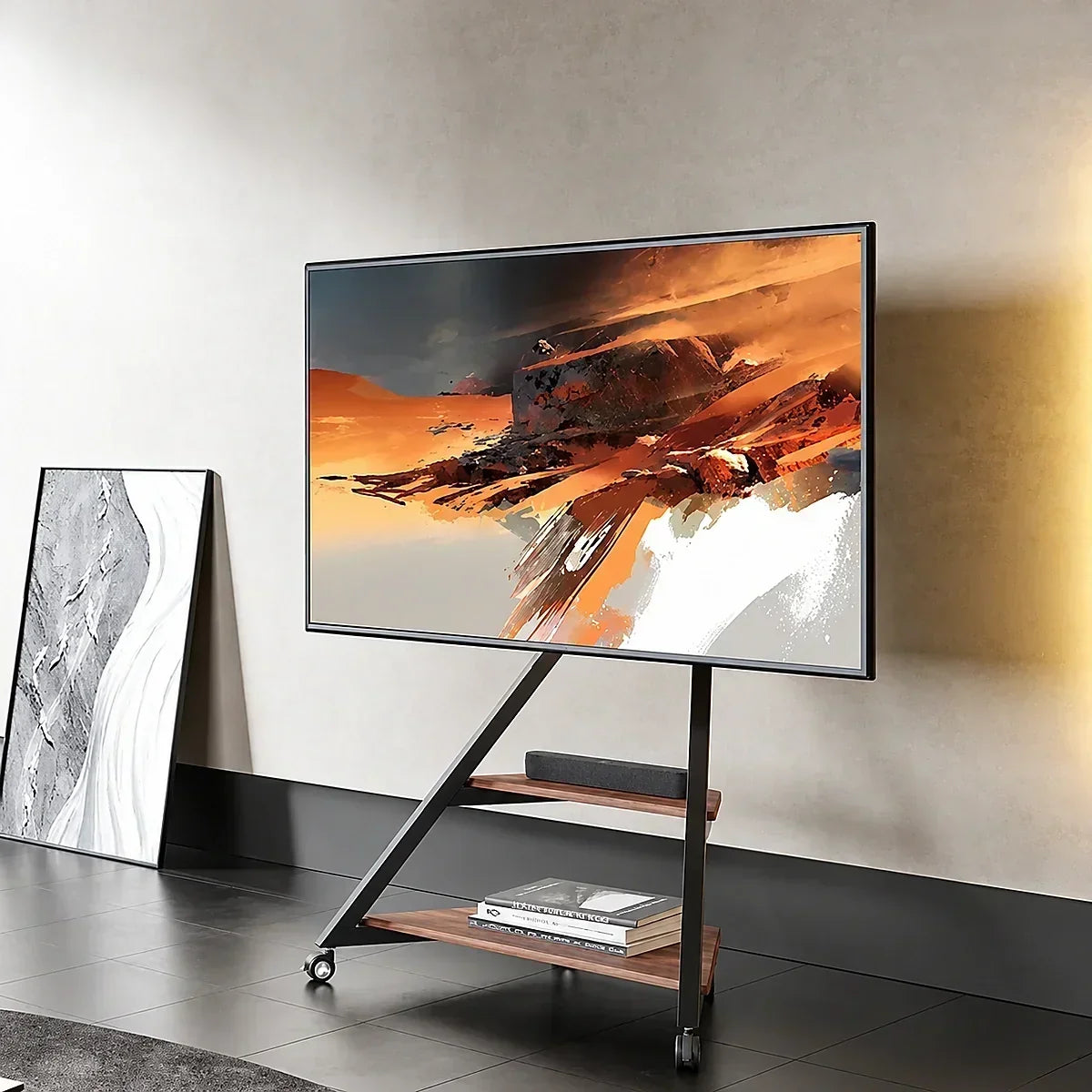
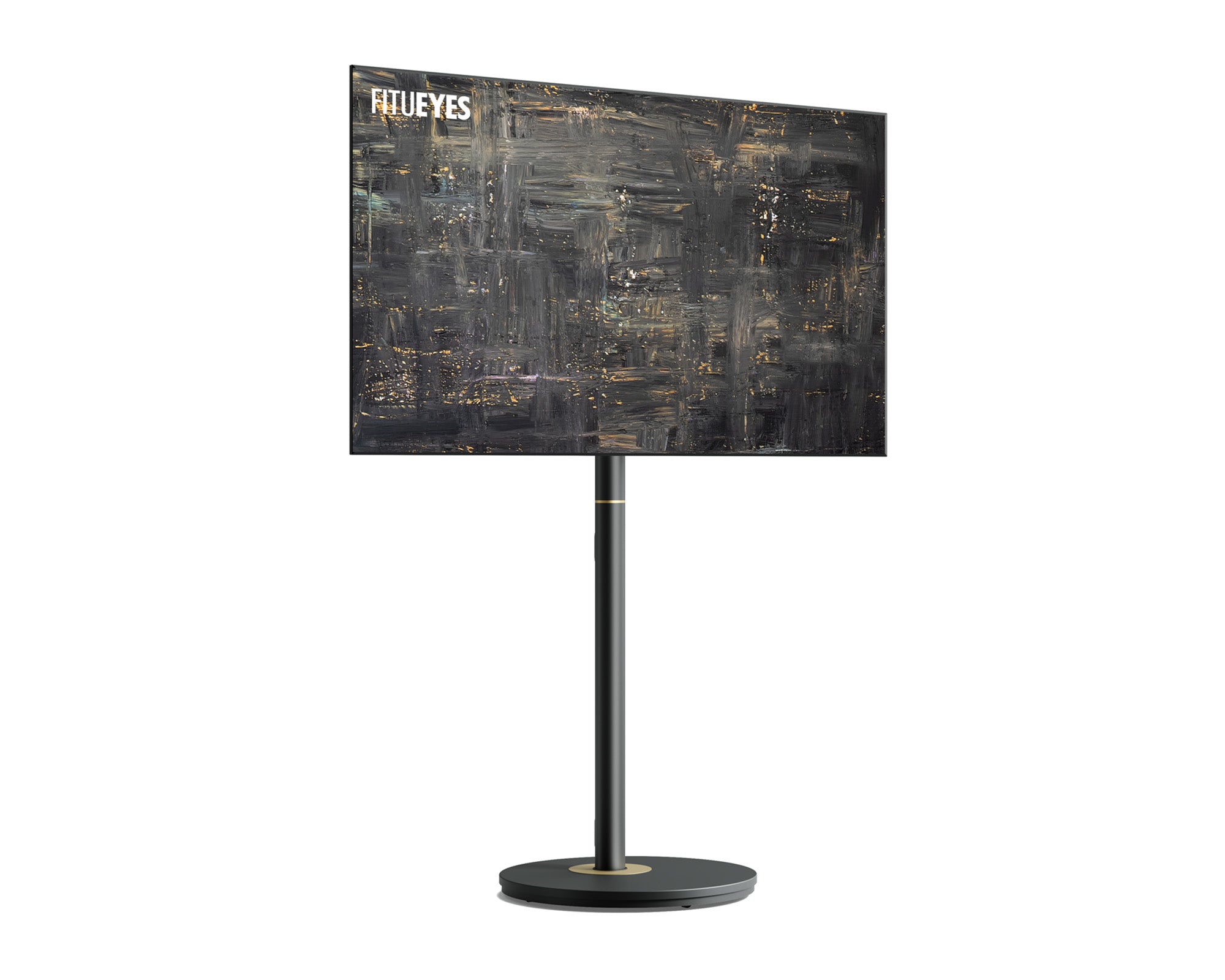
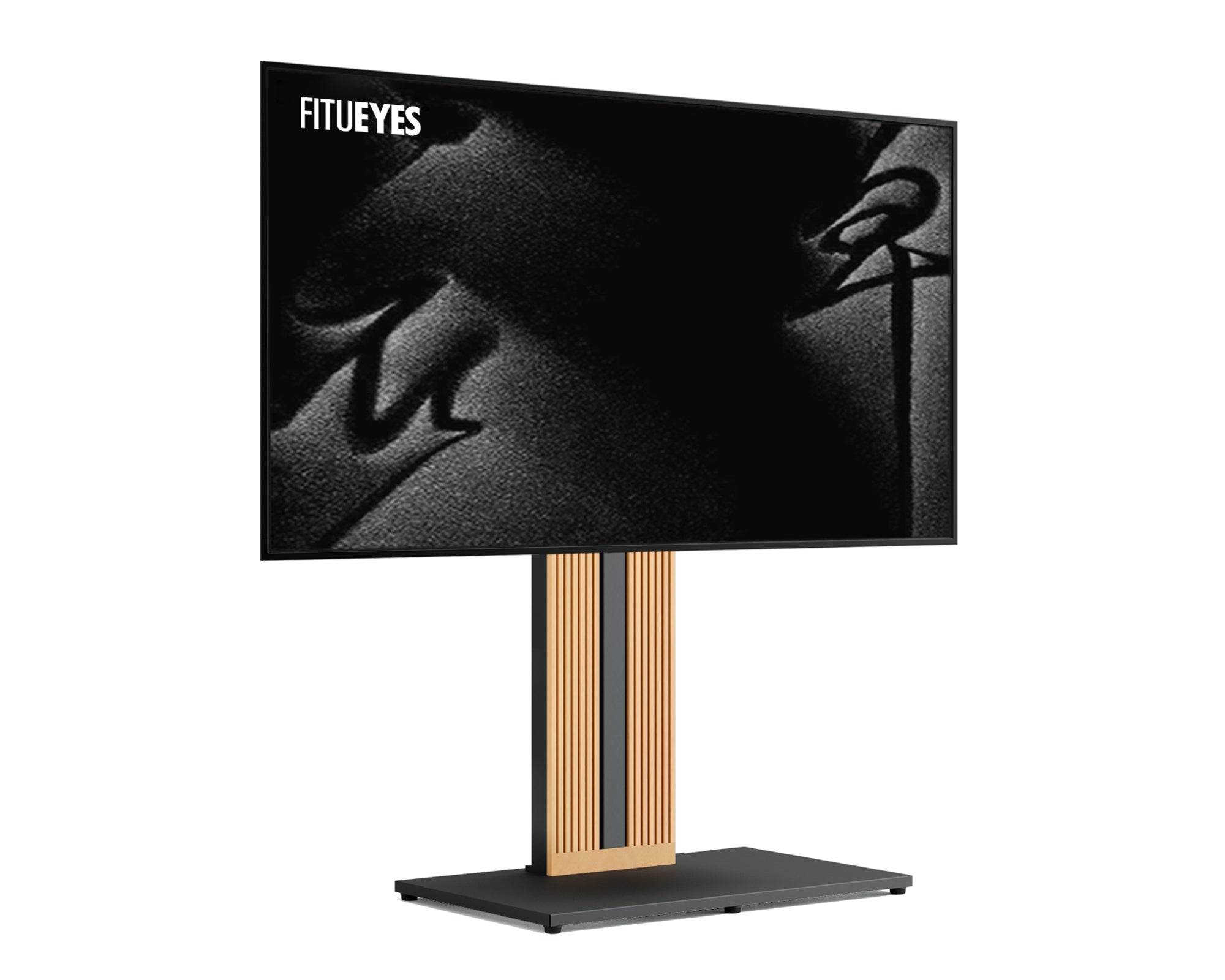
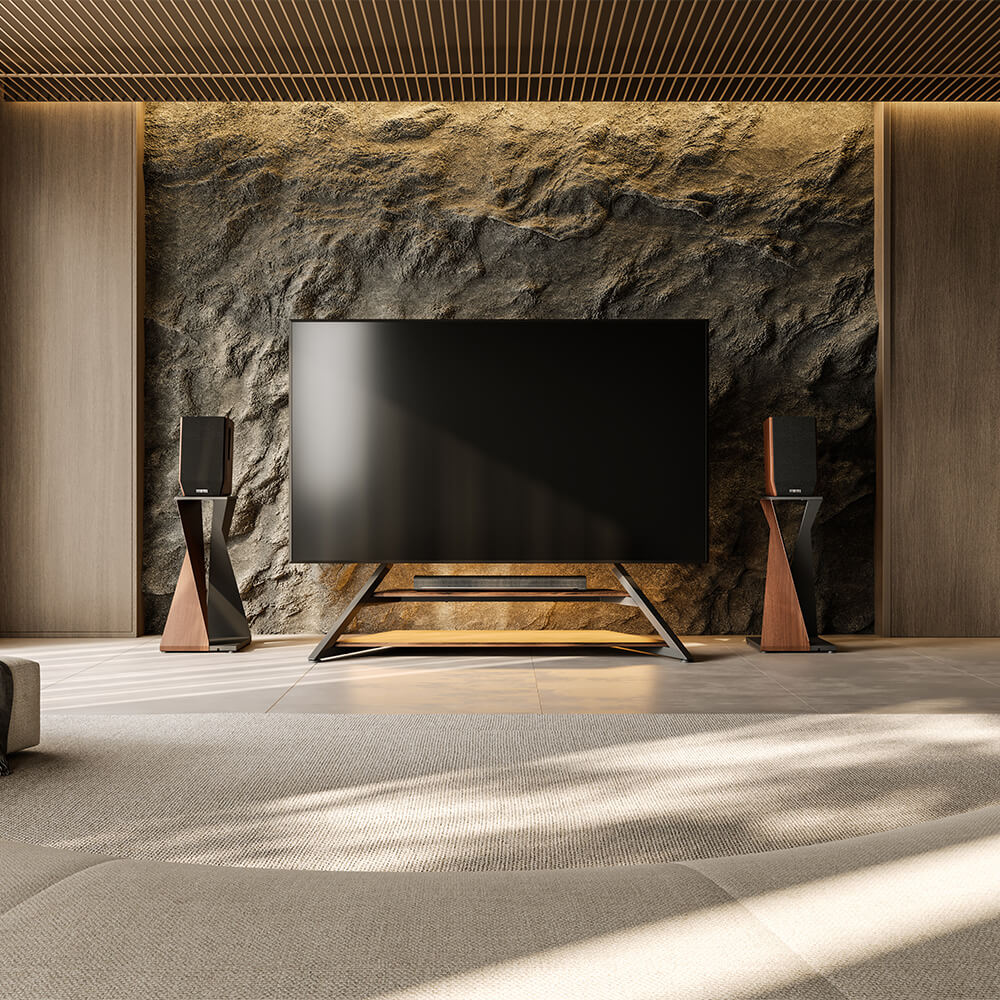
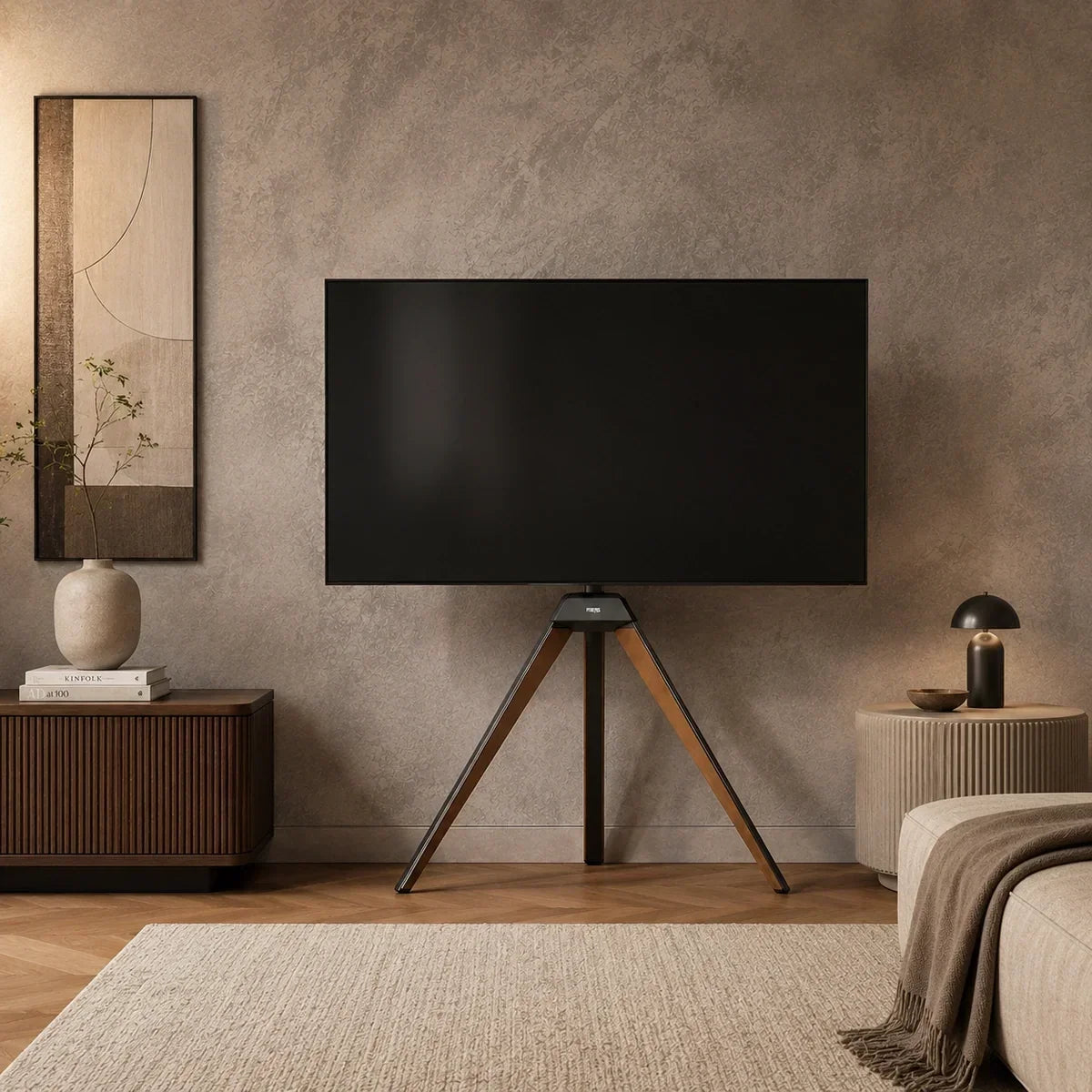
A freestanding floor TV stand can support both the screen and the visual composition without requiring permanent cabinetry around it. An easel-inspired design is especially useful when the TV itself needs to feel like part of the room rather than a screen placed against an unfinished wall.
The Picasso FT65 TV Stand is one example. Its tripod-inspired structure gives the TV a stronger vertical presence, while the TV center height adjusts from 36.4 to 42.3 inches (92.5 to 107.4 cm), providing about 6 inches (15 cm) of flexibility to better align the screen with nearby seating and furniture. The ±20° swivel range lets the stand remain visually anchored while the screen turns toward the main viewing area—useful in open-plan or L-shaped layouts. It also supports TVs up to 77 lbs, combining practical support with a relatively light visual footprint.
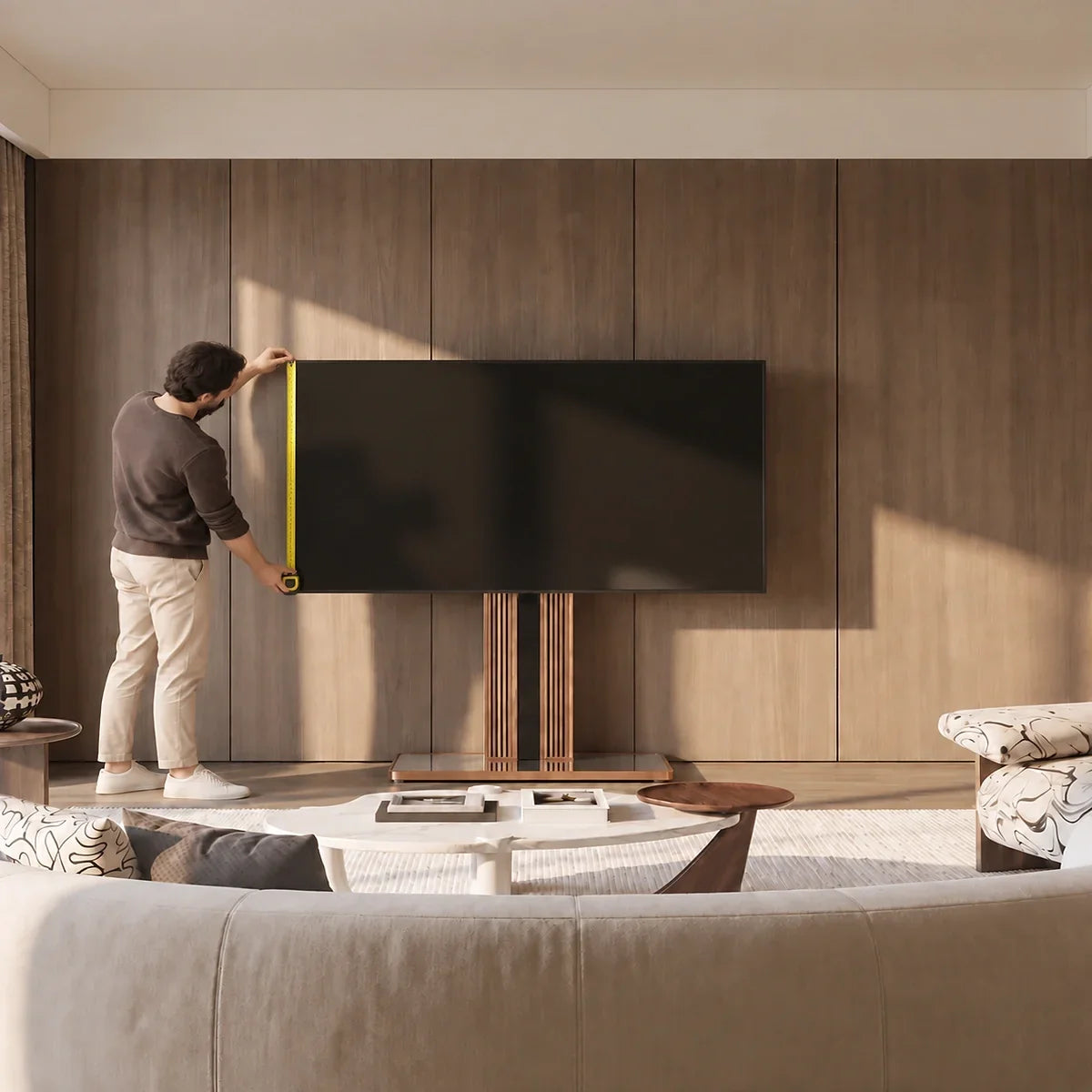
Before choosing any stand, check your TV's screen size, weight, and VESA pattern against the model specifications.

Use Mobility When Viewing Areas Change
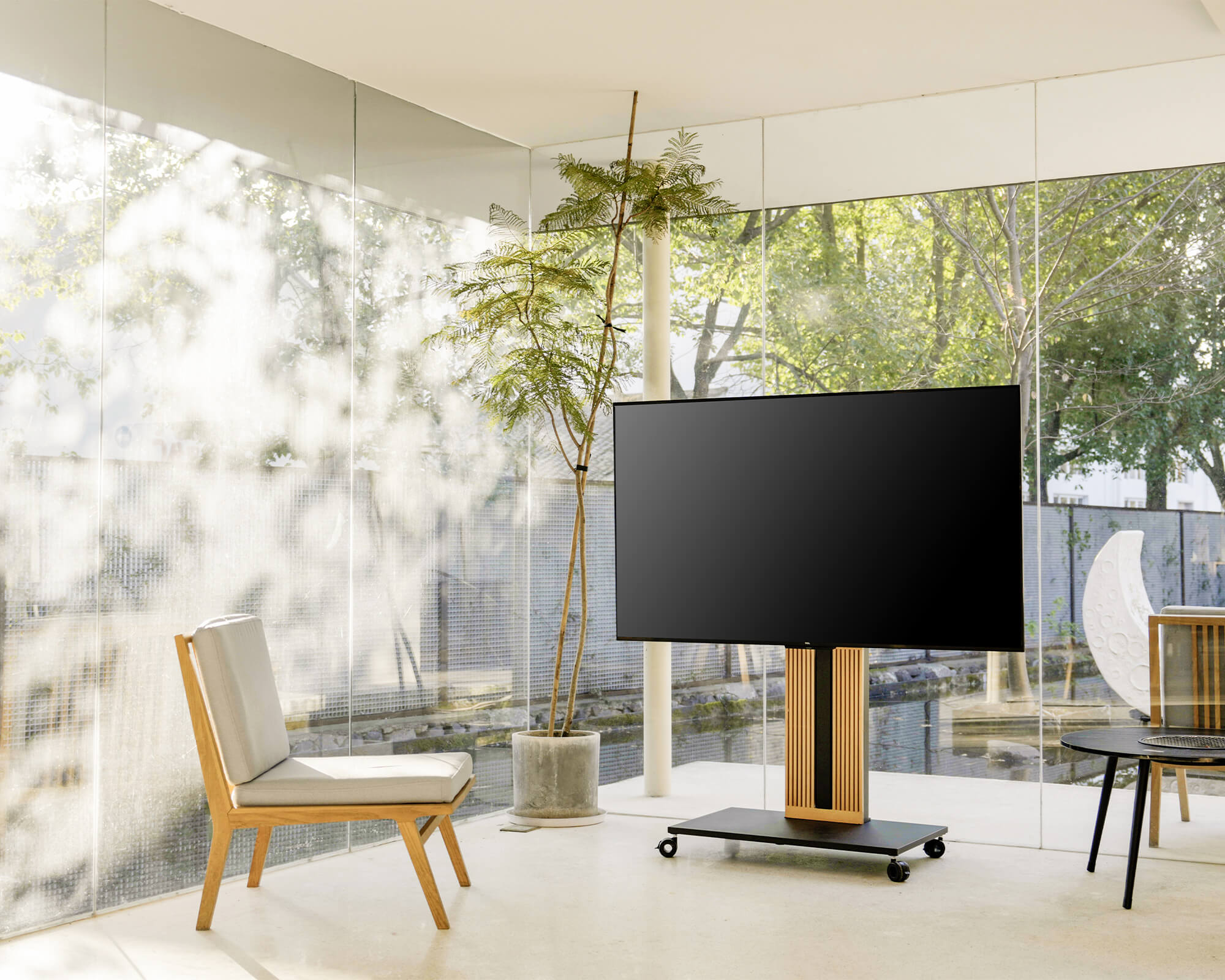
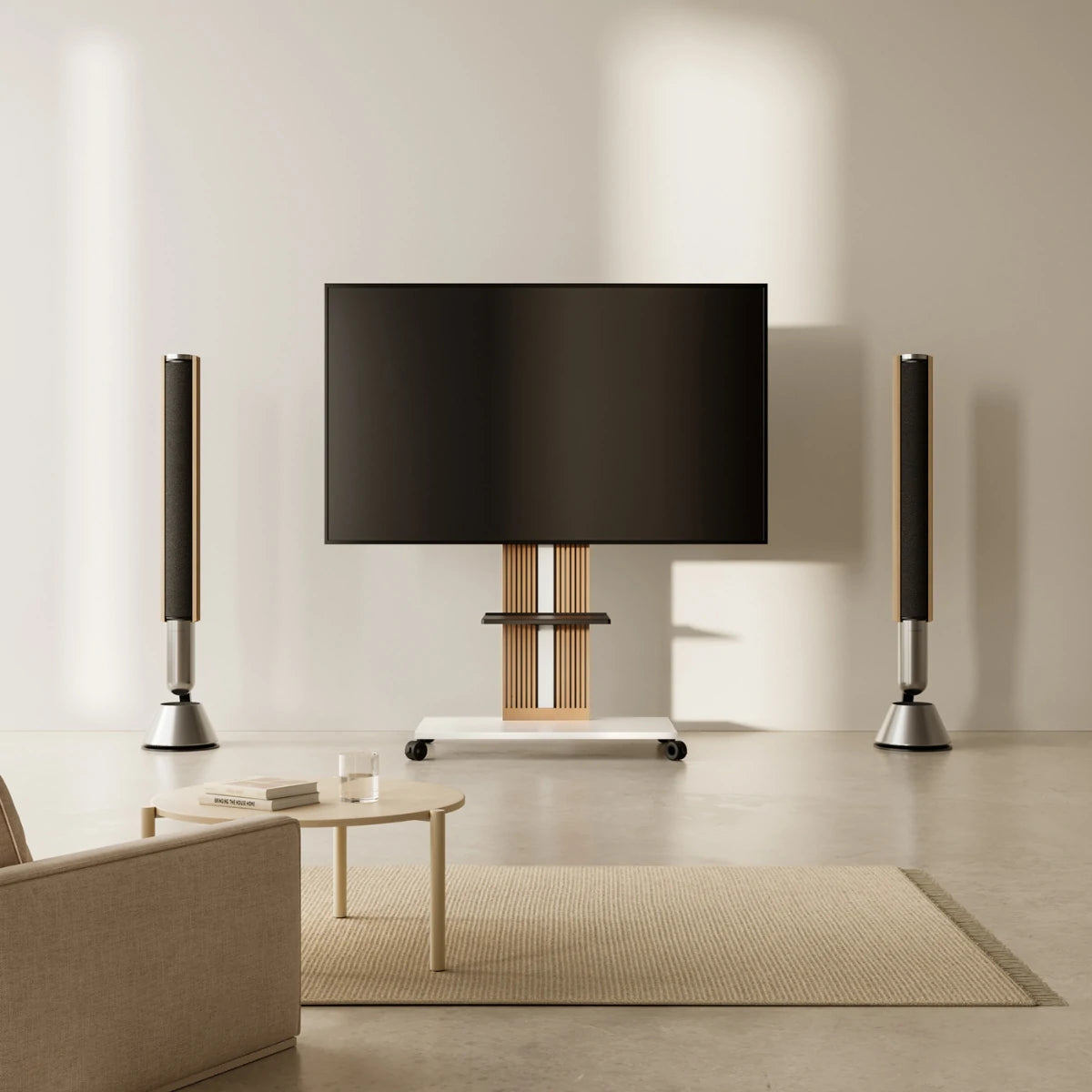
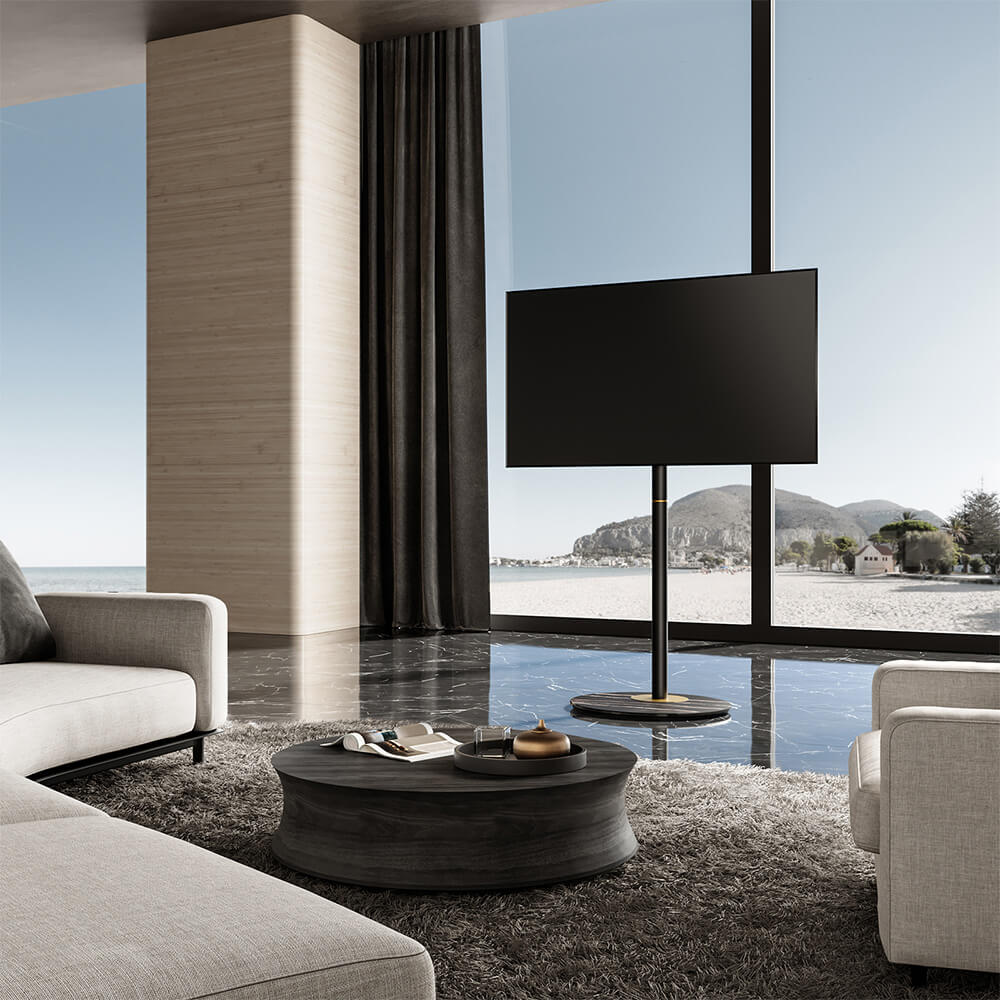
If the room needs to support more than one viewing area, mobility can be more useful than fine-tuning a single fixed position. A rolling TV stand allows the screen to move between seating zones or shift out of the way when the room serves another purpose. Instead of arranging furniture permanently around the TV, you can reposition the screen around how the space is being used.
This works especially well in open-plan and multipurpose rooms. If the TV normally stays in one defined zone, height and swivel adjustment may be enough; if the viewing position itself changes, mobility becomes the more useful feature.
Make Cable Routes Part of the Layout
Cable management affects more than whether the TV area looks tidy. A visible cable dropping from the screen can interrupt the clean lines that make a freestanding setup look intentional, while poorly planned routing can pull on connections or restrict normal swivel or movement.
Before settling on the final position, plan how power and connected equipment will reach the TV. If the stand includes built-in cable management, route wires through or along the stand so they stay less visible from the main viewing area while leaving enough slack for normal adjustment. Secure excess cable behind the structure instead of letting loops collect on the floor.
The goal is not simply to hide every wire. Good cable routing keeps the TV zone visually clean without limiting the movement and adjustability that make a freestanding setup useful.
Also think about what may be connected later. A simple setup can eventually gain a soundbar, streaming device, gaming device, or extra HDMI cable. Keep connections accessible enough that adding equipment does not mean undoing the entire setup.
Only after those routes are resolved should decor become the priority. A floor lamp, one larger artwork, or a plant will usually contribute more than several small pieces competing with the TV. These minimalist TV stand ideas offer more ways to reduce visual clutter without leaving the room feeling unfinished.
Build a TV Wall That Can Evolve
A finished TV wall does not need to be permanent. A flexible setup can work with today's furniture while still accommodating a different seating arrangement, new entertainment equipment, or a future move.
FITUEYES designs freestanding TV stands around flexible placement, stable support, adjustable viewing, and cleaner cable routing. Many models are designed for straightforward one-person assembly, typically taking 15-20 minutes depending on the stand. If you need help with compatibility, setup, or an order, you can contact the FITUEYES support team.
If your TV wall currently feels empty or disconnected, start with the composition rather than automatically adding more furniture. A freestanding setup works best when its flexibility solves a real layout need—such as defining the TV zone, adjusting the viewing direction, or avoiding permanent built-ins.
FAQs
1. Can a TV Stand Sit on a Thick Carpet?
It can, but thick or high-pile carpet can let support points sink unevenly. Keep the full base on one surface and check that the stand remains level and does not rock after installation. If the carpet compresses unevenly, use a firmer location rather than soft pads or stacked objects. Deep piles may also make rolling stands harder to move.
2. How Much Empty Space Should You Leave Around a TV?
There is no single spacing rule that works for every wall. Leave enough open space for the TV to remain the clear focal point without making it look isolated. If artwork, lighting, or plants are added nearby, keep them visually connected to the TV zone rather than spreading small items across the entire wall. In smaller rooms, some intentional empty space often looks more finished than filling every available gap.
3. Should the TV Wall Match the Rest of the Room?
It should feel connected, not identical. Repeating one or two colors, materials, or shapes is usually enough. A black TV frame might relate to dark lighting or table legs, while a wood-toned stand can echo nearby furniture without making the room look overly coordinated.