


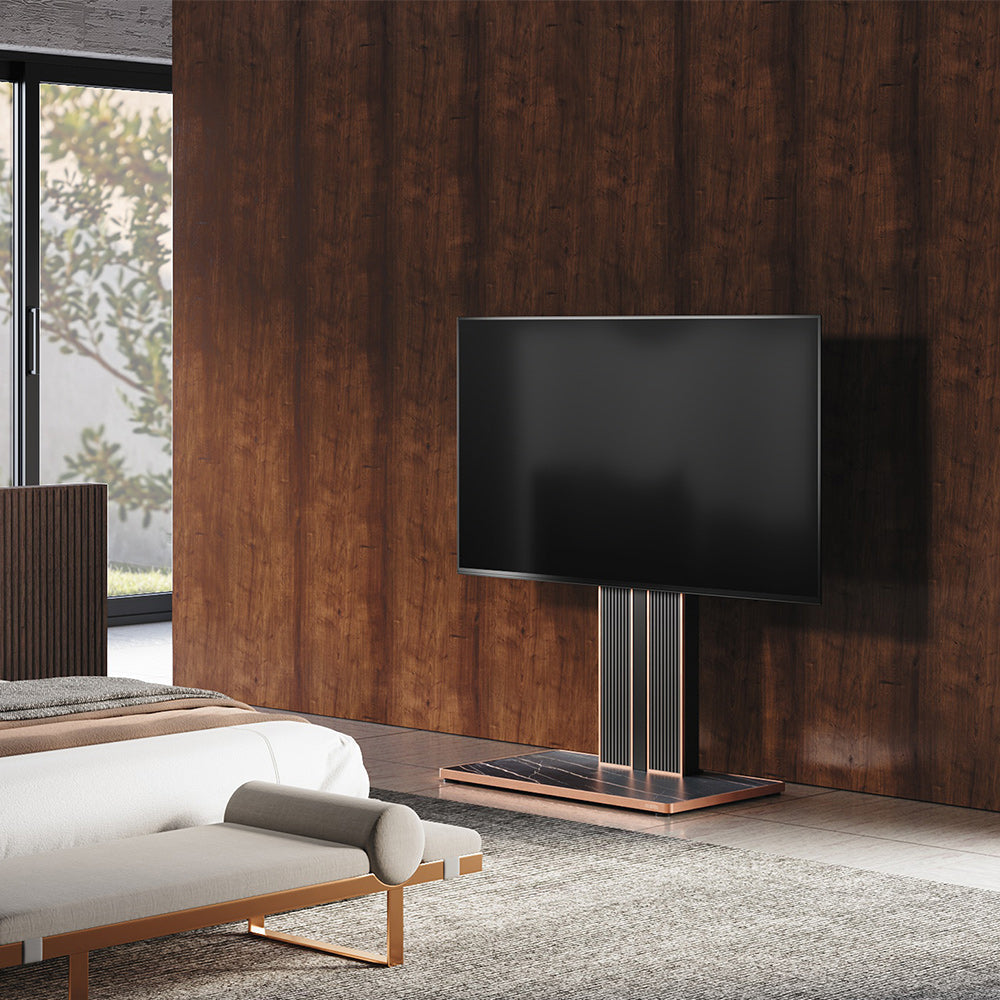
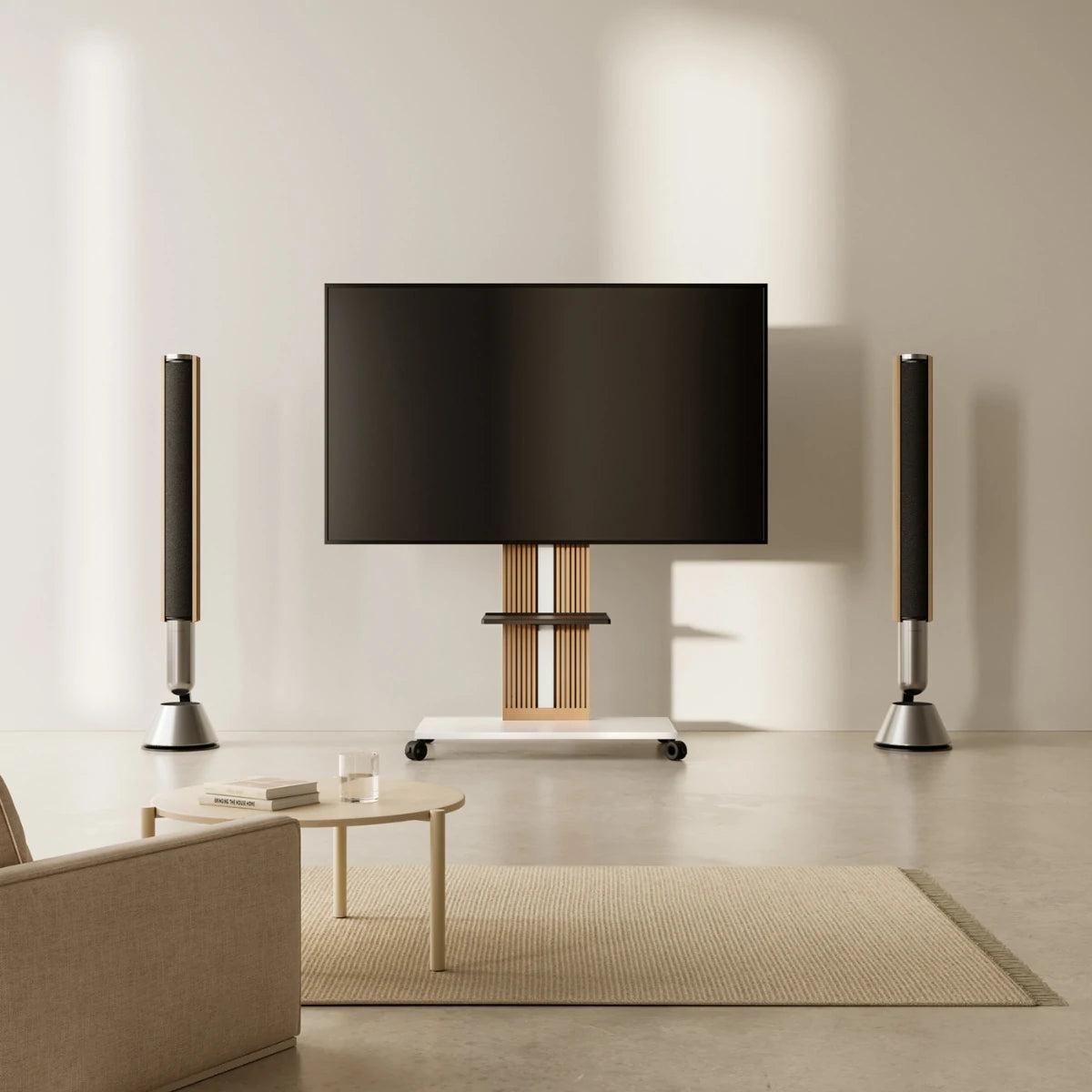
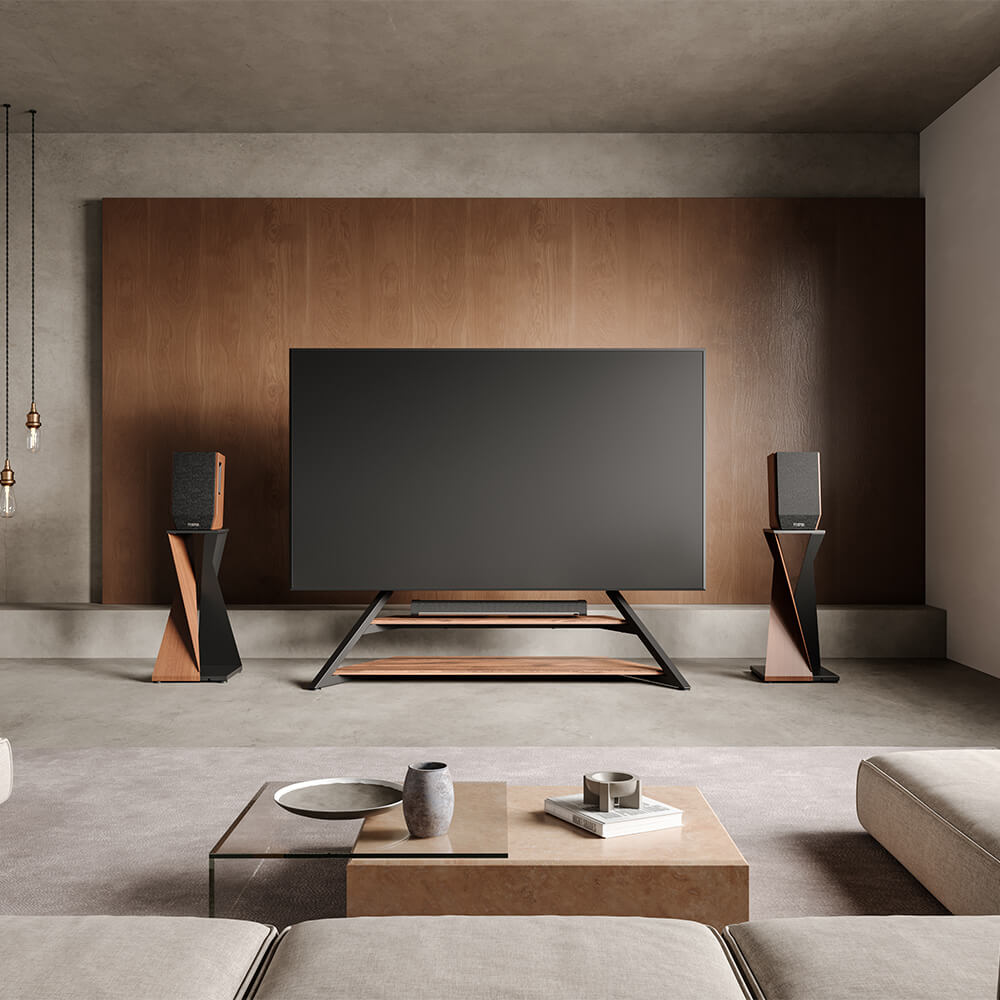
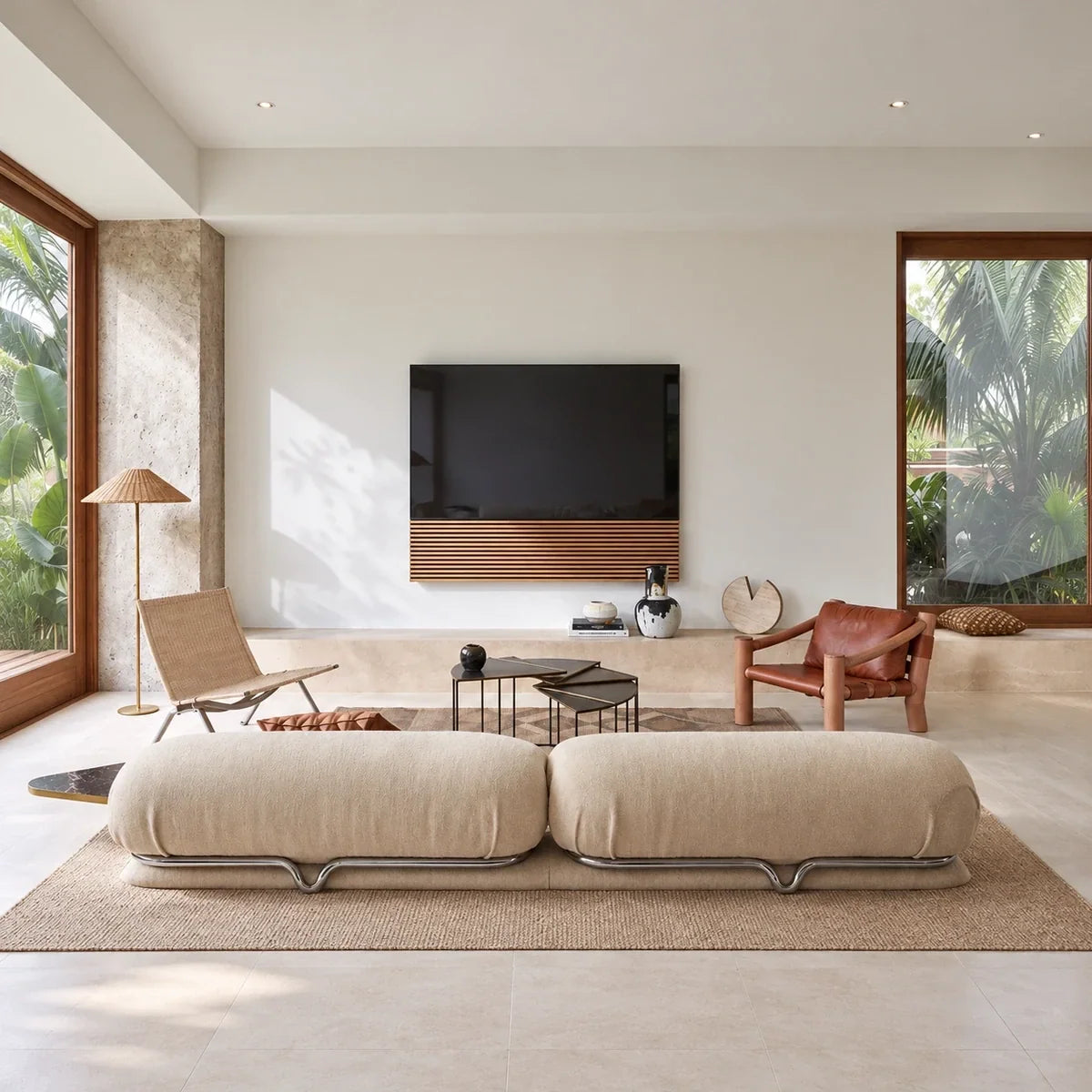
You can hide a soundbar without adding a bulky media console by attaching it below the TV, placing it on a floating shelf, recessing it into the wall, or using a TV wall-mount system with a concealed audio compartment. Brackets and shelves organize the speaker beneath the screen; recesses and covered compartments can also conceal its enclosure. Each approach needs suitable support, clear sound paths, and accessible connections.
The useful distinction is how much equipment you want to see. Tidying the cables may be enough to give the TV wall a cleaner appearance. Concealing the soundbar itself requires closer attention to its driver positions and installation guidance. Check those requirements alongside the speaker’s dimensions, since a compartment that physically accommodates the enclosure may still obstruct sound from its top or sides.
Attach the Soundbar Below the TV
A TV-mounted soundbar bracket brings the screen and speaker into one arrangement. This is especially useful when the television turns toward different seats: a compatible bracket lets the soundbar follow its direction. Check how the bracket attaches, since some share the TV’s VESA mounting arrangement and others use different connections. The TV mount must support the complete permitted load, including the additional bracket and soundbar, and the speaker needs compatible attachment points or an approved cradle.
For initial planning, allow roughly 2–4 inches (5–10 cm) between the soundbar’s top and the TV’s bottom edge, then confirm the clearance required for your particular model. Keep upward-firing drivers clear of the screen’s overhang. Within those requirements, adjust the bracket position to minimize visible arms or unused slots, checking the result from the main seats and the side of the room before final tightening.
Route the HDMI connection through the available guides and secure loose sections behind the mounting assembly. Leave the slack required for the television’s permitted movement, then check the full adjustment range for pulled connectors or pinched cables.
A TV-mounted bracket keeps the soundbar close to the screen, but the speaker remains visible. Once the attachment and cables are secured, check the arrangement from your usual seats and confirm that the TV can complete its permitted movement without pulling the leads or bringing the soundbar into contact with nearby furniture.

Give the Soundbar a Floating Shelf
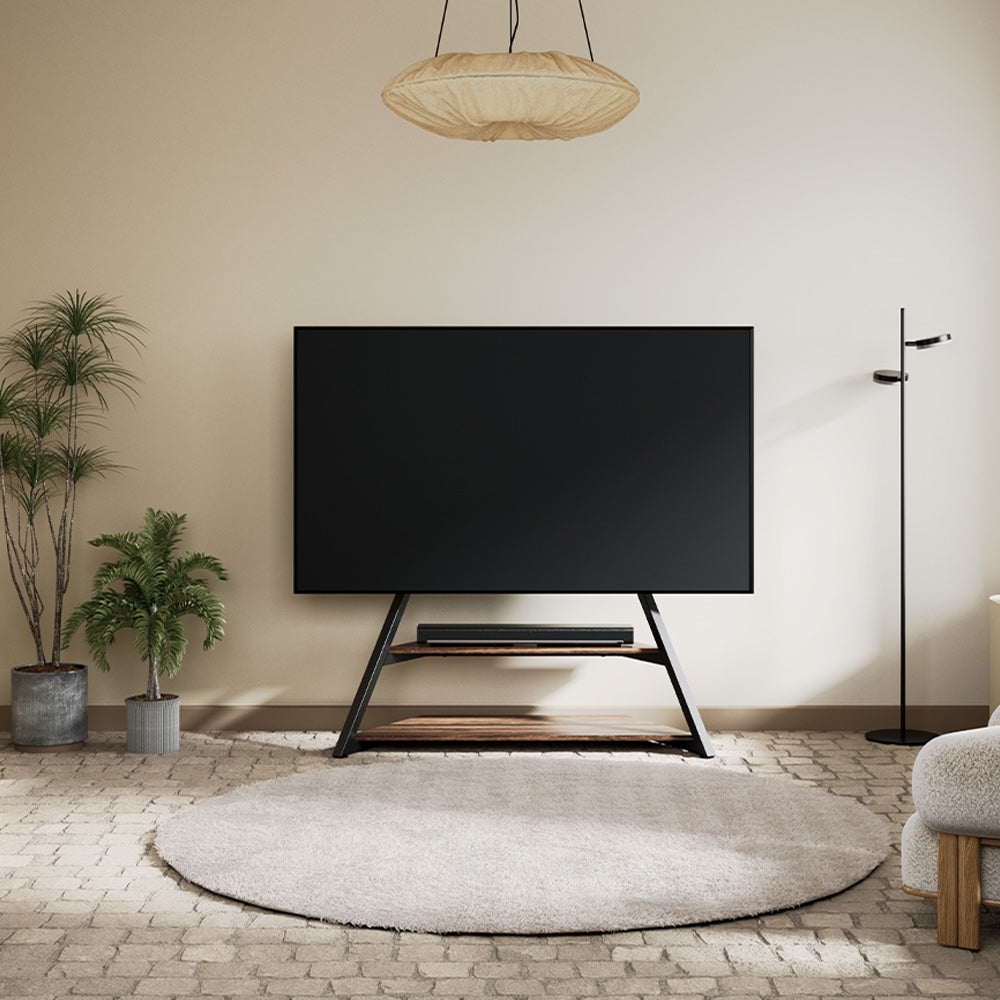
A floating shelf provides independent support beneath a stationary television, leaving the floor open and creating a simple horizontal line below the screen. Choose it by usable depth and load rating, with the soundbar’s feet fully supported. Include room for rear connectors, cable bends, and the manufacturer’s required ventilation. The shelf and its fixings must suit the wall construction and the complete supported load; matching the speaker’s width alone does not establish a workable installation.
Shelf depth also affects the appearance from the side. A shallow shelf may leave connectors pressed against the wall, while an unnecessarily deep one can project noticeably beyond the soundbar. Compare the connected equipment dimensions with the proposed shelf, then mark its outline beneath the TV using easy-release tape. Check that the position preserves screen clearance and leaves the soundbar’s controls and receiver accessible.
Plan the separate cable run between the television and shelf before installation. A paintable surface raceway can cover it against the wall. Concealed wiring requires an appropriate installation method, including a suitable power arrangement; ordinary device power cords should not simply be fed through the wall. After fitting the shelf, test familiar dialogue and bass-heavy material. Investigate any rattle at the fixings, cables, shelf, or nearby objects, and use pads beneath the speaker only as its manufacturer permits.

Recess the Soundbar Into the Wall
A recessed niche brings the soundbar into the wall, creating a more flush appearance beneath the television. An open-front design leaves the speaker visible within the recess; a removable grille or acoustic-fabric panel can conceal it for a more continuous wall finish. Plan the niche and its front panel together around the soundbar’s required sound paths, ventilation, and access to connections.
Front-firing models may be easier to accommodate than designs that also project sound upward or sideways, but the exact model’s guidance determines the required space. Include the connected plugs and cable bends when measuring the opening. Acoustic fabric over the front cannot compensate for a solid surface blocking a top or side driver, so establish a suitable speaker position before choosing the visible finish.
Have the proposed recess assessed before opening the wall. Studs, masonry, wiring, and pipework may restrict its location or depth, and the work needs a planned route for power and signal connections. Include a practical way to remove the soundbar and reach those connections without damaging the finished wall. A removable grille or panel should release independently of the television wherever the design permits. This makes the concealed installation usable when a cable needs replacing or the speaker requires service.

Use a TV Wall Mount With a Concealed Audio Compartment
An integrated wall-mounted system combines TV mounting and equipment storage in one structure, with a concealed soundbar compartment beneath the screen. A removable front hides the speaker enclosure while preserving access to its connections, and internal cable routing keeps the wiring organized within the unit. Check the complete system’s projection from the wall and the route to the power outlet alongside the compartment’s internal dimensions.
Compare the compartment with the soundbar’s full dimensions, including connected plugs and the clearances required for its drivers and ventilation. Check equipment load limits, television VESA compatibility, and wall requirements. Where the soundbar needs additional space above or beside it, establish the approved arrangement with the speaker manufacturer and system supplier before installation.

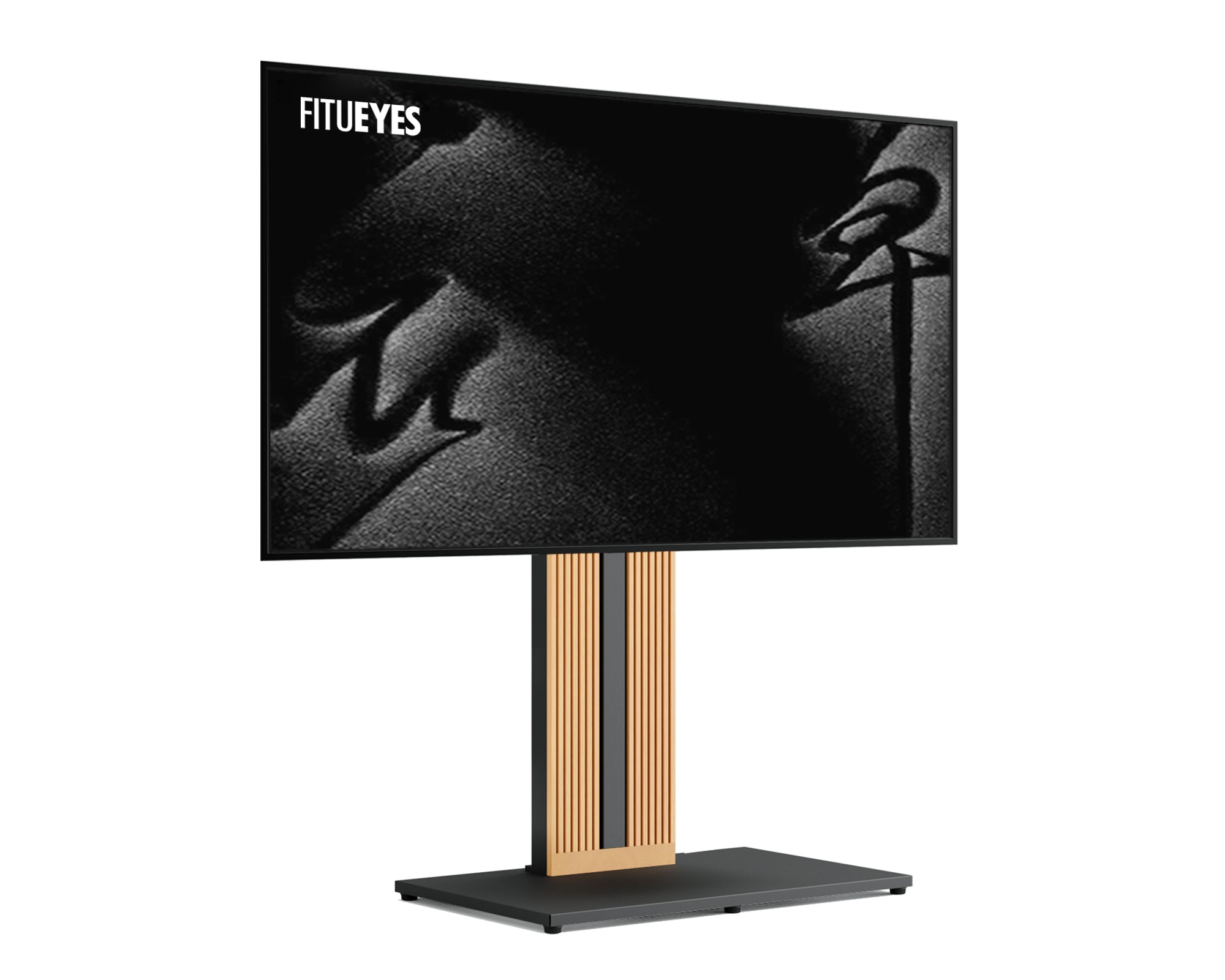
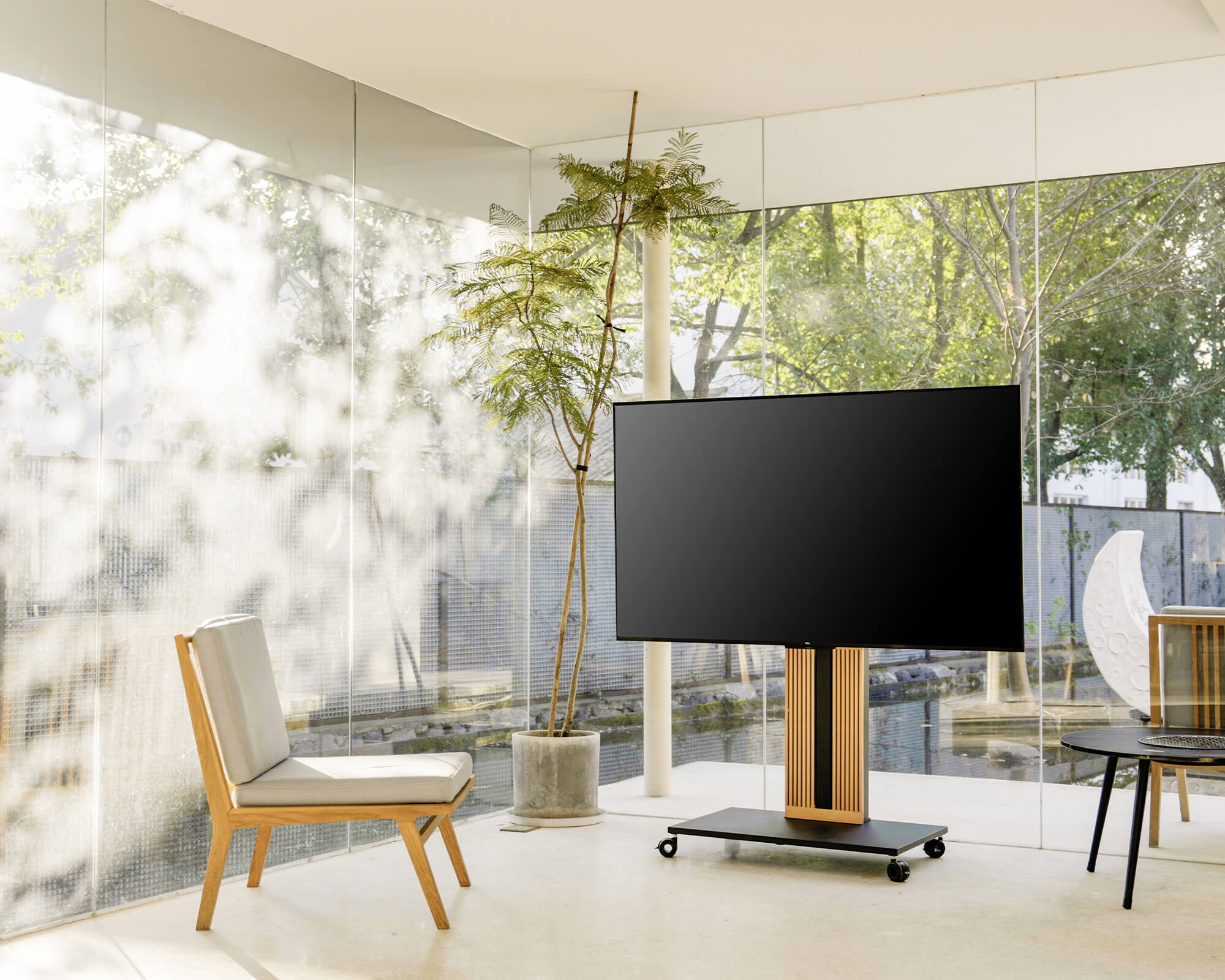
A wood grille can continue the room’s timber finishes, while an acoustic-fabric front provides a softer, continuous surface. Both versions of the Zen TV wall mount conceal the audio compartment behind a removable panel. The bay measures 43.6 inches (110.7 cm) wide, 9.2 inches (23.4 cm) deep, and 4.9 inches (12.4 cm) high. Internal channels organize HDMI and power leads, while vertical and front-to-back adjustment helps align the television with the housing around the soundbar compartment.
Internal channels handle the wiring inside the unit, but a lead may still remain visible between the system and a nearby outlet. Plan that final section along the wall, keeping plugs accessible and using a suitable surface raceway where needed. These methods for hiding TV wires without cutting the wall explain how to finish the exposed route without opening another section of the wall.
[product_card1]
A Cleaner TV Wall With Equipment Still Accessible
The most useful solution provides the degree of concealment you want while keeping the soundbar properly supported and easy to maintain. A bracket or shelf can make an existing speaker look more orderly; a planned recess or integrated compartment can bring its enclosure into the wall design. The choice follows from the equipment, installation work, and access your room can accommodate.
With those conditions established, FITUEYES brings TV mounting and equipment organization into a coordinated furniture design. The panel finish, proportions, and concealed connections can give the wall a calmer appearance, while removable access keeps the installation practical when connections need changing.
Frequently Asked Questions
Can I Hide a Soundbar Behind the TV?
A television placed in front of the soundbar can obstruct its drivers and affect the sound. Check the manufacturer’s approved placement options before using this position. If the goal is to conceal the enclosure, a dedicated compartment or recess with a suitable acoustic front provides a more purposeful arrangement, with the required sound paths kept clear.
Will a Wall-Mounted Soundbar Transmit Vibration Through the Wall?
It can, depending on the wall construction, mounting arrangement, and playback level. If vibration becomes noticeable, check the fixings, cables, and nearby objects to locate the source. Compare familiar content at different bass levels, then use only isolation accessories approved for the mounting arrangement. Avoid adding improvised padding beneath structural fixings.
How Can I Leave Room for a Future Soundbar Upgrade?
Record the compartment’s usable width, depth, and height, plus the opening through which the speaker must be removed. Compare replacement models with their connectors attached and their required driver clearances included. Check load limits again, too. An accessible panel allows replacement, but it does not make every future soundbar compatible with the original opening.