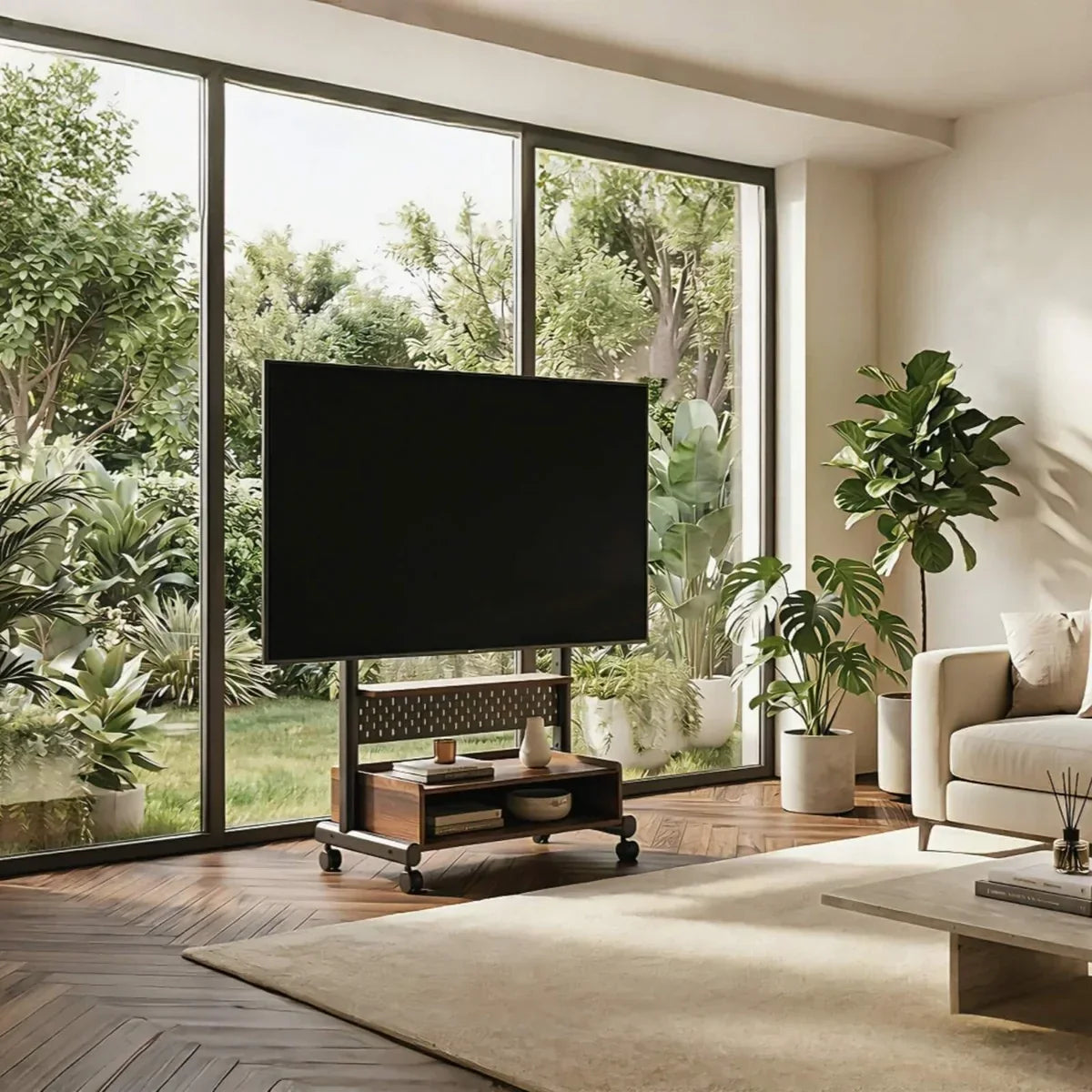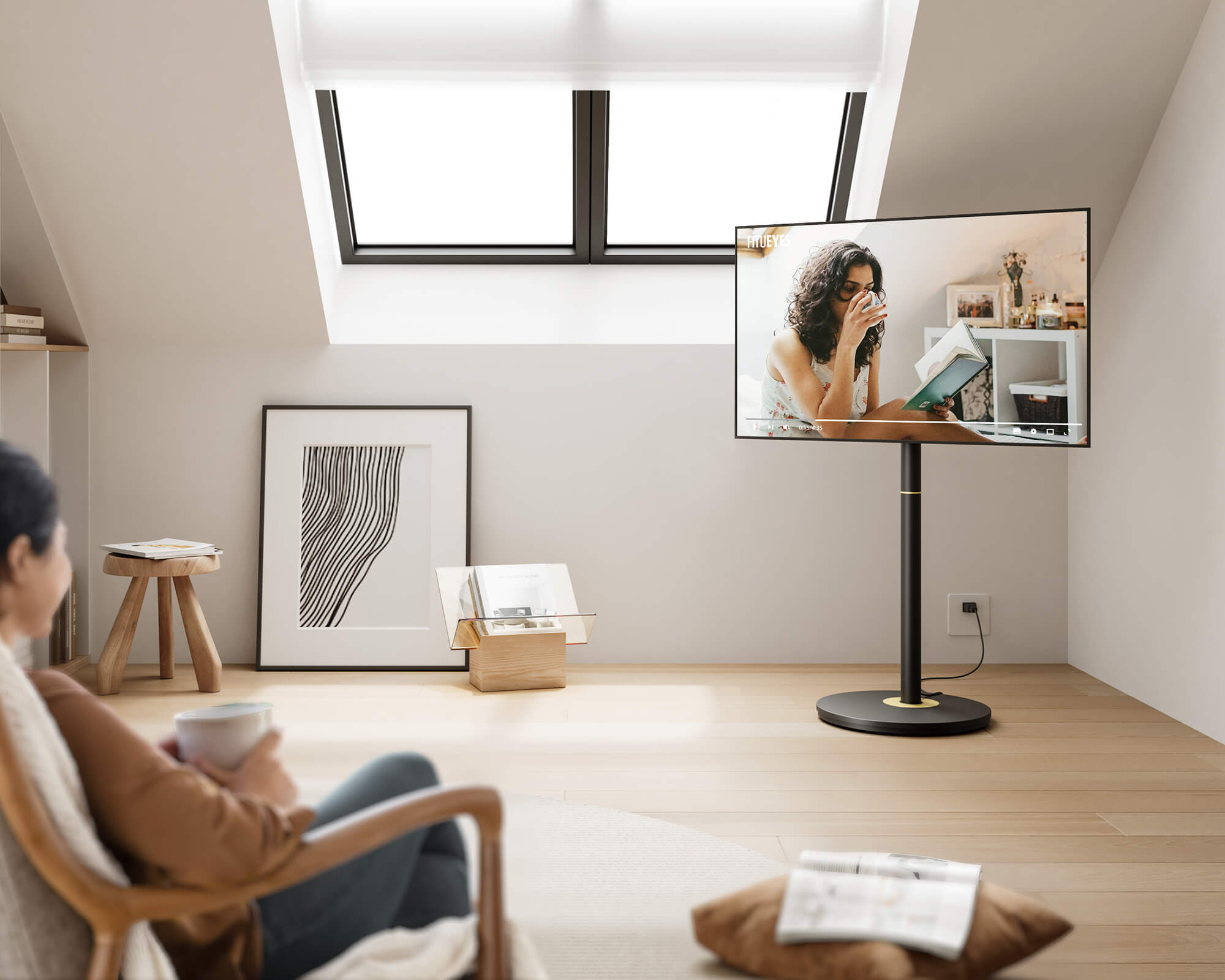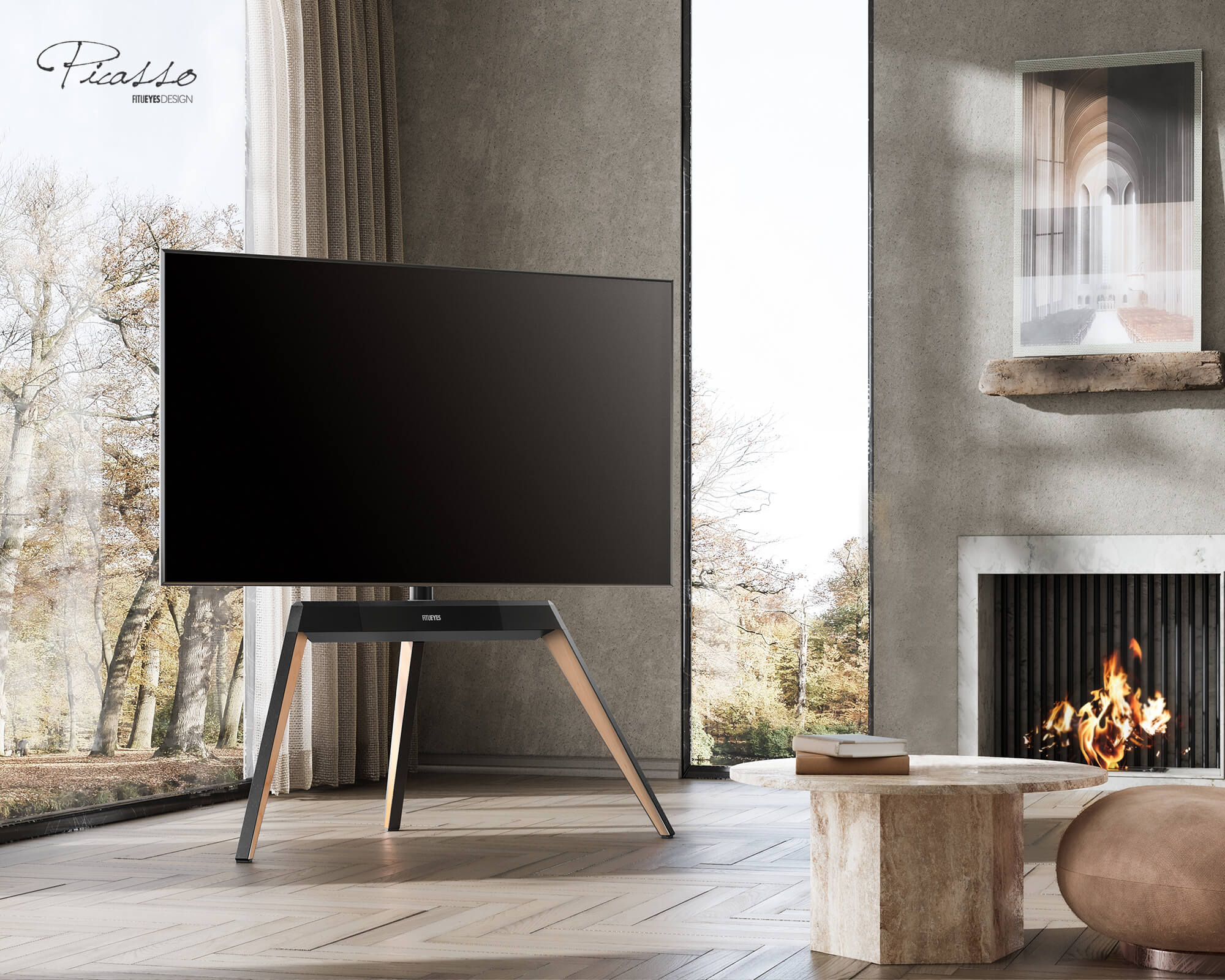



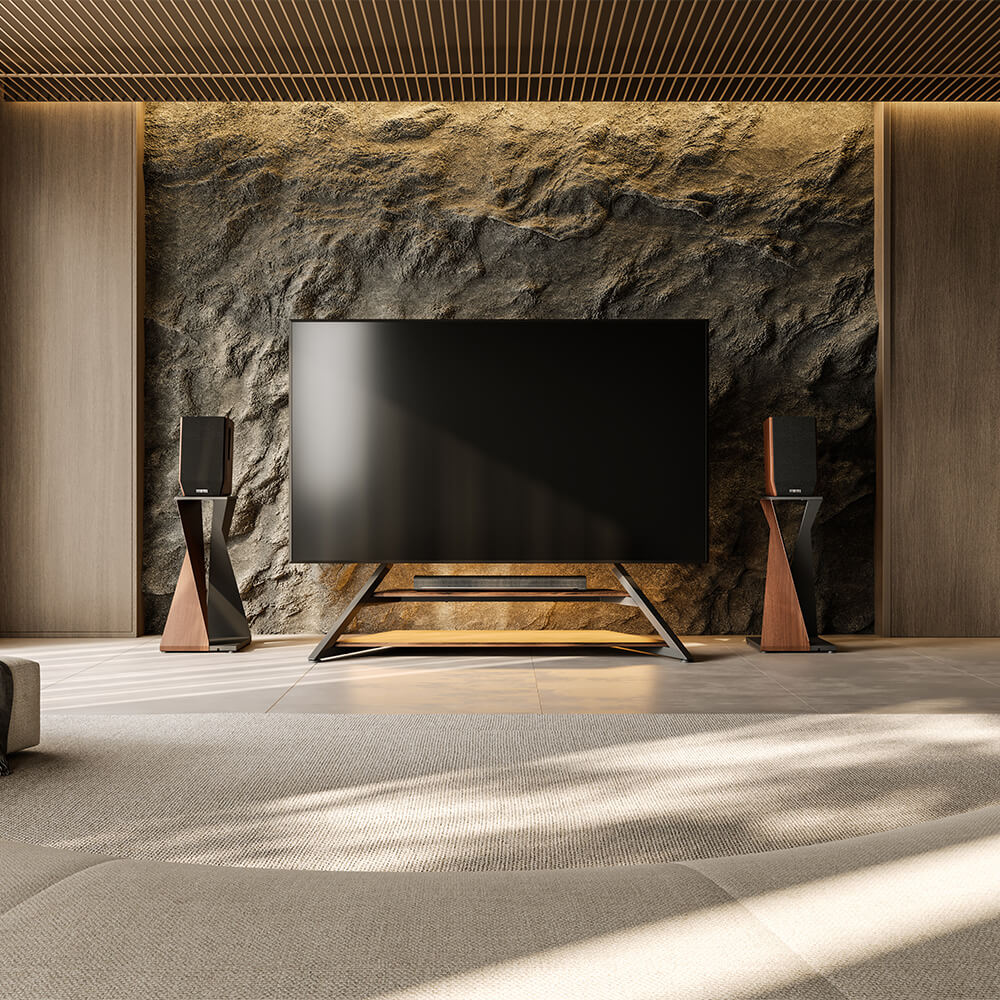
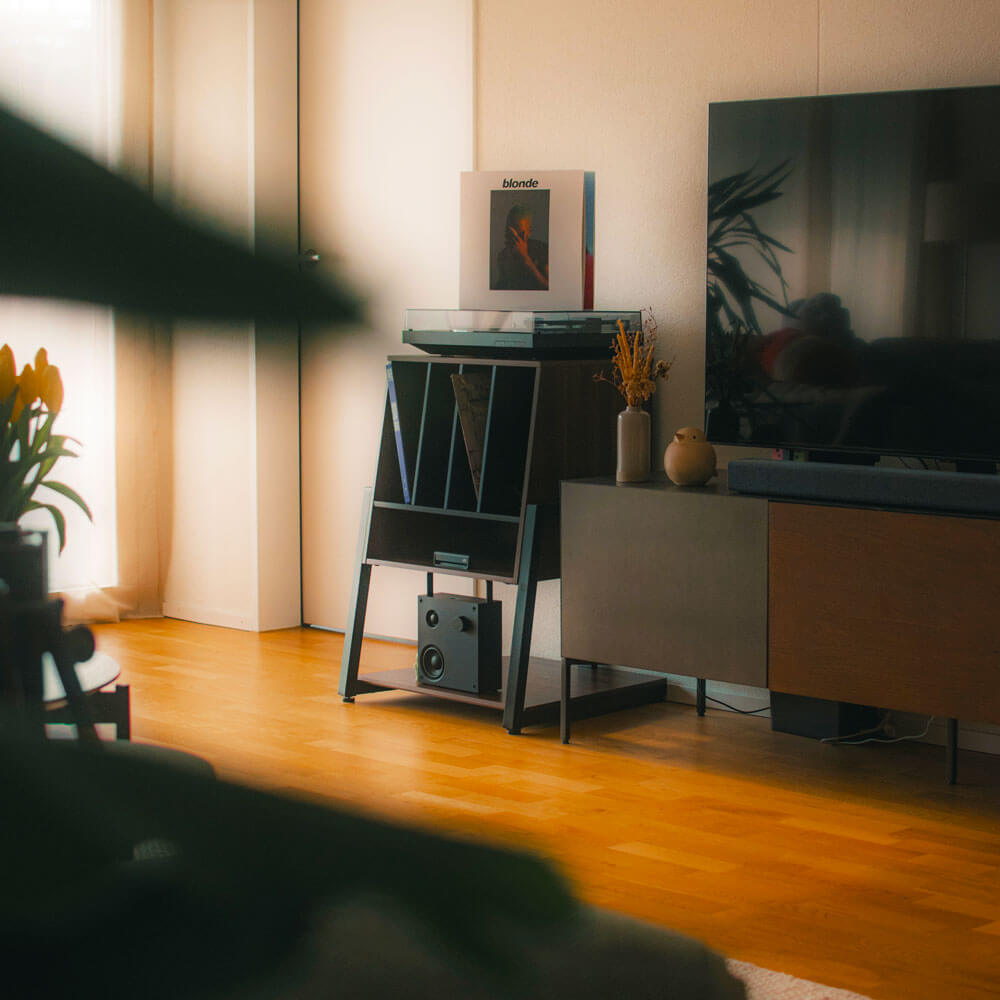
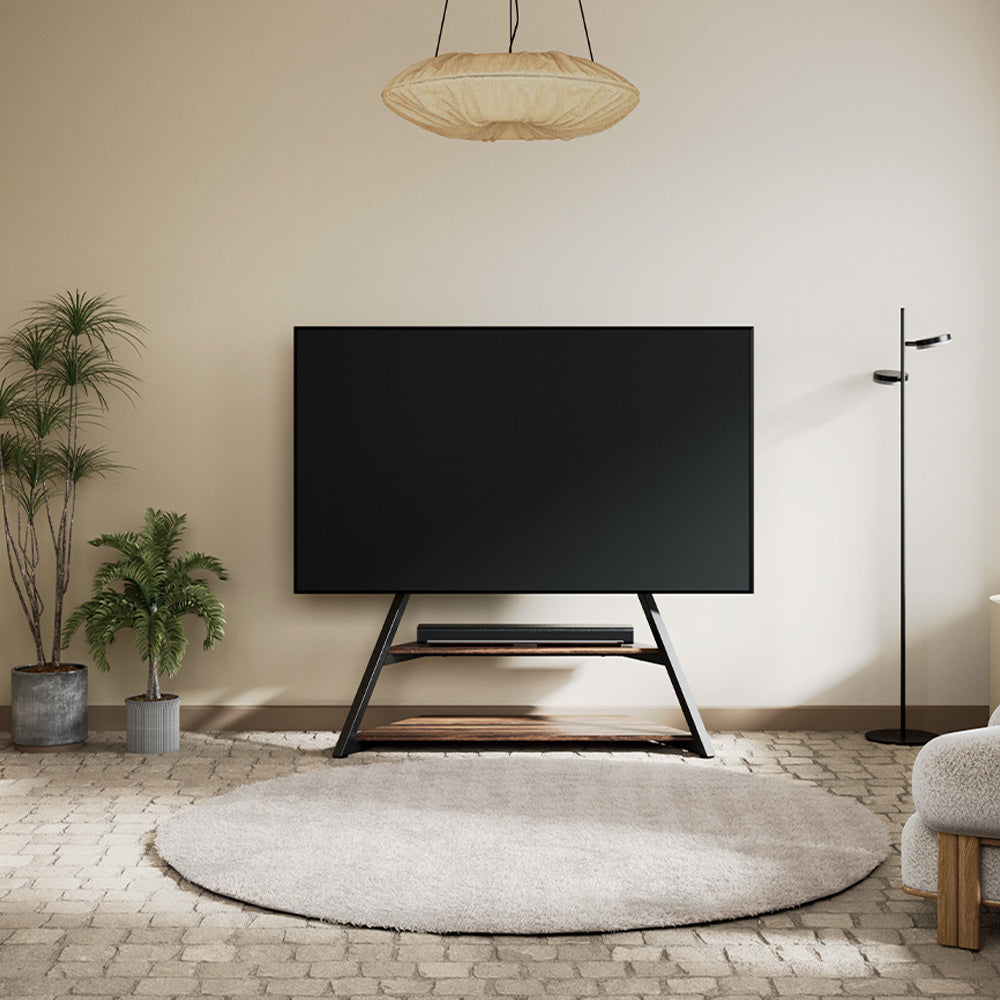
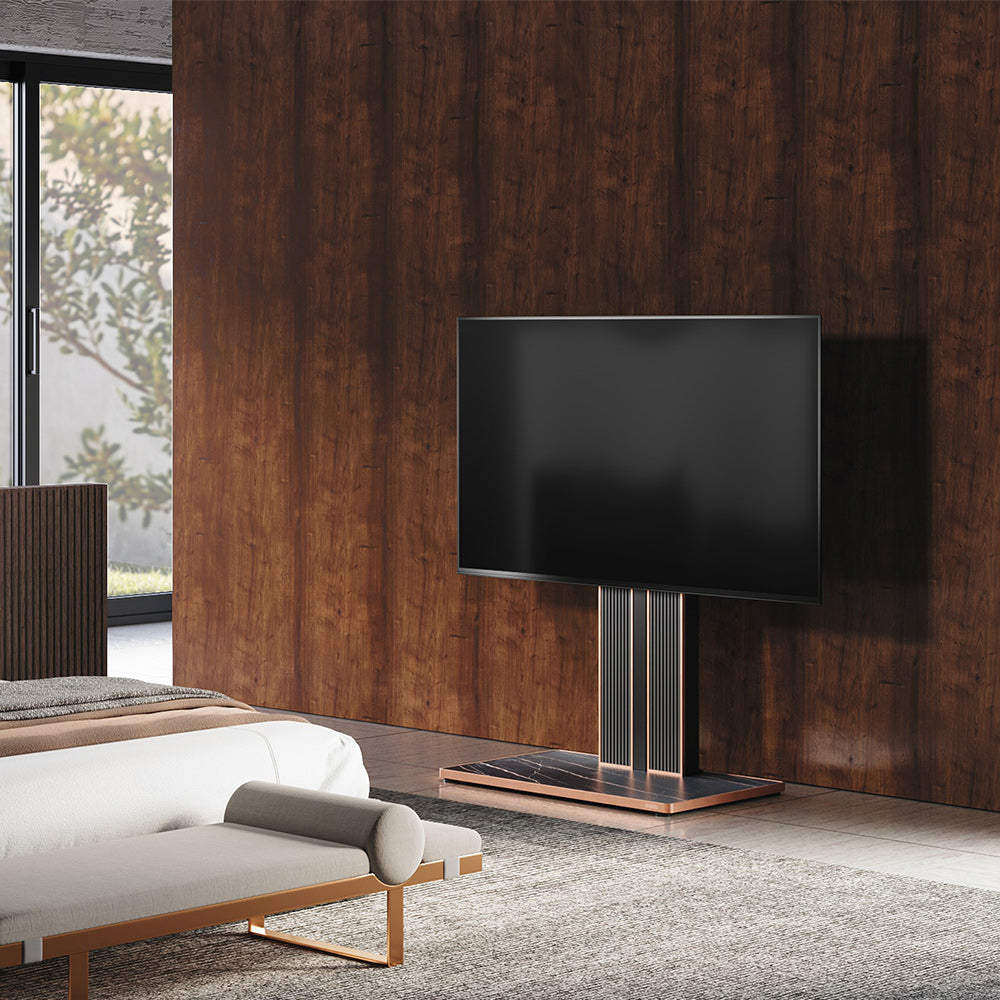
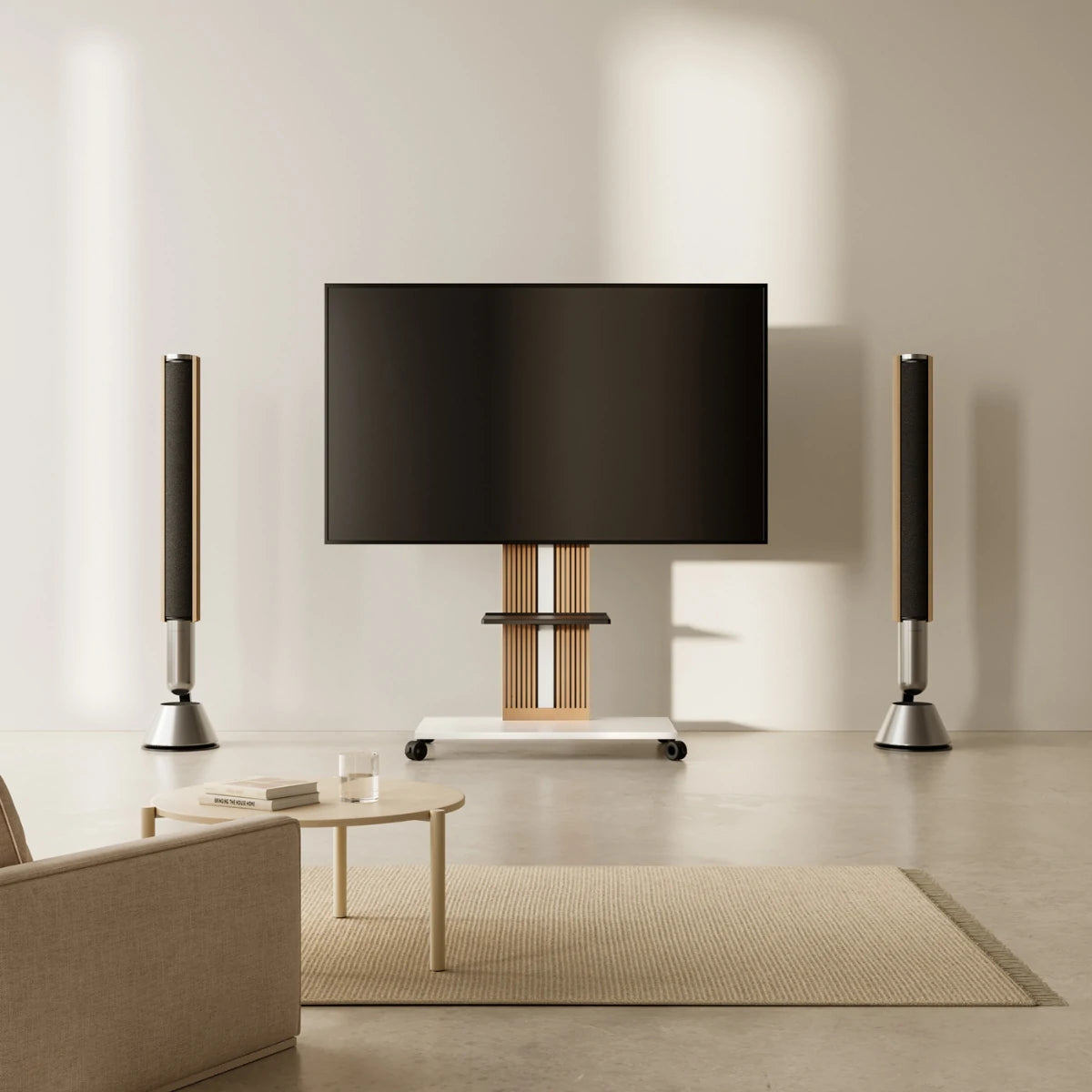
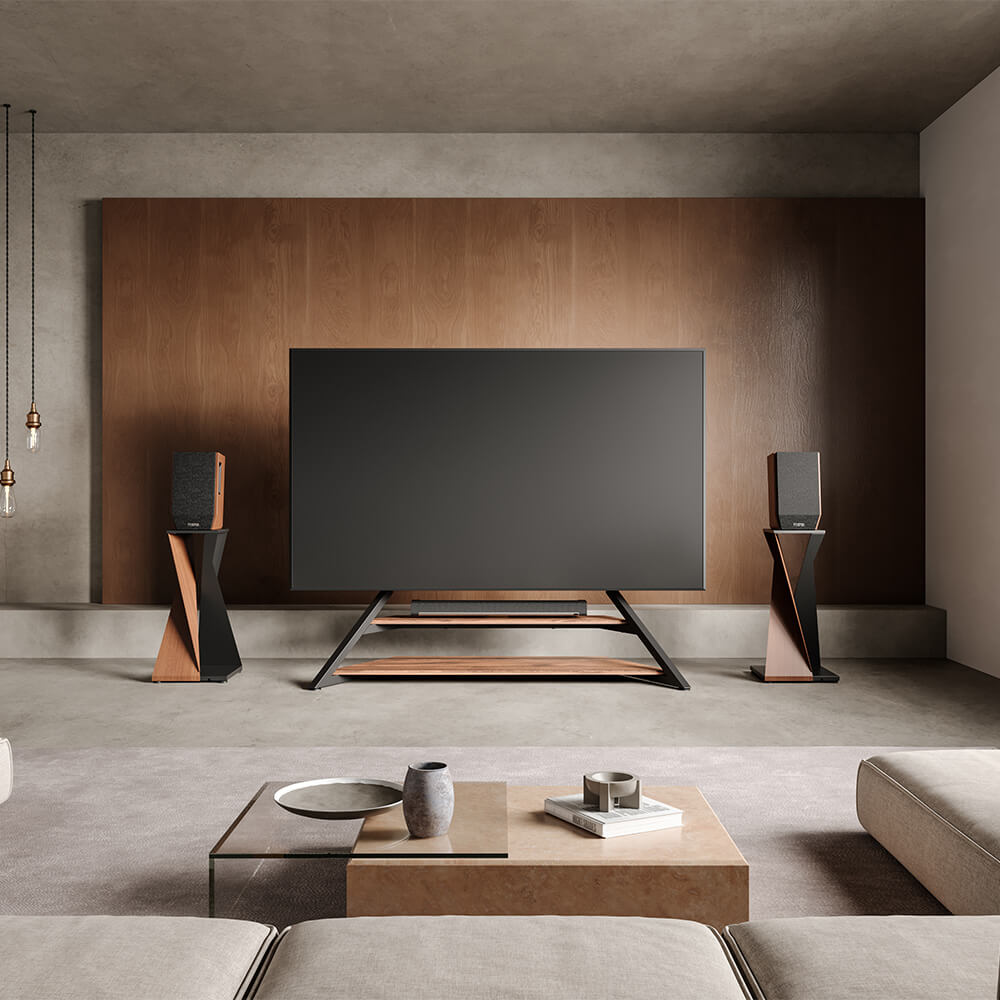
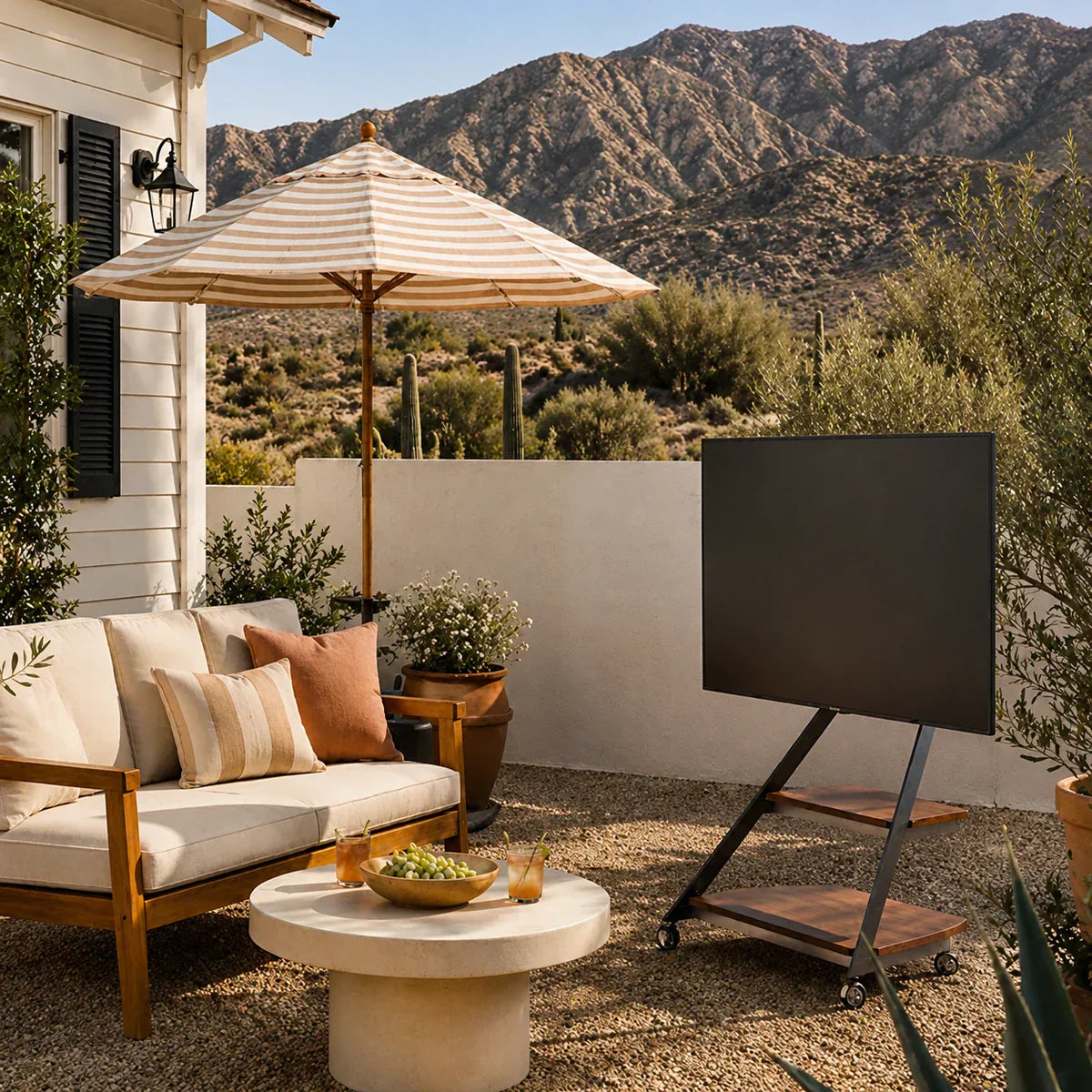
The best outdoor TV ideas combine a shaded screen position with comfortable sightlines and a layout that suits how the space is actually used. A covered patio can create a flexible social focal point, a pergola can support a no-drill viewing zone, and a poolside setup should keep the screen and cables away from the water. When the area changes between dining, lounging, and entertaining, a design-led freestanding stand can move with the occasion without making the space look like a commercial AV setup.
Plan Your Outdoor TV Viewing Zone
Start with the people and furniture, not the television. Identify where viewers will usually sit, whether that is an outdoor sofa, dining table, pool lounger, or bar stool. Then check how the sun reaches the space in the afternoon and evening. The best daytime position may not be the most comfortable one after sunset.
Next, decide whether you want the screen permanently tied to one wall. A fixed mount can work on a structurally suitable covered wall when the seating and viewing direction will not change. However, many outdoor spaces serve several purposes. In that case, freestanding outdoor TV stands let the screen follow the activity without depending on a particular wall or requiring permanent drilling.
Finally, plan where power cables will run and where the equipment will go after use. A beautiful position is not practical if cords cross a walkway or the screen cannot be moved into shelter.
Outdoor TV Ideas by Space
Each outdoor area creates different design and viewing challenges. A patio usually offers the most flexibility, a pergola may lack a suitable wall, and a poolside space requires extra attention to water, movement, and viewing height.
Patio TV Stand Ideas for Flexible Viewing
For a covered patio with a permanent seating area, position the TV opposite the main sofa and give the screen a relatively calm background. A brick wall, privacy screen, or section of vertical paneling can visually frame the television without requiring an oversized entertainment cabinet.
For a patio that shifts between dining and lounging, use a freestanding stand as a movable focal point. The screen can face the dining table during a game and turn toward the sofa later in the evening. This is where the practical difference between an outdoor patio TV stand and wall mount becomes important: one can follow the activity, while the other commits the screen to a single sightline.
No-Drill Outdoor Setup for Pergolas
A pergola does not need a solid TV wall to become an outdoor viewing area. Position a freestanding screen near the darker side of the structure, where a privacy panel, slatted divider, or planting can provide a quieter background. Arrange the seating around that focal point while preserving a clear path through the pergola.
This setup keeps the television independent of the structure. You do not have to drill into timber posts, stone columns, or decorative beams, and you can change the layout as furniture and activities change. It also avoids assuming that a pergola component is suitable for carrying a television. Any structural mounting should follow the pergola and mount manufacturers’ requirements.
Poolside Screen Placement Beyond the Splash Zone
Place a poolside television beyond the direct splash area and outside the main route between the pool, loungers, and house. Cables should never run across wet walking surfaces, and cable management on a stand does not replace outdoor-rated electrical equipment or properly protected power connections.
Consider who needs to see the screen. Pool loungers sit much lower than dining chairs or bar stools, so one fixed position may not serve every viewing zone. A stand with adjustable height or swivel can help the screen face the lounge area during the day and the pool bar during an evening gathering.
Mobility is particularly useful around a pool because the television does not need to dominate the space when it is not being watched. Once the event ends, the setup can return to a covered or indoor storage area instead of remaining beside the water.

Choosing a Design-Led Stand to Complete Your Outdoor TV Setup
Bringing these outdoor TV ideas to life can be challenging if you cannot visualize how a television fits into your space without looking like a temporary office setup. To bridge the gap between inspiration and practical reality, your choice of support matters. Instead of a bulky commercial cart or a restrictive wall mount, a design-led floor stand can seamlessly adapt to all three environments discussed above.
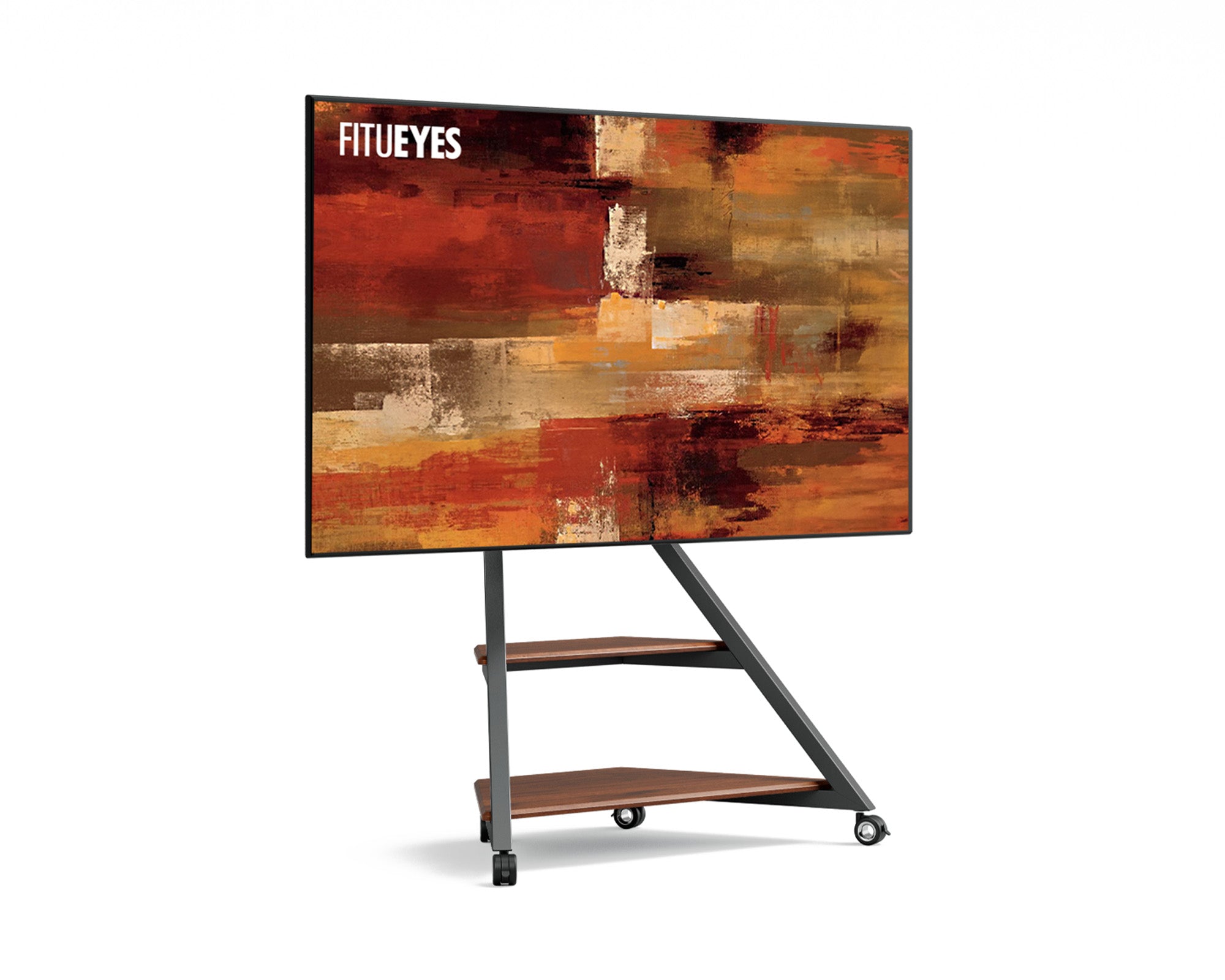
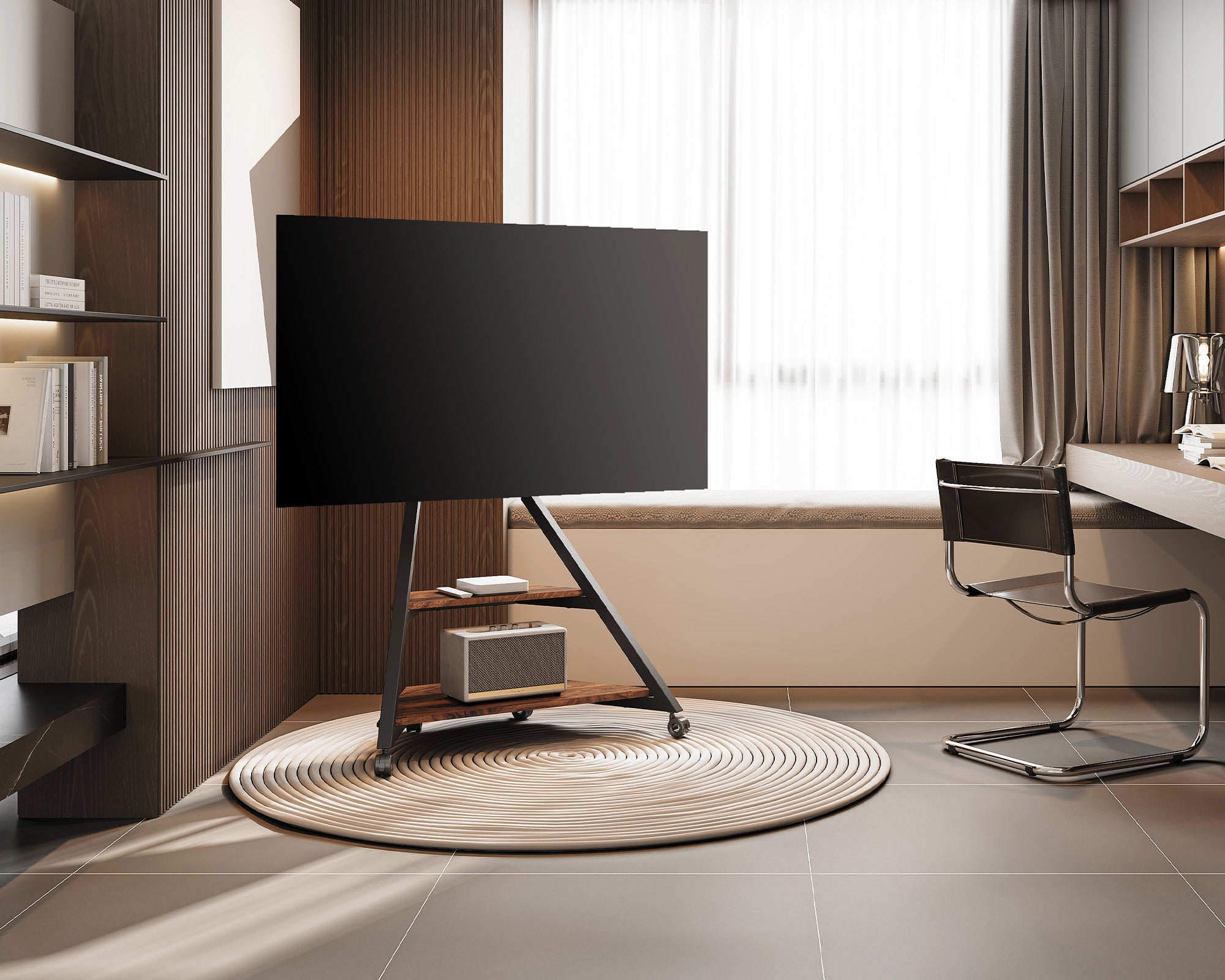
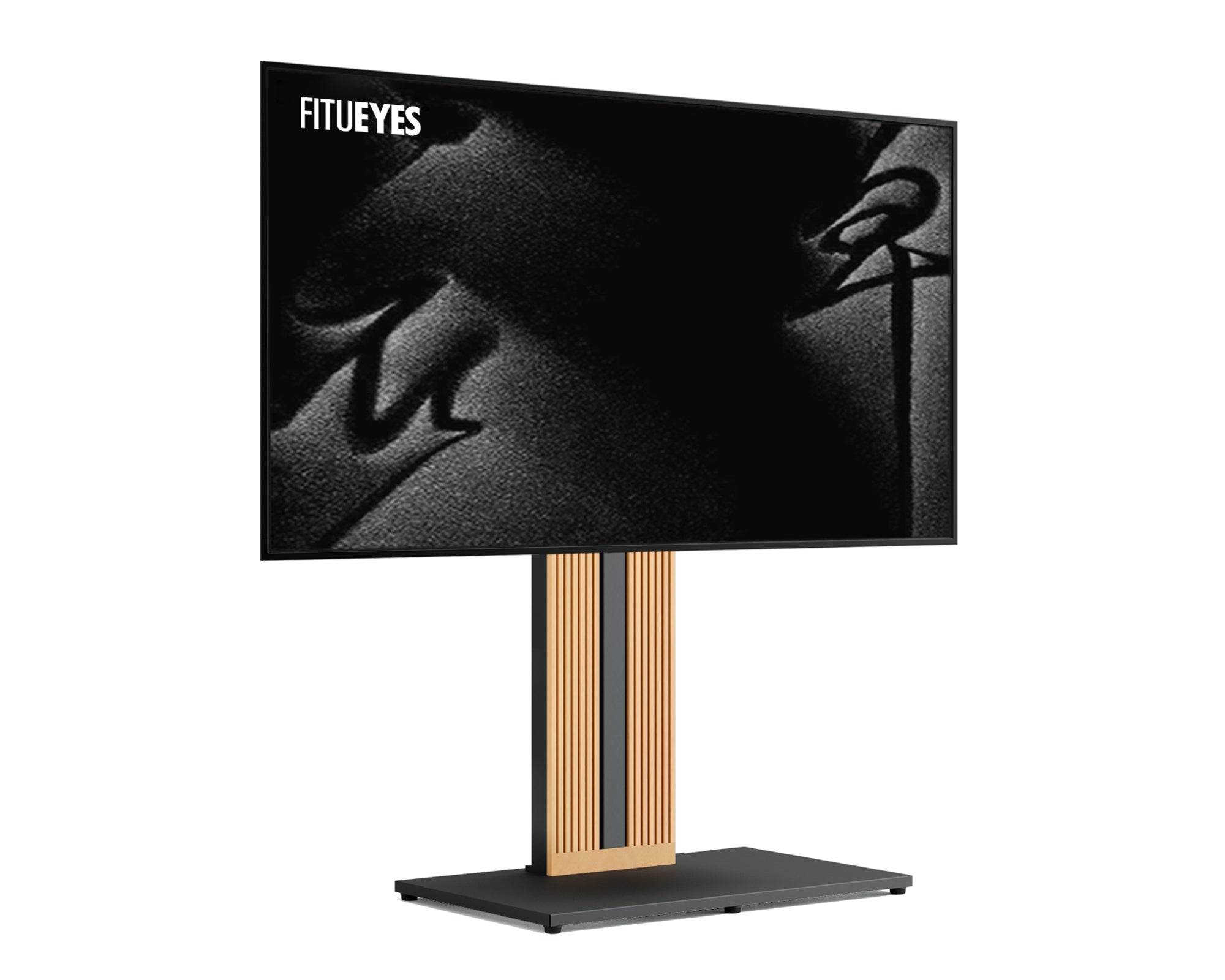
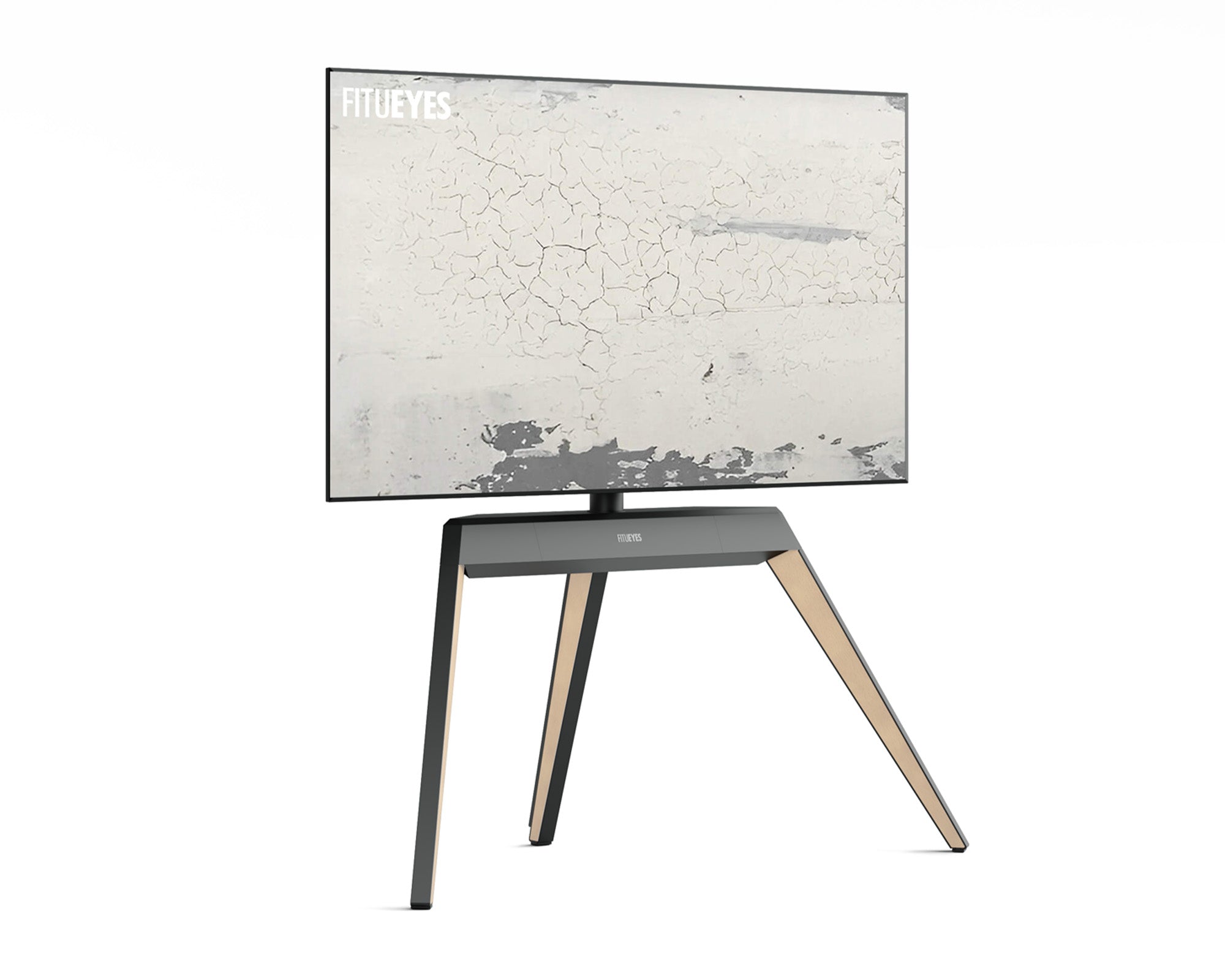
A prime example is the FITUEYES Eiffel FT65 TV Stand. Engineered to support most 32 to 65-inch flat or curved screens (with a universal VESA pattern up to 400x400mm and a weight capacity of 88 lbs), this stand doesn't just hold a television—it provides a tailored solution for each of the three environments discussed above:
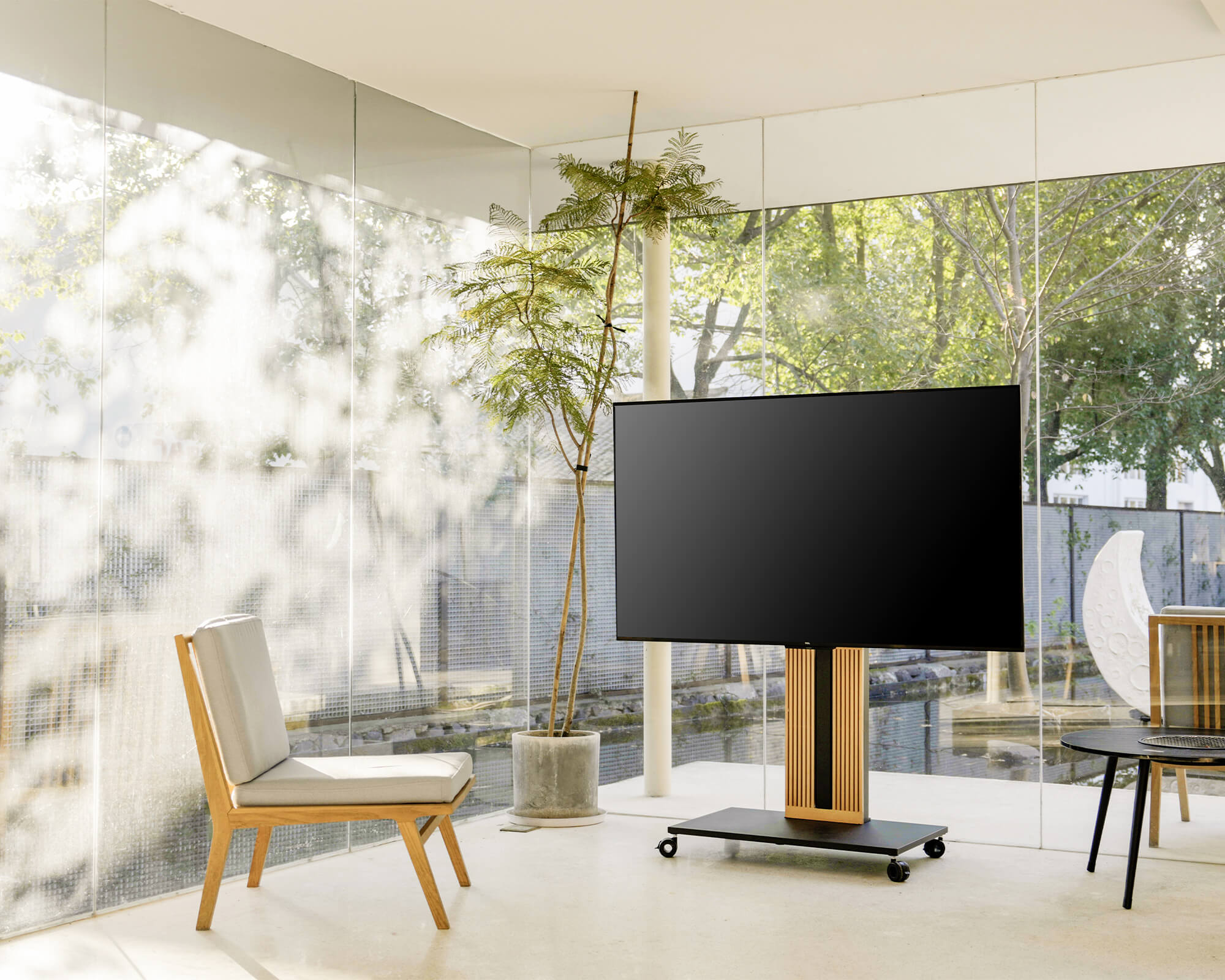
- Patio Versatility (Glare Reduction & Clean Lines): If you choose the wheeled configuration, you can effortlessly roll the screen from the dining table to the lounge sofa as the sun sets, and easily wheel the entire setup into indoor shelter after use. Furthermore, its ±15° swivel and +5°/-15° tilt functions are invaluable for cutting through unpredictable afternoon sun glare, while the integrated cable management keeps power cords hidden and away from wet walkways.
- Pergola Harmony (Material Matching): Its unique blend of premium walnut wood detailing and sleek metal finishes allows the stand to complement wooden timber posts or modern aluminum pergolas naturally, ensuring the TV looks like an intentional piece of outdoor furniture rather than an afterthought.
- Poolside Adaptability (Wheels & Feet Pads Both Included): You don't have to choose between mobility and stability at purchase; the stand includes both heavy-duty swivel wheels and non-slip feet pads in the same package. For a dedicated poolside bar, you can choose to install the adjustable feet pads for a rock-solid, stationary setup. The iconic Eiffel-inspired A-frame base provides a low center of gravity, ensuring the TV remains completely safe and resistant to tipping in dynamic, high-traffic family zones.
By choosing a solution that balances aesthetic appeal with structural utility, you can easily execute your layout ideas while keeping your outdoor living area flexible, safe, and beautifully styled.

FAQs About Outdoor TV Spaces
1. Can You Leave the Setup Outside Overnight?
An outdoor-friendly TV setup can be used comfortably on a patio, pergola, or poolside area, but outdoor use and continuous weather exposure are not the same. Dew, prolonged moisture, strong sunlight, wind, and temperature changes can gradually affect both the screen and its support. Unless every component is specifically rated for permanent outdoor installation, moving the setup to a dry, sheltered place when it is not in use is a sensible way to extend its life—especially during storms, freezing weather, or long periods between viewing.
2. Does Outdoor Streaming Need Better Wi-Fi?
Test streaming at the TV’s final position before changing your network. Exterior walls and distance can weaken performance, and a phone showing a Wi-Fi signal does not guarantee stable TV playback. If video repeatedly buffers, reposition the router or consider a suitable mesh node.
3. What TV Size Works Best Outdoors?
Use the viewing distance as a practical starting point. A 55-inch TV generally suits seating about 6 to 8 feet away, while a 65-inch screen works well at roughly 8 to 10 feet. Consider a 75-inch TV for 10 to 12 feet and an 85-inch or larger screen when the main seats are more than 12 feet away.
Move up a size if several people will watch from a wide seating area, but do not choose by screen size alone. Confirm that the stand supports the television’s weight and VESA mounting pattern, and check that a larger screen will not block walkways, views, or access around the patio.
Designing an Outdoor TV Space That Adapts to You
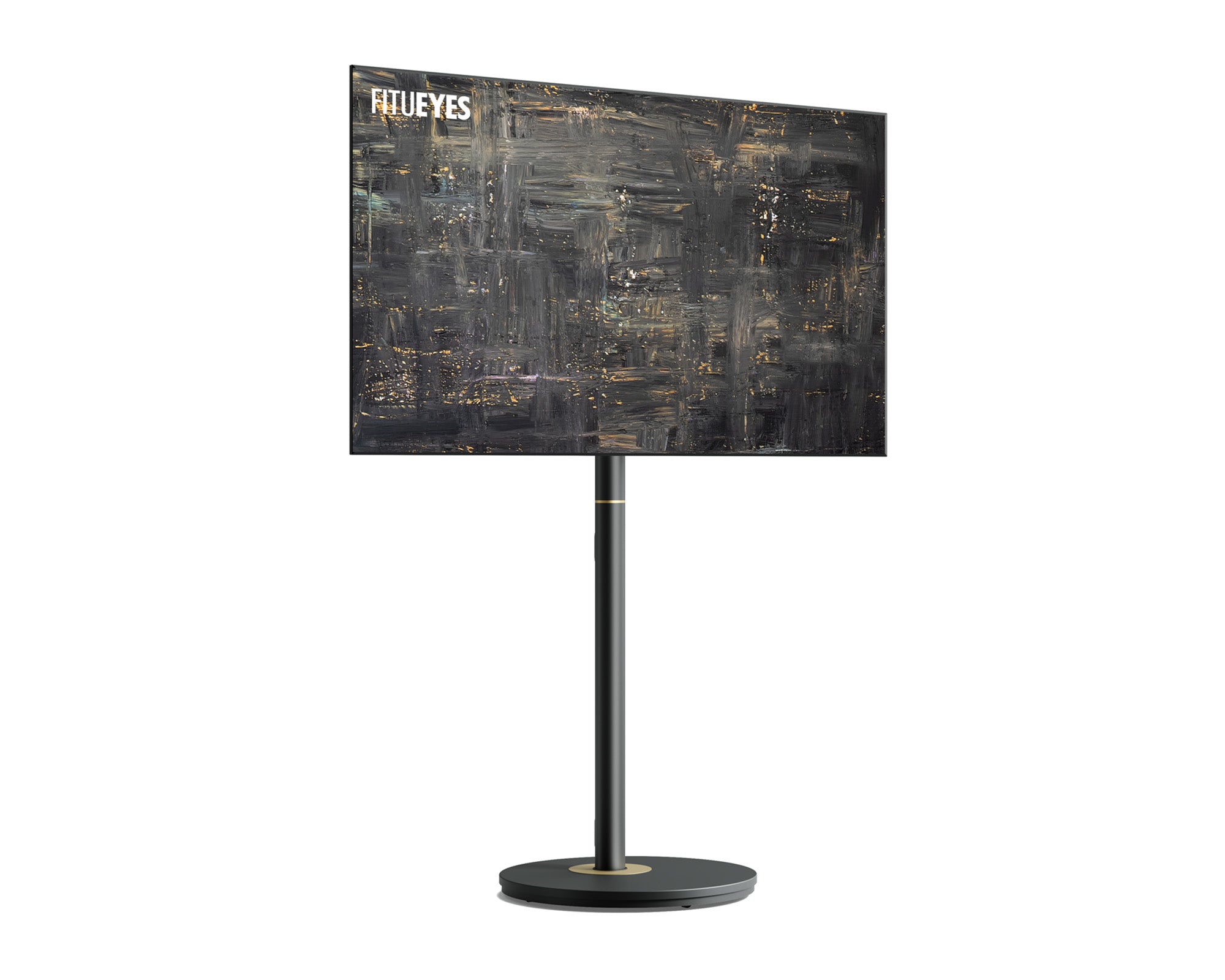
Wheels, height adjustment, cable management, and no-drill installation are common across the TV stand category. What matters in an outdoor living area is how those functions fit the space. A utility cart may suit a classroom or commercial event, while a patio, pergola, or poolside lounge benefits from a stand that can move when needed without looking like temporary equipment. That balance of flexibility and thoughtful design is central to FITUEYES, where audiovisual furniture is created to support the way people live while feeling like part of the surrounding environment. Explore how this approach can help your outdoor viewing area adapt to the occasion without taking over the space.