


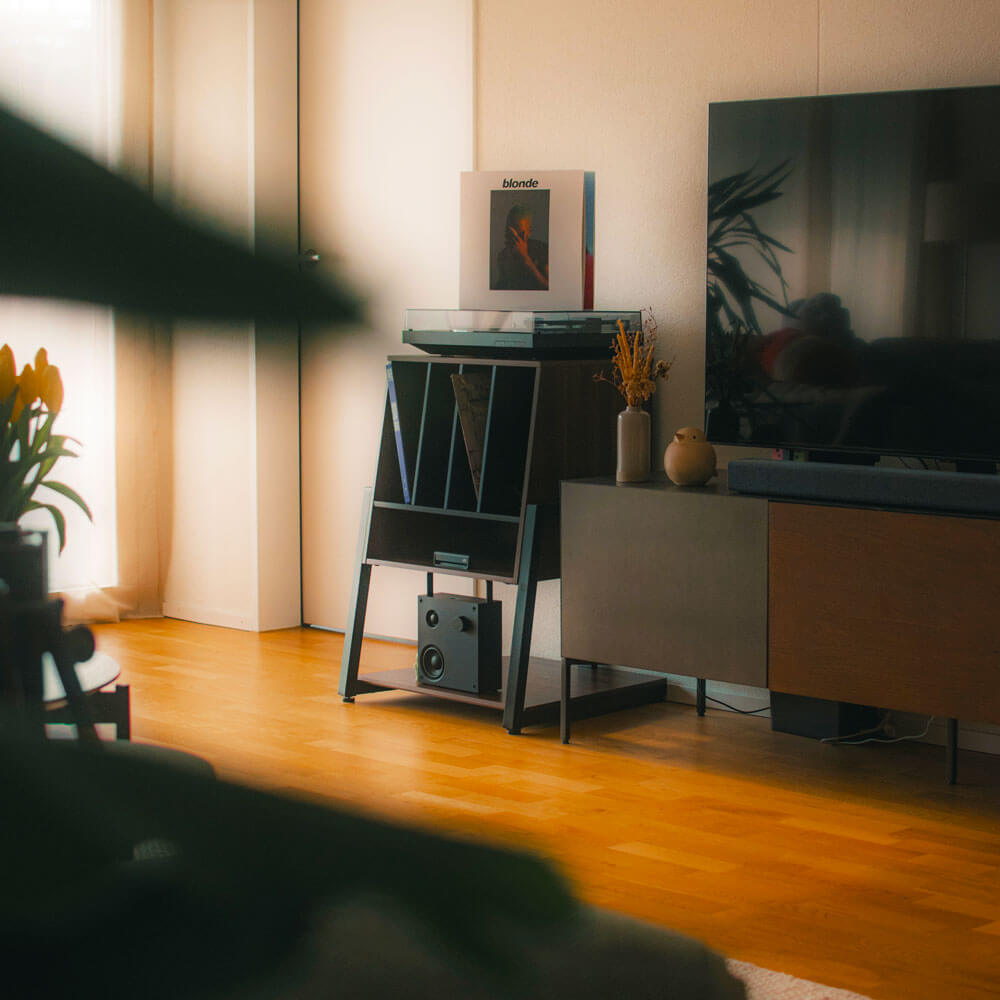
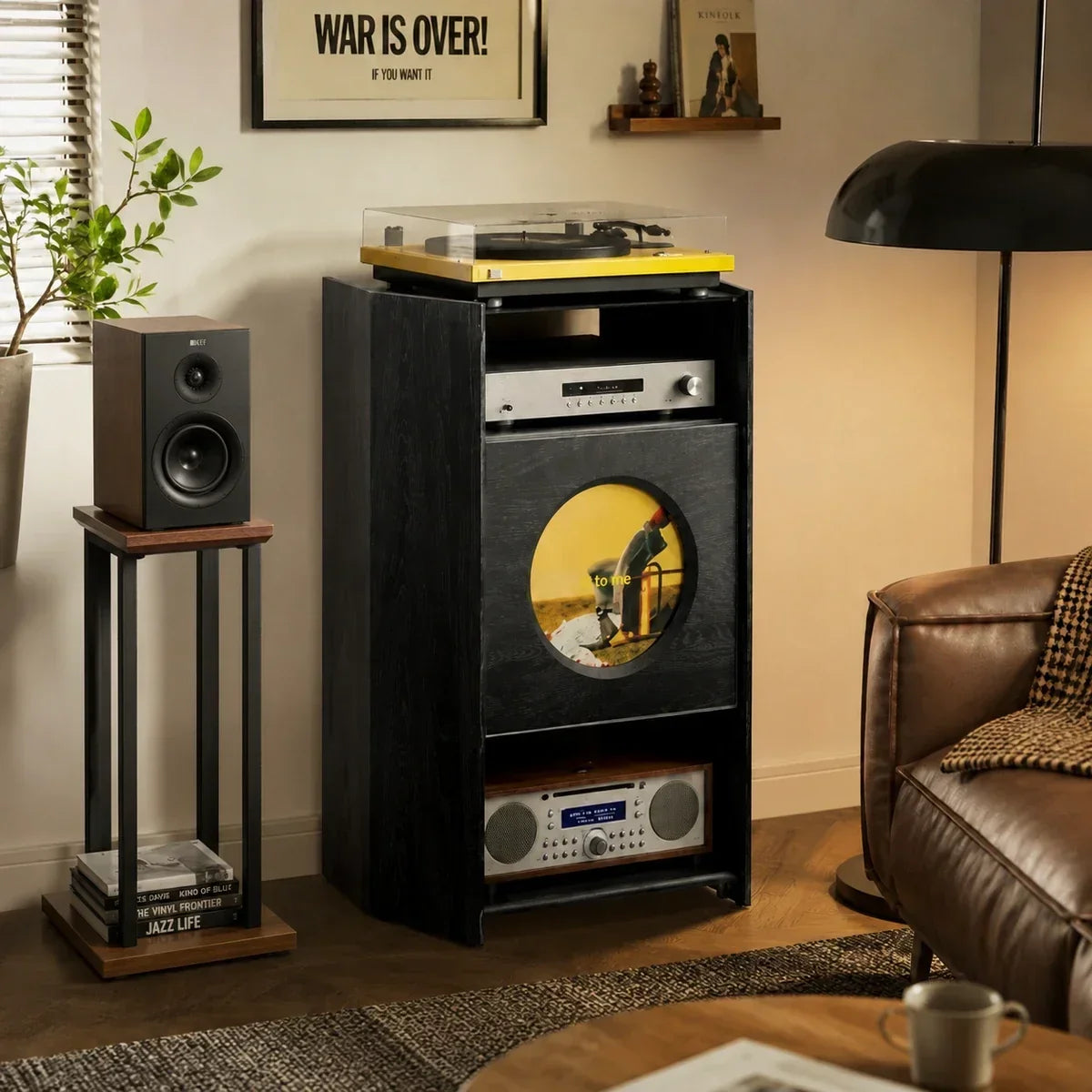
A better music corner keeps everyday records within reach, gives selected covers a clear display area, and moves less-used albums into reserve storage. Keep records upright, support partly filled shelves with dividers, and leave capacity for future purchases.
This guide explains how to plan vinyl storage around your listening habits, collection size, daily access, and display needs.
Start With How You Listen
Before choosing a cabinet or wall display, notice how you select music. Some listeners search alphabetically by the spine. Others respond faster to cover art. You may also play a small group of favorites far more often than the rest.
Most music corners can balance capacity, visibility, and browsing speed when each need has a clear place. Keep regular favorites in the easiest compartment to reach. Give recent purchases or records waiting to be played in a small face-out section. Store the wider collection spine-out so it uses space efficiently and remains easy to classify.
Keep a record brush and stylus cleaner close to the turntable. Spare sleeves, adapters, and cables can sit lower down or behind a door. In a shared room, use a compact setup with clear boundaries so storage does not spread into the main walkway.
Match Vinyl Storage to Collection Size
Under 50 Records
One compact record player stand can usually support a collection under 50 records, along with the turntable and a few accessories. Display one to three covers and use dividers in partly filled compartments.
A larger stand is not automatically a poor choice. However, wide empty sections can allow records to develop a strong lean. Over time, uneven pressure may bend cover edges and contribute to warping, especially when heat is also present. Choose smaller compartments or add firm dividers until the collection grows.
50 to 150 Records
Separate the active library from general storage. Keep recent purchases and regular favorites near the turntable because they change often and need fast access. Organize the rest by artist, genre, year, or another consistent system. This gives each album a clear return position and prevents new records from disappearing into a crowded shelf.
Leave roughly 15 percent of each section open. This makes each record easier to pull out without rubbing or bending its cover, while leaving room for the collection to grow.
Browse record player stands with vinyl storage to compare options such as the 23.8-inch-wide Eiffel AS07 and the wider 42.5-inch Eiffel RS10. The AS07 lists up to 110 pounds for its top and bottom shelves, while the collection also includes open or enclosed storage, adjustable shelves, cable management, and movable designs. These details help narrow the choice by floor space, equipment load, collection size, and access preference.

More Than 150 Records
Divide a large collection by use. Keep current favorites, recent purchases, and records waiting to be played near the turntable. Move the rest into a separate archive instead of forcing every album into the playback area.
Split the archive at clear points, such as A to M and N to Z, or divide it by genre before sorting alphabetically. Keep one short section open for new or unsorted records so they do not disappear into the main collection before you catalog them.
Use several supported compartments instead of one long row. Place fuller and heavier sections on lower shelves, add dividers wherever a compartment is partly filled, and leave enough space to remove one album without rubbing its cover against neighboring records. When one unit reaches its practical capacity, add a coordinated second unit instead of compressing the records more tightly.
Organize the Music Corner by Function
Playback and Daily Storage
Reserve the main surface for the turntable and leave enough clearance to open the dust cover and operate the tonearm. Place frequently played records directly below or beside it so choosing and returning an album does not require moving around the room.
Give accessories a fixed place based on use. Keep the record brush and stylus cleaner in an open tray or easy-to-reach compartment. Move spare sleeves, adapters, power strips, and extra cables into a lower or enclosed section. This keeps daily tools close without allowing less attractive accessories to dominate the display.
Rotating Album Display
Show the record that is playing, a recent purchase, or a short artist theme. Rotate the covers regularly rather than exposing a large part of the collection.
For many small music corners, one to six visible covers create a clear focal point. The exact number should follow the available wall and furniture space.
The Picasso RS05 record player stand is designed for listeners who see analog sound as more than a playback format. For vinyl enthusiasts, it also represents the warmer, more tactile, and more intentional ritual of choosing, playing, and displaying a record.
The RS05 record player stand gives that analog listening culture a dedicated place in the room. Its circular front display turns a favorite or currently playing album into part of the interior, while three open storage zones keep the wider collection visible and easy to browse. With capacity for up to 120 records across 7-inch, 10-inch, and 12-inch formats, it brings the turntable, records, and daily listening routine into one organized structure.
A premium smoked-glass top provides a refined surface for the turntable, while damped cabinet hinges allow the door to close more gently and quietly. The enclosed section also helps protect collectible vinyl and accessories from dust buildup, reducing the risk of particles contributing to surface scratches during handling. Measuring 21.9 × 17.7 × 35.4 inches (55.6 × 45.0 × 89.9 cm), the stand offers substantial storage within a relatively compact footprint. Optional silent casters also make it easier to move the setup for cleaning or room adjustments without disrupting the calm character of the music corner.
Reserve Collection Space
Use reserve storage for seasonal albums, duplicate editions, box sets, and records that you play less often. Keep these records upright and divided, but place them outside the most accessible part of the music corner.
Spine-out storage works well here because it uses space efficiently and supports consistent labeling. Use the same organization system as the active library so a record remains easy to find after moving between zones. Keep one partly empty section for future additions instead of filling every compartment immediately.

Display Records Without Visual Clutter
Choose one primary display surface, such as the stand front, one short wall shelf, or the wall above the turntable. Filling all three areas usually weakens the focal point and makes individual covers harder to notice.
Separate display pieces from working items. Album covers, a lamp, headphones, and a few music books can support the theme. Cleaning fluid, adapters, packaging, loose sleeves, and power strips usually look better inside a closed section or cable channel.
Repeat one or two materials already present in the furniture, such as wood, black metal, or smoked glass. Leave clear space around the featured album. If the wall already contains framed art, align the record display with the existing edges rather than starting a competing grid.
Protect displayed records from direct sunlight, heating vents, unstable ledges, and busy walkways. Rotate replaceable favorites instead of leaving rare records exposed for months. The guide to the best way to store vinyl records explains vertical support, shelf depth, sleeves, heat, and humidity in more detail.
Make the Corner Feel Like Yours
A good music corner should make it easy to choose, play, and return a record while still looking deliberate when the turntable is idle. Check three points: Can you reach the records you play most? Can you hide items that create clutter? Can the storage grow without forcing records to lean?
If the next step is choosing furniture rather than collecting more inspiration, explore FITUEYES to compare designs by footprint, open or enclosed storage, equipment support, cable control, and display style. Its approach combines function and aesthetics through adaptable audiovisual furniture designed to belong naturally in the living space. Choose a structure that fits how you listen and makes you more likely to reach for a record.
FAQs
1. Do Vinyl Records Need Outer Sleeves?
Outer sleeves are not essential for playback, but they help protect album covers from dust, scuffs, fingerprints, and shelf wear. Inner sleeves serve a different purpose by protecting the record surface. Choose sleeves that fit without making each album difficult to remove, and replace damaged or dirty sleeves.
2. Does a Record Player Stand Need Ventilation?
Yes, especially when it also holds an amplifier or other heat-producing equipment. The Picasso RS05 uses an open structure without solid side panels that could trap heat, helping air move around the equipment more freely.
3. Can Speakers Share a Stand With a Turntable?
They can, but vibration may travel through the furniture and back to the stylus. Separate stands are preferable. When space is limited, increase the distance and use isolation pads.
4. How Often Should Vinyl Records Be Cleaned?
Use a dry brush when surface dust appears. Deep-clean records when they have fingerprints, persistent static, dirt, or unusual noise. Frequent wet cleaning is unnecessary when records are handled properly.