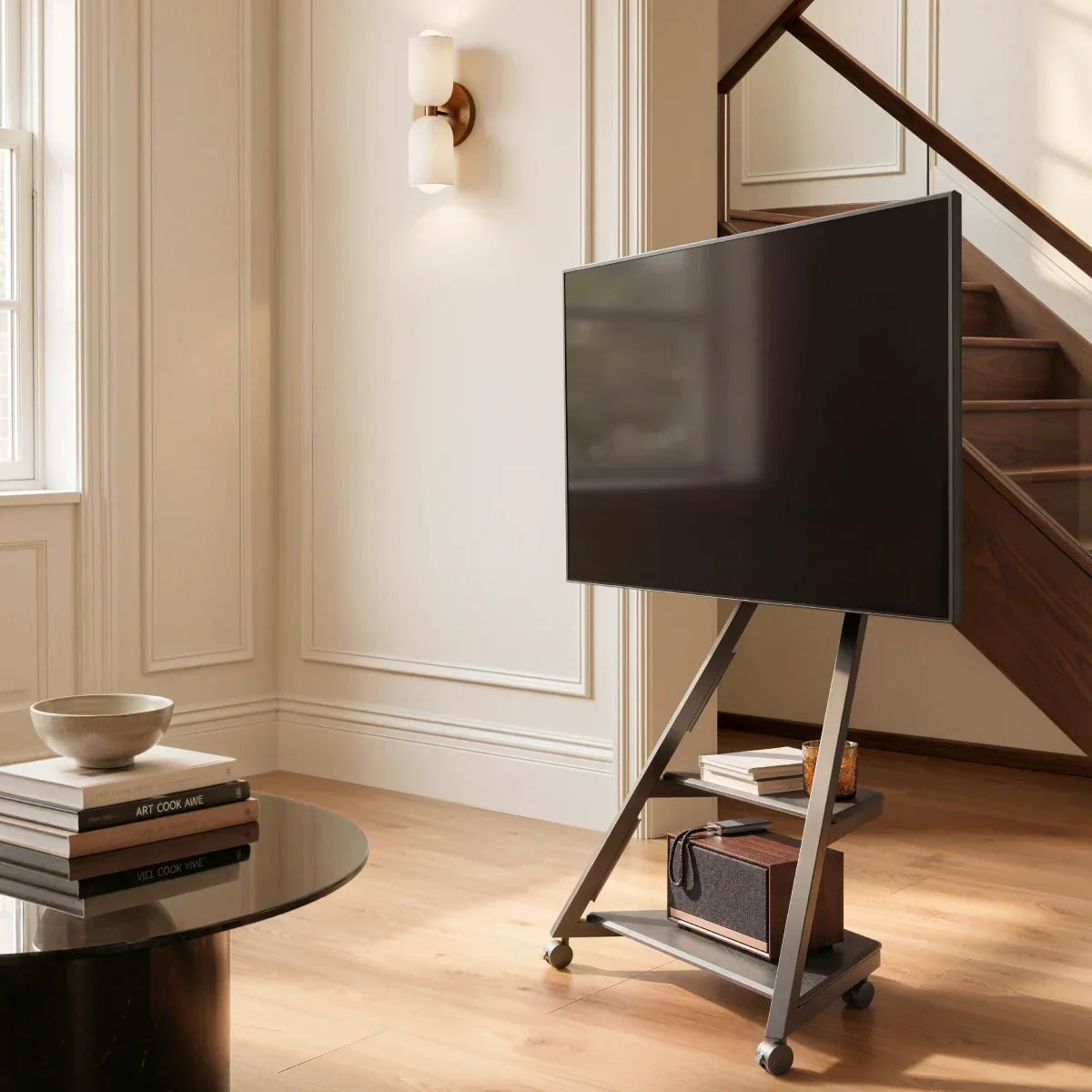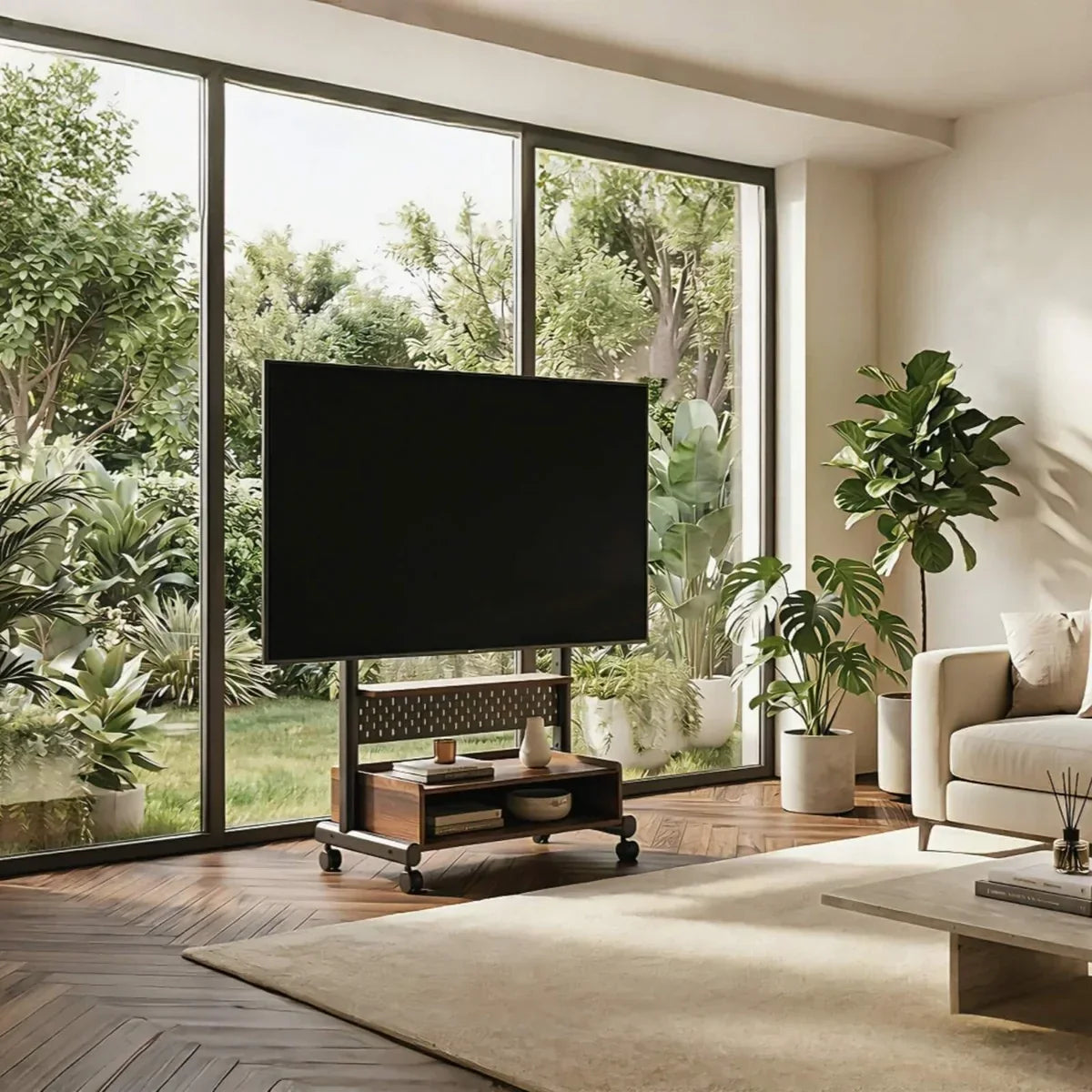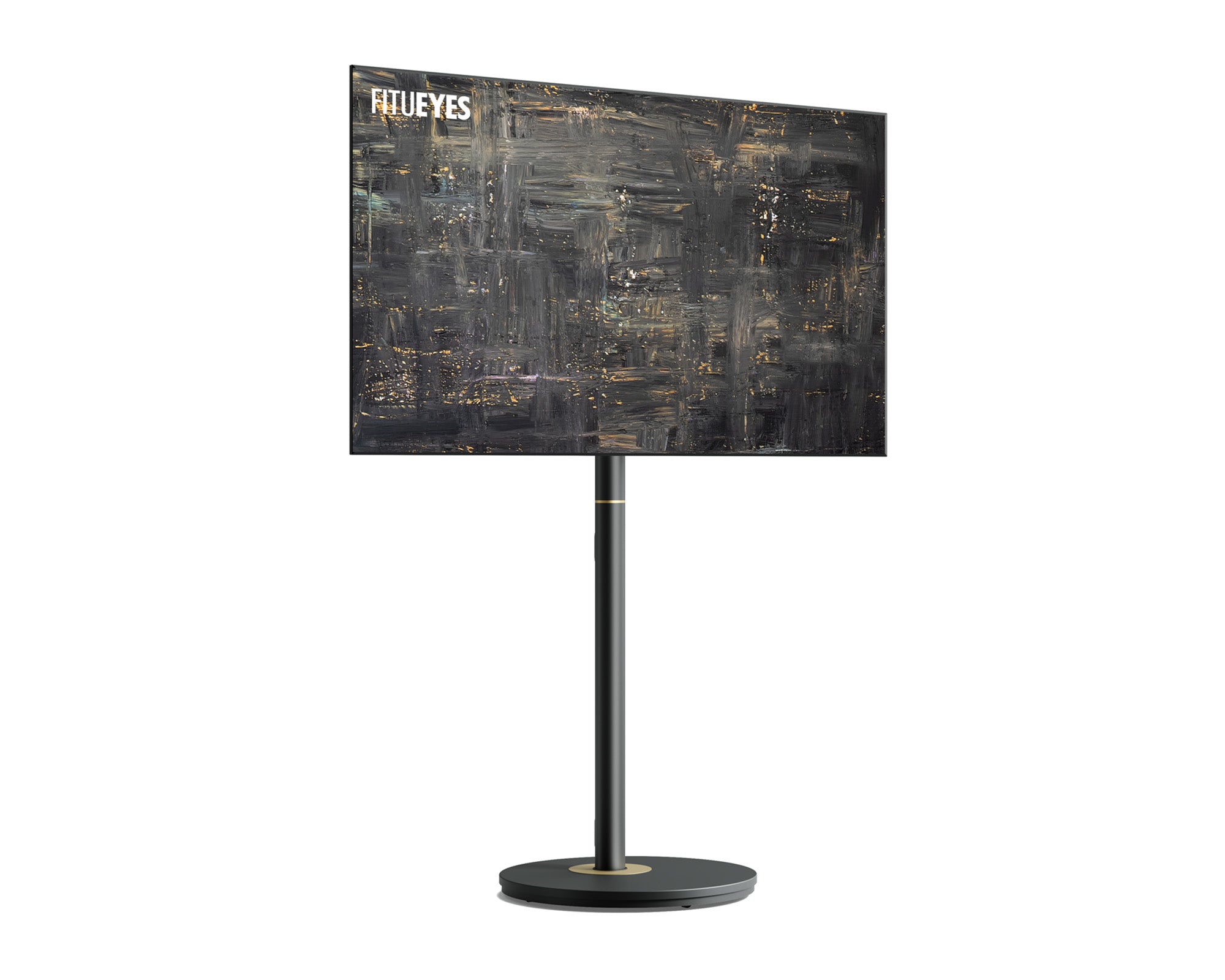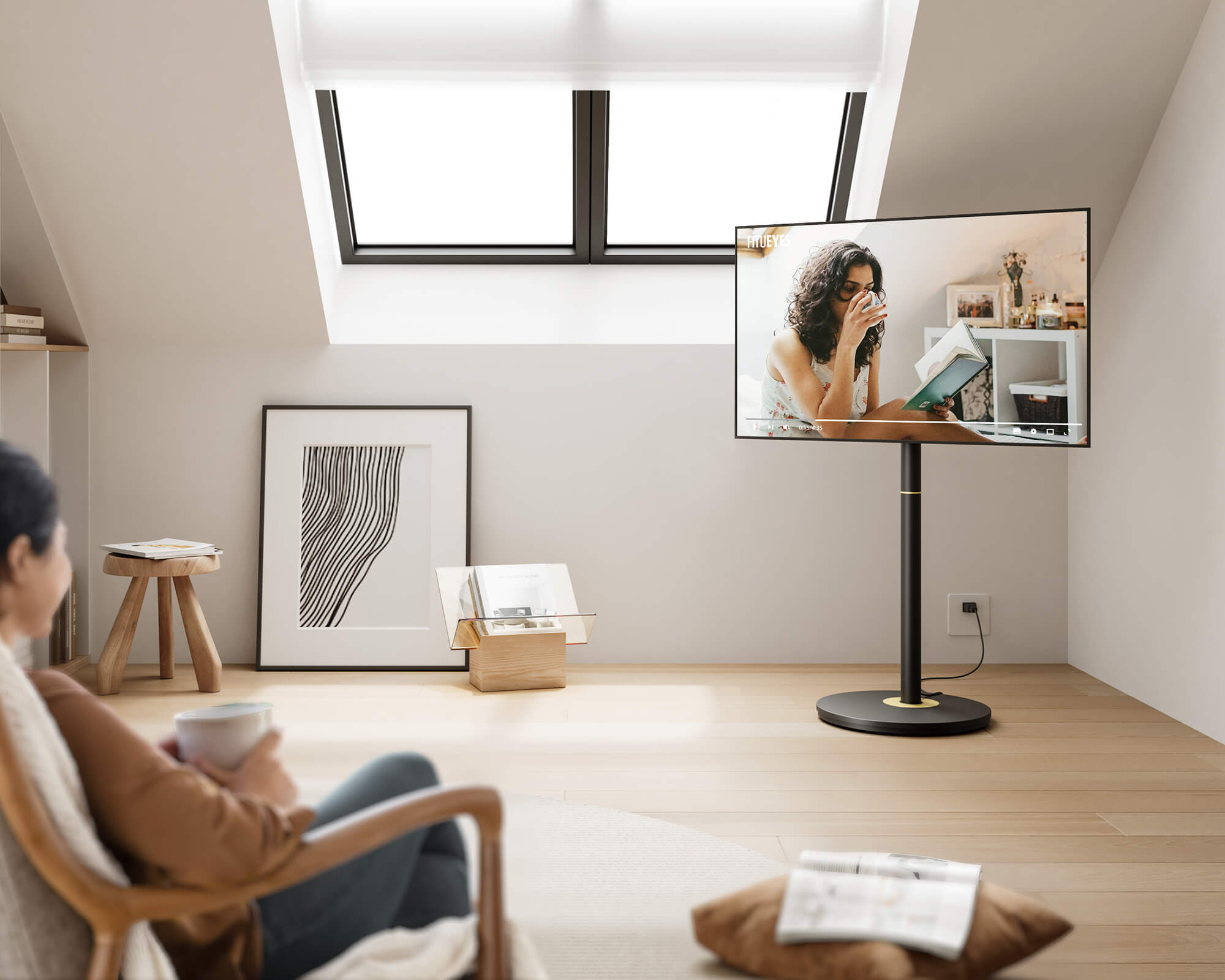



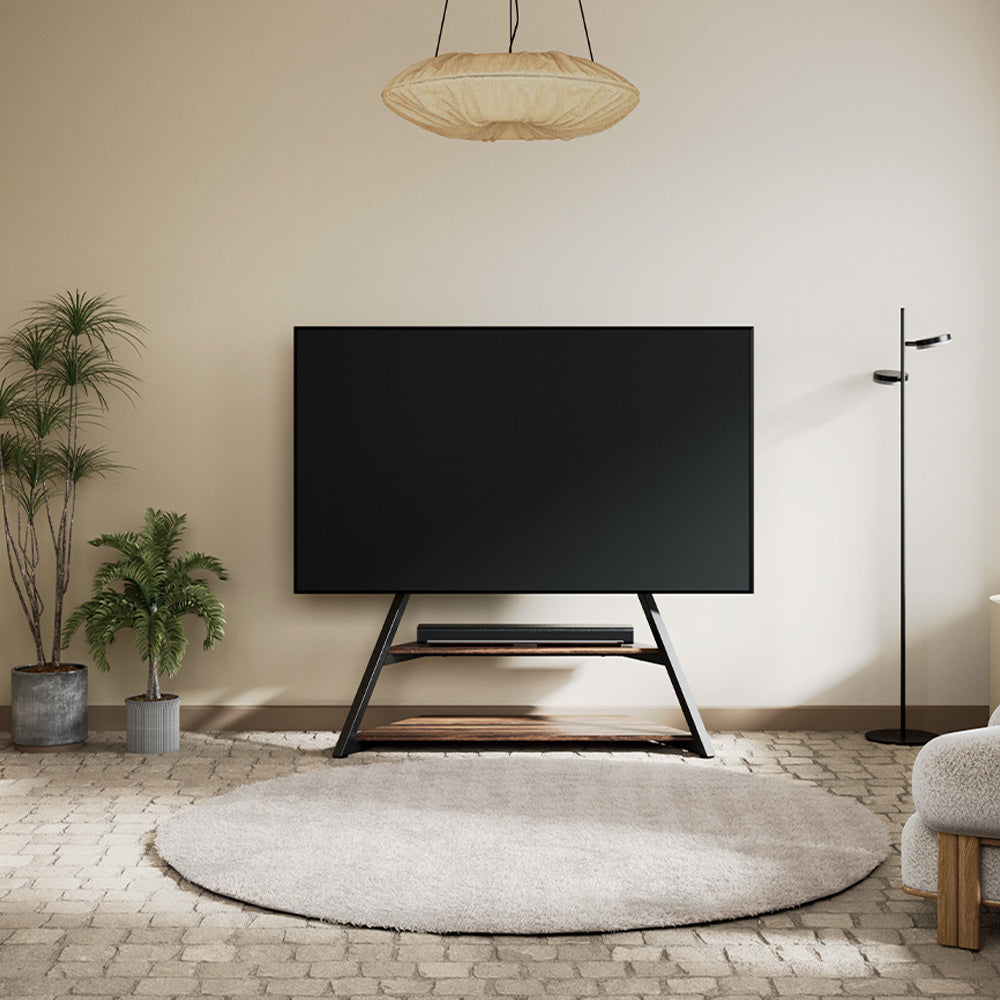
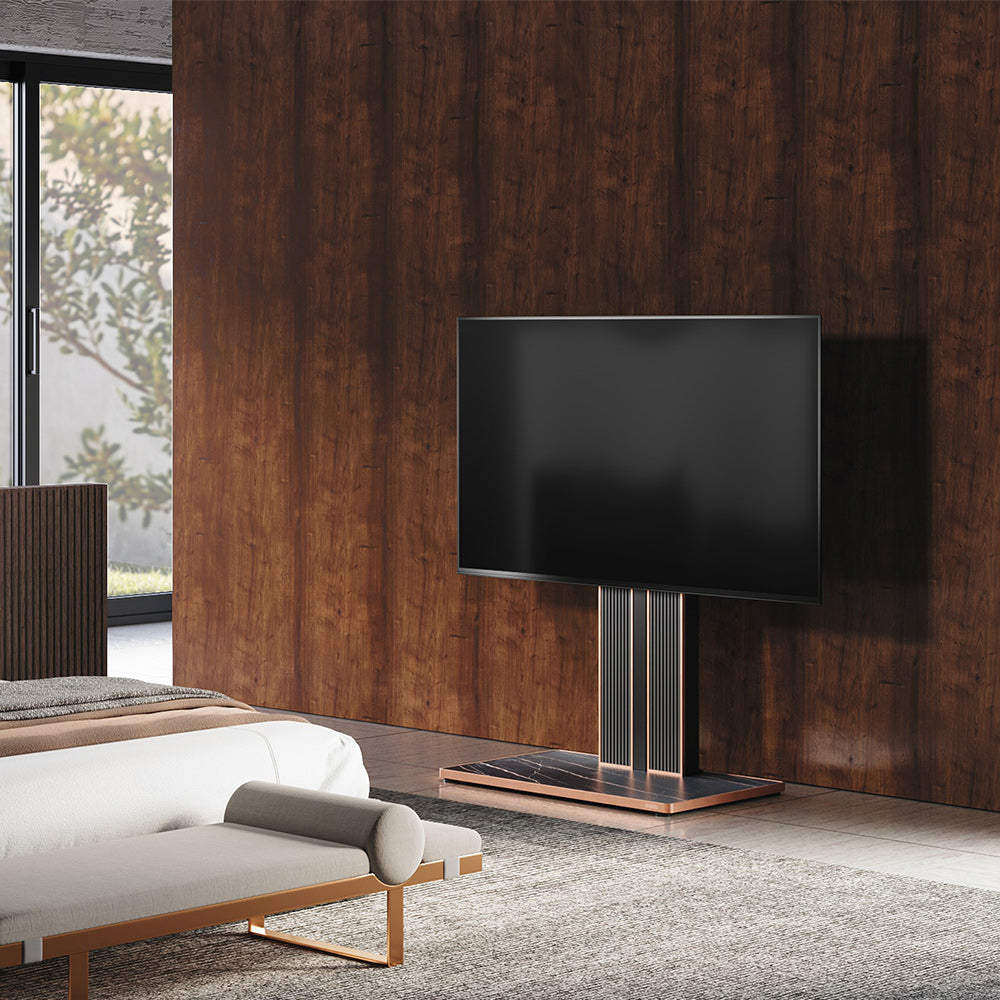
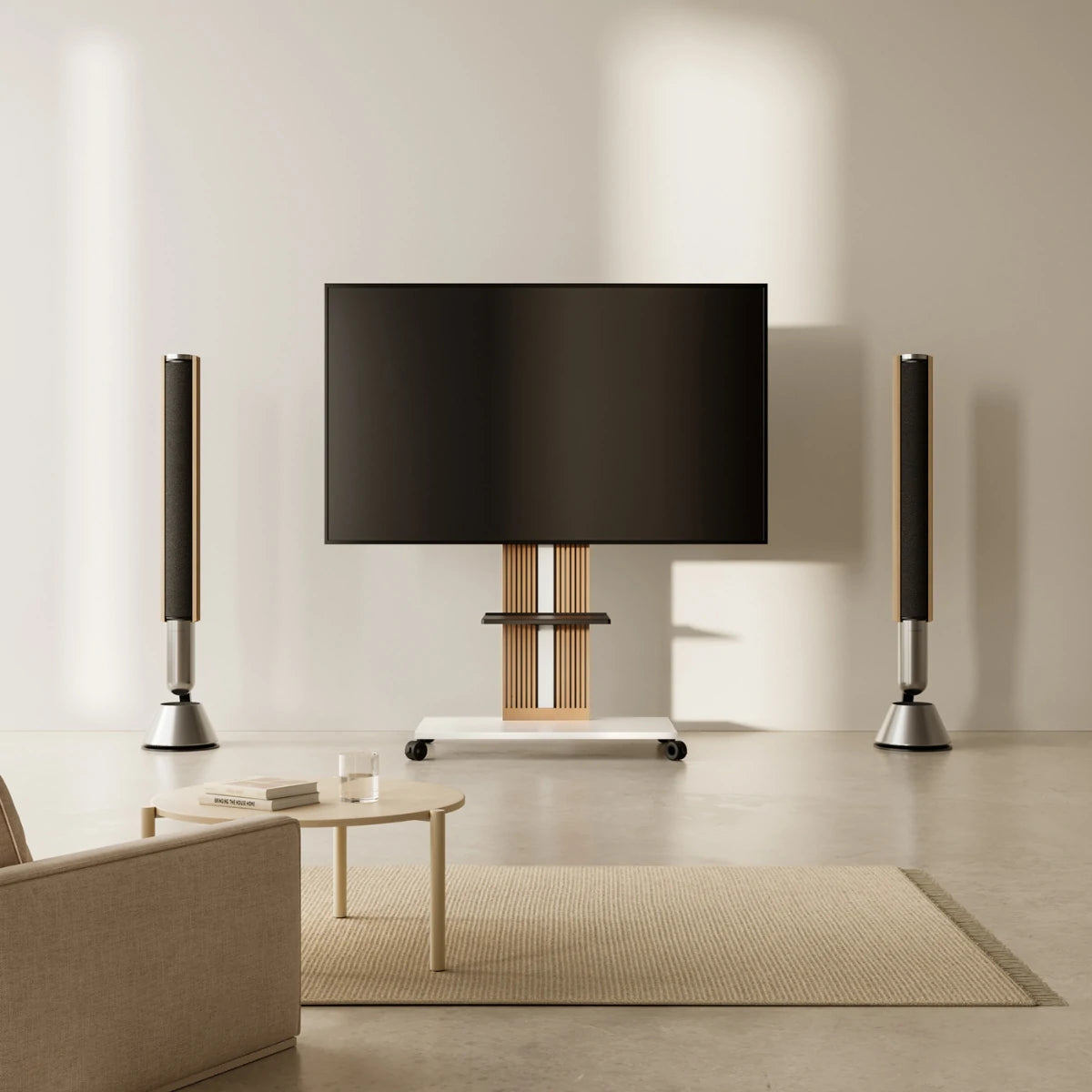
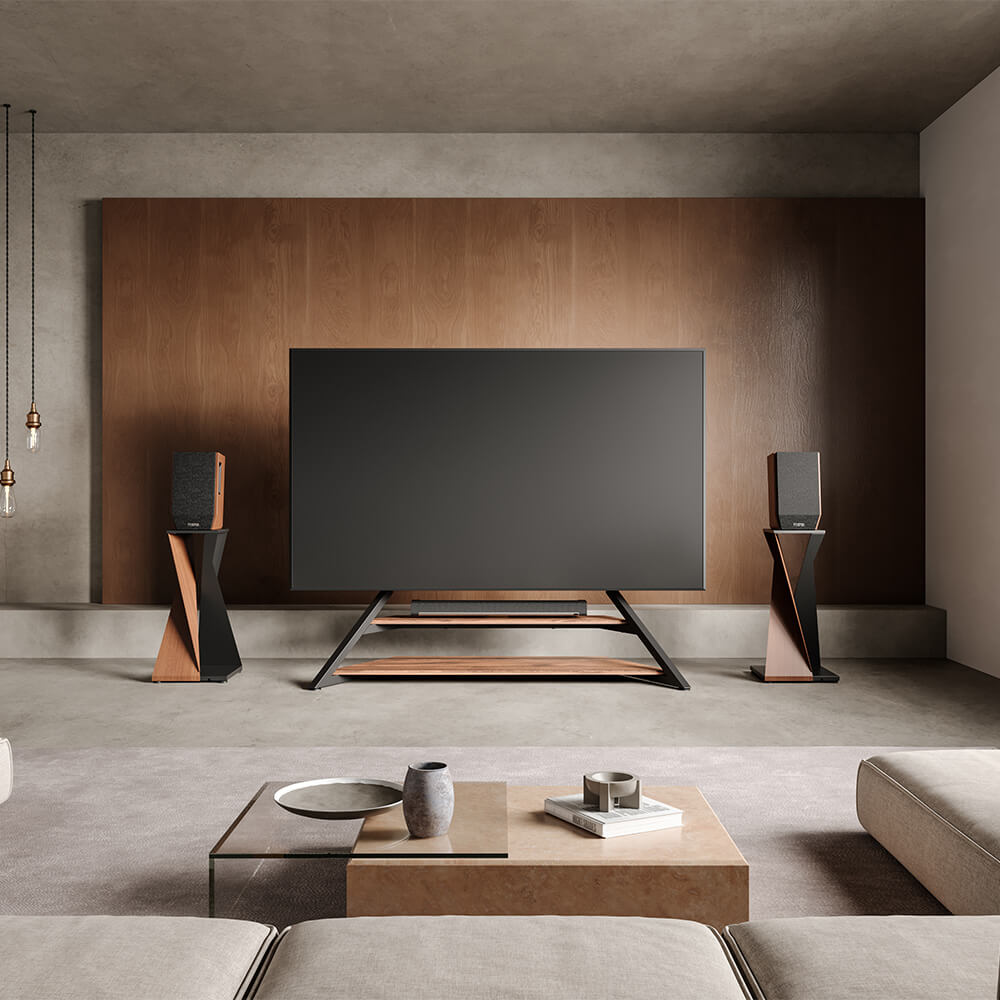
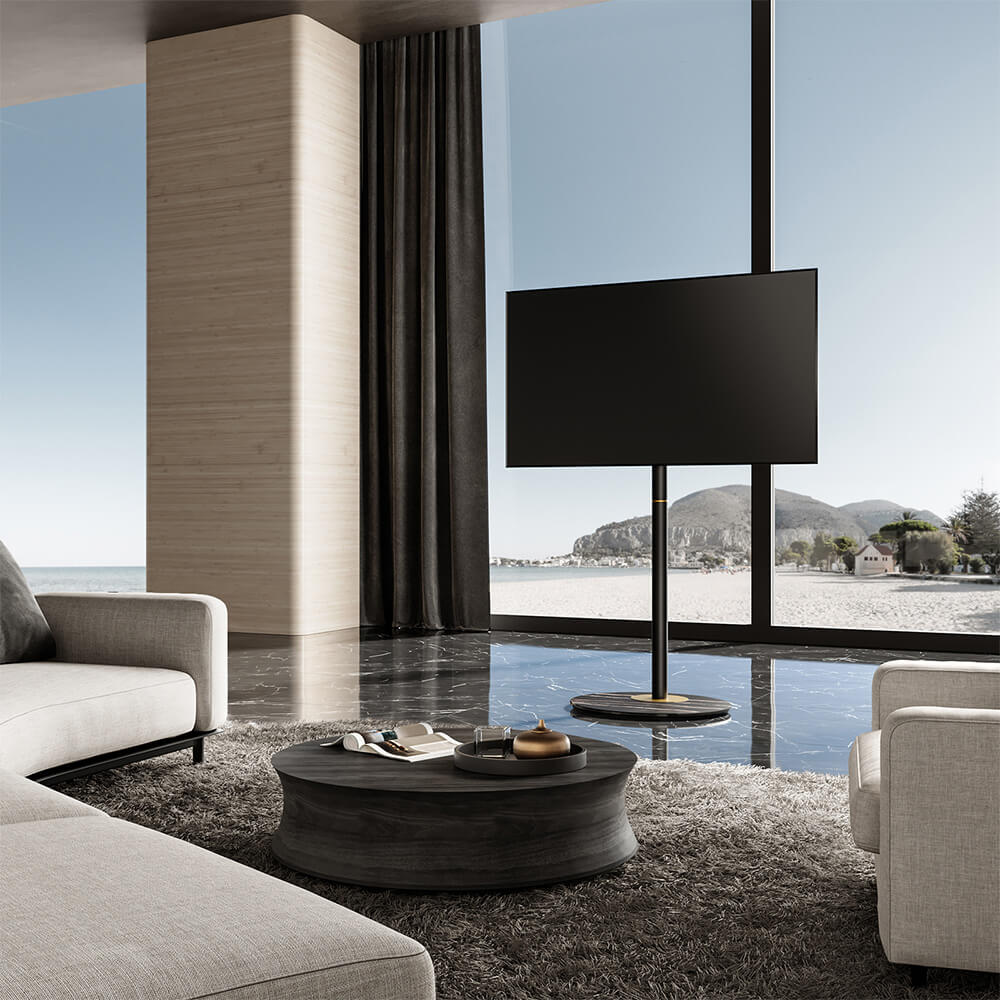
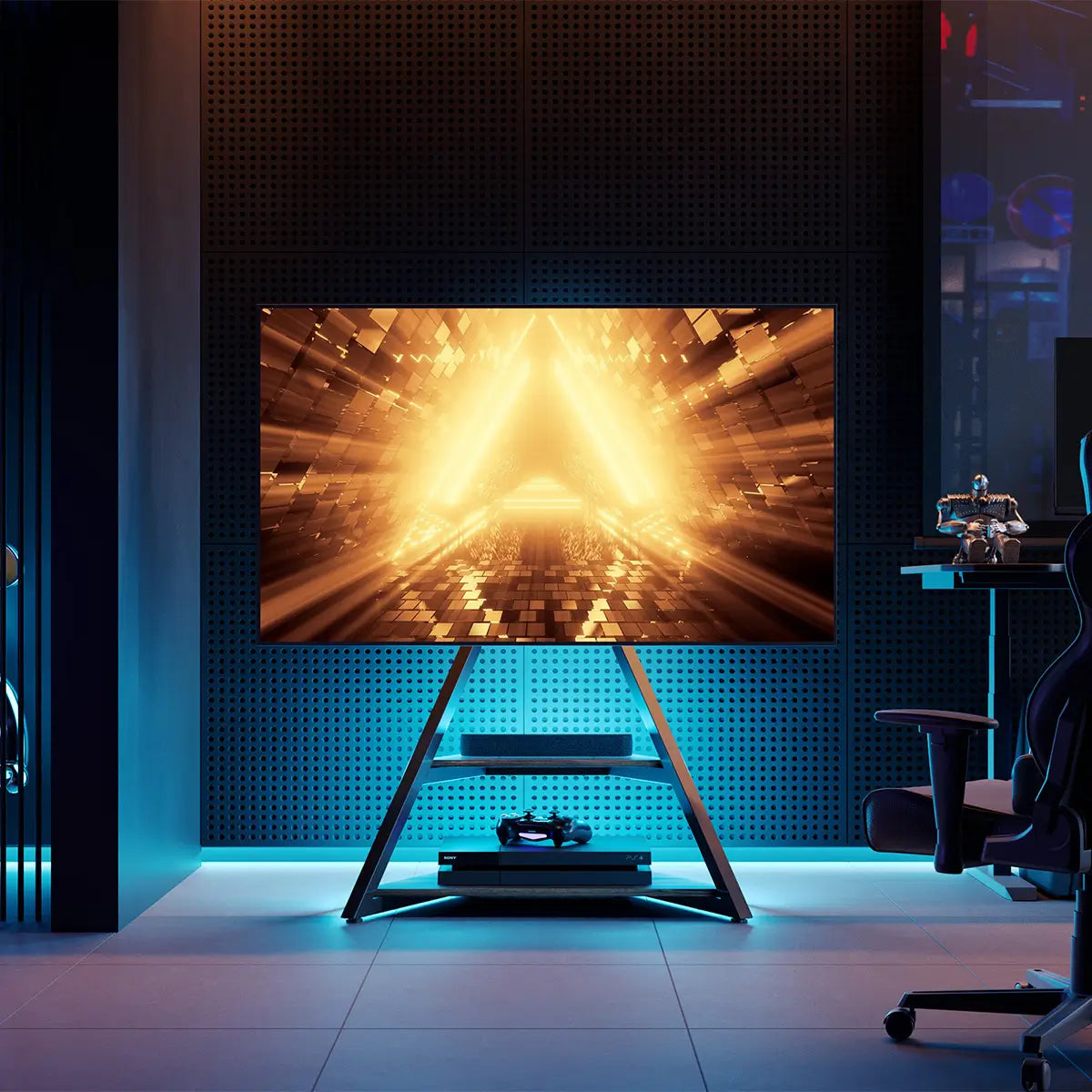
A wall mount is a strong choice if you want the TV fixed in one position and prefer to keep the floor directly below it open. A freestanding TV stand is usually more practical if you rent, want to avoid drilling into the wall, expect to rearrange the room, or prefer more flexibility in screen height and viewing angle.
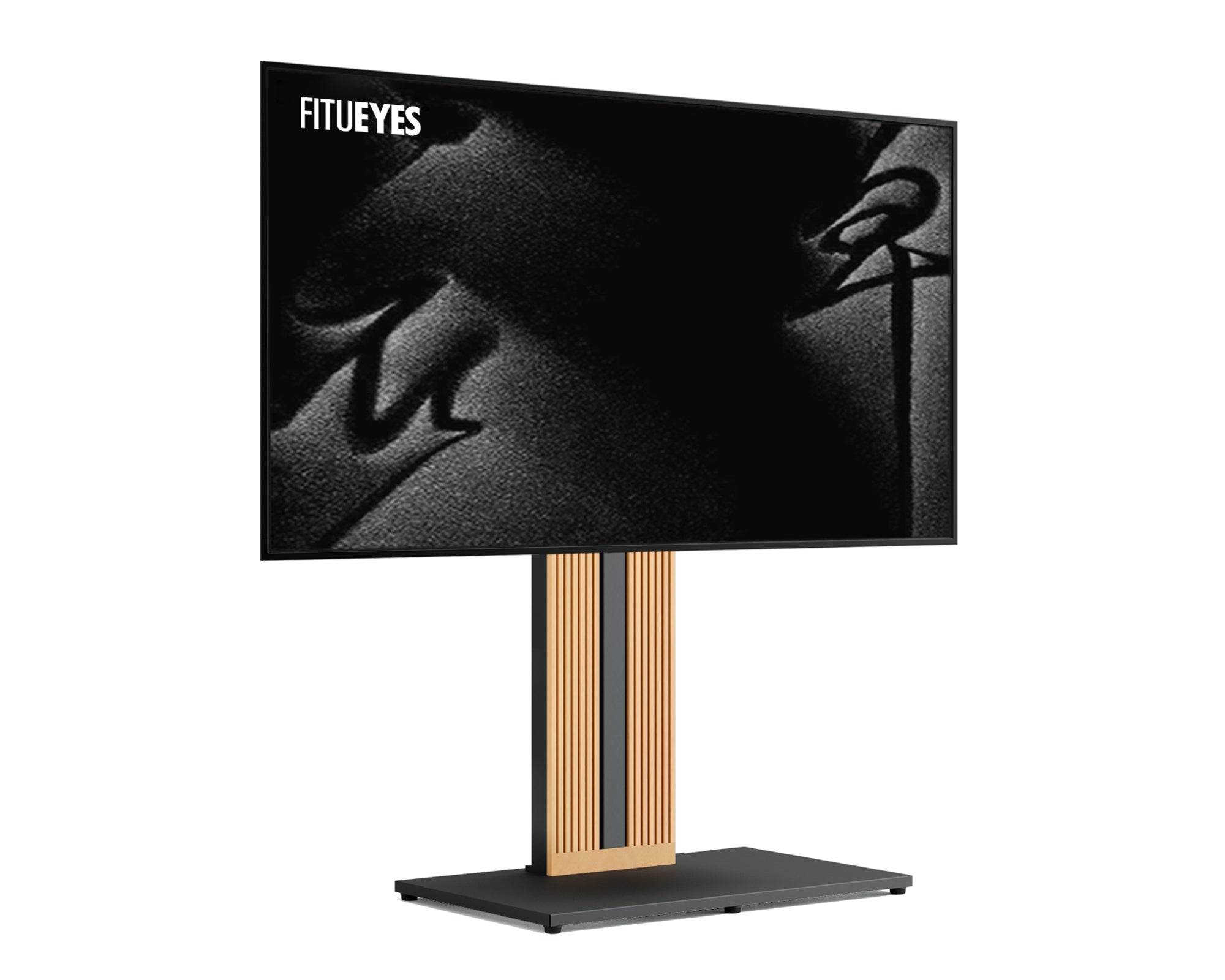
The key is to compare how each option fits the way you actually use the room. A modern floor TV stand does not simply hold the television on a furniture surface. The screen attaches to the stand through its VESA mounting holes, giving you a raised viewing position without permanently fixing the TV to the wall.
TV Stand vs Wall Mount at a Glance
Neither option is automatically better. The right choice depends on how permanent you want the TV position to be, how much adjustment you need, and whether the wall is suitable for mounting.
| Factor | Floor TV Stand | Wall Mount |
|---|---|---|
| Wall drilling | Not required | Usually required |
| Placement | Flexible | Fixed after installation |
| Height adjustment | Available on many models | Usually set during installation |
| Swivel or tilt | Available on some models | Depends on mount type |
| Floor footprint | Requires a base | Keeps area below TV open |
| Rental-friendly | Usually easier | Depends on lease and wall changes |
| Cable access | Easy to reach | Requires more planning |
| Moving the TV | Relatively easy | Requires removal and reinstallation |
If you are still comparing different stand styles before deciding between freestanding and wall-mounted setups, the TV Stands collection shows options designed for different TV sizes, room layouts, and viewing needs.

Which Is Easier to Install?
For most home users, a floor TV stand involves fewer permanent installation steps because there is no need to drill mounting holes or commit to one wall position.
The typical setup involves assembling the base and frame, attaching the mounting brackets to the TV, securing the screen to the stand, and setting the preferred height or angle. Before assembly, confirm that your TV falls within the stand's supported screen size, VESA range, and weight capacity.
FITUEYES TV stands are designed for DIY assembly and include the necessary hardware and instructions. If you have questions about compatibility or setup, 24-hour customer support and installation guidance are available.
Wall mounting requires more planning. You need to confirm that the wall and mounting position are suitable, select hardware appropriate for the wall construction, align the TV at the intended height, and make sure both the mount and TV are compatible.
That does not mean wall mounting always requires a professional installer. Many users can complete the process themselves when the wall, mount, and installation instructions are straightforward. The main difference is that mistakes are harder to correct once holes have been drilled.
Which Works Better for Renters?
For renters who want to avoid permanent wall changes, a freestanding setup is generally the easier option.
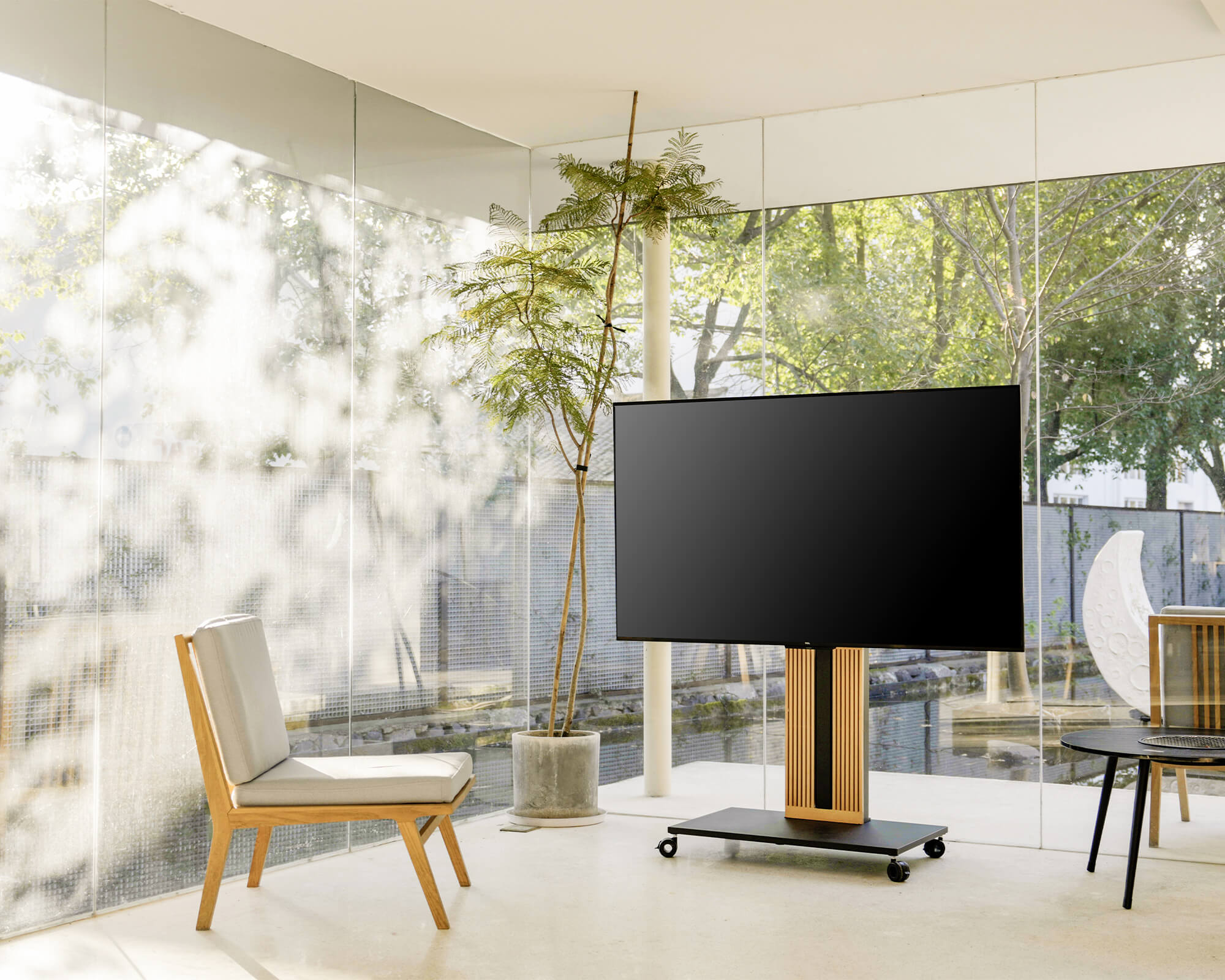
A floor TV stand supports the television independently from the wall, so it can be moved when the room layout changes or taken with you when you move. This can also suit homeowners who simply do not want to commit to one TV location.
A wall mount makes more sense when you know the television will remain in the same place for a long time and the wall is appropriate for installation.
If you rent but still prefer wall mounting, check your lease before drilling. It is better to confirm what modifications are allowed than to rely on temporary mounting methods that may not be designed for the size and weight of your TV.
For users whose main goal is keeping the wall untouched, our guide to no-drill TV setup ideas explains other practical ways to create a clean TV area without permanent wall installation.
Which Gives Better Viewing Flexibility?
Both options can provide a comfortable viewing position, but they offer flexibility in different ways.
A wall mount fixes the television relative to one wall. A fixed mount keeps the screen in one position, while tilting or full-motion mounts can provide some angle adjustment.
A floor TV stand can provide height and swivel adjustment while also allowing the entire setup to be repositioned within the room. That can be useful in apartments, open-plan spaces, bedrooms, or multipurpose rooms where the TV needs to serve more than one seating area.
For example, the Eiffel FT75 TV Stand supports most 43–75 inch TVs and combines VESA mounting with height and swivel adjustment. The important point is not that one model fits every room, but that a freestanding mount-style stand can offer viewing adjustment without tying the TV to one wall.
Whichever option you choose, the screen should sit at a comfortable height from your normal seated position. Avoid placing the TV unusually high simply because there is open wall space above a fireplace or piece of furniture.
Think about where people actually watch from. If everyone sits on the same sofa and the room layout rarely changes, a fixed wall position may work perfectly. If the TV needs to serve a sofa, dining area, workout space, or temporary work zone, a more adjustable setup can be easier to live with.
Which Saves More Space?
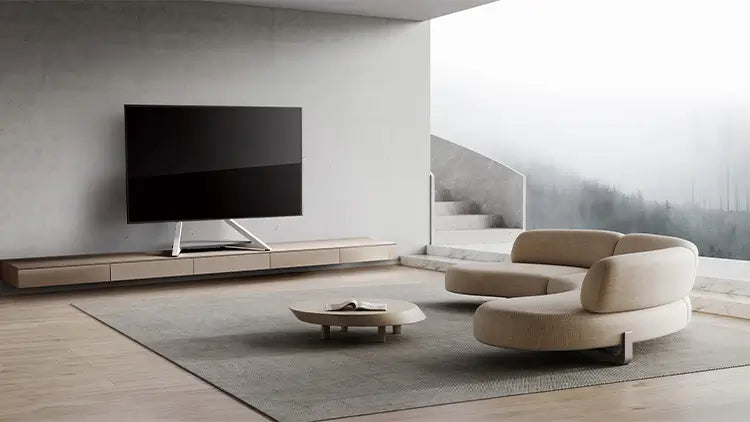
A wall-mounted TV keeps the area immediately below the screen open, so it is often the better choice when maximizing visible floor space is the main goal.
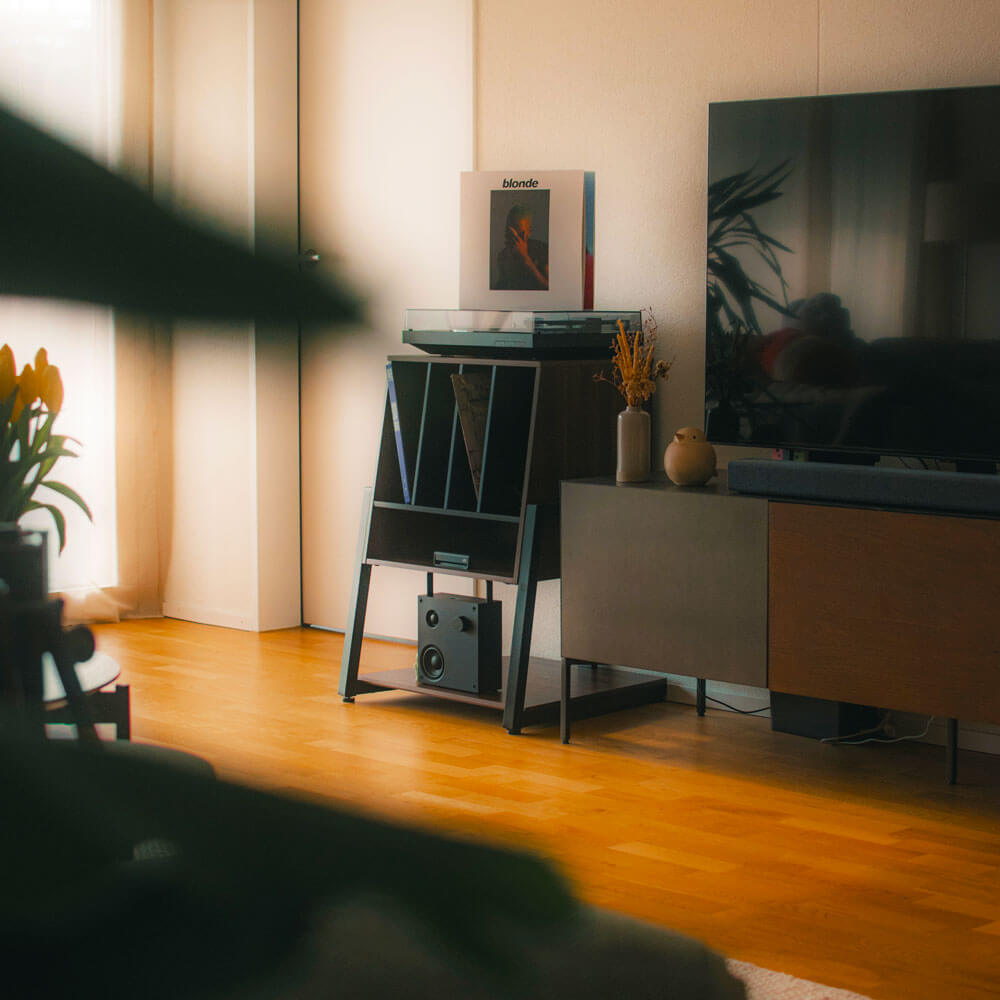
However, wall mounting does not automatically eliminate furniture. If you still need a game console, streaming box, soundbar, receiver, or storage, you may still need a console or shelf below the television.
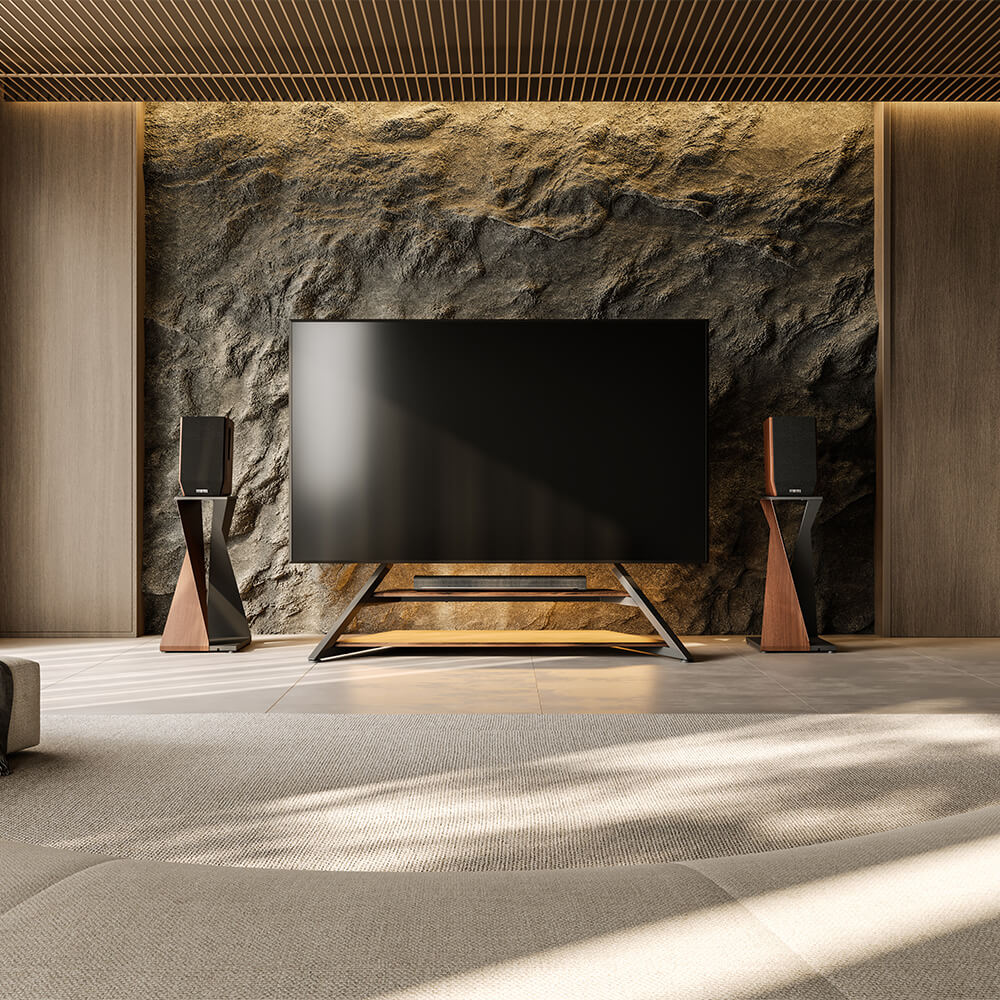
A floor TV stand uses some floor space for its base, but it can replace a much larger media cabinet when you do not need extensive storage. In a small apartment, this can create a lighter setup without making permanent changes to the wall.
The more useful question is:
Do you actually need storage below the TV?
If the answer is no, both a slim floor stand and wall mount can create a clean setup. If the answer is yes, compare the total footprint of the TV support plus the furniture you still need rather than looking at the mount alone.
Which Is Safer and More Stable?
Safety depends more on compatibility and correct setup than on whether the television is supported from the wall or floor.
For a floor TV stand, check the supported TV size, VESA pattern, and weight capacity before installation. The base should sit on a stable, level surface, and the television should be secured using the intended mounting hardware. Cable routing also matters, especially in homes with children or pets.
A wide or carefully engineered base can help distribute weight, but the stand still needs to be used within the manufacturer's stated limits.
For a wall mount, the same compatibility checks apply. The TV must fall within the mount's supported VESA and weight specifications, and the mounting hardware must be suitable for the wall structure.
Neither option should simply be assumed to be safer. A properly assembled compatible floor stand can be very stable, while an incorrectly installed wall mount can create its own risks.
In either setup, keep cords controlled, avoid unstable furniture close to the television, and make sure children or pets cannot easily pull on cables or climb around the screen.
Which One Should You Choose?
The final decision comes down to how fixed or flexible you want the room to be.
| Your Situation | Better Starting Point |
|---|---|
| You rent and want to avoid drilling | Floor TV stand |
| You rearrange the room regularly | Floor TV stand |
| You want height or swivel adjustment | Adjustable floor TV stand |
| You already know the TV will stay on one wall | Wall mount |
| Keeping the floor directly below the TV open is the priority | Wall mount |
| The wall is unsuitable for mounting | Floor TV stand |
| You already have a console but want independent TV support | Floor TV stand |
| You want a permanent minimalist TV wall | Wall mount |
A wall mount works best when the screen has a permanent home. A floor stand is usually the better fit when flexibility, renting, viewing adjustment, or avoiding wall drilling matters more.

FAQs
1. Can a Floor TV Stand Support a Large TV?
Yes, as long as the TV falls within the stand's specified screen size, VESA pattern, and weight capacity. For a large TV, check these specifications rather than choosing a stand based only on appearance.
2. Is a Wall Mount Always Better for Saving Space?
Not necessarily. A wall mount keeps the space directly below the TV open, but you may still need furniture for media devices or storage. A slim floor TV stand can sometimes use less overall space than a wall-mounted TV paired with a large console.
3. Can a Floor TV Stand Work in a Corner?
Yes. A floor TV stand can work well in a corner if the base fits the available space and the screen can be angled toward the main seating area. Models with swivel adjustment are especially useful because they let you change the viewing direction without moving the entire stand.
Choose Based on How Your Room Needs to Work
A wall mount is the better choice when you want a permanent TV position and prefer to keep the area directly below the screen open. A floor TV stand is more practical when you want a no-drill setup, easier relocation, or more flexibility in viewing height and angle.
FITUEYES designs freestanding TV stands for everyday homes, with options for different TV sizes, VESA patterns, room layouts, and viewing preferences. Before choosing a model, confirm compatibility first, then decide how much flexibility your room actually needs.