




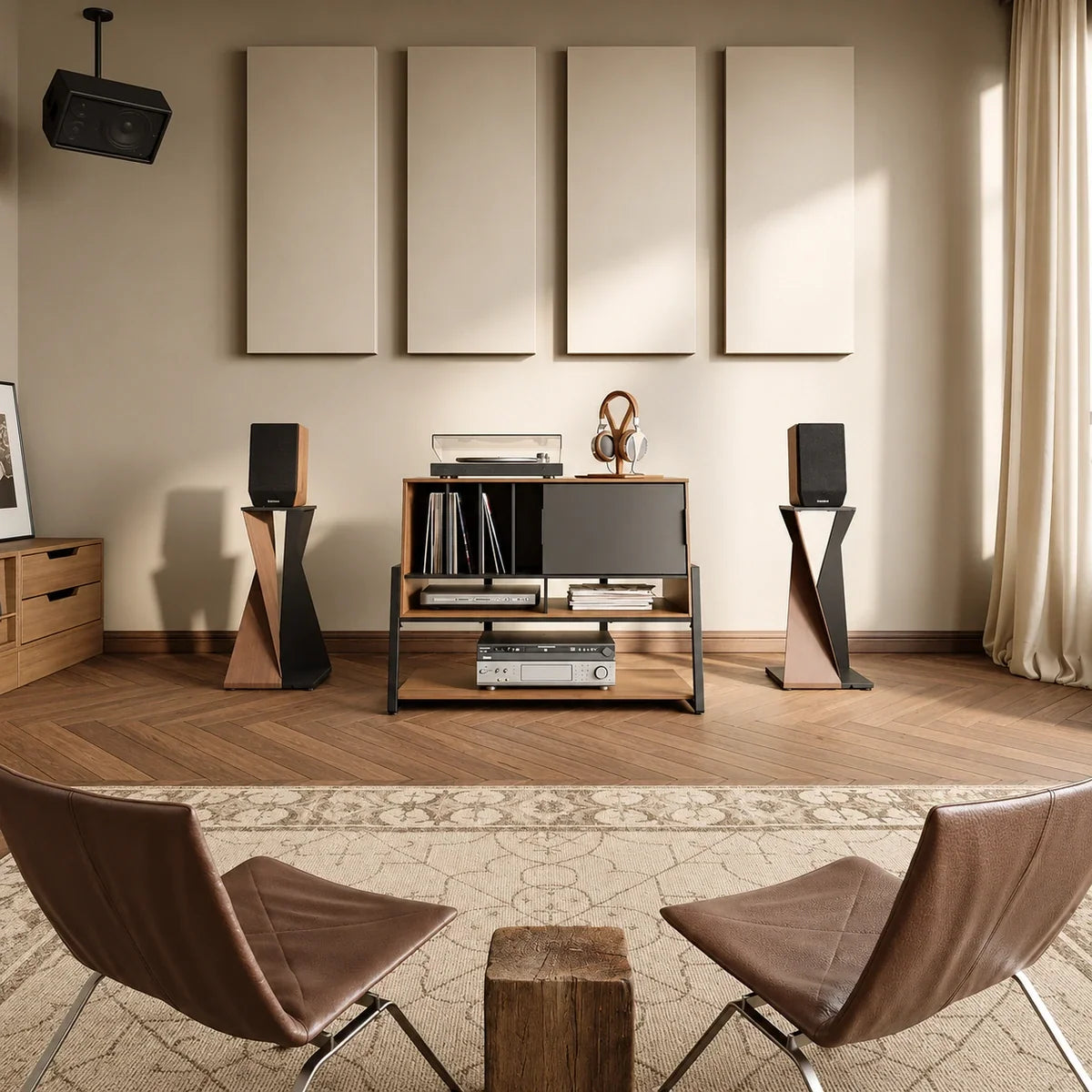
Speaker stands are usually the more practical choice when you need to experiment with speaker spacing, distance from the wall, or furniture layout. Wall mounts work well when compatible speakers can reach suitable listening positions from secure wall fixings and keeping the floor clear is a priority. Start with the speaker model, then compare the positions and installation conditions your room can provide.
Check How Each Option Supports Your Speakers
Start with the speaker’s weight, dimensions, and manufacturer-approved support methods. For a stand, check that the platform supports the speaker’s intended contact points or that its attachment matches the required connection. A stand may carry the stated weight yet have a platform that does not support the cabinet properly. Confirm both the load rating and the way the speaker rests on or attaches to the stand.
For a wall mount, identify the bracket or supporting arrangement approved for the speaker. Threaded inserts, keyhole fittings, and clamping supports require different hardware, so check how the speaker will be held and secured. If the manual does not identify a wall-mounting method, confirm the options with the manufacturer before purchasing a bracket. Do not drill new holes into the enclosure unless specifically instructed.
Both methods must leave ports, connectors, and controls usable. Check rear-plug space and the model’s required clearance around the cabinet, including any rear-facing port. If only one method provides suitable support and clearance, carry that option forward into the room-layout checks. If both qualify, compare where each can position the speakers relative to your listening seat.

How Do Stands and Wall Mounts Affect Speaker Placement?
Speaker Height and Direction
Use the main listening position and the speaker manufacturer’s placement guidance to establish the target height and direction. A stereo pair, front home-theater speakers, and surrounds may have different requirements, so identify the speaker’s role before choosing hardware. For a stand, add the driver’s position within the speaker cabinet to the platform height. A 28-inch stand does not place every speaker’s high-frequency driver at the same height.
Choose a fixed-height stand when that combination suits your seat, or an adjustable model whose range reaches the required position. Wall mounts let you establish an installation height, while tilt and swivel may help direct the speaker toward listeners. Check whether the permitted movement is sufficient at the proposed wall location. A high installation with limited downward tilt may leave the speaker poorly directed toward the seating even though the bracket fits securely.
Distance From the Wall and Speaker Spacing
Stands provide more freedom to test speaker spacing, distance from the wall, and inward angle. Those changes can affect bass balance and the position of voices between a stereo pair, making stands useful while you refine the layout. Compare familiar material from the same seat, changing one position at a time so you can hear what each adjustment does. Follow the model’s placement guidance; moving farther from the wall is not automatically an improvement.
Wall mounts offer less freedom to relocate the speakers, although suitable brackets may allow directional adjustment. If the approved wall position already meets the speaker’s needs, that limitation may have little effect on everyday listening. Where the speakers need to extend farther into the room, compare bookshelf speaker stands by the supporting height and base dimensions required for those positions.
The important sound-related difference is the placement each method permits. A well-positioned speaker on an approved wall mount can be a suitable choice, while a stand cannot compensate for a position constrained by furniture or a narrow walkway. Keep both speakers’ locations in view when comparing the options, especially for a stereo pair.
Will the Setup Fit Your Floor Space, Walls, and Cables?
Once you have suitable listening positions, check how they interact with everyday room use. Mark the full stand base or leg area with easy-release tape, then open nearby doors and move chairs as usual. Walk the routes around the sofa and television. A narrow column can look unobtrusive while its base occupies an important part of the floor. If the speaker or stand would regularly be brushed against, try another position before committing to that arrangement.
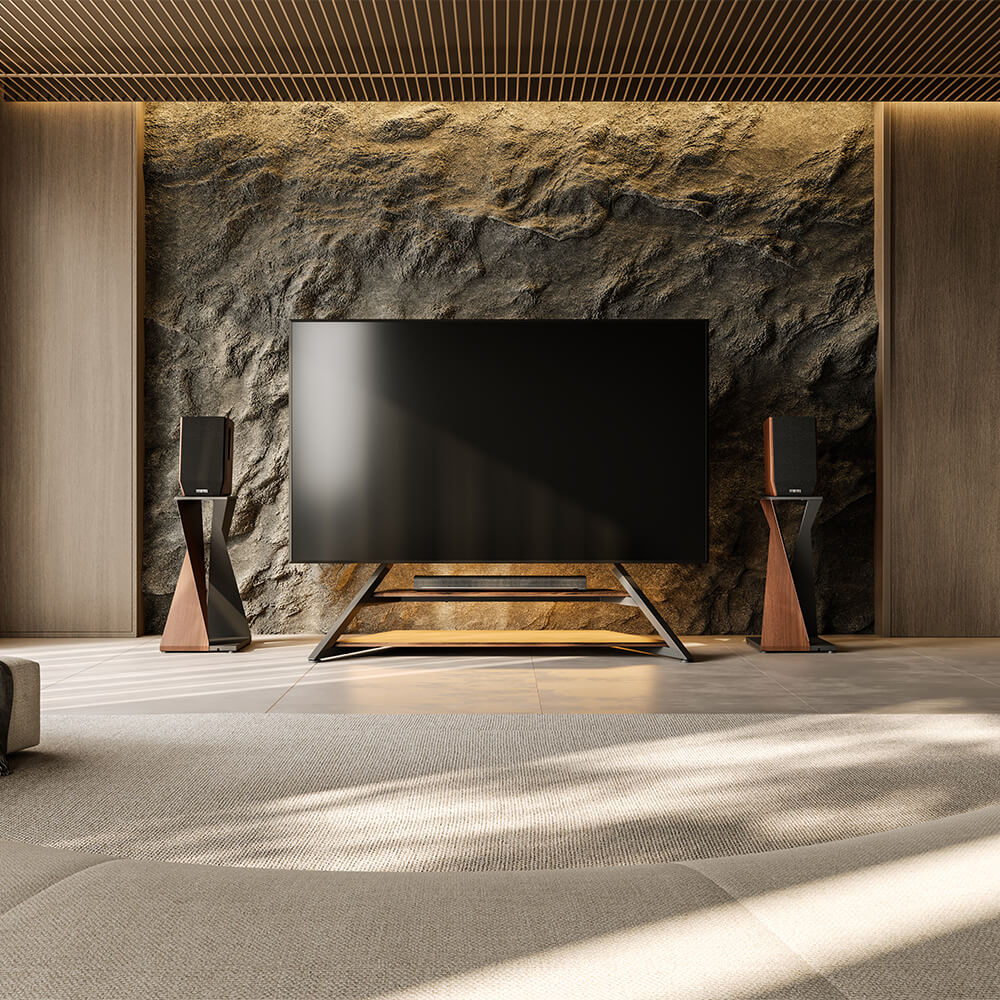
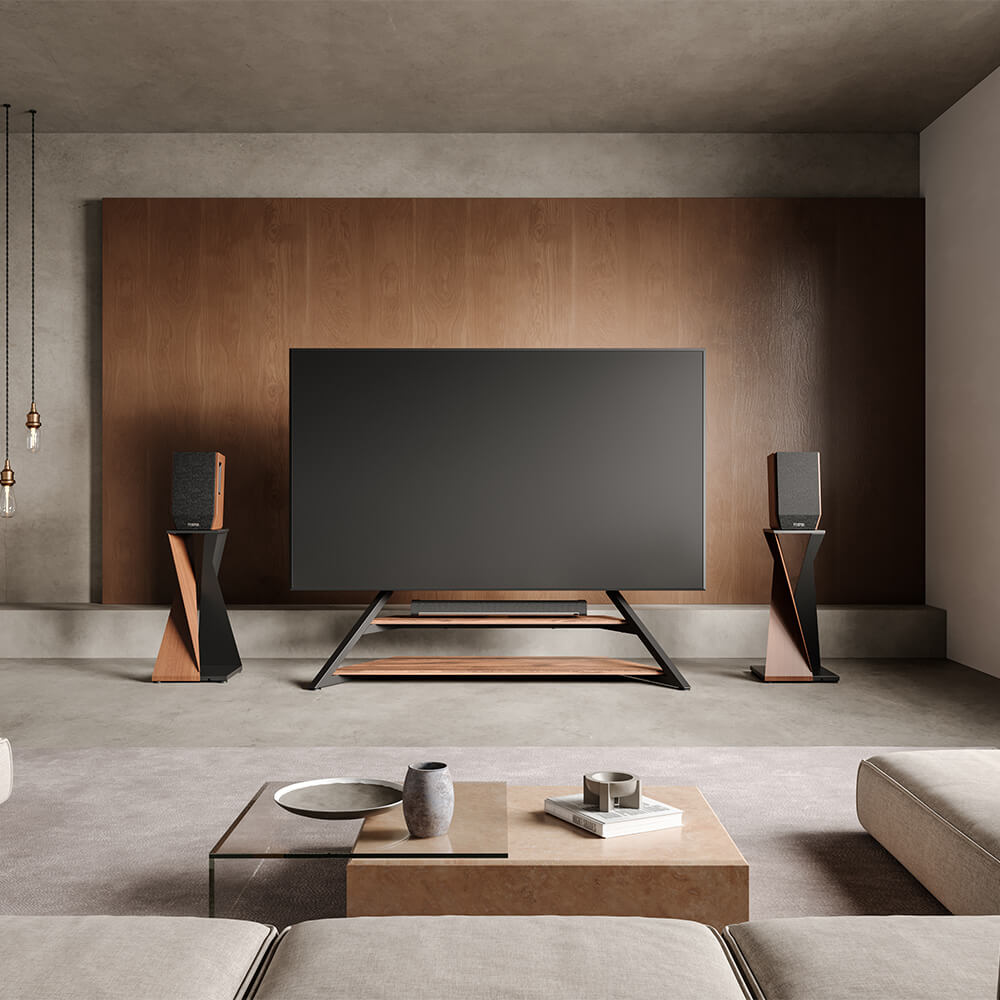
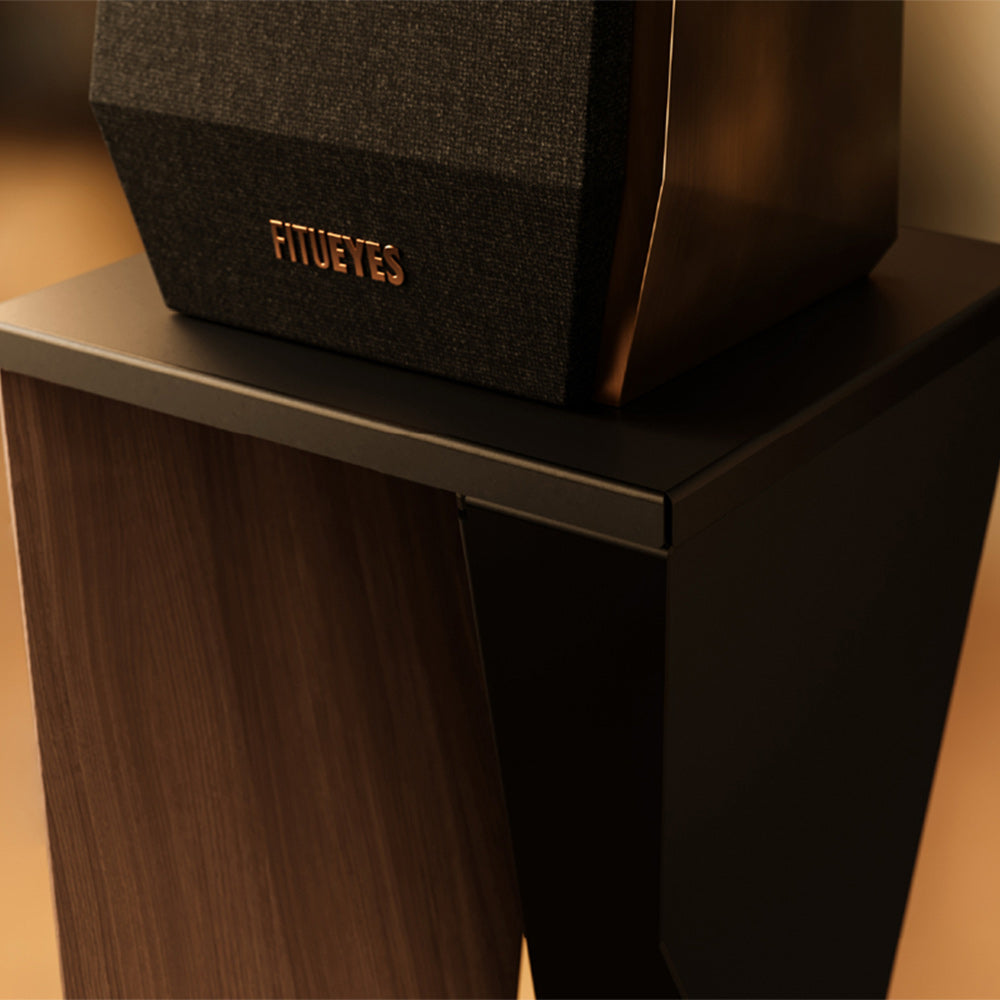
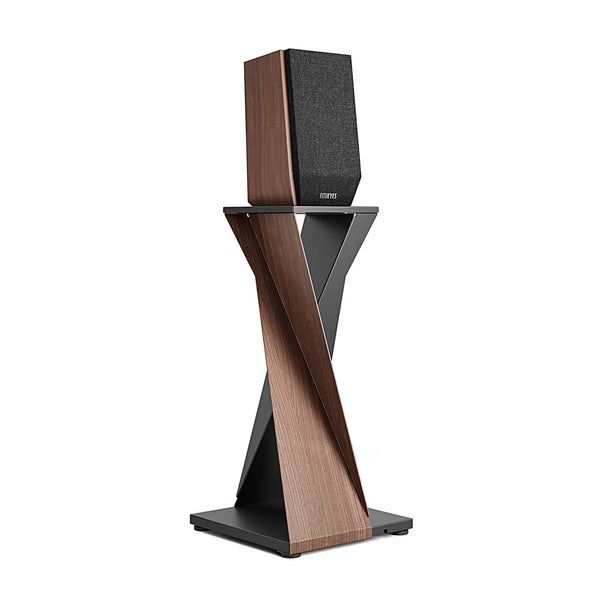
When there is sufficient floor space and a fixed supporting height suits the listening position, the Eiffel SS11 speaker stand provides a platform 27.6 inches (70 cm) above the floor. Its adjustable foot pads help level the support on slightly uneven flooring, while the steel structure gives the speaker a dedicated place beside the furniture. Check the speaker’s contact dimensions and the stand’s 22 lb (10 kg) load limit before choosing it. The foot pads provide leveling; the main platform height remains fixed.

For wall mounts, verify that the proposed positions have the construction and fixing conditions required by the bracket manufacturer. Permission to drill may matter in rented accommodation. A speaker can accept the bracket while the room offers no suitable fixing point at the required location. If the available position would move the speaker too far sideways or leave it facing the wrong direction, reconsider the layout. Installing the bracket securely does not, by itself, establish a useful listening position.
Finally, trace the cables for each option. A stand’s internal channel must accommodate the cable and connector, and the exit needs to leave the connection free from strain. Wall-mounted powered speakers still need access to power even when their audio connection is wireless. Include space for plugs, access for disconnection, and a route that stays clear of walking areas. Around children or pets, consider both contact with the speaker and access to loose leads. Neither mounting method removes the need for appropriate placement and securing.
Which Option Fits Your Room and Listening Needs?
If both methods pass the speaker, placement, and room checks, use the requirement that matters most in daily use to make the final choice.
| Your Main Requirement | Speaker Stands | Wall Mounts |
|---|---|---|
| Test spacing and distance from the wall | Usually easier to reposition within available floor space | Limited by fixing locations and bracket reach |
| Keep the floor clear beside seating or walkways | Requires space for the base and speaker | Keeps the floor below clear when the wall position is suitable |
| Avoid permanent wall changes | Usually the more practical option | Requires suitable fixings and permission where applicable |
| Accommodate furniture rearrangements | Can be relocated, with support and cables checked again | Larger changes may require new fixings and cable routing |
| Keep an established listening layout | Works when the stands fit comfortably in the room | Works when approved wall positions meet the speaker’s needs |
When conditions conflict, separate a preference from a restriction. You may prefer the appearance of wall-mounted speakers, but unsuitable fixing locations can rule that arrangement out. You may prefer the flexibility of stands, but an obstructed main walkway needs another solution. Resolve those restrictions before choosing a finish or extra adjustment features.
For stereo listening, stands can be useful while you refine the relationship between the speakers and seating. In a settled home-theater layout, wall mounts may help position compatible surrounds where floor space is limited. These are use cases, not rules separating music and cinema systems. Once stands are the suitable approach, this speaker stand buying guide can help you compare the remaining support and fit details.
A Speaker Setup That Fits Your Room and Listening Position
The right support lets the speaker occupy a useful listening position while keeping the room comfortable to move through and straightforward to maintain. Compatibility establishes what is possible; placement and installation conditions determine what works in your home. With those decisions made, appearance becomes easier to assess.
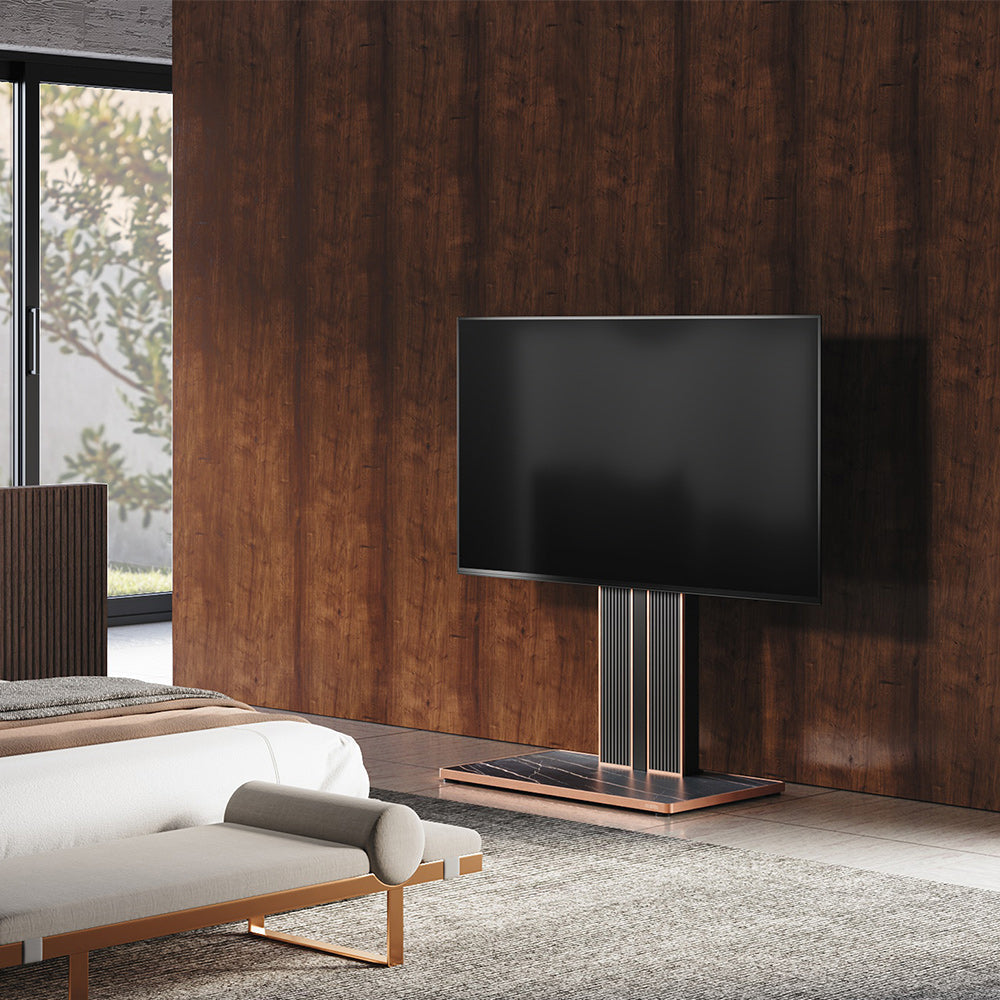
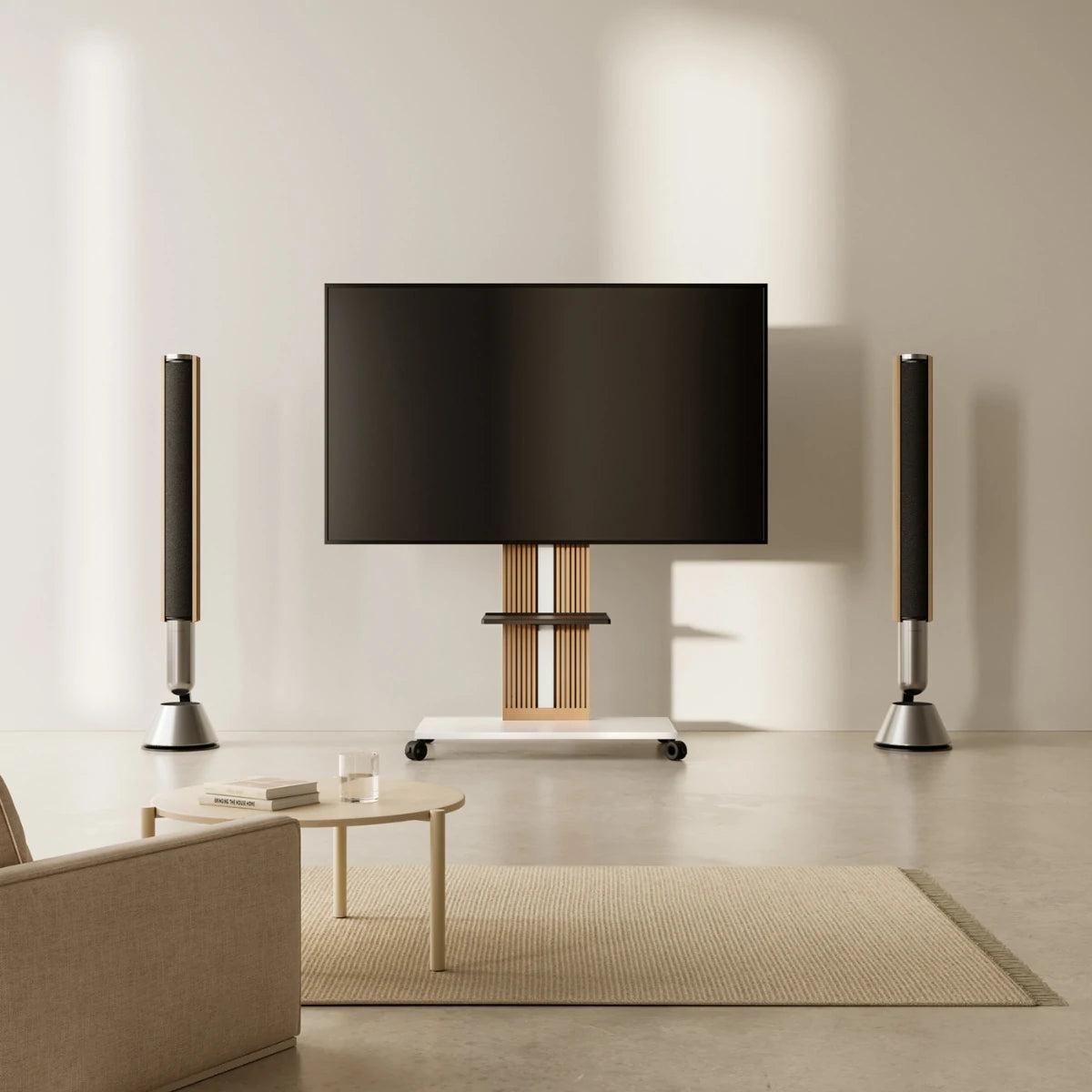
For a floor-standing arrangement, FITUEYES combines speaker support with furniture-oriented design. Choose a supporting height and base size that meet the requirements already established, then consider how the shape and finish relate to the television, seating, and other furniture. The stand becomes part of the room while giving the speaker an appropriate place to perform.
FAQs
Can One Speaker Be on a Stand and the Other Wall-Mounted?
Different supports are not automatically a problem, but they can produce different heights, directions, and relationships with nearby walls. Check that both speakers meet the placement requirements for their channels. If the wall-mounted speaker cannot reach a compatible position, revise the layout. Complete any supported system calibration after establishing suitable physical placement.
Will Wall Mounting Stop Bass From Reaching the Next Room?
No. Wall mounting is not a soundproofing solution. Sound travels through the air, and the installation may also transmit vibration through the structure. Check playback level and placement, and investigate noticeable rattles or loose fittings. Do not insert improvised padding that changes how the bracket carries its load.
Do You Need Isolation Pads With Speaker Stands or Wall Mounts?
Use the pads or protective fittings specified for the speaker and support system. If you hear rattling, identify the source first: loose hardware, a cable, or a nearby object may be responsible. Additional pads must not compromise platform support, clamp engagement, or mounting security. Confirm compatibility before fitting them.